Respectability, Restraint and What Was Sold Anyway
An age that declared cosmetics vulgar and bought them by mail order, in quantity, under other names.
HOM · Era1837 – 1901Elegance & Etiquette
All of The Victorian Era
In short
Victorian Britain and America held that visible cosmetics were disreputable, so the industry sold them as something else: complexion "medicines", toilet preparations and skin cures filled mail-order catalogues while etiquette manuals insisted that a lady used nothing at all.
- 10min read
- 5chapters
- 6sources
Vivien
Your guide through time
Listen to this essay
7 min listenVivien reads our essays aloud, word for word — every date and every name in its place — so you can listen the way you would be walked through a gallery.
An AI voice, designed for History of Makeup
The Victorian position on cosmetics was unambiguous and almost entirely fictional.
A lady did not paint. Paint belonged to the stage and to prostitution, and an etiquette literature of remarkable volume said so repeatedly across sixty years. Meanwhile the same decades produced an enormous commercial trade in complexion preparations, skin whiteners, lip salves, tooth powders and hair dyes, sold through chemists, department stores and the post.[1]
The contradiction was managed with a word. These were not cosmetics. They were toilet preparations, complexion remedies, medicines for the skin — and a woman who bought them was not painting her face, she was treating it.
The Rules, and the Workarounds
The approved Victorian face was pale, clear, faintly flushed and entirely unassisted. Achieving it without visible assistance was the whole art, and the workarounds are well documented: rice powder and pearl powder for the complexion, a pinch or a bitten lip for colour, clear pomade for the brows, elderflower water and cucumber preparations for the skin, and a good deal of staying out of the sun.[2]
Tinted preparations existed and were used, discreetly. Rouge in papers and in crepe, lip salves with a faint stain, and cosmetics for the eyes were all available to anyone who wanted them; what was forbidden was being seen to have used them. The standard was not abstinence. It was deniability.[3]
This produced a genuinely odd commercial logic. An industry grew up whose product could not be named, whose customers could not admit to buying it, and whose advertising therefore had to describe it as something else entirely — which is how the beauty trade spent six decades pretending to be the pharmaceutical trade.
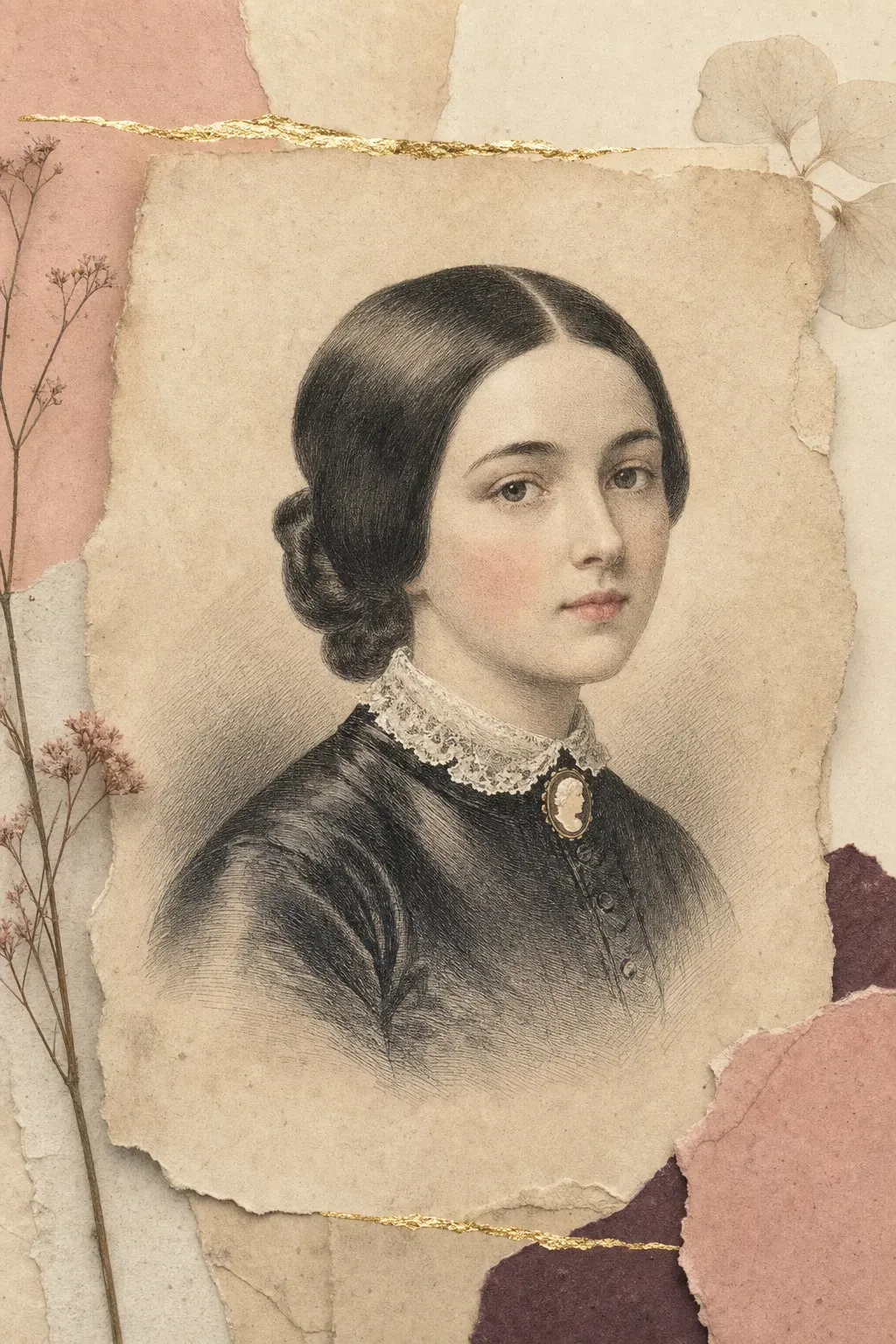
We need but walk down any modish street and peer into the little broughams that flit past, or (in Thackeray's phrase) under the bonnet of any woman we meet, to see over how wide a kingdom rouge reigns.
The Arsenic Wafers: What Is Actually True
No claim about Victorian beauty circulates more freely than the arsenic complexion wafer — the pill that women supposedly swallowed to achieve a pale, translucent skin. It is worth separating carefully, because most of it is true and the most repeated part of it is not.
True: arsenic was everywhere in Victorian life — in wallpaper pigment, in dress fabric, in food colouring, in medicine — and exposure was a genuine and widespread public health problem.[5] True: arsenical complexion preparations, including wafers taken internally, were manufactured and advertised, particularly in the later decades and particularly in the American market.[5] True: arsenic in small doses does produce an effect on the skin that a nineteenth-century consumer could read as improvement.
Not established: that this was a normal, widespread practice among Victorian women. The modern telling — an era of women casually eating poison for their complexion — rests largely on the existence of the advertisements rather than on evidence of how many people bought them, and it was contested at the time by doctors and by the press.[5]
The distinction matters. The Victorian beauty trade genuinely did sell dangerous things to people who did not know what was in them, which is a serious charge and a well-evidenced one. Inflating it into a cartoon makes it easier to dismiss.
Lead, Mercury and the Rest
Arsenic gets the attention, but the routine hazards were older and more common. Lead-based face powders and enamels were still sold, still worked, and still did what lead does. Mercury compounds appeared in skin-lightening preparations and in freckle removers. Neither was a secret: both were discussed in the medical press, and periodic scandals attached to named products.[6]
There was essentially no regulation. In the United States, meaningful federal oversight of cosmetics did not arrive until well into the twentieth century, and a Victorian consumer had no mechanism whatever for discovering what was in a jar beyond the manufacturer's word.[7]
What is genuinely striking is how little concealment was required. These products were sold openly, under brand names, in respectable shops, to a public that had been told the dangerous thing about cosmetics was that they were immodest.
How Beauty Reached the Ordinary Household
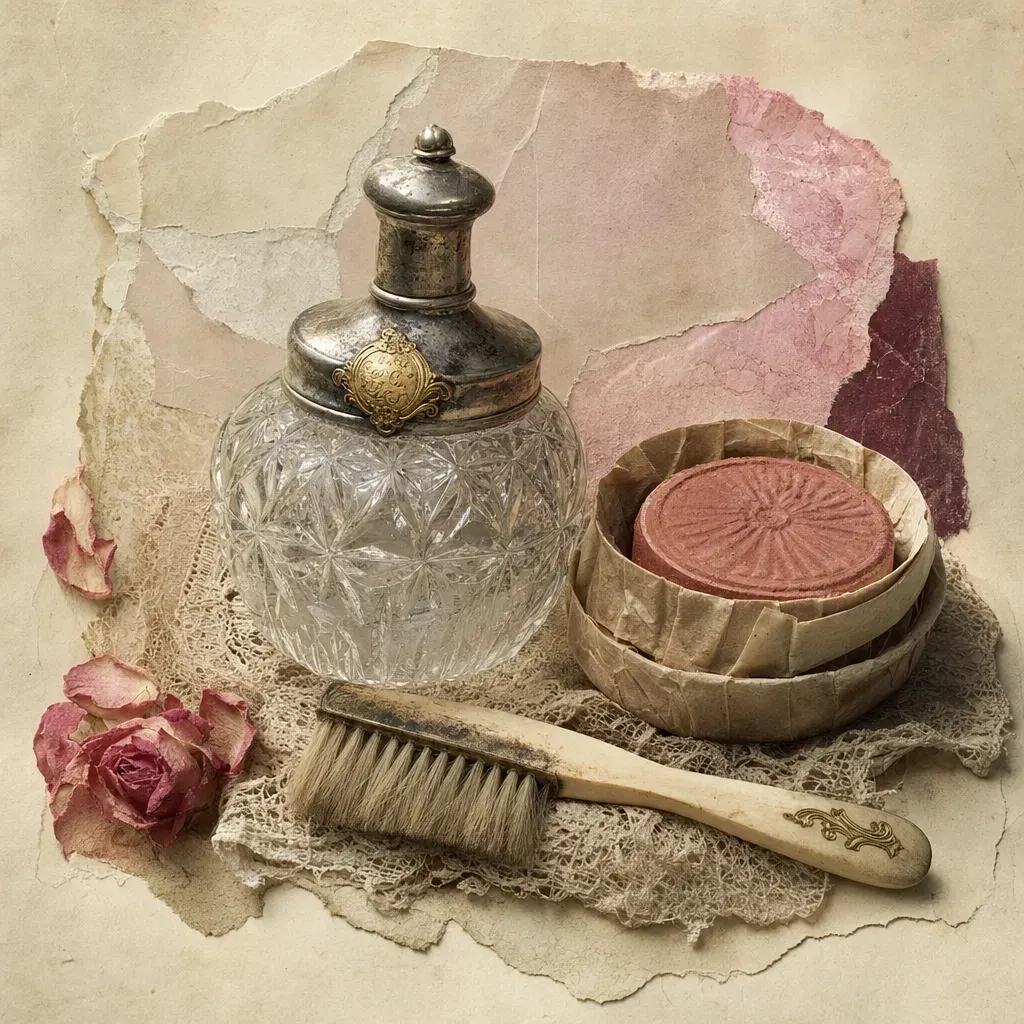
The Victorian period built the distribution that the twentieth-century industry would inherit. Department stores gave beauty preparations a counter and a saleswoman. Mail order gave them a national reach: by the end of the century an American farm household could order complexion preparations from a catalogue and have them delivered, which had not previously been possible anywhere.[8]
Direct selling appeared too. The California Perfume Company, founded in 1886 and later renamed Avon, built a sales force of women selling to women in their homes — a model that sidestepped the respectability problem completely, because a transaction in a parlour is not a public admission of anything.[9]
By 1900 the infrastructure was in place: manufacture, branding, national distribution, a trained sales channel and an advertising industry. Everything was ready except permission.
What the Victorians Established
Three inheritances, and they are all still visible.
The first is the vocabulary of evasion. Calling a cosmetic a treatment, a remedy, a corrector or a skincare product to make it respectable is a Victorian invention, and the contemporary language of "enhancing your natural features" is the same manoeuvre in a softer register.
The second is the machinery. Brands, counters, catalogues, door-to-door sales and mass advertising were all working by 1900, waiting for a decade that would let people admit to using what they bought.[10]
The third is the double bind: be beautiful, but do not be seen trying. The Victorians did not invent it — the medieval centuries had it too — but they enforced it with more commercial infrastructure than anyone before, and the 1920s had to break it very loudly indeed to break it at all.
Sources
- [1, 7, 9, 10]Hope in a Jar: The Making of America’s Beauty Culture Metropolitan Books, 1998.
- [2, 6]Fashions in Makeup: From Ancient to Modern Times Peter Owen, 1972.
- [3]Beauty and Cosmetics 1550–1950 Shire Publications, 2012.
- [4]A Defence of Cosmetics The Yellow Book, vol. 1 (April 1894); Project Gutenberg eBook #41875, 1894.View source (opens in a new tab) Accessed 2026-09-25.
- [5]The Arsenic Century: How Victorian Britain was Poisoned at Home, Work, and Play Oxford University Press, 2010.
- [8]Consumers Guide, Catalogue No. 104 1897.
Continue in The Victorian Era
Elegance & Etiquette
Browse all 27 articles