Cultures
Every tradition answered the same question differently. These are their vocabularies of beauty — and they run alongside one another, not one after the next.
6 cultures
- 8th century BCE - 16th century CE
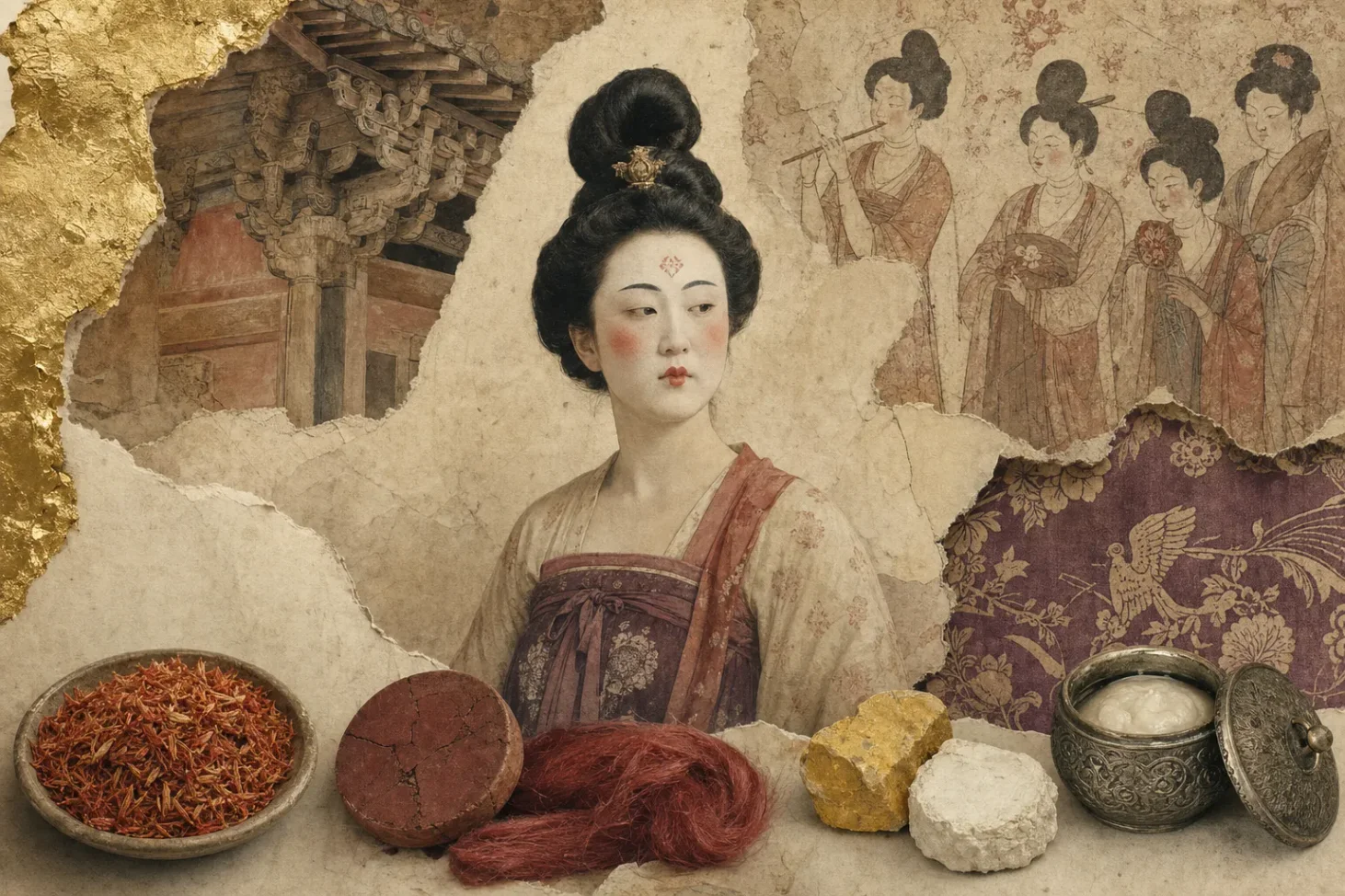
East Asia
Chinese Makeup
Lead white made by a route Europe never used, red pressed from a thistle, an ornament worn between the brows, and a brow line that fashion rewrote for two thousand years.
- c. 4000 BCE - 30 BCE
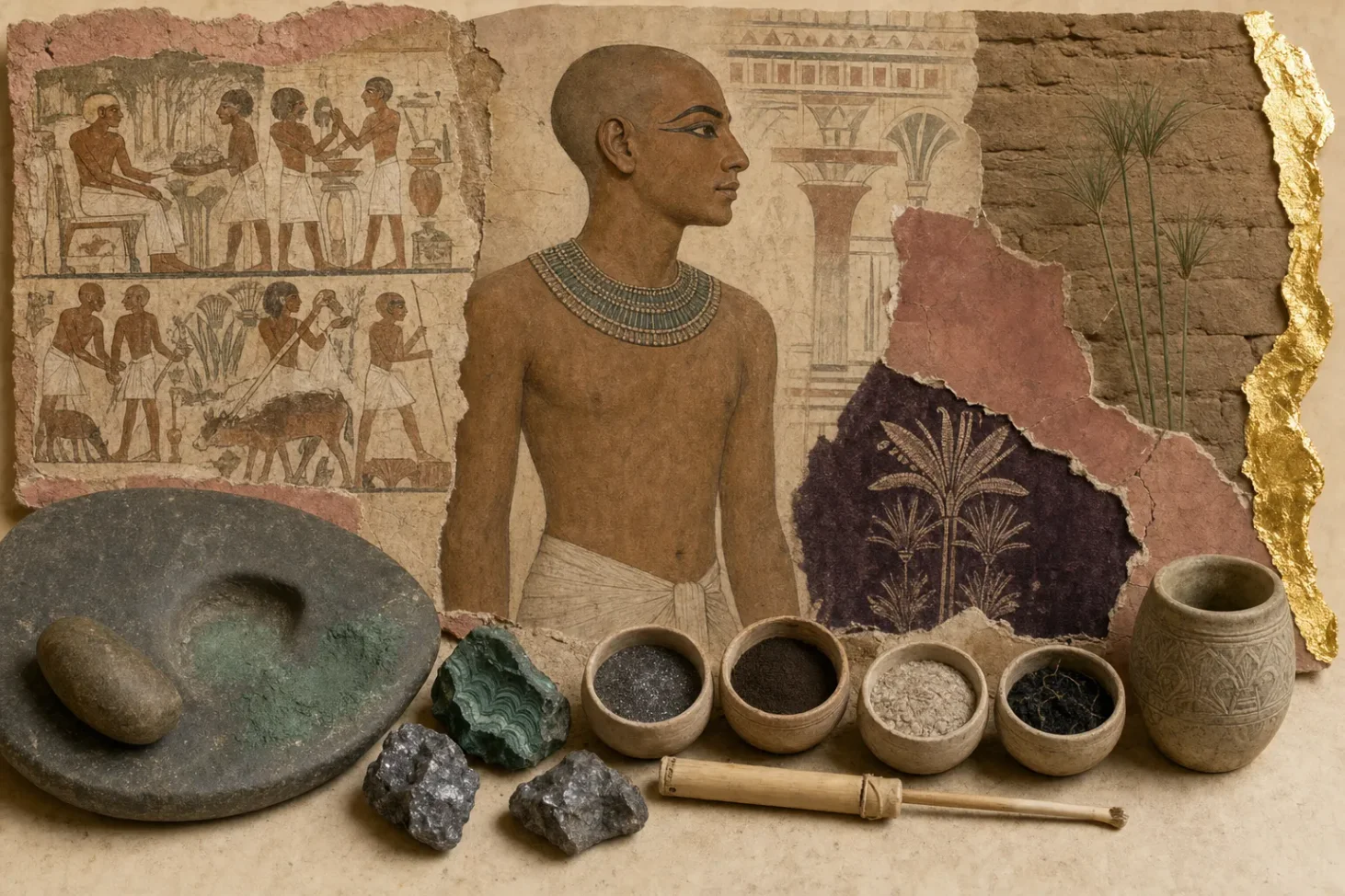
The Nile Valley
Egyptian Makeup
Ground malachite and galena, worn by men and women at every level of Egyptian society for three thousand years — a cosmetic tradition whose chemistry is far better attested than its purpose.
- 5th century BCE – 1930
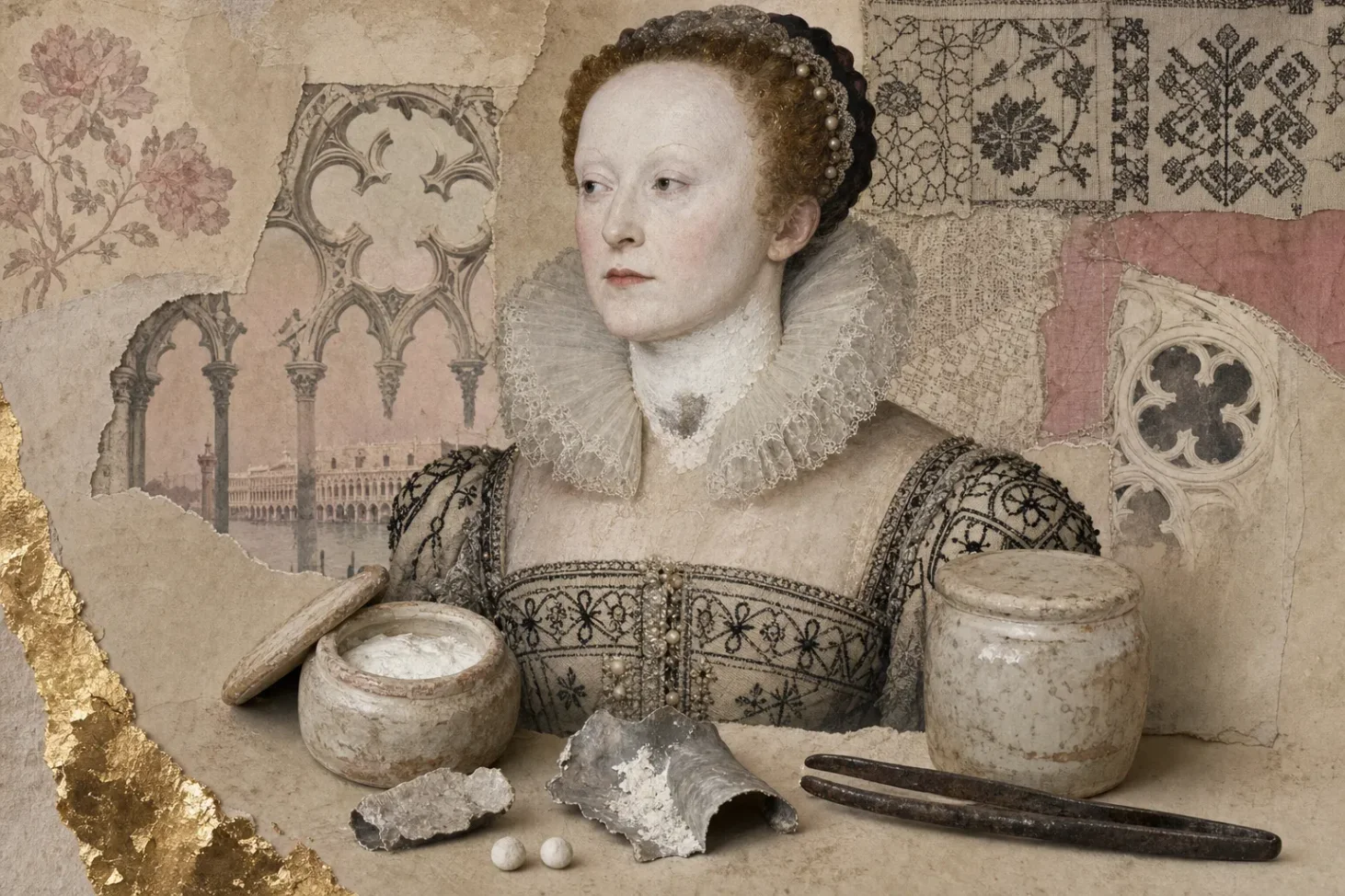
Britain, Ireland, Italy and Greece
European Makeup
From Venetian ceruse to the plucked hairline to the Victorian rule against visible paint, the evidence gathered here — English, Irish and Venetian, with a Greek prehistory — turns on one argument: whether a made-up face is a lie. It ran four hundred years and stopped, quite suddenly, in the 1920s.
- c. 2500 BCE - present
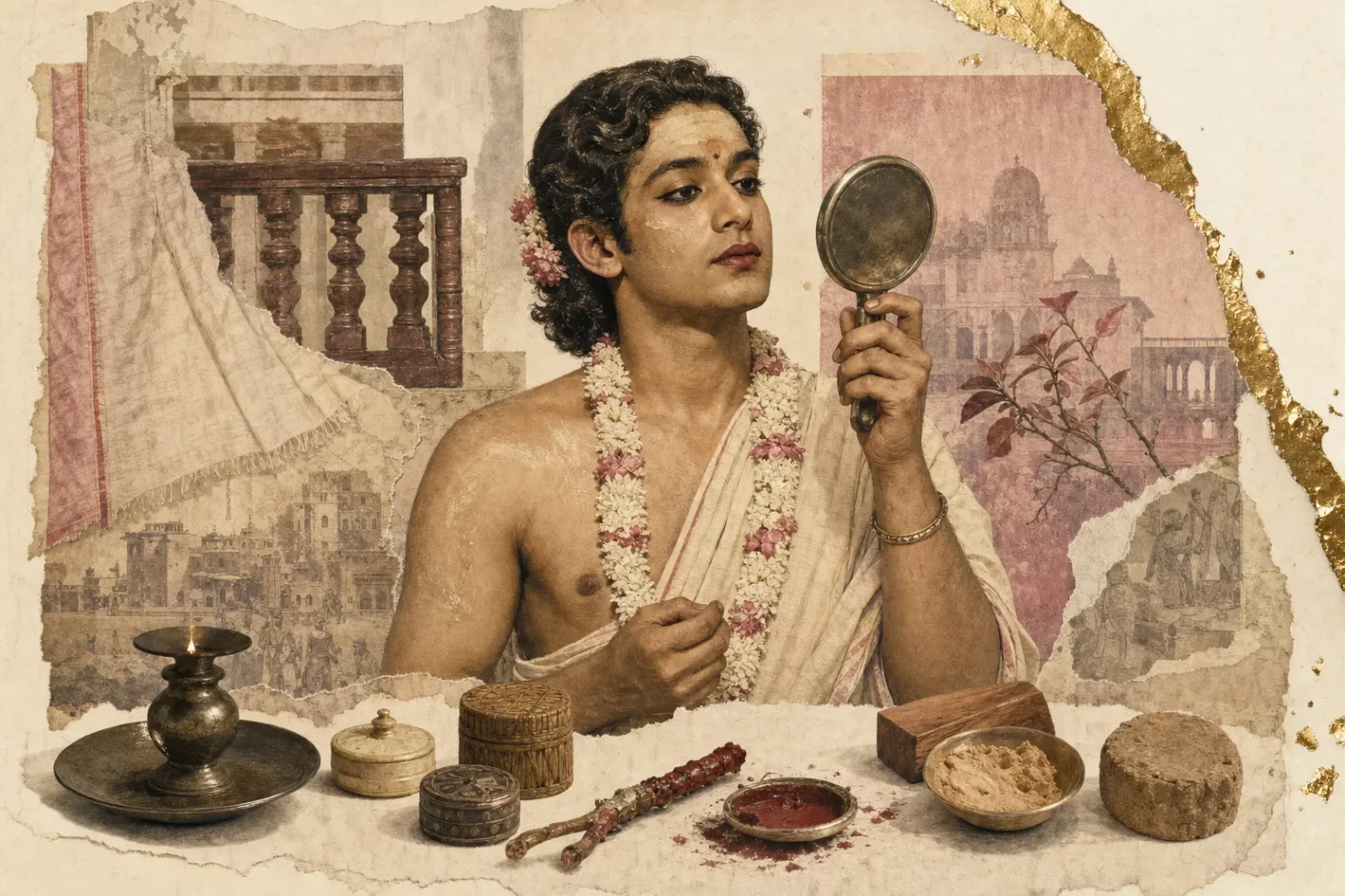
The Indian Subcontinent
Indian Makeup
Eye paint that enters the record as a ritual substance, red lac on lips and feet, a monastic code that lists lamp soot among permitted eye ointments, and a henna history that is genuinely unsettled.
- 4th century CE – present
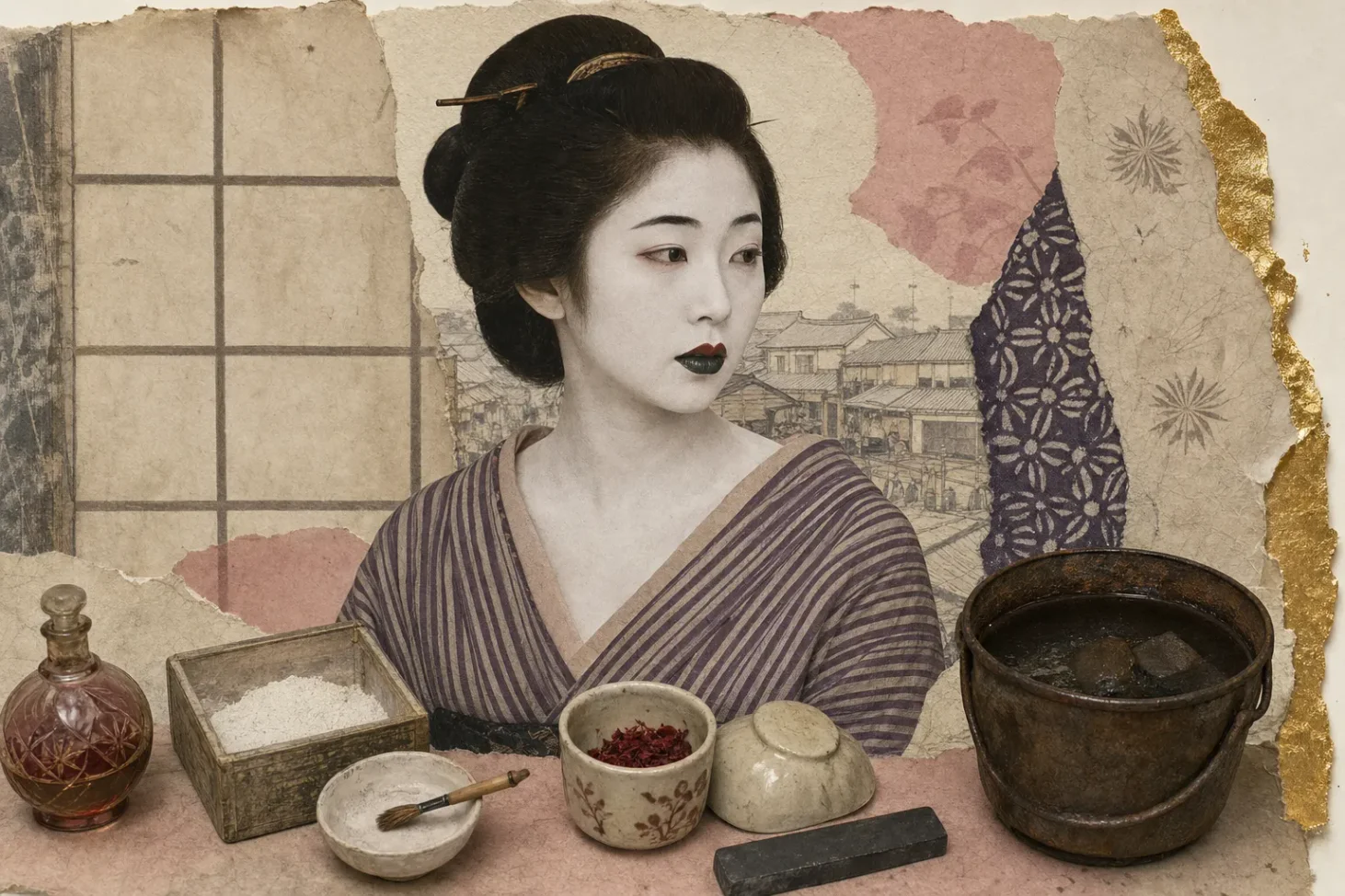
Japan
Japanese Makeup
Japanese cosmetic practice worked in three colours — white oshiroi, red beni, and the black of stained teeth and drawn brows — and held to them for centuries, through lead, safflower and a Meiji revolution.
- 9th – 12th centuries
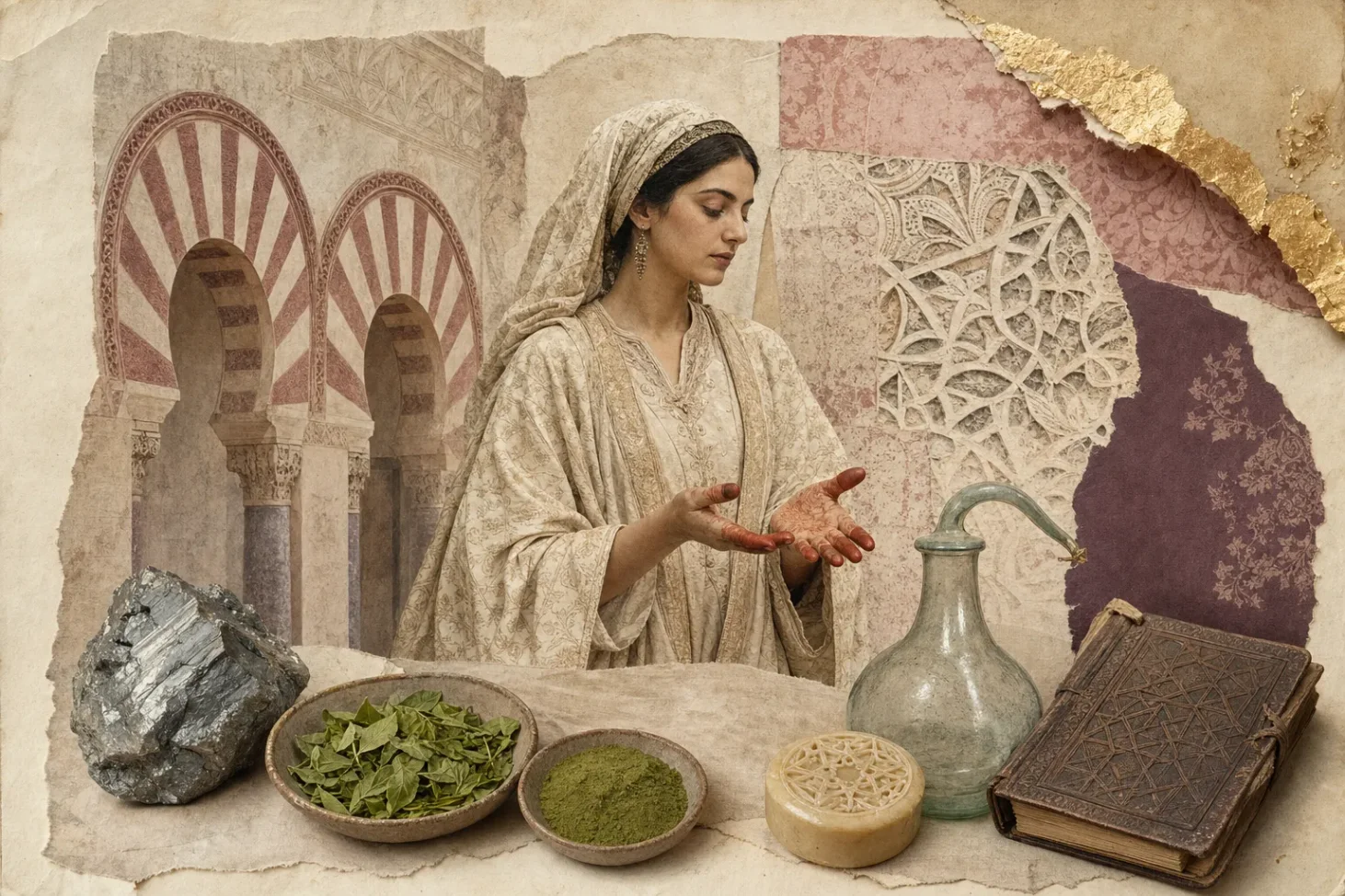
From Baghdad to Córdoba
The Islamic World
Between Baghdad and Córdoba, from the ninth century to the twelfth, cosmetics were classed with medicine, written into encyclopaedias and pharmacopoeias, and carried westward into Latin Europe along the routes that carried the materials.