Henna Gets a Botanical Name: And Two Regulators Pick Different Ones
Linnaeus named the plant in 1753. American law still defines henna by a name published thirty-nine years later.
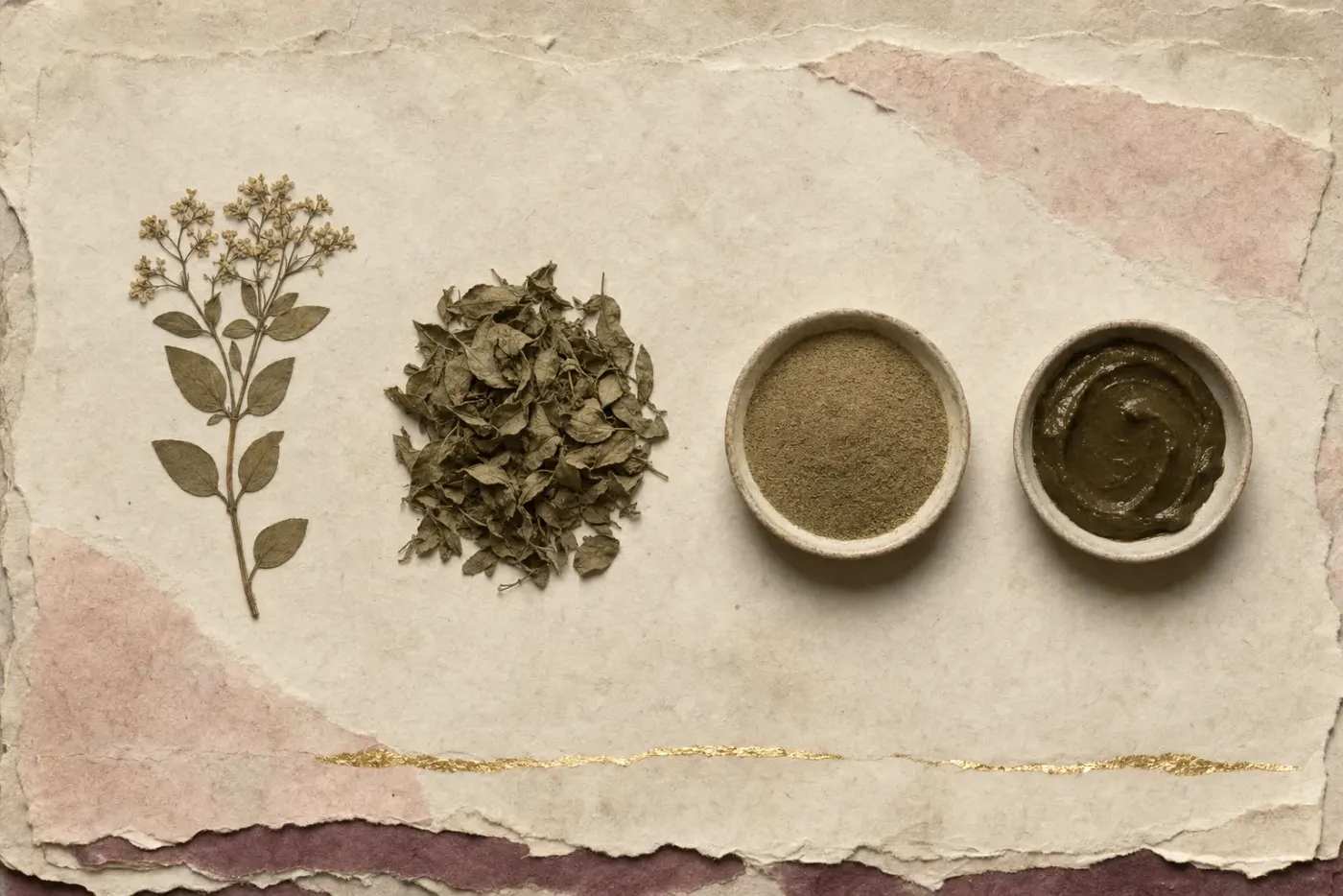
In short
Linnaeus published Lawsonia inermis in Species Plantarum in 1753 and Lamarck published Lawsonia alba in 1792; the US colour-additive regulation for henna defines it by Lamarck’s later name while the EU scientific committee’s opinion uses Linnaeus’s earlier one.
- 12min read
- 6chapters
- 8sources

Vivien
Your guide through time
Listen to this essay
6 min listenVivien reads our essays aloud, word for word — every date and every name in its place — so you can listen the way you would be walked through a gallery.
An AI voice, designed for History of Makeup
Binomial nomenclature exists to make sure that two people discussing a plant are discussing the same plant. It works well, and it does not work perfectly, and henna is a good place to watch the seam.
Linnaeus published Lawsonia inermis in Species Plantarum in 1753.[1] Lamarck published Lawsonia alba in the Encyclopédie méthodique in 1792.[2] Both names are for henna, and modern regulators use both.
Which Name Has Priority
Botanical nomenclature settles competing names by publication date, so of these two the 1753 name is the earlier by thirty-nine years and the 1792 name is the later.[3]
The dates are precise because the system requires them to be: the Linnaean name is dated 1 May 1753 and the Lamarck name 13 February 1792, both verifiable in the standard index of published plant names.[4]
Eight Names, One Genus
The genus has accumulated eight published binomials: inermis and spinosa from Linnaeus in 1753, achronychia in 1782, falcata in 1790, alba and purpurea in 1792, falcifolia in 1812, and coccinea with no year given in the record.[5]
That is a count of naming events rather than of plants. The index used here lists published names and is not a list of accepted species, so the eight record eight occasions on which somebody published a name in this genus — which is a fact about botanists.[5]
It is also a fact about how European botany worked. Specimens reached Paris and Uppsala from several directions at once, often without reliable notes on where they came from, and a describer with a dried branch in front of him had no way to know that somebody else had already named the same plant.[5]
Two regulators, one plant, two different Latin names. Both are correct citations of something.
What the Regulators Chose
The United States colour-additive regulation defines henna as the dried leaf and petiole of Lawsonia alba Lam. — the 1792 name — and restricts its use to hair, excluding eyelashes, eyebrows and the eye area, with required label warnings.[6]
The European scientific committee’s 2013 opinion on henna is titled for Lawsonia inermis — the 1753 name — and gives the lawsone content of the leaf, the hair-dye conclusion and the stated limits of its assessment.[7]
Why This Is Not a Technicality
Because regulation is searched by name. A supplier, a formulator or an importer checking whether a material is permitted looks up the name on the label, and two legitimate names for one plant means two lookups that a careless search will not connect.[8]
Both instruments are otherwise emphatic about scope. The American rule confines henna to hair and excludes the eye area explicitly; the European opinion is a hair-dye assessment and states its own limits, including body-paint use and the genotoxicity of lawsone.[9]
The Name That Is Not a Plant at All
The serious modern hazard is a paste sold as black henna, and the harm in it is not from the plant. The documented pattern is p-phenylenediamine sensitisation from such pastes, and no European restricted-substances entry authorises p-phenylenediamine for application to the skin.[10][11]
So the naming problem has a much harsher counterpart in the market. A regulated botanical name covers a leaf that stains brown-red slowly; the product doing the damage borrows the word and contains something the same regulator permits only in oxidative hair dye, and for eyelash products only under professional use.[11]
The naming problem and the adulteration problem therefore compound each other. A consumer who looks up henna finds a regulated leaf with a long safe record, and the paste that caused the injury was never that leaf — it only shared the word.[10]
What Is Not Known
Which of the eight published names any modern treatment accepts is not established by the index used here, which records publication rather than status. That question needs a taxonomic source and has not been answered in this article.[12]
How old the practice is remains open too. Henna-dyed hair survives on Egyptian mummified remains, probably dyed at the time of embalmment, and the popular chronologies of henna body art are documented as unreliable — no earliest date for it is established here.[13][14]
Nor does this article establish why the two regulators diverged. It may be inheritance from older instruments, it may be the source each one worked from, and the reason is not in either document.[13]
Sources
- [1, 3]Species Plantarum Laurentius Salvius, Stockholm, 1753.View source (opens in a new tab) Accessed 2026-09-24.
- [2, 4]Encyclopedie methodique: Botanique 1792.View source (opens in a new tab) Accessed 2026-09-24.
- [5, 12]Published names in the genus Lawsonia Royal Botanic Gardens Kew, Harvard University Herbaria and Australian National Herbarium.View source (opens in a new tab) Accessed 2026-09-24.
- [6, 8]21 CFR 73.2190: Henna Electronic Code of Federal Regulations, Title 21, Part 73, Subpart C, 2026.View source (opens in a new tab) Accessed 2026-09-22.
- [7, 9]Opinion on Lawsonia inermis (Henna), COLIPA no. C169, SCCS/1511/13 European Commission, Directorate-General for Health and Food Safety, 2013.View source (opens in a new tab) Accessed 2026-09-22.
- [10, 14]The Geographies of the Black Henna Meme Organism and the Epidemic of Para-phenylenediamine Sensitization: A Qualitative History PhD dissertation, Department of Geography, Kent State University, 2015.View source (opens in a new tab) Accessed 2026-09-22.
- [11]Annex III (restricted substances) to Regulation (EC) No 1223/2009 on cosmetic products, consolidated text of 3 December 2020 Official Journal of the European Union (consolidated version 02009R1223-20201203), 2020.View source (opens in a new tab) Accessed 2026-09-22.
- [13]The henna plant: transcending time, religion and culture Natural History Museum, London, 2026.View source (opens in a new tab) Accessed 2026-09-22.
Filed under