The Arsenic Wafers: What Is Actually True
Arsenical complexion products existed and were sold. Almost everything else usually said about them is later embroidery.
In short
Arsenical complexion wafers were genuinely manufactured and sold in the nineteenth century, but the widely repeated image of their ubiquity is a later exaggeration: the substance was real and its prevalence has been consistently overstated.
- 12min read
- 6chapters
- 3sources

Vivien
Your guide through time
Listen to this essay
5 min listenVivien reads our essays aloud, word for word — every date and every name in its place — so you can listen the way you would be walked through a gallery.
An AI voice, designed for History of Makeup
This is the single most repeated fact about Victorian cosmetics, and it arrives in a standard form: Victorian women ate arsenic wafers to achieve a fashionable pallor, and many of them died of it. The first half of that sentence is true of some women. The second is very largely invention.
The distinction matters more here than in most places on this site, because the exaggerated version is doing a job — it makes the past look stupid, which is comfortable, and it obscures a more uncomfortable continuity with the present.[1]
What Is Established
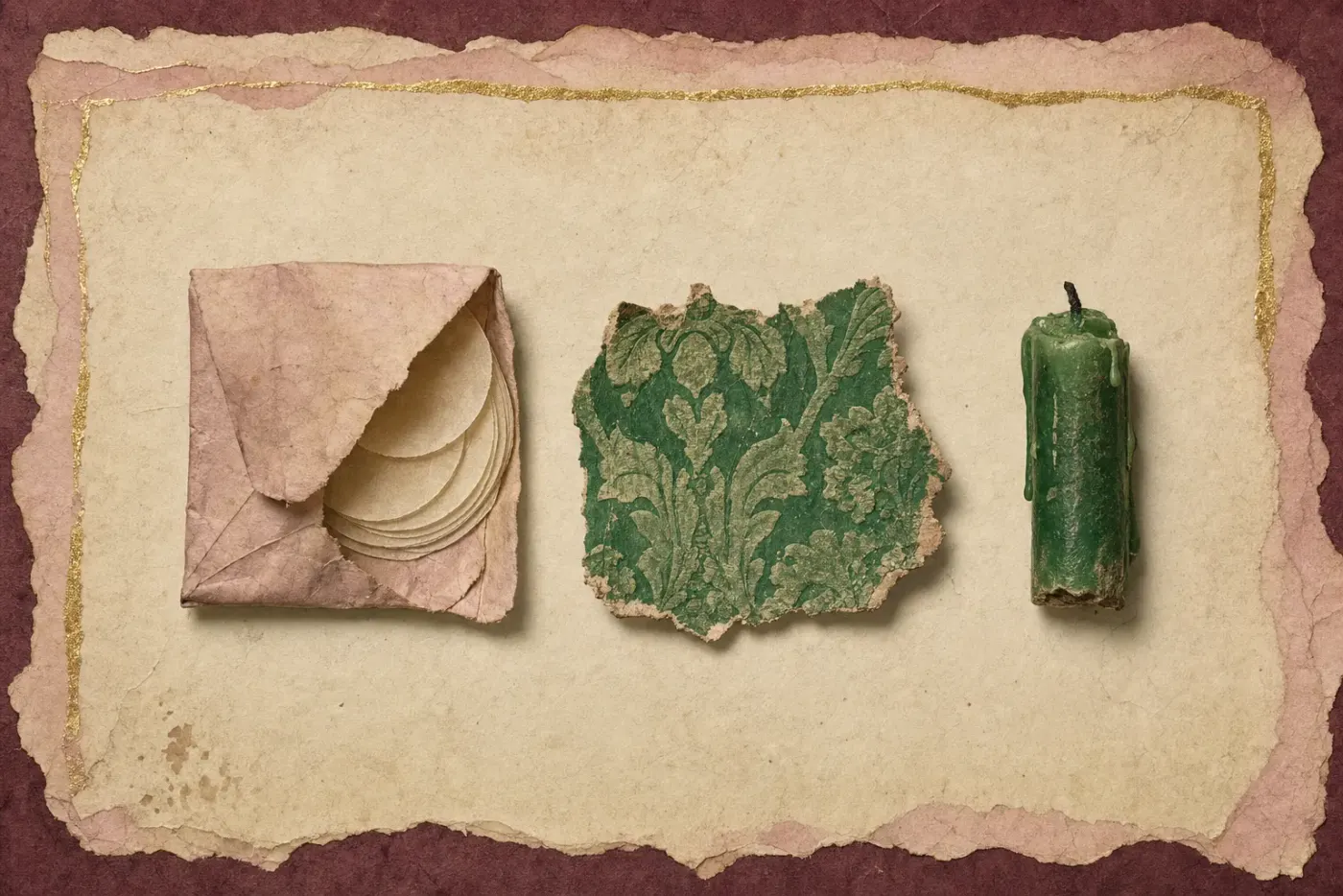
Arsenic was everywhere in nineteenth-century Britain, and not principally in cosmetics. It was in wallpaper pigment, in fabric dye, in candles, in artificial flowers, in food colouring and in rat poison sold over the counter. Domestic exposure was genuine, widespread and frequently accidental.[2]
Against that background, a trade in arsenical complexion preparations is unremarkable rather than shocking. Such products were manufactured and advertised, and they promised the pale, clear, translucent skin that the period admired.[2]
The pharmacology behind the promise is real and unpleasant. Chronic low-dose arsenic exposure can produce changes in the skin, and a preparation that altered the complexion was therefore not simply a fraud — which is precisely why the trade was durable. A product that does nothing is abandoned; a product that does something at a cost the buyer cannot see is bought again.[2]
What Is Exaggerated
The claim that fails is the claim of ubiquity. The complexion-wafer trade was real and it had limits, and the picture of a whole century of women routinely dosing themselves is a later embellishment rather than a finding.[3]
The embellishment has a recognisable shape. A documented product becomes a common product; a common product becomes a universal practice; a universal practice acquires a death toll. At no point in that progression does new evidence arrive — each step is a retelling.[3]
A documented product becomes a common product; a common product becomes a universal practice; a universal practice acquires a death toll.
Why It Was Contested At the Time
The most useful correction to the legend is that Victorians were not ignorant of the danger. Arsenic was a recognised poison, its effects were understood, and the domestic arsenic problem was a subject of sustained public argument, medical comment and press campaigning through the period.[4]
The products were sold into an informed argument rather than into a vacuum — which is what makes them a story about advertising and regulation rather than a story about credulity.[4]
Press campaigning on domestic arsenic ran for decades and named specific hazards, and the medical press returned to the subject repeatedly. A buyer in the 1870s could have known that arsenic was dangerous and still have bought a complexion wafer, for the same reasons people now buy things they have read warnings about: the harm is deferred, invisible and statistical, and the benefit is immediate and looks back at them from a mirror.[4]
What the Law Could and Could Not Reach
The Pharmacy Act 1868 restricted the keeping and sale of scheduled poisons to registered pharmaceutical chemists — a real instrument, aimed at who might sell a substance.[5]
It did not regulate what a cosmetic could contain, and that gap is the whole regulatory story of the period. A product could be framed as a complexion remedy, sold through channels the Act did not reach, and remain outside any requirement to declare what was in it.[5]
The Uncomfortable Part
The reason the exaggerated version is so durable is that it lets the episode be filed as a curiosity. Victorians did an absurd thing; we do not; the matter is closed.
The accurate version does not close. A recognised hazard, sold as a beauty preparation, into a market that had been told about the risk, under a regulatory regime that governed sale rather than composition — that is not a nineteenth-century configuration. Skin-lightening preparations containing mercury are still seized from sale in multiple jurisdictions, for the same reasons and through the same gap.[6]
What Is Not Known
No reliable figure exists for how many people used arsenical complexion products, or for how many were harmed by them specifically rather than by the many other domestic arsenic sources. Separating cosmetic exposure from wallpaper, dye and food colouring is not possible retrospectively.[7]
Any article that gives a death toll for arsenic cosmetics should be read as citing a retelling rather than a source.[7]
Sources
- [1, 2, 3, 4, 7]The Arsenic Century: How Victorian Britain was Poisoned at Home, Work, and Play Oxford University Press, 2010.
- [5]Pharmacy Act 1868 (31 and 32 Vict. c. 121) legislation.gov.uk, The National Archives, 1868.View source (opens in a new tab) Accessed 2026-09-22.
- [6]Hope in a Jar: The Making of America’s Beauty Culture Metropolitan Books, 1998.
Filed under