Mass Market, Counterculture and Self-Expression
Ninety years in which makeup became an industry, a battleground and, eventually, something people chose for themselves.
HOM · Era1930 – TodaySelf-Expression
All of The Modern Era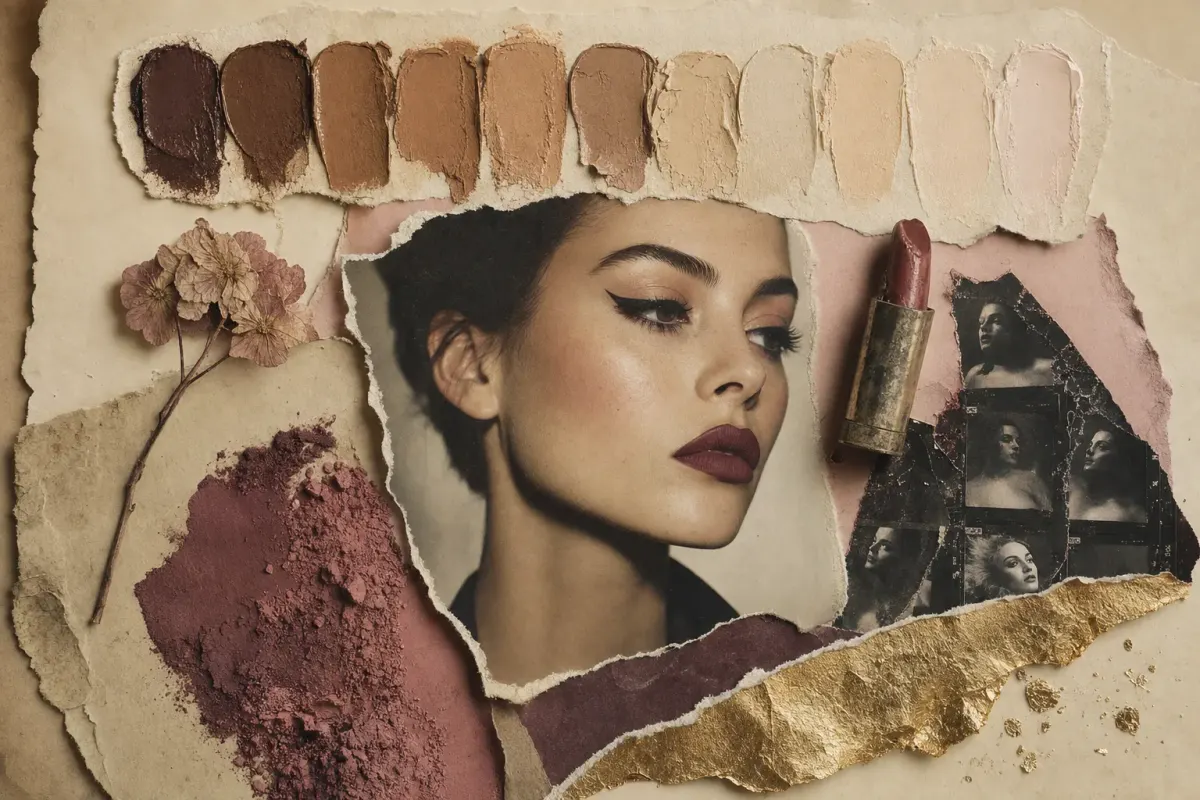
In short
The modern era turned makeup into an industry with seasons, a counterculture to argue with, and — after decades in which complexion products were formulated almost exclusively for white skin — a shade-range standard that only became general in the late 2010s.
- 11min read
- 6chapters
- 6sources
Vivien
Your guide through time
Listen to this essay
8 min listenVivien reads our essays aloud, word for word — every date and every name in its place — so you can listen the way you would be walked through a gallery.
An AI voice, designed for History of Makeup
The 1920s settled the question of whether makeup could be worn openly. Everything after it is an argument about what it is for.
Across the next ninety years cosmetics became one of the largest consumer industries in the world, acquired a seasonal fashion cycle, were denounced as a tool of oppression and reclaimed as a tool of self-definition, and finally had to answer a question the industry had spent most of a century avoiding: who, exactly, were these products made for?
The Screen Sets the Face
Cinema had shaped makeup since the 1910s, but colour film changed the requirement entirely. Max Factor developed Pan-Cake in the 1930s specifically for Technicolor, which punished the heavy greasepaints that had worked under black and white — and then discovered that the actresses were taking it home.[1] Bennett dates the development to 1936-1938, its first use on screen to Vogues of 1938 and the consumer launch to that same year; 1937 also circulates as the launch date, and the two are not reconciled by anything cited here.[3]
The pattern set there ran for decades: a technical solution developed for the camera, then sold to the public on the strength of whose face it had been on. Professional makeup artistry and consumer cosmetics stayed coupled through television, through the beauty magazine, and eventually through the front-facing phone camera — which imposed its own requirements, and produced its own techniques, exactly as Technicolor had.[2]
Colour as a Season
The commercial innovation of the mid-century was not a product. It was a calendar.
Charles Revson built Revlon on the insight that nail enamel and lipstick could be sold the way clothes were sold: in coordinated shades, twice a year, with names and campaigns attached. The 1952 "Fire and Ice" campaign is the landmark — a shade, a mood and a quiz about what kind of woman the reader was, all in service of persuading her that last season's red was last season's.[4]
This did two things at once. It made cosmetics a fashion category rather than a chemist's category, and it created the obsolescence that makes a repeat-purchase industry possible. Every seasonal colour story since — every autumn palette, every shade of the year — descends directly from it.[5]
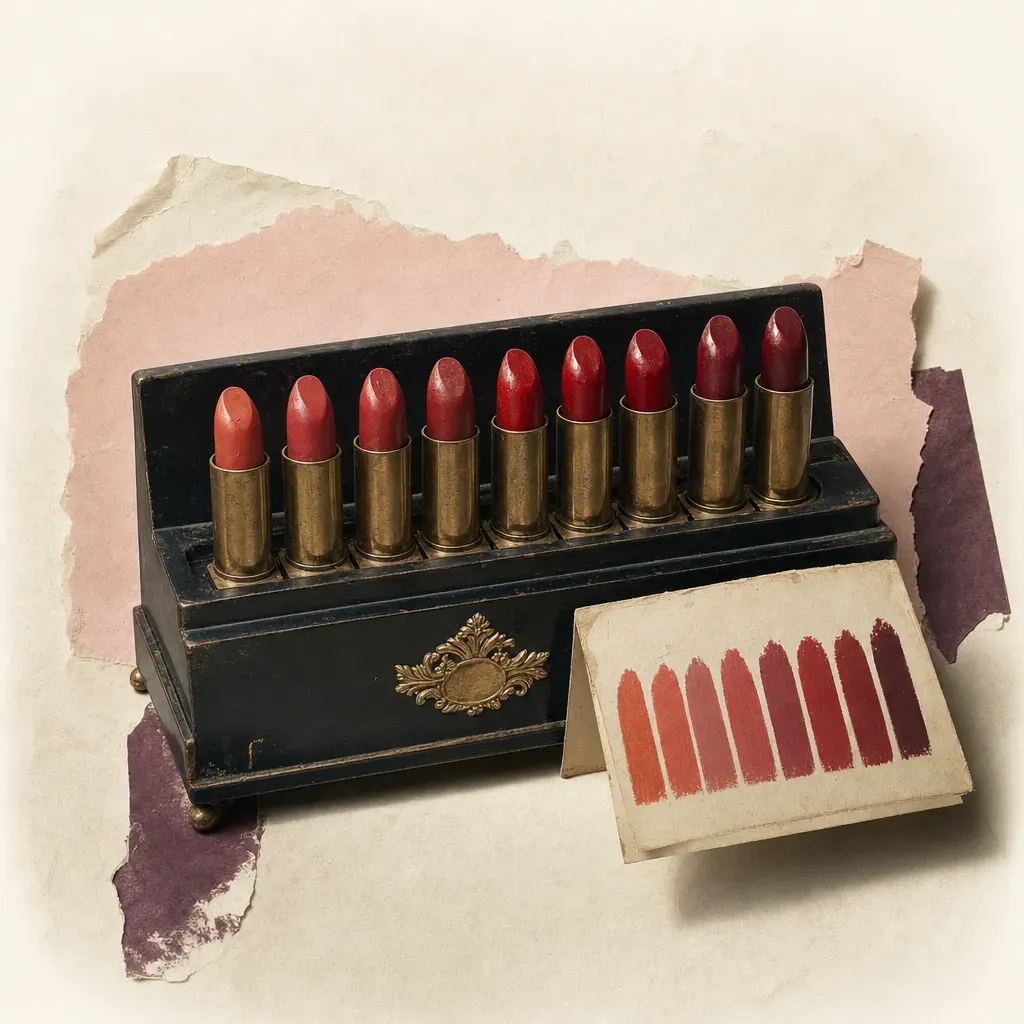
In the factory, we make cosmetics; in the store, we sell hope.
The Argument
By the 1960s makeup was contested ground. The decade's own look was youthful and graphic — the eye carrying everything, the mouth pale — and it sat alongside a counterculture that treated cosmetics as artifice to be rejected, and a feminist critique that read the whole industry as a tax on women's time, money and self-regard.[7]
The critique was not answered so much as absorbed. The industry's response, developed over the following decades, was to reposition makeup as self-expression: not something done to a woman for someone else's benefit, but something she chose, for herself, as a form of authorship. Whether that is a genuine reframing or a more sophisticated sale is a question the industry is not well placed to answer, and it remains live.[8]
What is clear is that the argument never resolved, and that both positions are still on sale. The "no-makeup" look and the full editorial face are marketed by the same houses, in the same season, to the same customer.
Who It Was Made For
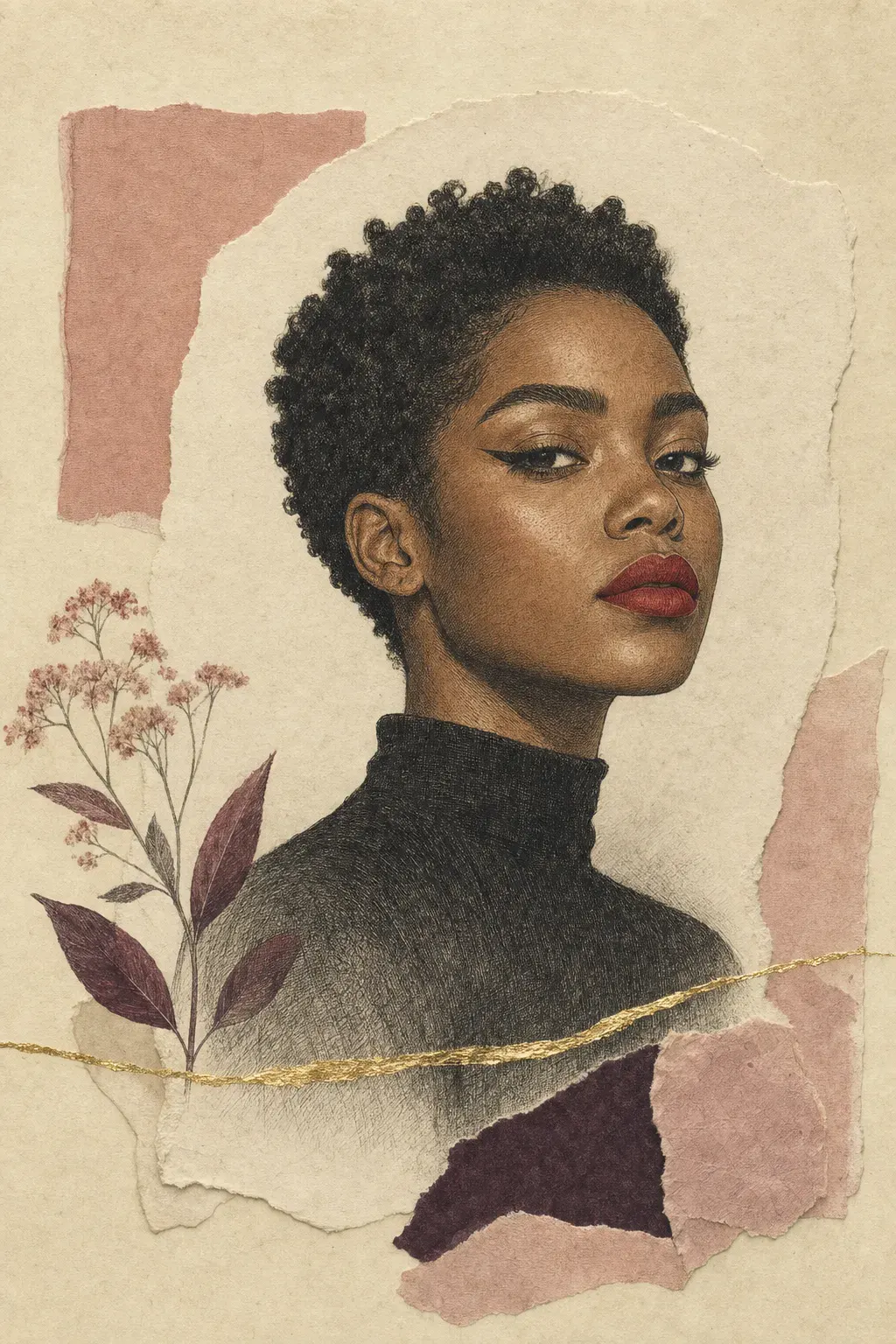
For most of this period the mainstream industry's complexion products were formulated for white skin. This was not an oversight that nobody noticed; it was the market the major houses had decided to serve, and it persisted long after it could be defended.[9]
Where the mainstream would not sell, others did. Black-owned companies — among them Madam C. J. Walker's earlier enterprise, and later firms such as Fashion Fair, founded in 1973 — built businesses on the customers the majors ignored, and did so with far less capital and far less shelf space.[9] Their existence is the clearest evidence that the demand was always there.
The professional artistry end moved first. Bobbi Brown's 1991 launch — ten lipsticks built around what skin actually looks like rather than around a seasonal trend — and Kevyn Aucoin's work through the 1990s reframed the question as one of matching rather than covering.[10] But the decisive commercial shift came much later: a 2017 foundation launch with forty shades, and the sales that followed it, established a range that the rest of the industry rapidly matched.
It is worth being plain about the timing. The chemistry to make those shades had existed for decades. What changed was not the technology.
What Regulation Did and Did Not Do
The twentieth century brought the first real oversight of what could go into a cosmetic. In the United States, colour additives permitted in cosmetics are now listed explicitly, with some requiring batch certification; the European Union operates a separate and in several respects stricter regime.[11]
Two things follow from this, and they pull in opposite directions. The materials that defined every earlier era of this archive — lead white, mercury compounds, arsenical preparations — are no longer legally sold as cosmetics in these markets, which is a genuine and large improvement. But regulation is territorial and it changes, so a statement that an ingredient is "banned" is meaningless without naming a jurisdiction and a date.
This archive's ingredient dictionary is built on that principle: every status carries the instrument it comes from and the date it was checked. Where no regulatory dataset has been loaded, the entry says so instead of implying an authority it does not have.
Where It Leaves Us
The modern era ends the story with an inversion worth noticing.
For most of recorded history, cosmetics were a specialist manufacture with a narrow distribution and a contested moral status. They are now ubiquitous, cheap, regulated, and — in the sense that has taken longest to arrive — available in a range that fits more than one kind of face.
What has not changed is the thing every era in this archive shares. A painted face is still read as a statement, and people still disagree, loudly, about what it says. The materials have been replaced several times over. The argument is the same one the Roman satirists were having.
Sources
- [1]Max Factor: The Man Who Changed the Faces of the World Arcade Publishing, 2008.
- [2, 5, 8, 10]Beauty Imagined: A History of the Global Beauty Industry Oxford University Press, 2010.
- [3]Max Factor (1930-1945)View source (opens in a new tab) Accessed 2026-09-22.
- [4, 6]Fire and Ice: The Story of Charles Revson William Morrow, 1976.
- [7, 9]Hope in a Jar: The Making of America’s Beauty Culture Metropolitan Books, 1998.
- [11]Color Additives Permitted for Use in Cosmetics, 21 CFR Parts 73 and 74View source (opens in a new tab) Accessed 2026-09-22.
Continue in The Modern Era
Self-Expression
Browse all 38 articles