Estée Lauder and the Free Sample
Her company's history credits her with the gift with purchase. Her unauthorised biographer disputed much of the rest.
HOM · Person? – 2004Co-founder of the Estée Lauder Companies
In short
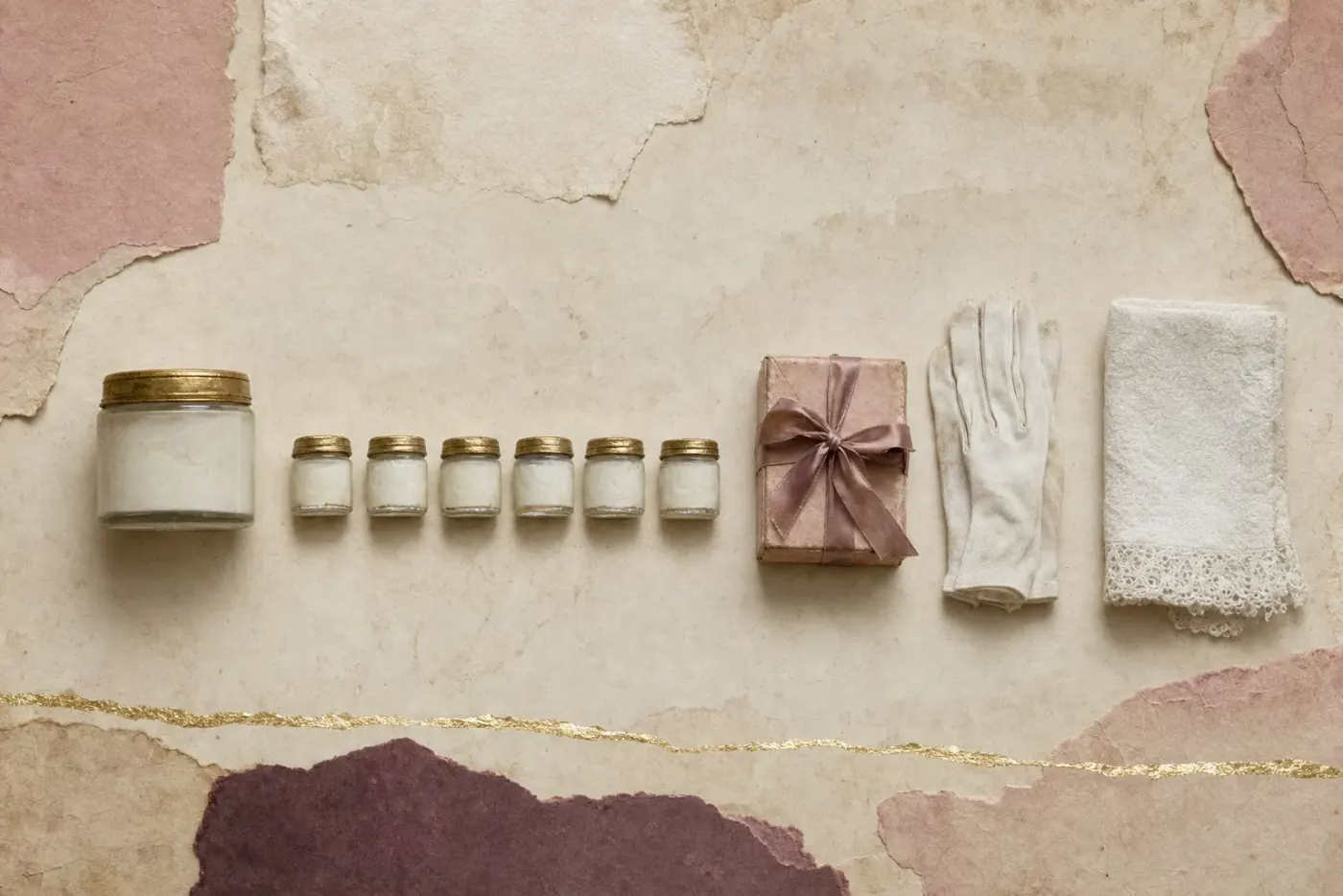
Estée and Joseph Lauder launched their company in 1946; by the company's own account a first eight-hundred-dollar order from Saks Fifth Avenue followed a year later, and her habit of giving a free sample with a purchase set an industry practice.
- 3min read
- 4chapters
- 5sources
Vivien
Your guide through time
Listen to this essay
3 min listenVivien reads our essays aloud, word for word — every date and every name in its place — so you can listen the way you would be walked through a gallery.
An AI voice, designed for History of Makeup
The company that bears her name dates its beginning to 1946, when Estée Lauder and her husband Joseph officially launched it. A year later, by the company's own account, Saks Fifth Avenue placed a first major order worth eight hundred dollars.[1]
Most of what is commonly repeated about her comes from that account, or from her own telling of her life. Both are primary sources about how she wished to be remembered, and at least one biographer did not remember her the same way.[2]
Selling by Touch
The company's history has her selling by touch before she sold by advertising, demonstrating her preparations on women sitting under the dryers in beauty salons, and later attending the opening of nearly every new store that stocked her products, staying a week to teach the women who would sell them.[3]
The method is one this site traces through the counters of the 1920s, advice given in person as the means of the sale.[4] Her contribution, on this account, was to make it a system that could be repeated in store after store.
The Free Sample
The practice most often credited to her is the gift with purchase. The company's own wording is precise: she offered customers a free sample when they bought a product, and the company credits that with establishing gift with purchase as an industry practice.[5]
The distinction between a sample and a gift matters, and so does the source. A company's account of its founder is evidence of what the company wants believed, not an independent history of a sales technique, and its claim to have established an industry practice has not, in the sources cited here, been tested against what other houses were doing at the time.[5]
A company's account of its founder is evidence of what the company wants believed.
Two Versions
In 1985 Lee Israel published an unauthorised biography, Estée Lauder: Beyond the Magic.[6] As Publishers Weekly summarised its charges, Lauder had failed to admit her age and hedged about her background, and, more seriously, had not compensated the chemist uncle who invented the cream on which her company was built.[7]
This entry does not adjudicate between the versions. It records that they exist, and that the most often repeated facts about her origins come from the side with the strongest interest in them.
What Is Not Known
Her date of birth, for one; the dispute over her age is part of the record.[8] How much of the early formulation was hers, her uncle's or later chemists' is another. Estée Lauder died in 2004, and the company she founded became one of the largest in the industry, which is the one fact about her that neither version disputes.[9]
Sources
- [1, 3, 5]Our Founder The Estee Lauder Companies.View source (opens in a new tab) Accessed 2026-09-22.
- [2, 7, 8]Estée Lauder: Beyond the Magic, by Lee Israel (review) Publishers Weekly, 1985.View source (opens in a new tab) Accessed 2026-09-25.
- [4]Hope in a Jar: The Making of America’s Beauty Culture Metropolitan Books, 1998.
- [6]Estée Lauder: Beyond the Magic — An Unauthorized Biography Macmillan, New York, 1985.
- [9]Beauty Imagined: A History of the Global Beauty Industry Oxford University Press, 2010.
Filed under