Flat-top buffing brush
A dense brush cut straight across, for buffing foundation into the skin until it looks like skin. How to choose and use one, and why it is a brush of the synthetic age.
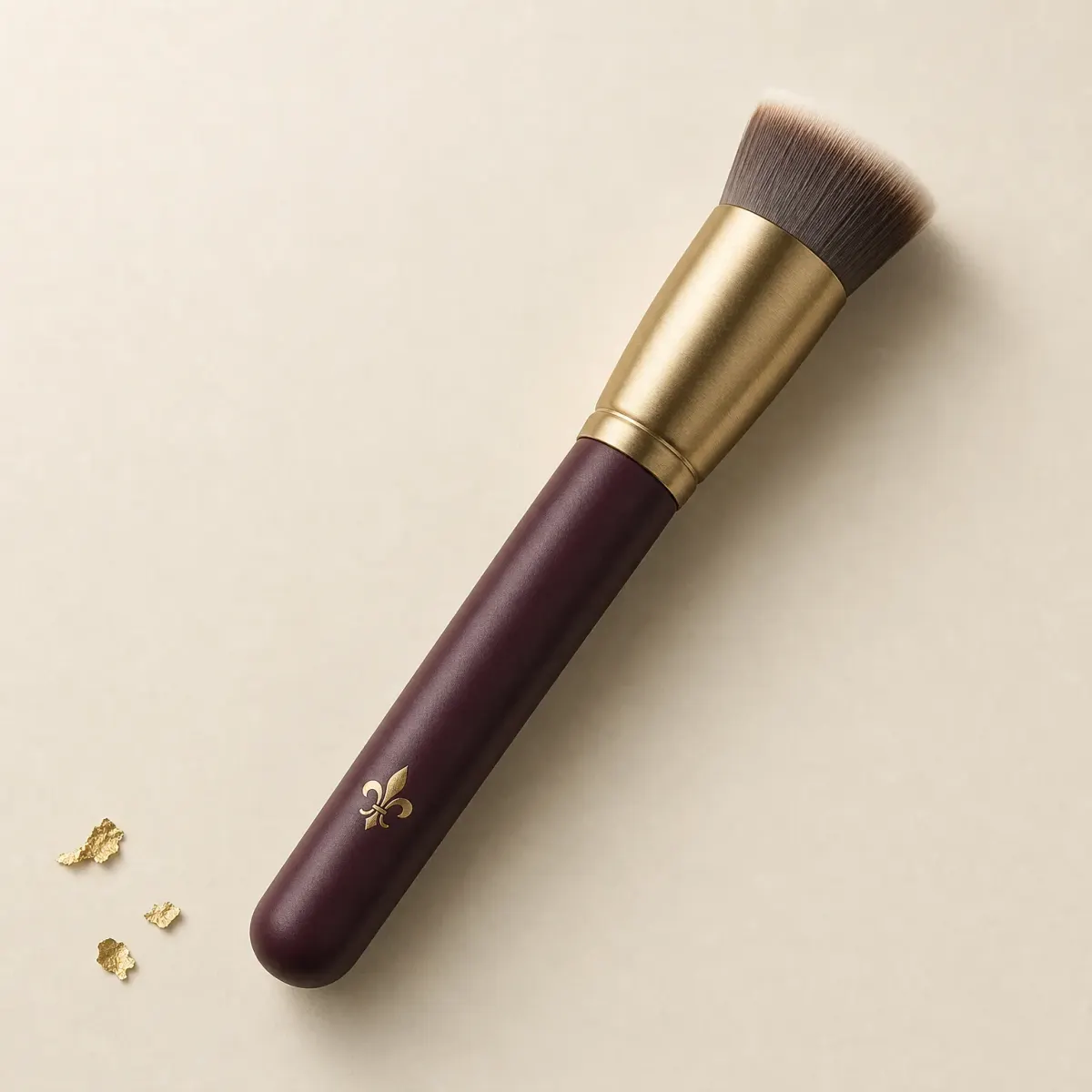
A flat-top buffing brush is a dense brush of short fibres cut straight across the top, used to buff liquid, cream or powder foundation into the skin in small circles for even, streak-free coverage.
Our picks
Chosen from brushes whose makers describe them as flat-topped or flat-headed for buffing, across density, size and budget, from drugstore to prestige. Fewer prestige houses make the shape than make domed or paddle foundation brushes, which appear on those pages. Each opens at the maker’s own shop.
Affiliate links — we may earn a commission at no extra cost to you. How this works
Flat-headed bufferPrestige Charlotte Tilbury
Magic Complexion Brush
A flat-headed synthetic brush made for buffing foundation in, sold as spreading it evenly for an air-brushed-looking finish.
- Flat brush head
- Synthetic
- For buffing
Reference flat-topMid-range Sigma Beauty
F80 Flat Kabuki Brush
The house’s best-selling foundation brush by its own account: a dense, flat synthetic head for buffing liquids and creams to a smooth, buildable finish.
- Dense, flat head
- Liquid and cream
- Medium to full
Round flat-topDrugstore Real Techniques
Glow Round Base Makeup Brush
A round, flat-topped head that buffs foundation over large areas and into the hard-to-reach spots of the face.
- Flat top
- Dense synthetic
- Liquid and cream
For powderMid-range IT Cosmetics
Heavenly Luxe Flat Top Buffing Foundation Brush #6
The exception: a densely packed flat-top sold for buffing loose and pressed powder foundations rather than liquids.
- Flat top
- Powder foundation
- Synthetic
All-purposeDrugstore wet n wild
Flat Top Brush
An inexpensive flat-top with densely packed bristles that picks up any formula, from liquid to powder.
- Flat top
- Densely packed
- Liquid to powder
Extra largePrestige Natasha Denona
No. 22 Large Foundation Brush
An extra-large flat-top of short, dense bristles, for buffing foundation over the whole face quickly and without streaks.
- Flat-topped
- Densely packed
- Extra large
PrecisionMid-range Bdellium Tools
Golden Triangle 957 Precision Kabuki
A soft, dense, flat-bristled head sold as a precision kabuki, ideally for buffing liquid foundation.
- Flat, dense head
- Vegan synthetic
- For liquids
Very denseDrugstore Morphe
M106 Flat-Topped Foundation Brush
A very dense, fanned flat-top for concentrated coverage: pick up on the flat, press on, then buff.
- Flat-topped
- Very dense
- Creams and liquids
Mineral houseMid-range Glo Skin Beauty
105 Flat-top Kabuki Brush
A densely packed flat-top from a mineral-makeup house, for medium to full coverage with any form of foundation.
- Flat top
- Densely packed
- Liquid, cream or powder
Small flat-topDrugstore ColourPop
Stippling Brush
Sold as a stippling brush, but short and flat-topped by its maker’s own description, with no second fibre: a small flat-top for foundation, blush and concealer.
- Short, flat top
- Vegan
ProfessionalMid-range Graftobian
OMNIA Flat Kabuki Brush
From a make-up house that works for film and the stage: bristles that flare into a flat top, for buffing foundation to a satin finish.
- Flat top
- Satin finish
A flat-top buffing brush is a round, dense bundle of short fibres cut straight across, like a cylinder sliced off at the end, set on a long handle. The flat face meets the skin all at once, so foundation is pressed and polished in rather than painted on, and the result is smooth, fairly full coverage without the stripes a flat paddle brush can leave. Makers often sell it as a flat kabuki or a foundation buffer.
Its neighbours differ in small but useful ways. A kabuki is domed and squat, made above all for powder. A domed buffing brush has the same density with a rounded top, which slips more easily into the sides of the nose. A duo-fibre stippling brush can be flat-topped too, but its longer, sparser outer fibres dot product on for a sheerer finish. The flat-top is the one for coverage.
Choosing one
Density decides coverage. The more tightly packed the head, the more foundation it holds and presses into the skin, and the more it blurs; a looser flat-top leaves a lighter layer. Size decides speed. A broad head covers the cheeks and forehead in a few passes; a smaller one works around the nose, the eyes and a blemish, and some flat-tops come in mini versions for exactly that.
Choose synthetic fibre. It is not porous, so it does not drink liquid foundation, and it can be cut cleanly to shape, which is all a flat top is.[1] Most flat-tops are made for liquids and creams, but not all: IT Cosmetics sells its #6 for loose and pressed powder foundations. The name on the handle matters less than the shape. ColourPop calls its small flat-top a stippling brush, Charlotte Tilbury calls its own a complexion brush, and Sigma, Glo, Bdellium and Graftobian all call theirs kabukis.
Match the brush to the foundation, too. Thin, fast-setting long-wear liquids need a brush that moves quickly, so work one area of the face at a time before the formula sets; thicker creams and sticks want a denser, firmer head that can push them into the skin; and with a powder foundation, a dense flat-top presses a fuller layer onto the skin than a loose powder brush can.
How to buff
Dot foundation on the forehead, cheeks and chin, or put a little on the back of your hand and touch the brush to it. Press the flat face onto the skin first to set the colour down where it is needed, then buff in small circles, working outward so that the edges of the face get least. Keep the brush flat to the skin: tilting it drags the edge and leaves marks. If the foundation starts to look heavy, the brush is overloaded; wipe it on a tissue rather than pressing harder.
For a lighter finish, use less product rather than less pressure, and finish with a damp sponge pressed over the face. For more coverage, let the first layer set for a minute and buff a second, thin one only where it is needed, usually around the nose, the chin and any redness.
A dense brush holds on to what it is given. Clean a flat-top after each use with a brush cleanser or mild soap, working from the base of the fibres out, and dry it lying flat so the head keeps its edge and water does not reach the glue in the ferrule.
Where it came from
The flat-top belongs to the age of synthetic fibre. As late as 1997, a patent filed by DuPont could say that natural bristles such as goat hair had traditionally been used more than synthetic filaments of nylon or polyester in cosmetic brushes. The synthetics were stiffer, and those made fine enough to feel soft picked up too little product and simply “dump” it on the skin; DuPont’s answer was a softer filament, crimped to copy the wave of goat hair.[2]
Two decades later the argument had turned. A patent filed in 2019 by the cosmetic-packaging maker HCT, granted in 2021, sets out the case for synthetic fibre: hair is porous and soaks up liquid and cream, “which may lead to clumping and waste”, while synthetic fibres are made to exact sizes, give a streak-free finish with liquids and can be cut to precise shapes. It names Taklon, nylon and PBT among the materials.[3] Makeup artists put it more plainly. “We’ve mimicked real hair with synthetic bristles so you can use them with creams, powders and liquids – something you can’t do with real hair brushes,” the sisters behind the Real Techniques brushes told Marie Claire in 2015.[4]
A flat, cut top is exactly what the older Japanese tradition avoids. Hakuhodo, the brush maker in Kumano, distinguishes a “brush”, made by trimming the tips of bundled hairs, from its own fude, shaped without cutting so that each hair keeps its natural tip. In 2023 it told Nippon.com that it was developing synthetic fibres, because concern for small animals had made hair other than that of livestock such as goats, horses and pigs harder to use.[5] The flat-top is the other way of making a brush, and the one that liquid foundation called for.
The techniques
- Buff
- Work in small circles with a dense brush until no edge remains.
- Stipple
- Bounce the tips of the brush against the skin for an airbrushed, dotted-in finish.
Sources
- [1, 3]US Patent 10,966,513 B2 - Synthetic goat hair brush United States Patent and Trademark Office, 2021.View source (opens in a new tab) Accessed 2026-09-26.
- [2]US Patent 5,976,692 - Natural bristle replacement for cosmetic and other brushes United States Patent and Trademark Office, 1999.View source (opens in a new tab) Accessed 2026-09-26.
- [4]The Pixiwoo Sisters On The Brilliance Of Their New Real Techniques Brushes Marie Claire UK, 4 February 2015, 2015.View source (opens in a new tab) Accessed 2026-09-26.
- [5]Hakuhōdō: Luxury Cosmetic Brushes that Highlight Traditional Japanese Crafts Nippon.com, 28 November 2023, 2023.View source (opens in a new tab) Accessed 2026-09-26.
What it is used with
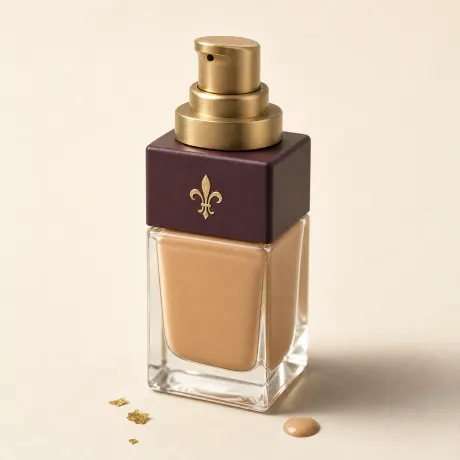
Liquid foundation
The standard base: pigment suspended in a fluid, in shades matched to the skin.
Read the guide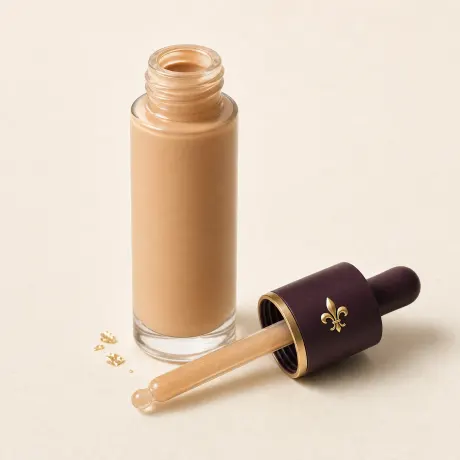
Skin tint
A watery, sheer base that evens tone while letting skin show through.
Read the guide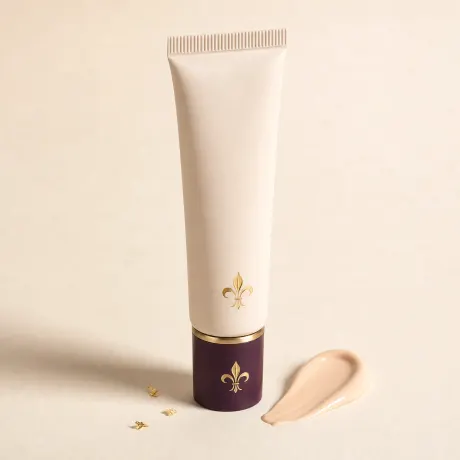
CC cream
A light base built to neutralise redness or sallowness rather than simply cover it.
Read the guide
Cream foundation
A dense, emollient base with high coverage, suited to dry skin and to photography.
Read the guide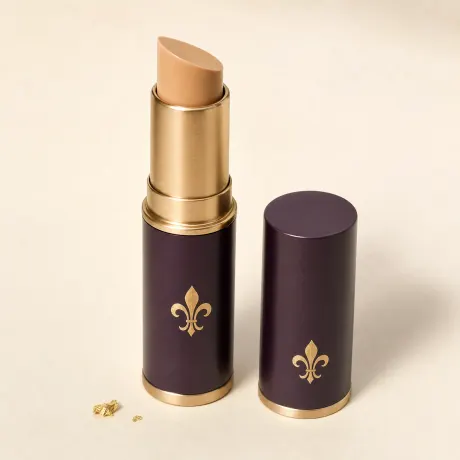
Stick foundation
Cream foundation set into a twist-up stick, for targeted coverage and travel.
Read the guide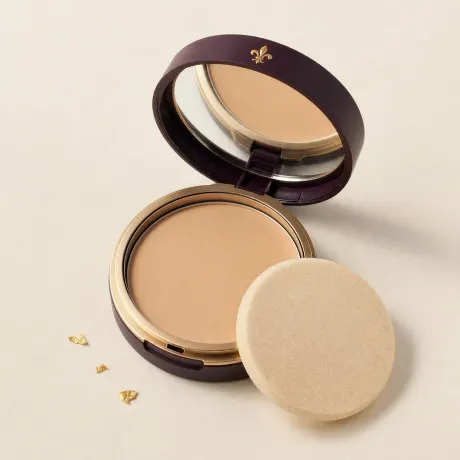
Powder foundation
Foundation pressed into a powder cake, for a quick matte base in one step.
Read the guide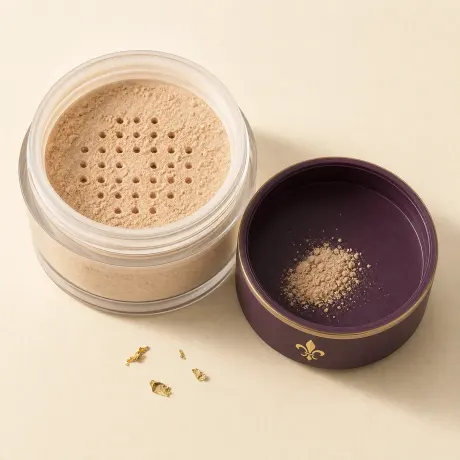
Loose mineral foundation
Foundation as a loose, finely milled mineral powder, buffed in to build coverage.
Read the guide
Other kinds of face brushes
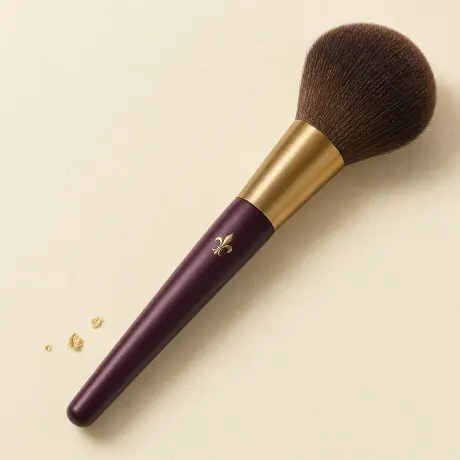
Powder brush
A large, loosely packed, fluffy brush that lays down a veil of powder rather than pushing it in.
Read the guide
Kabuki brush
A squat, palm-sized brush with a very dense dome of short bristles on a stubby handle, for buffing powders and creams into the skin.
Read the guide
Flat foundation brush
A flat synthetic brush with a rounded edge, for painting foundation on like a primer coat.
Read the guide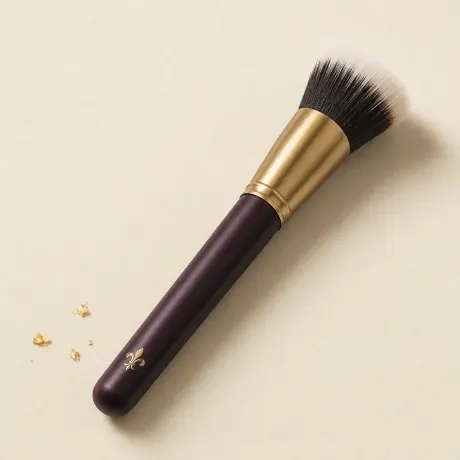
Stippling brush
Two layers of fibre — long and sparse over short and dense — that dot product on for an airbrushed finish.
Read the guide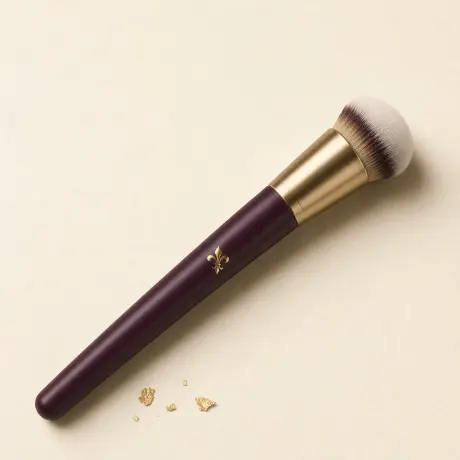
Domed buffing brush
A dense, rounded brush on a full-length handle, for buffing cream and liquid with more control than a kabuki.
Read the guide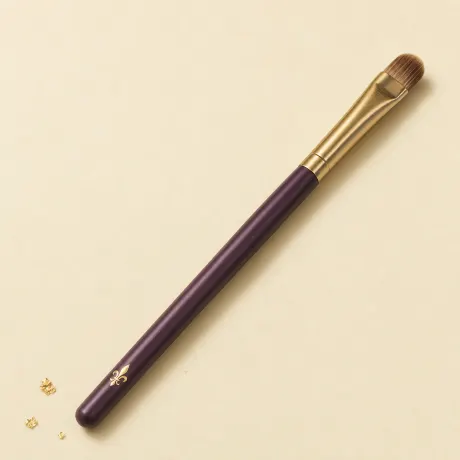
Flat concealer brush
A small, flat, tongue-shaped synthetic brush for placing concealer precisely.
Read the guide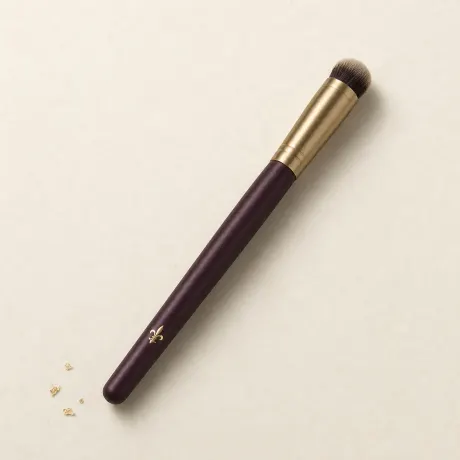
Concealer buffing brush
A small, dense, domed brush — about the size of a fingertip — that buffs concealer into skin.
Read the guide