Powder brush
The largest, softest brush in the kit, made to lay a light veil of powder over the face rather than press it in. How to choose one by fibre and density, how to use it — and how it replaced the hare’s foot.
A powder brush is a large, loosely packed, fluffy brush with a rounded head, used to sweep a thin, even veil of loose or pressed powder over the face rather than pressing it into the skin.
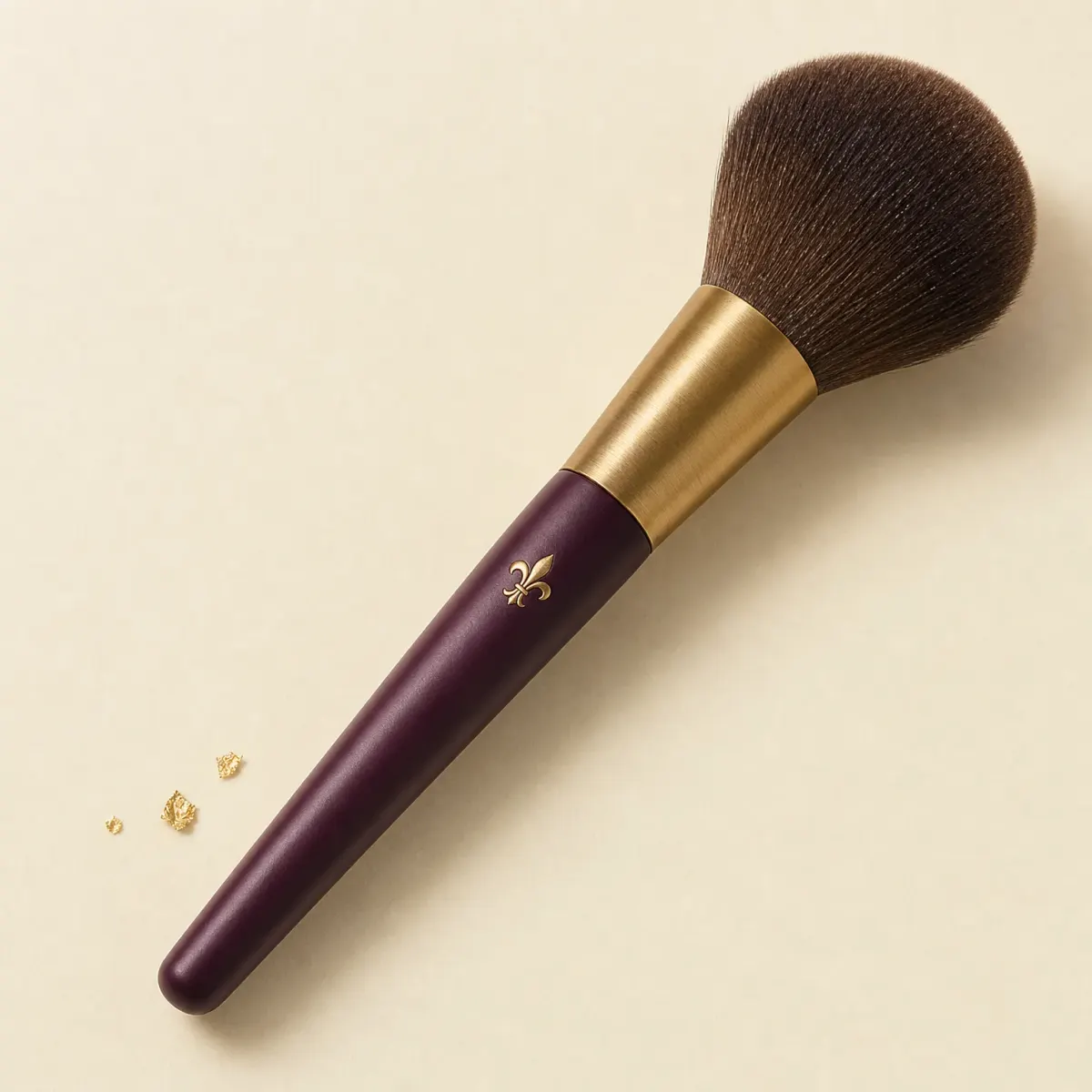
Our picks
Chosen across fibre, from goat hair shaped by hand in Kumano to modern synthetics, across head shape and density, and across budgets from drugstore to prestige. Each opens where its maker sells it: on Amazon where the house sells there, or at its own shop.
As an Amazon Associate I earn from qualifying purchases. Affiliate links — we may earn a commission at no extra cost to you. How this works
Classic domePrestige MAC Cosmetics
150S Large Powder Brush
A full, rounded synthetic head that dusts powder over a broad area in a sheer, well-blended layer.
- Synthetic
- Full, rounded head
- Loose or pressed
Budget fluffyDrugstore EcoTools
Full Powder Brush
A large, fluffy synthetic head on a bamboo handle, for setting a finished face.
- Synthetic Taklon
- Bamboo handle
- Loose or pressed
Goat hairPrestige Hakuhodo
J104BkSLN Powder Round
From the Kumano brush maker Hakuhodo: a round head of goat hair, shaped by hand, for a seamless powder finish.
- Goat hair
- Round head
- Moderate coverage
All-overMid-range Sigma Beauty
F24 All-Over Powder Brush
A large rounded head, sized for all-over powder yet small enough to place blush on the apples of the cheeks.
- Synthetic
- Powder and blush
Curved headPrestige Laura Mercier
Glow Powder Brush
A soft, curved synthetic head made to hug the face, as good with luminous powders as with matte ones.
- Synthetic
- Curved shape
- Luminous finish
Domed budgetDrugstore Real Techniques
Powder Brush
An inexpensive domed synthetic brush for setting powder and bronzer.
- UltraPlush synthetic
- Domed head
- Powder and bronzer
Sheer settingPrestige Bobbi Brown
Sheer Setting Powder Brush
A tapered head of silky fibres that lays down a sheer, even film of setting powder.
- Tapered
- Ultra-silky fibres
- Natural finish
Waved fibresMid-range bareMinerals
Supreme Finisher Brush
A domed brush of waved, densely packed synthetic fibres, for a sheer, even layer of powder or bronzer.
- Synthetic
- Domed
- Powder or bronzer
Double-endedPrestige Hourglass
Veil Powder Brush
Two brushes in one: a large, rounded end for powder all over the face and a small, tapered one for setting under the eyes.
- Double-ended
- Large, rounded end
- Under-eye end
Plush budgetDrugstore wet n wild
Powder Brush
A large, plush head of soft, curved bristles that picks up just enough powder for an even layer.
- Large head
- Curved bristles
Airy veilPrestige Victoria Beckham Beauty
15. Powder Brush
An airy, large round dome made for a light, even veil of powder rather than coverage.
- Airy density
- Large dome
- Loose or pressed
Wooden handleMid-range ILIA
Finishing Powder Brush
A domed, full-bodied head on a wooden handle, for dusting loose or pressed powder into the skin.
- Domed
- Full-bodied
- Vegan
Soft ovalPrestige Natasha Denona
HY-GLAM Powder Brush
An oval head of coated vegan fibres with an airy density, for the lightest application of powder.
- Vegan fibres
- Oval head
- Airy density
Soft syntheticDrugstore NYX Professional Makeup
Pro Powder Brush
An inexpensive soft synthetic brush for an even layer of loose or pressed powder.
- Synthetic
- Loose or pressed
Plush classicPrestige Clinique
Powder Brush
A large, plush brush for a smooth, even dusting of powder, from a house known for skincare.
- Large, plush head
- Loose or pressed
Face and bodyMid-range Bdellium Tools
Golden Triangle 980 Large Powder
A large synthetic powder brush from a professional brush maker, for setting foundation or dusting shimmer onto the collarbones.
- Vegan synthetic
- Face and body
VoluminousPrestige By Terry
Tool-Expert Powder Brush
A generous, fluffy head that picks up a measured amount of powder and spreads it very lightly.
- Fluffy head
- Loose or pressed
Very fluffyDrugstore Morphe
M161 Large Rounded Powder Brush
A full-bodied, very fluffy brush for dusting on setting powder without build-up.
- Very fluffy
- Setting powder
Ultra-plushPrestige Pat McGrath Labs
Skin Fetish: Sublime Perfection Powder Brush
An ultra-plush brush from the makeup artist Pat McGrath’s complexion range, for layering powder.
- Ultra-plush
- For layering
Tapered ballMid-range IT Cosmetics
Heavenly Luxe Wand Ball Powder Brush #8
A rounded, tapered head for loose and pressed setting powders and bronzer.
- Rounded, tapered
- Setting powder
- Bronzer
BlurringPrestige Kevyn Aucoin
Blurring Powder Brush
A dome-shaped brush for setting and finishing, and for rolling away excess powder.
- Dome-shaped
- Pressed or loose
A powder brush is the largest brush most people own: a loose, fluffy dome of hair or synthetic fibre, four or five centimetres across, on a long handle. The looseness is the point. Each sweep picks up a little powder and lets it go in a fine, even veil, so the brush sets foundation or takes down shine without adding much coverage, and it is hard to overdo. The long handle helps: held near its end, the brush can only brush.
It is not the only way to lay powder down, and the difference matters. A puff presses powder into the skin and leaves more of it, which is why it is used for setting under the eyes. A kabuki is short and dense and buffs powder in for coverage. A blush brush is smaller, sized to the apple of the cheek. The powder brush is the one for the whole face, when the aim is to look powdered as little as possible.
Hair or synthetic
Powder brushes are still made in both hair and synthetic fibre, and the two behave differently. Natural hair has a cuticle, a scaled surface that, as one brush patent puts it, helps lift powder and blend it across the skin; goat hair is the commonest natural hair in cosmetic brushes and the least costly.[1] Its tips are blunt, which suits soft, rounded heads better than points.[2] Squirrel hair is softer, more absorbent and holds a good point.[3] Hakuhodo, the Japanese maker in the carousel, sells powder brushes of goat, of squirrel and of the two mixed.
Synthetic fibres, most often polyesters such as PBT, or nylon, are made to an exact thickness and can be made without pores, so they soak up little.[1] That matters most with liquids, but it also makes a synthetic powder brush simple to wash. For powder, density matters more than fibre. A loose, airy head deposits least and suits setting a finished face; a fuller, denser one carries more and suits pressed powder, bronzer or a powder foundation. Match the head to your face, too: too big a brush dusts the hairline and jaw as well.
How to use it
Tip a little loose powder into the lid, or swirl the brush once over a pressed compact, and tap the handle against your wrist so the excess falls away; most of what goes wrong with a powder brush is too much powder. Sweep lightly outward from the centre of the face, where shine usually starts, and let the weight of the brush do the work. For more hold on an oily forehead or nose, press and roll the brush there instead of sweeping. Finish with a few strokes of the clean, empty brush to lift away anything that has not settled.
Use a brush or a puff according to the job. Where make-up has to stay put, under the eyes, around the nose or on a shiny chin, press powder on with a puff or a damp sponge and dust the excess away with the brush; everywhere else the brush alone is enough. Loose powder gives the lightest veil; pressed powder carries more colour and suits touching up during the day.
Wash a powder brush every week or two, and more often if it has touched foundation. Work a mild shampoo through the head with lukewarm water, keeping the water below the ferrule, the metal collar in which the fibres are glued; rinse, squeeze, reshape and dry it lying flat or head down, so that water does not run back into the glue.
Where it came from
For most of the nineteenth century the tool for spreading powder and colour on the stage was not a brush but an animal’s foot. In The Road to the Stage (1827), which the V&A calls the earliest account of make-up in the English theatre, Leman Thomas Rede advised that “a rabbit’s foot is better than anything else for distributing the paint equally”, and in 1877 the authors of what the museum calls the first comprehensive manual of stage make-up were credited as “Haresfoot and Rouge”.[4] By 1882, once greasepaint had arrived, a writer could already call it the old method: a coating of violet powder, with “the hare’s foot and rouge” called in to throw up the complexion.[5] The V&A also keeps the hare’s paw from the dressing table of the theatre manager Sir Henry Irving, still marked with powder and rouge, taken as a souvenir by his valet after Irving died in 1905.[6]
At the dressing table, powder went on with a puff. A British beauty manual of 1936 recommended swansdown for fine skin and lambswool for greasy skin, and brought in a soft brush only at the end, to remove the surplus.[7] The film studios used brushes more freely: Elizabeth Arden’s screen make-up of 1935 was powdered with cotton and then “carefully blended with a specially prepared camel’s hair brush”.[8] The name was a trade habit, not a description. Brushes sold as camel hair were made from the tail hair of squirrels, true camel hair being rare.[9]
The museum’s record of its hare’s foot ends plainly: “Today the hare or rabbit’s foot has been replaced by brushes.”[4] What the powder brush kept from it is the looseness, a soft, splayed head that spreads a little powder a long way.
The techniques
- Sweep
- Long, light strokes that deposit a veil of product.
Sources
- [1]US Patent 10,966,513 B2 - Synthetic goat hair brush United States Patent and Trademark Office, 2021.View source (opens in a new tab) Accessed 2026-09-26.
- [2]Goat hair, CAMEO: Conservation and Art Materials Encyclopedia Online Museum of Fine Arts, Boston, 2026.View source (opens in a new tab) Accessed 2026-09-26.
- [3]Squirrel, CAMEO: Conservation and Art Materials Encyclopedia Online Museum of Fine Arts, Boston, 2026.View source (opens in a new tab) Accessed 2026-09-26.
- [4]Make-up applicator (hare’s foot), Great Britain, 19th century, museum number S.22-1998View source (opens in a new tab) Accessed 2026-09-26.
- [5]Greasepaint Cosmetics and Skin, 2010.View source (opens in a new tab) Accessed 2026-09-25.
- [6]Henry Irving's hare's paw make-up brush, Great Britain, before 1905, museum number S.109-2004View source (opens in a new tab) Accessed 2026-09-26.
- [7]Loose Face Powders Cosmetics and Skin, 2009.View source (opens in a new tab) Accessed 2026-09-26.
- [8]Arden Screen and Stage Make-up Cosmetics and Skin, 2026.View source (opens in a new tab) Accessed 2026-09-26.
- [9]Camel hair, CAMEO: Conservation and Art Materials Encyclopedia Online Museum of Fine Arts, Boston, 2026.View source (opens in a new tab) Accessed 2026-09-26.
What it is used with
Loose setting powder
A fine loose powder that sets the base, takes down shine and holds everything beneath it in place.
Read the guide
Pressed powder
Setting powder pressed into a compact, for touching up away from the mirror.
Read the guide
Powder bronzer
A warm pressed powder that adds the colour sun would, where sun would.
Read the guide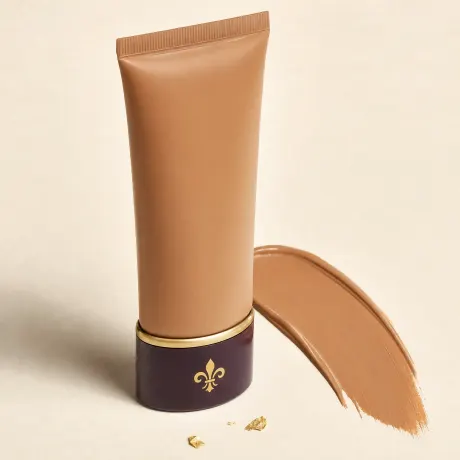
Body makeup
A water-resistant foundation for the body, used to even tone or cover tattoos.
Read the guide
Other kinds of face brushes

Kabuki brush
A squat, palm-sized brush with a very dense dome of short bristles on a stubby handle, for buffing powders and creams into the skin.
Read the guide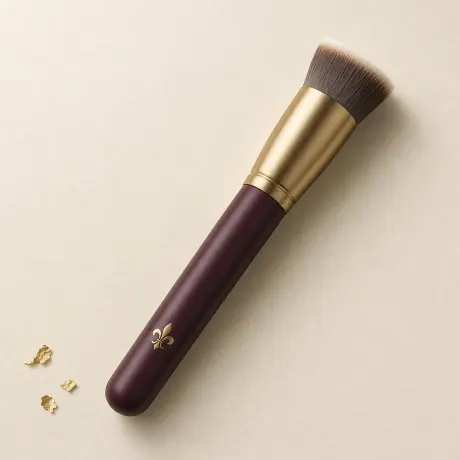
Flat-top buffing brush
A dense brush cut straight across, which buffs liquid and cream into skin with no streaks.
Read the guide
Flat foundation brush
A flat synthetic brush with a rounded edge, for painting foundation on like a primer coat.
Read the guide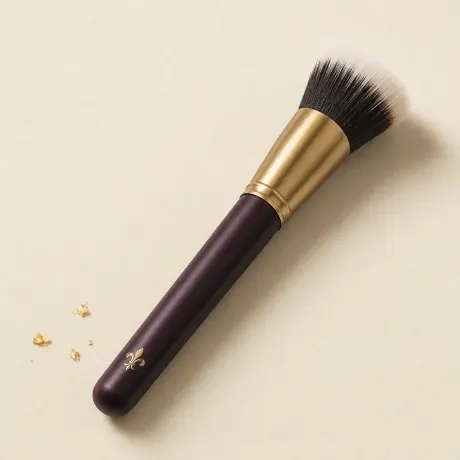
Stippling brush
Two layers of fibre — long and sparse over short and dense — that dot product on for an airbrushed finish.
Read the guide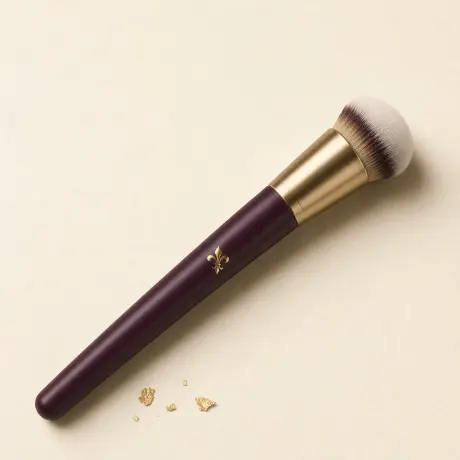
Domed buffing brush
A dense, rounded brush on a full-length handle, for buffing cream and liquid with more control than a kabuki.
Read the guide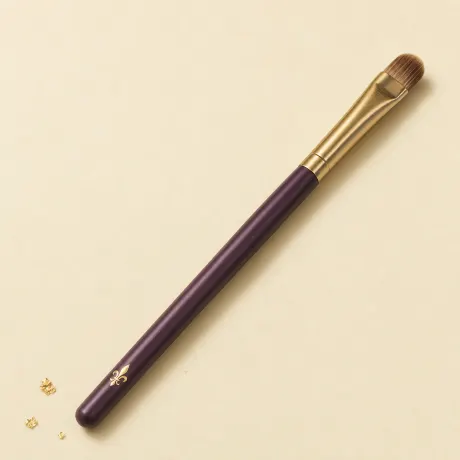
Flat concealer brush
A small, flat, tongue-shaped synthetic brush for placing concealer precisely.
Read the guide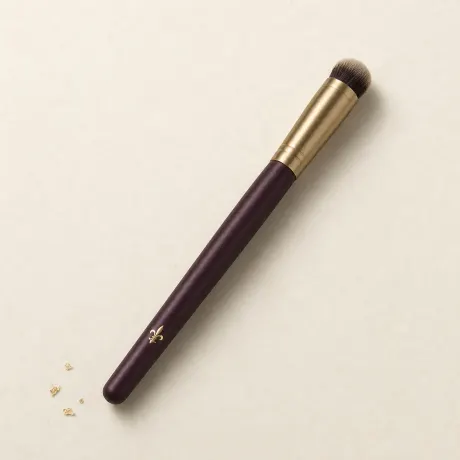
Concealer buffing brush
A small, dense, domed brush — about the size of a fingertip — that buffs concealer into skin.
Read the guide