Kabuki brush
A squat, dense, palm-sized brush for buffing powder and cream into the skin. How to choose one and how to buff with it, and what its name does and does not owe to the Japanese stage.
A kabuki brush is a squat, palm-sized brush with a very dense dome of short bristles on a stubby handle, used to buff powder, mineral foundation or cream into the skin in small circles for fuller coverage than a loose powder brush gives.

Our picks
Chosen across the forms the kabuki now takes, from the classic squat dome to retractable, handle-less and pointed versions, in goat hair and synthetic fibre, from drugstore to prestige. Each opens where its maker sells it: on Amazon, or at the house’s own shop; one Australian house ships from its own shop abroad.
As an Amazon Associate I earn from qualifying purchases. Affiliate links — we may earn a commission at no extra cost to you. How this works
Full domePrestige MAC Cosmetics
182 Synthetic Buffer Brush
A full, dome-shaped synthetic kabuki for buffing any face product, powder or foundation, to a polished finish.
- Dome-shaped
- Synthetic
- Face and body
Handle-lessDrugstore Real Techniques
Foundation Kabuki Makeup Blender
A dense, domed head with no handle at all, held in the fingers for close control when buffing foundation.
- No handle
- Dense
- Liquid, cream or powder
Goat hairPrestige Hakuhodo
Kinoko (Kabuki Style Brush) BkA Round
The Kumano maker’s own squat brush, sold as a kinoko, a mushroom: a very dense goat-hair top for powders and touch-ups.
- Goat hair
- Very dense
- Travel size
Short handleMid-range Bdellium Tools
Golden Triangle 995 Kabuki
A fully rounded dome on a short handle, the classic shape, for full-coverage application.
- Short handle
- Vegan synthetic
- Full coverage
RetractablePrestige Hourglass
Retractable Kabuki Brush
A portable kabuki whose head slides into its case, for buffing on blush and powder away from home.
- Retractable
- Blush and powder
Travel sizeDrugstore e.l.f. Cosmetics
Kabuki Face Brush
An inexpensive travel-sized kabuki for precise, controlled application of powder on the go.
- Travel-sized
- Vegan
Any foundationPrestige Dior
Kabuki Brush N°18
A multi-use complexion kabuki, sold for controlled application of every form of foundation, from fluid to compact.
- Multi-use
- Fluid, cream, stick or compact
Super denseMid-range Glo Skin Beauty
101 Pro Kabuki Brush
A super-dense, softly domed kabuki from a mineral-makeup house, for full coverage with liquid, cream or powder.
- Super dense
- Softly domed
- Face and body
Tapered domePrestige Trish McEvoy
Brush 39 Deluxe Kabuki
A softly tapered dome that places and diffuses bronzer and blush as well as all-over finishing powder.
- Tapered dome
- Cream or powder
Face and bodyDrugstore ColourPop
Kabuki Face and Body Brush
An inexpensive vegan kabuki sized for buffing product into the body as well as the face.
- Vegan
- Face and body
Pocket domePrestige By Terry
Tool-Expert Kabuki
A retractable kabuki with a flexible, dense dome, made for loose and pressed powders.
- Retractable
- Dense dome
- Loose or pressed
Angled bodyMid-range Fenty Beauty
Face & Body Kabuki Brush 160
A large angled kabuki made for body makeup, yet precise enough for the face.
- Angled
- Liquid or powder
- Face and body
PointedDrugstore Crown Brush
Pointed Kabuki Brush SS018
A densely packed synthetic kabuki cut to a point, which reaches the sides of the nose, from a professional brush maker.
- Pointed cut
- Synthetic
- Small handle
Vegan retractableMid-range Spectrum Collections
Pantherine Retractable Kabuki Brush
A retractable kabuki with densely packed, ultra-soft bristles, for touching up powder away from home.
- Retractable
- Densely packed
- Powder, bronzer, blush
Travel powderDrugstore Ulta Beauty Collection
Travel Kabuki Brush 150
A small, soft kabuki from Ulta’s own line, for an airbrushed look with pressed or loose powder.
- Travel size
- Pressed or loose powder
MiniMid-range Rae Morris
Jishaku #2 Mini Kabuki Brush
A small kabuki from an Australian makeup artist’s own brushes, for placing blush and bronzer precisely.
- Mini kabuki
- Blush and bronzer
A kabuki brush is short, dense and round: a tightly packed dome of short fibres on a handle so stubby that the whole brush sits in the palm. The density is what makes it useful. A loose powder brush sweeps a veil across the face; a kabuki is pressed and turned against the skin, so it works powder into place and gives fuller, more even coverage. That is why it became the usual partner of loose mineral foundation, and why it is also good for buffing bronzer, blush and creams.
Its nearest relatives share its density but not its shape. The flat-top buffing brush is cut straight across and usually has a long handle; the domed buffing brush puts a kabuki’s dense round head on a full-length handle, for more control around the nose and eyes. Retractable kabukis, whose heads slide down into a metal case, are the same brush made for a handbag.
Choosing one
Start with density. The more tightly packed the head, the more product it carries and the fuller the coverage; a slightly looser kabuki gives a sheerer, more forgiving finish with powder and suits bronzer and blush as well. Then the fibre. Goat hair grips and blends powder well; synthetic fibre, which is not porous, is the better choice if the brush will also buff cream or liquid foundation. Size follows use: a full-size dome covers the whole face in a minute, a mini one is for blush, the sides of the nose and touching up, and a body-sized one is for bronzer or shimmer on the shoulders and legs.
Then the handle. The classic kabuki is short so that you hold it close to the head and press; it travels well and works fast. The name has stretched, though. Houses now sell dense brushes on full-length handles as kabukis, and angled, pointed and body-sized versions too, while Hakuhodo in Japan sells its own squat brushes under another name altogether. If you want to press and buff, look for the density and the short handle rather than the word on the box.
How to buff
For loose powder or mineral foundation, tip a little into the lid, swirl the brush in it so the powder works into the head, tap off the excess, and buff it over the face in small circles, starting where you need most coverage and moving outward. Build in thin layers: two light passes cover more naturally than one heavy one. With pressed powder, swirl once over the pan. For cream or liquid, dot it on the skin first and buff it in the same way, then wash the brush that day, because a dense head holds on to wet product.
With bronzer and blush, use a lighter hand. A dense brush picks up a great deal of colour at once, so touch the pan with the side of the dome, tap off twice as much as you think, and place the colour before you buff; buffing afterwards softens an edge, but it cannot take colour away.
Density also makes a kabuki slow to dry. Squeeze it out well after washing and leave it lying flat or head down, and let a retractable one dry completely before it goes back into its case.
Where it came from
The name comes from kabuki, the Japanese theatre, and the story usually told with it, that kabuki actors put on their white faces with just such a brush, is repeated far more confidently than the evidence supports. The Japan Arts Council’s own account of kabuki make-up describes the actor covering his face in a base colour and then drawing the kumadori lines with a brush; it names no squat powder brush.[1] Hakuhodo, a brush maker in the Japanese town of Kumano, says the brush traditionally used for shironuri, the white face of kabuki and geisha, is the itabake, a thick, flattened brush,[2] and it sells its own squat, dense brushes as kinoko, mushrooms, with “kabuki style” in brackets.[3]
Japan’s documented part in the makeup brush lies in Kumano itself. Its villagers sold brushes bought in Nara from the late eighteenth century and learnt to make them in the nineteenth; they began making brushes for painting and for make-up around 1955, and in 1975 Kumano brushes were designated a traditional craft by Japan’s trade minister. The town now makes about 80 per cent of the brushes produced in Japan.[4] Hakuhodo was founded there in 1974 to make brushes for painting ceramics and dolls, spent the early 1980s developing makeup brushes and, by its own account, began making brushes for MAC in 1995.[5]
In the West the short, dense brush spread with loose mineral foundation. Loose powders had been falling out of use since the Second World War; very fine mineral powders revived them, applied, as the historian James Bennett notes, with a brush rather than a puff.[6] Bare Escentuals, which signed an agreement with the shopping channel QVC in 1998 and first ran a long television infomercial in 2002, trademarked its method of putting on its foundation as “Swirl, Tap, Buff” and packed brushes into its introductory kit.[7] Swirling, tapping and buffing is exactly the work a kabuki does.
The techniques
- Buff
- Work in small circles with a dense brush until no edge remains.
- Sweep
- Long, light strokes that deposit a veil of product.
Sources
- [1]Stock Characters and Makeup, Kumadori Makeup, Kabuki for Beginners Japan Arts Council, Cultural Digital Library.View source (opens in a new tab) Accessed 2026-09-25.
- [2]Itabake (Traditional Powder Brush) 36L [HC1376] Hakuhodo USA.View source (opens in a new tab) Accessed 2026-09-26.
- [3]Kinoko (Kabuki Style Brush) BkA Round [HC1312] Hakuhodo USA.View source (opens in a new tab) Accessed 2026-09-26.
- [4]History of Kumano Fude Fudenosato Kobo, Kumano, Hiroshima Prefecture.View source (opens in a new tab) Accessed 2026-09-26.
- [5]Hakuhōdō: Luxury Cosmetic Brushes that Highlight Traditional Japanese Crafts Nippon.com, 28 November 2023, 2023.View source (opens in a new tab) Accessed 2026-09-26.
- [6]Loose Face Powders Cosmetics and Skin, 2009.View source (opens in a new tab) Accessed 2026-09-26.
- [7]Form S-1/A registration statement (amendment), filed 13 September 2006 U.S. Securities and Exchange Commission (EDGAR), 2006.View source (opens in a new tab) Accessed 2026-09-26.
What it is used with
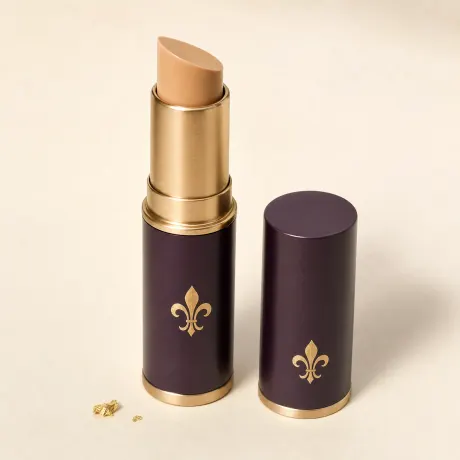
Stick foundation
Cream foundation set into a twist-up stick, for targeted coverage and travel.
Read the guide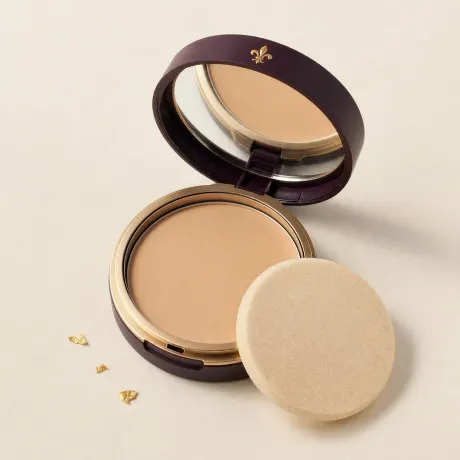
Powder foundation
Foundation pressed into a powder cake, for a quick matte base in one step.
Read the guide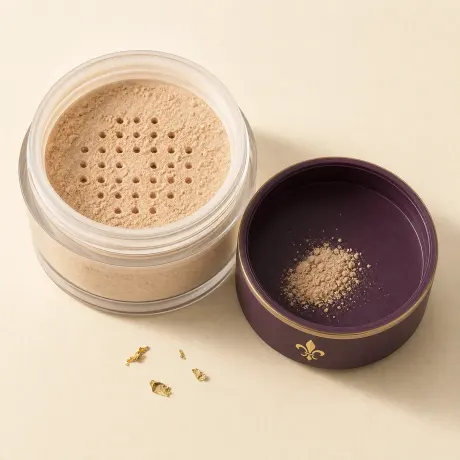
Loose mineral foundation
Foundation as a loose, finely milled mineral powder, buffed in to build coverage.
Read the guide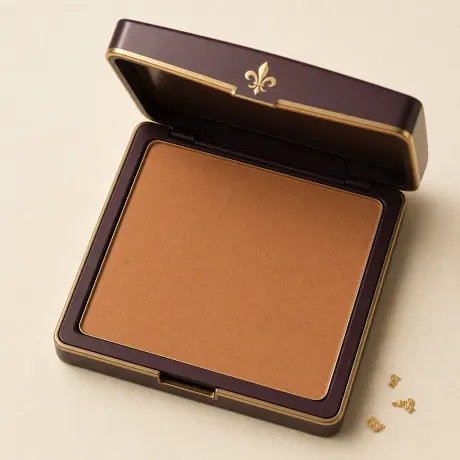
Powder bronzer
A warm pressed powder that adds the colour sun would, where sun would.
Read the guide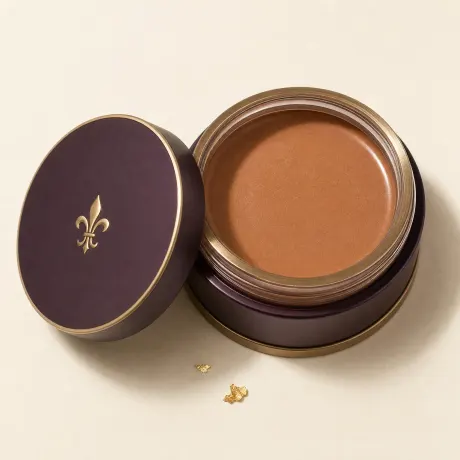
Cream bronzer
Bronzer in a cream base, which melts into skin and reads as skin rather than powder.
Read the guide
Cream contour stick
Contour shade in a twist-up cream stick, drawn straight onto the face.
Read the guide
Body makeup
A water-resistant foundation for the body, used to even tone or cover tattoos.
Read the guide
Other kinds of face brushes
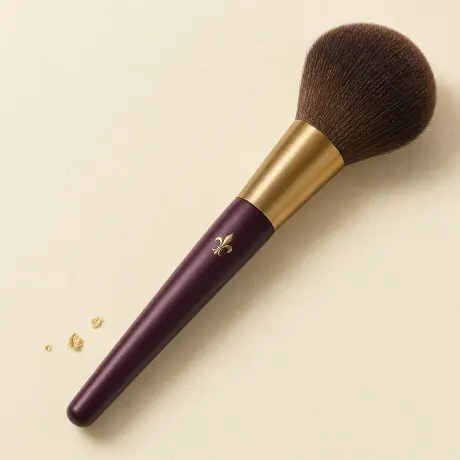
Powder brush
A large, loosely packed, fluffy brush that lays down a veil of powder rather than pushing it in.
Read the guide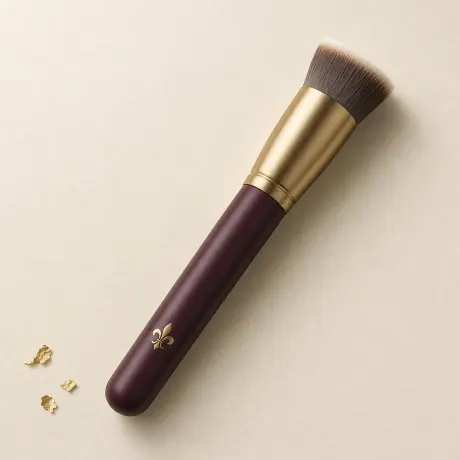
Flat-top buffing brush
A dense brush cut straight across, which buffs liquid and cream into skin with no streaks.
Read the guide
Flat foundation brush
A flat synthetic brush with a rounded edge, for painting foundation on like a primer coat.
Read the guide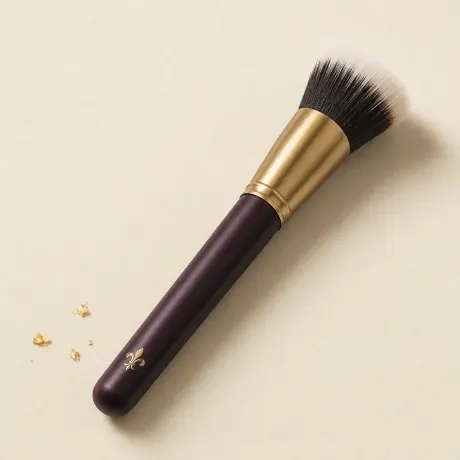
Stippling brush
Two layers of fibre — long and sparse over short and dense — that dot product on for an airbrushed finish.
Read the guide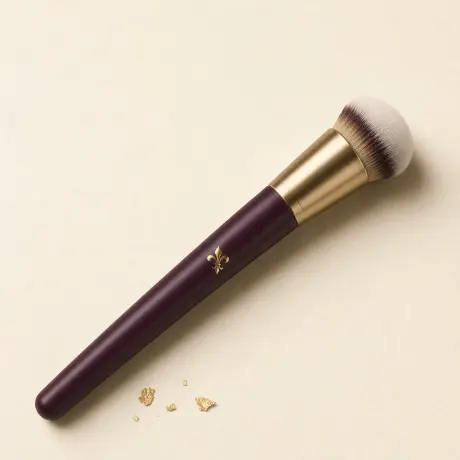
Domed buffing brush
A dense, rounded brush on a full-length handle, for buffing cream and liquid with more control than a kabuki.
Read the guide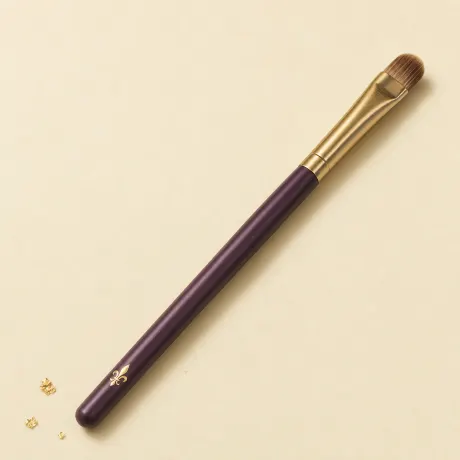
Flat concealer brush
A small, flat, tongue-shaped synthetic brush for placing concealer precisely.
Read the guide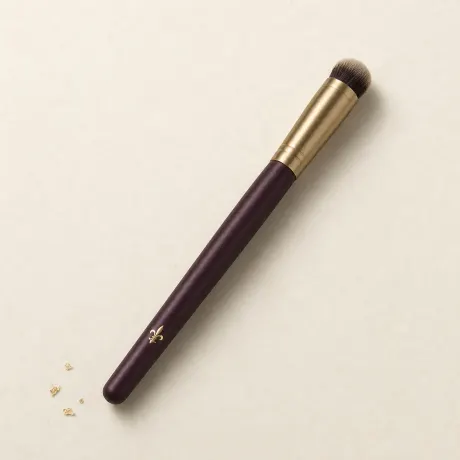
Concealer buffing brush
A small, dense, domed brush — about the size of a fingertip — that buffs concealer into skin.
Read the guide