Powder foundation
Foundation and powder in one pressed cake: a matte base in a single step, carried in a compact. What it is, who it suits, how the tool changes the finish — and where it came from.
Powder foundation is foundation pressed into a powder cake, with enough pigment and binder to even skin tone on its own, applied dry with a brush, sponge or puff for a matte finish in one step.

Our picks
Chosen across finish, coverage and formula — from long-wear mattes to baked and mineral powders — and across budgets. Each opens where its maker sells it, on Amazon or at the house’s own shop, and you choose your shade on that page.
As an Amazon Associate I earn from qualifying purchases. Affiliate links — we may earn a commission at no extra cost to you. How this works
Long wearPrestige Estée Lauder
Double Wear Stay-in-Place Matte Powder Foundation
A powder version of the long-wear reference point, made to hold through heat and humidity.
- Medium to full
- Matte
- Waterproof
Budget long wearDrugstore L'Oréal Paris
Infallible Fresh Wear Foundation in a Powder
An inexpensive powder foundation sold as waterproof and long-wearing.
- Up to 24H wear
- Waterproof
BakedMid-range Laura Geller
Baked Balance-n-Brighten Color Correcting Foundation
A baked, swirled cake, swept on light or pressed on for more, made with drier, older skin in mind.
- Baked powder
- Buildable
- Brush-applied
Blur mattePrestige MAC Cosmetics
Studio Fix Powder Plus Foundation
MAC’s powder and foundation in one, in a wide range of shades.
- Blur-matte finish
- Buildable
Drugstore matteDrugstore Maybelline New York
Super Stay Up to 24HR Hybrid Powder-Foundation
An inexpensive powder made to cover like a liquid, with a sponge for fuller coverage or a brush for less.
- Medium to full
- Matte
- Up to 24HR
Pressed mineralMid-range PÜR
4-in-1 Pressed Mineral Makeup SPF 15
A mineral powder foundation pressed into a compact, so it travels without the mess of a loose one.
- Mineral
- SPF 15
- Medium to full
Full coveragePrestige Clinique
Beyond Perfecting Powder Foundation + Concealer
Full coverage from a powder, for skin that needs cover without the weight of a liquid.
- Full coverage
- Foundation + concealer
Second skinMid-range Glo Skin Beauty
Pressed Base
A mineral powder from a skincare-clinic brand, made to look like skin rather than powder.
- Mineral
- Natural finish
Refillable compactPrestige Dior
Dior Forever Natural Velvet
Dior’s compact foundation, made for touching up through the day from a refillable case.
- 24h wear
- Refillable
Airbrush finishMid-range IT Cosmetics
CC+ Airbrush Perfecting Powder Foundation
The powder version of IT Cosmetics’ CC+ line, for a soft-focus finish over bare skin.
- Pressed powder
- Airbrush finish
French luxuryPrestige Guerlain
Parure Gold Skin Control High Perfection Matte Compact Foundation
A French house’s matte compact, soft and blurred rather than flat, in a case made for the handbag.
- Matte
- 24h wear
- No-transfer
Mineral with SPFPrestige Jane Iredale
PurePressed Base Mineral Foundation SPF 20/15
A pressed mineral foundation with sunscreen built in, sold as light-to-full coverage.
- Mineral
- Light to full
- SPF 20/15
Oil-freePrestige Bobbi Brown
Skin Weightless Powder Foundation
A soft, cushiony powder that stays shine-free without looking flat.
- Oil-free
- Natural finish
Sheer mattePrestige Laura Mercier
Real Flawless Feather Matte Powder Foundation
The lightest powder here: sheer, primer-infused cover for skin that needs little.
- Sheer to medium
- Natural finish
- 16HR wear
Hydrating mineralPrestige Colorescience
Natural Finish Mineral Foundation SPF 20
A pressed mineral foundation from a clinic brand, made to feel hydrating rather than dry.
- Mineral
- Hydrating
- SPF 20
Powder foundation is pigment, filler and binder pressed into a cake. The pigments are the same iron oxides and titanium dioxide that colour a liquid; the fillers, usually talc or mica, give the powder its slip and its soft, light-scattering finish; the binder, a small amount of oil or ester, lets it be pressed and makes it cling. Swept or pressed over the face, it evens tone and takes down shine in one step, which is the whole of its appeal.
It is easy to confuse with its neighbours. A setting powder is sheer or translucent and meant to fix a foundation underneath, not to replace it. A two-way cake is a pressed foundation made to be used either dry or with a damp sponge. A loose mineral foundation is similar in purpose but unpressed, with little or no binder. A cream-to-powder foundation is a cream that dries to a powdery finish. Powder foundation is the dry, pressed one: enough pigment to cover on its own, and made to be applied dry.
Who it suits
Powder foundation is kindest to normal, combination and oily skin. It absorbs shine as it covers, and a compact makes touching up in the middle of the day easy. On very dry or flaking skin it can cling to texture and look dull; a well-moisturised face, or a cream or liquid instead, is the better answer there.
Within the kind there are real choices. Finish runs from flat matte to a soft, satin “natural” finish; baked powders, made from a cream mixture dried into a dome, tend to look more luminous. Coverage is mostly built by layering, but some formulas are made for full cover and some for a veil. Mineral pressed powders, often sold to people with sensitive skin, are built on the same pigments with fewer additional ingredients, as their makers present them. And many compacts now carry an SPF.
Brush, sponge or puff
The tool decides the finish more than the powder does. A loose kabuki or large brush, swirled lightly and swept over the face, gives the sheerest, most skin-like veil. A dense flat-top brush, buffed in small circles, gives medium coverage and a smooth surface. The sponge or puff in the compact, pressed rather than wiped, puts down the most pigment and is the way to build full coverage where it is needed.
Start on moisturised skin that has had a few minutes to settle, so the powder does not grab at damp patches. Tap excess off the brush before it touches the face, work from the centre outward, and build in thin layers: two light passes look more like skin than one heavy one. For a later touch-up, blot oil first with a tissue or blotting paper, then press on a little powder; powder laid over oil turns patchy and cakey.
A puff or sponge that goes back into the compact every day collects oil and bacteria. Wash it with a gentle soap every week or so and let it dry completely before it goes back in, or keep a clean spare.
Getting the shade and finish right
Powder looks lighter in the pan than it does on the face, and some formulas deepen a little on oily skin, so test a shade on the jaw rather than the wrist and look at it again in daylight after twenty minutes. A shade that matches bare skin can read slightly darker over moisturiser or primer. Undertone matters as much as depth: a powder that leans too pink or too yellow shows as a cast, not as a shade that is simply too light or too dark.
If the finish looks dry or chalky, the answer is usually less powder, a softer brush or a better-moisturised face rather than a different shade. A fine mist of water or setting spray, pressed in with clean hands, melts a powdery surface back toward skin.
Where it came from
The pressed cake is older than the powder foundation. In 1914 Houbigant used the term poudre comprimée for compressed face powder; patents for fitting such cakes into compacts appeared as early as 1917, and by 1925 the case was being called a compact.[1] Those were face powders, worn over a cream. The historian James Bennett notes that the “pressed cream” powders that became popular in the 1950s were a different thing, because they “also acted as foundations”.[1]
Among them was Pond’s Angel Face of 1946, a compact powder in five shades. As a powder-cream it was applied with a puff, not with the wet sponge that cake make-up needed, and it was advertised as “A sensational new make-up that’s easier to apply—no water, no greasy fingertips”; a mirrored case followed in 1950.[2] Max Factor answered in 1953 with Creme Puff, which blended a creamy make-up base with powder and was applied with a puff from a hinged, mirrored compact.[3] In Japan, according to Shiseido’s own account, powder foundations that finish in a single step spread quickly from the 1970s as an item for working women.[4]
The compact in a handbag today is that 1950s idea refined: foundation and powder in one cake, a puff or sponge in the lid, and a mirror for the touch-up.
The techniques
- Sweep
- Long, light strokes that deposit a veil of product.
- Buff
- Work in small circles with a dense brush until no edge remains.
- Press
- Press product onto the skin without dragging, so it stays where it is put.
Sources
- [1]Compressed Face Powders Cosmetics and Skin.View source (opens in a new tab) Accessed 2026-09-22.
- [2]Pond's Extract Company Cosmetics and Skin, 2011.View source (opens in a new tab) Accessed 2026-09-25.
- [3]Max Factor (1945–1960) Cosmetics and Skin, 2026.View source (opens in a new tab) Accessed 2026-09-22.
- [4]資生堂のファンデはどうやって進化していったの? (How did Shiseido’s foundations evolve?) Shiseido, Foundation 100 Questions and 100 Answers.View source (opens in a new tab) Accessed 2026-09-25.
What to apply it with

Kabuki brush
A squat, palm-sized brush with a very dense dome of short bristles on a stubby handle, for buffing powders and creams into the skin.
Read the guide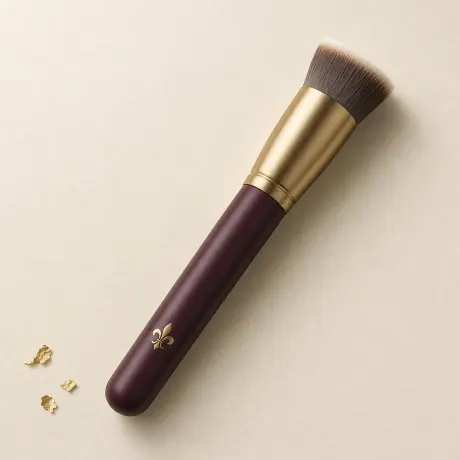
Flat-top buffing brush
A dense brush cut straight across, which buffs liquid and cream into skin with no streaks.
Read the guide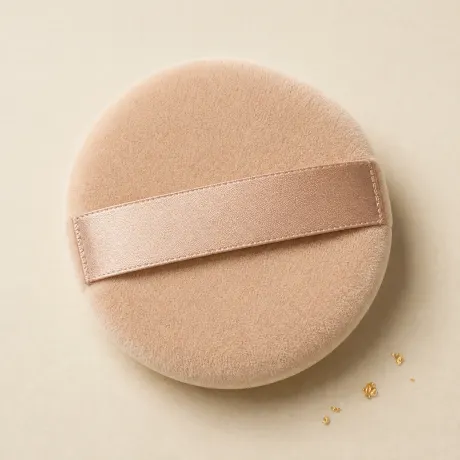
Velour powder puff
A plush round puff that presses powder in and rolls it off, setting without disturbing the base.
Read the guide
Other kinds of foundation & tinted base
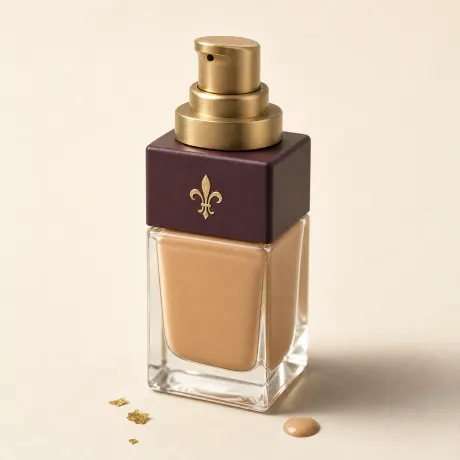
Liquid foundation
The standard base: pigment suspended in a fluid, in shades matched to the skin.
Read the guide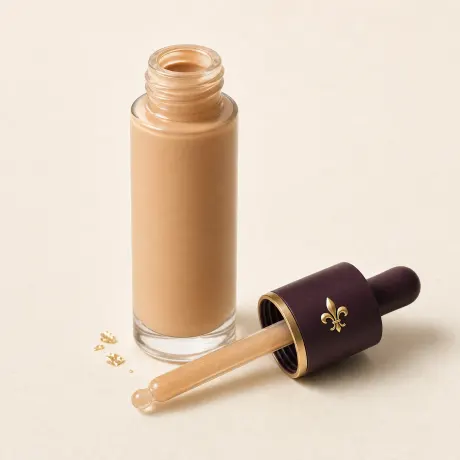
Skin tint
A watery, sheer base that evens tone while letting skin show through.
Read the guide
Tinted moisturiser
A moisturiser with a little pigment in it — often with sunscreen — for the lightest base.
Read the guide
BB cream
A skincare-leaning base that tints, smooths and usually protects in one step.
Read the guide
CC cream
A light base built to neutralise redness or sallowness rather than simply cover it.
Read the guide
Cream foundation
A dense, emollient base with high coverage, suited to dry skin and to photography.
Read the guide
Stick foundation
Cream foundation set into a twist-up stick, for targeted coverage and travel.
Read the guide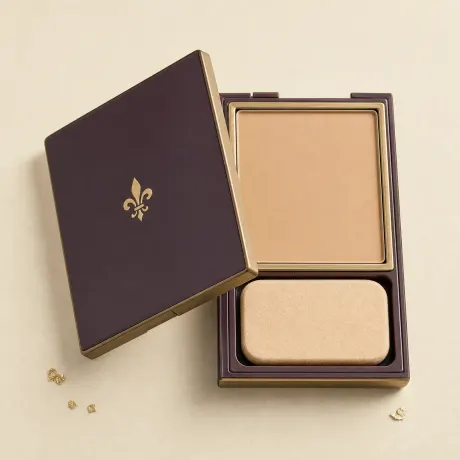
Two-way cake foundation
A pressed foundation made to be used dry for a sheer finish or with a damp sponge for coverage.
Read the guide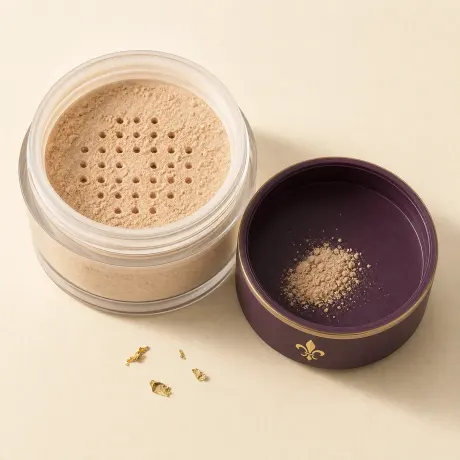
Loose mineral foundation
Foundation as a loose, finely milled mineral powder, buffed in to build coverage.
Read the guide
Cushion foundation
Liquid foundation soaked into a sponge cushion inside a compact, picked up with a puff.
Read the guide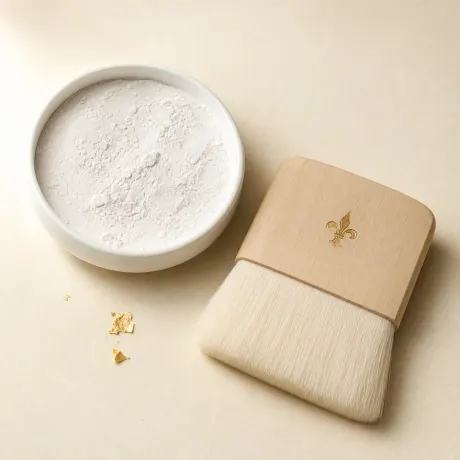
Oshiroi
Japanese white face powder, mixed with water to a paste and laid on with a broad flat brush.
Read the guide