Concealer buffing brush
A small, dense brush about the size of a fingertip, made to blend concealer into the skin until its edge disappears. How to choose and use one, and how it came to imitate the finger it replaced.
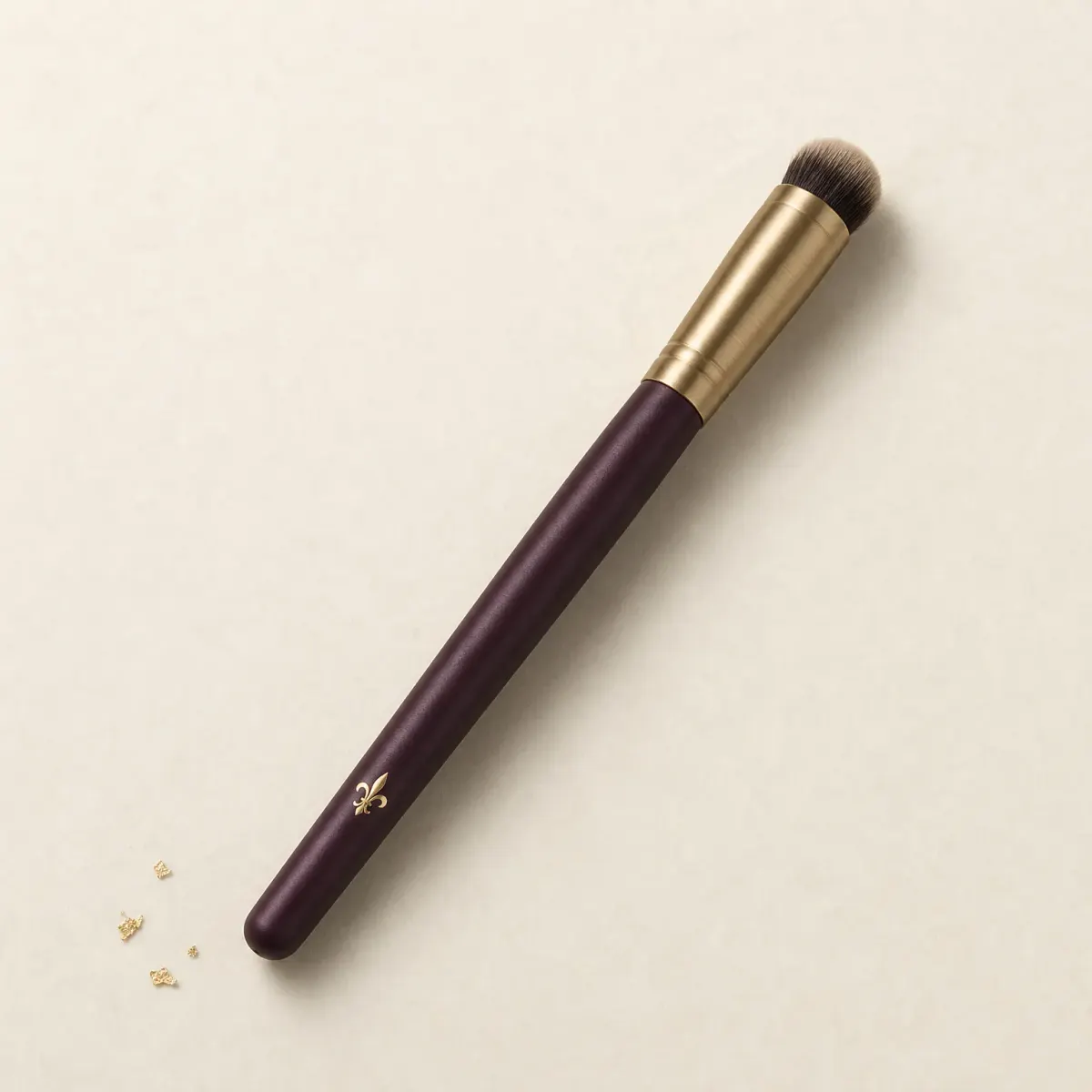
A concealer buffing brush is a small, dense brush with a domed or rounded head about the size of a fingertip, used to tap and buff concealer into the skin under the eyes and around the nose until no edge shows.
Our picks
Every brush we could verify whose maker describes it as a small domed, sloped, cylindrical or fingertip-shaped concealer brush, with one small flat-top sold for buffing, from drugstore to prestige, and a Japanese fude from Shiseido. Each opens where its maker sells it: on Amazon, or at the house’s own shop.
As an Amazon Associate I earn from qualifying purchases. Affiliate links — we may earn a commission at no extra cost to you. How this works
Mini slantPrestige MAC Cosmetics
270 Synthetic Mini Rounded Slant Brush
A round, slightly domed slant, densely packed: MAC’s foundation brush made small for concealer.
- Rounded, slanted
- Densely packed
- Cream and liquid
Budget roundDrugstore e.l.f. Cosmetics
Flawless Concealer Brush
An inexpensive round head for blending concealer or highlighter to a smooth finish.
- Round shaped
- Vegan
- Concealer and highlighter
Sloped fingertipPrestige Bobbi Brown
Concealer Blending Brush
A sloped head shaped like a fingertip, for blending concealer and corrector under the eyes.
- Sloped
- Fingertip shape
- Concealers and correctors
True domeMid-range Sigma Beauty
F26 Domed Concealer Brush
A densely packed dome with a rounded tip, for under the eyes, around the nose and over blemishes.
- Domed
- Densely packed
- Rounded tip
CylinderPrestige Shiseido
TSUTSU FUDE Concealer Brush
A small cylinder from Shiseido’s fude brushes, made for patting concealer on as much as blending it.
- Cylindrical
- Apply, pat, blend
Dense domeDrugstore Morphe
M133 Domed Concealer Brush
A very dense little dome, Morphe’s foundation brush made mini, for building concealer without streaks.
- Very dense
- Domed
- Creams and liquids
Oval fingertipMid-range Anisa Beauty
Angled Concealer Brush
A slightly domed oval shaped like a fingertip, with a tip for detail over blemishes.
- Slightly domed
- Oval
- Densely packed
Fingertip contourPrestige Kevyn Aucoin
Concealer and Color Corrector Brush
A head shaped to the contour of a fingertip, made in keeping with what the house calls the makeup artist Kevyn Aucoin’s ethos, that makeup should be applied with the hands.
- Fingertip contour
- Cream and powder
- Synthetic
Mini flat-topDrugstore Ulta Beauty Collection
Buffing Concealer Brush 120
The one flat top here: a small, dense, slightly angled head for pinpoint, full coverage.
- Slightly angled flat top
- Densely packed
- Full coverage
Round and slopedMid-range Makeup by Mario
F5 Concealer Brush
A round, sloped head from the makeup artist Mario Dedivanovic’s line, for blending and building concealer.
- Round, sloped
- Blend and build
Forty-degree slantPrestige Pat McGrath Labs
Skin Fetish: Sublime Perfection Concealer Brush
A slanted head with a tapered tip, designed to replicate the makeup artist Pat McGrath’s fingertip technique.
- 40-degree slant
- Tapered tip
- Synthetic
Small domeDrugstore Crown Brush
Pro Precision Dome Blender Brush C517
A small, densely packed dome from a professional brush maker, for under the eyes and the sides of the nose.
- Densely packed dome
- Tight spots
- Powder or cream
Dome and pointMid-range Haus Labs
Concealer Brush
A domed curve for blending and a pointed tip for hard-to-reach places.
- Domed curve
- Pointed tip
Soft and fluffyPrestige NARS
#10 Radiant Creamy Concealer Brush
A small, fluffy head for diffusing concealer under the eyes at sheer to medium coverage.
- Small, fluffy
- Under-eye
- Sheer to medium
Round headMid-range Jane Iredale
Concealer Brush
A small, angled brush with a round head, for applying and diffusing cream or liquid concealer.
- Round head
- Small, angled
- Creams and liquids
Dense fingertipPrestige By Terry
Tool-Expert Concealer Brush
A dense head inspired by a fingertip, angled to follow the contours around the eyes.
- Dense
- Fingertip-inspired
- Angled silhouette
Double domeMid-range Bdellium Tools
Golden Triangle 952 Small Rounded Double Dome Blender
A small symmetrical double dome that blends concealer and, after it, cream contour or blush.
- Double dome
- Vegan synthetic
- Multi-use
A concealer buffing brush is a domed buffing brush shrunk to the size of a fingertip: a dense tuft of short synthetic fibre about a centimetre across, rounded or gently slanted at the top, on a slim handle. It does the second half of concealing. Pressed and then turned in tiny circles, it melts the edge of the concealer into the foundation around it without lifting the cover from the middle, and it fits the hollow beside the nose and the curve under the eye.
Its nearest rivals are a finger and a sponge. A fingertip warms concealer and presses it in, but it is broad, and it leaves some of the product on the hand; a damp sponge sheers concealer out and soaks some of it up. The flat concealer brush places product; the buffing brush finishes it, and gives a full-coverage formula a soft edge.
Choosing one
Look at the head first. A true dome, like Sigma’s or Morphe’s, works in any direction and suits the under-eye. A rounded slant, like MAC’s 270, has a longer side that reaches the inner corner. Several houses cut theirs to the shape of a fingertip, and Shiseido makes a small cylinder for patting. Ulta’s is a small, slightly angled flat top, sold for pinpoint, full coverage.
Then density and size. A very dense head gives full coverage and holds its shape against a thick cream; a softer, fluffier one, like NARS’s, gives a sheerer, more diffused finish with liquids. A head the size of a fingertip suits the under-eye; a smaller one reaches blemishes and the sides of the nose; a larger one doubles for cream blush on a small area. Choose synthetic fibre, which does not soak up the product, so that the concealer ends up on the skin rather than in the brush.
How to use it
Apply concealer after foundation, so that you use only as much as the foundation has left undone. Dot it where the shadow is darkest, often the inner corner and the hollow above the cheek, or place it with a flat brush. Then tap the buffing brush over it lightly, several times, before moving it at all: tapping presses the concealer into the skin, while rubbing moves it off. Only then work the edges in tiny circles, outward, until they disappear into the foundation.
A blemish needs a lighter touch still. Tap concealer onto the spot with the smallest part of the head, leave the centre where it is, and blend only the outer edge into the skin around it; buffing the middle would lift the cover from the one place it is needed.
The skin under the eyes is thin and creases, so keep the layer thin and the pressure light; a second small layer where it is needed covers better than a thick one, which settles into lines. Set it soon after with a little powder pressed on, before it creases. A dense little brush holds a lot of concealer in its base, so wash it after every use and dry it head down or flat, so that it keeps its dome.
Matching brush and formula
Liquid concealer suits a softer, springier dome that spreads it thinly; a cream or a stick needs a firmer, denser head that can push it into the skin without dragging. With a colour corrector, use a small, dense brush to press the thinnest layer only where the colour is, then conceal over it with a clean brush, or the two will mix into grey. A powder concealer or brightening powder wants a looser dome, pressed on rather than buffed, so that it sets what is underneath instead of lifting it.
Where it came from
For most of the history of make-up, the tool for blending a small area was the hand. In 1909 the actor Cavendish Morton mixed his greasepaint on the palm of his left hand, finding it “an admirable palette; its heat readily melting the paint”, and the list of materials in his manual of stage make-up includes no brush at all.[1] Warmth was the hand’s advantage, and a fingertip still brings it to a cream concealer.
When concealer became an everyday product in the 1950s, it was sold with the same assumption. Ayer Magic, a cream of 1952 for the shadows under the eyes and at the corners of the mouth, told its users to moisten a forefinger, dab on a little and blend it into their foundation with the miniature airfoam sponge they would find in the box.[2] Finger and sponge, one to place and one to soften, are the two tools a concealer buffing brush now combines.
The brush imitates the finger quite openly. Kevyn Aucoin Beauty says its concealer brush, with a head shaped to the contour of a fingertip and a handle it describes as patented by the makeup artist, is an homage to the brushes of the line’s original 2001 assortment.[3] Bobbi Brown’s brush is sloped to mimic a fingertip, and Pat McGrath’s is slanted to replicate, in the house’s words, her signature fingertip technique. Who made the first is not recorded in anything read for this page. What these brushes share is an aim: to do what a warm fingertip does, and leave the hand clean.
The techniques
- Buff
- Work in small circles with a dense brush until no edge remains.
- Pat
- Tap lightly with a fingertip or damp sponge so product melts in rather than moves.
Sources
- [1]The Art of Theatrical Make-up Adam and Charles Black, London; Project Gutenberg eBook #56617, 1909.View source (opens in a new tab) Accessed 2026-09-26.
- [2]Corrective Make-up (Concealers) Cosmetics and Skin, 2016.View source (opens in a new tab) Accessed 2026-09-25.
- [3]Concealer and Color Corrector Brush Kevyn Aucoin Beauty.View source (opens in a new tab) Accessed 2026-09-26.
What it is used with
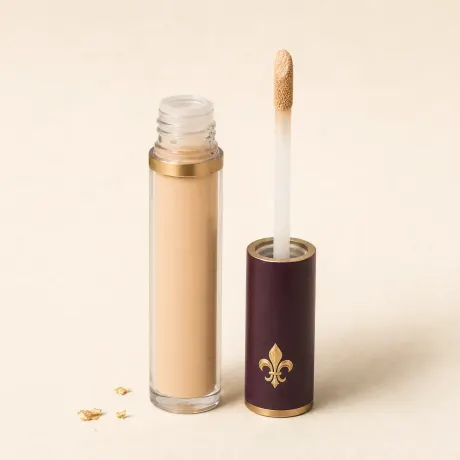
Liquid concealer
A fluid concealer in a wand tube, the most versatile form for the under-eye.
Read the guide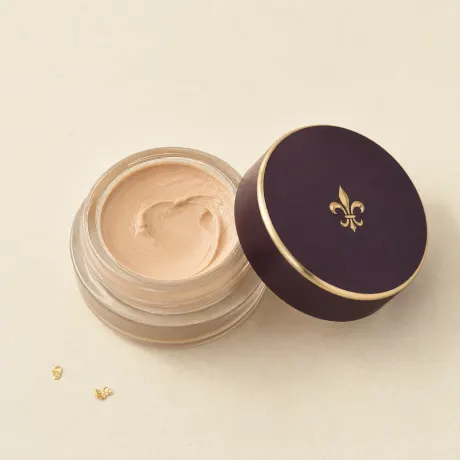
Cream concealer
A thick, high-coverage concealer in a small pot, for blemishes and deep shadow.
Read the guide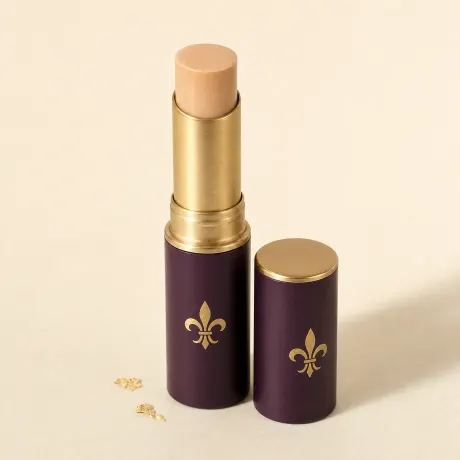
Stick concealer
A firm concealer in a slim twist-up case, for spot coverage.
Read the guide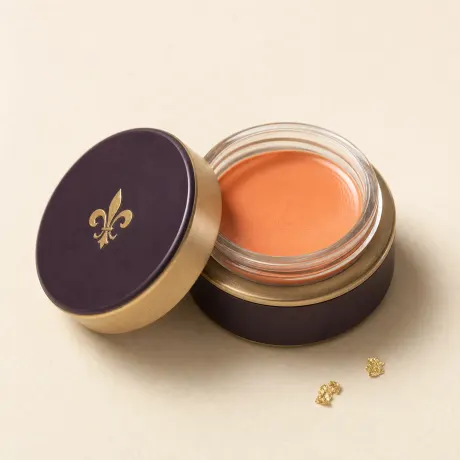
Colour corrector
A cream in the colour opposite what it hides: peach or orange over blue shadows, green over redness, lavender over sallowness.
Read the guide
Other kinds of face brushes
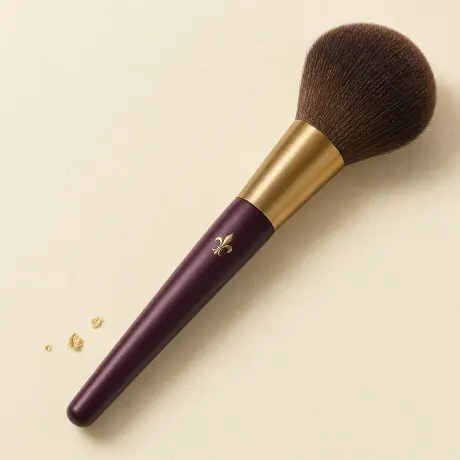
Powder brush
A large, loosely packed, fluffy brush that lays down a veil of powder rather than pushing it in.
Read the guide
Kabuki brush
A squat, palm-sized brush with a very dense dome of short bristles on a stubby handle, for buffing powders and creams into the skin.
Read the guide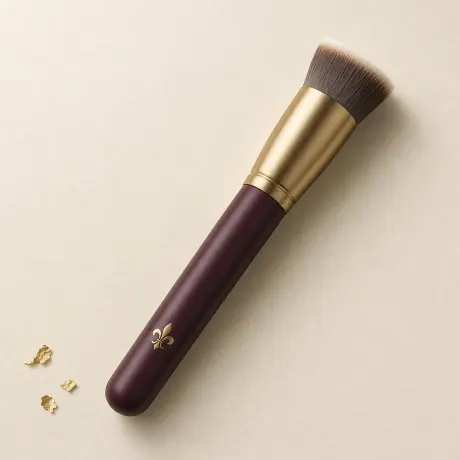
Flat-top buffing brush
A dense brush cut straight across, which buffs liquid and cream into skin with no streaks.
Read the guide
Flat foundation brush
A flat synthetic brush with a rounded edge, for painting foundation on like a primer coat.
Read the guide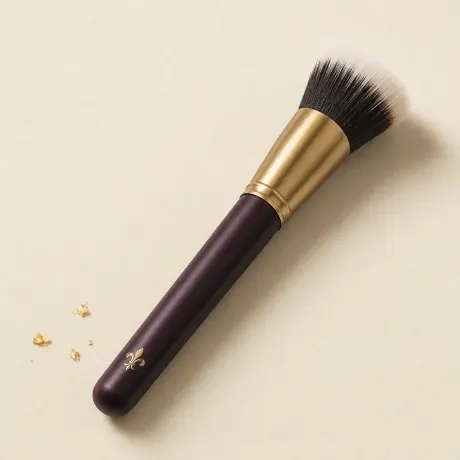
Stippling brush
Two layers of fibre — long and sparse over short and dense — that dot product on for an airbrushed finish.
Read the guide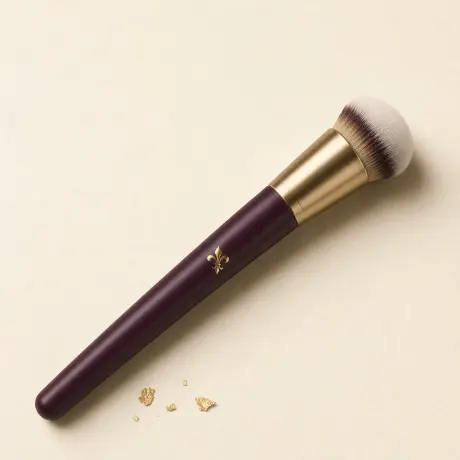
Domed buffing brush
A dense, rounded brush on a full-length handle, for buffing cream and liquid with more control than a kabuki.
Read the guide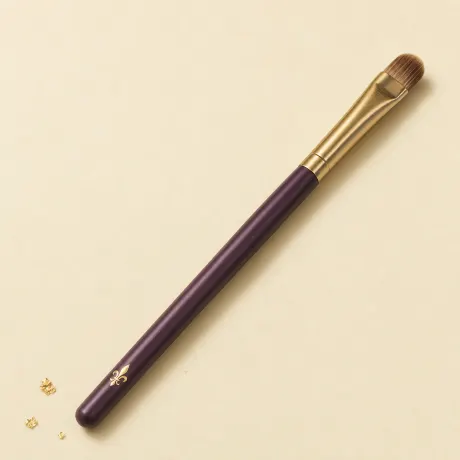
Flat concealer brush
A small, flat, tongue-shaped synthetic brush for placing concealer precisely.
Read the guide