Skin tint
The sheerest base sold as makeup: a watery tint that evens tone and lets the skin show through. How it differs from its neighbours, how to choose and wear one — and how a young category got its name.
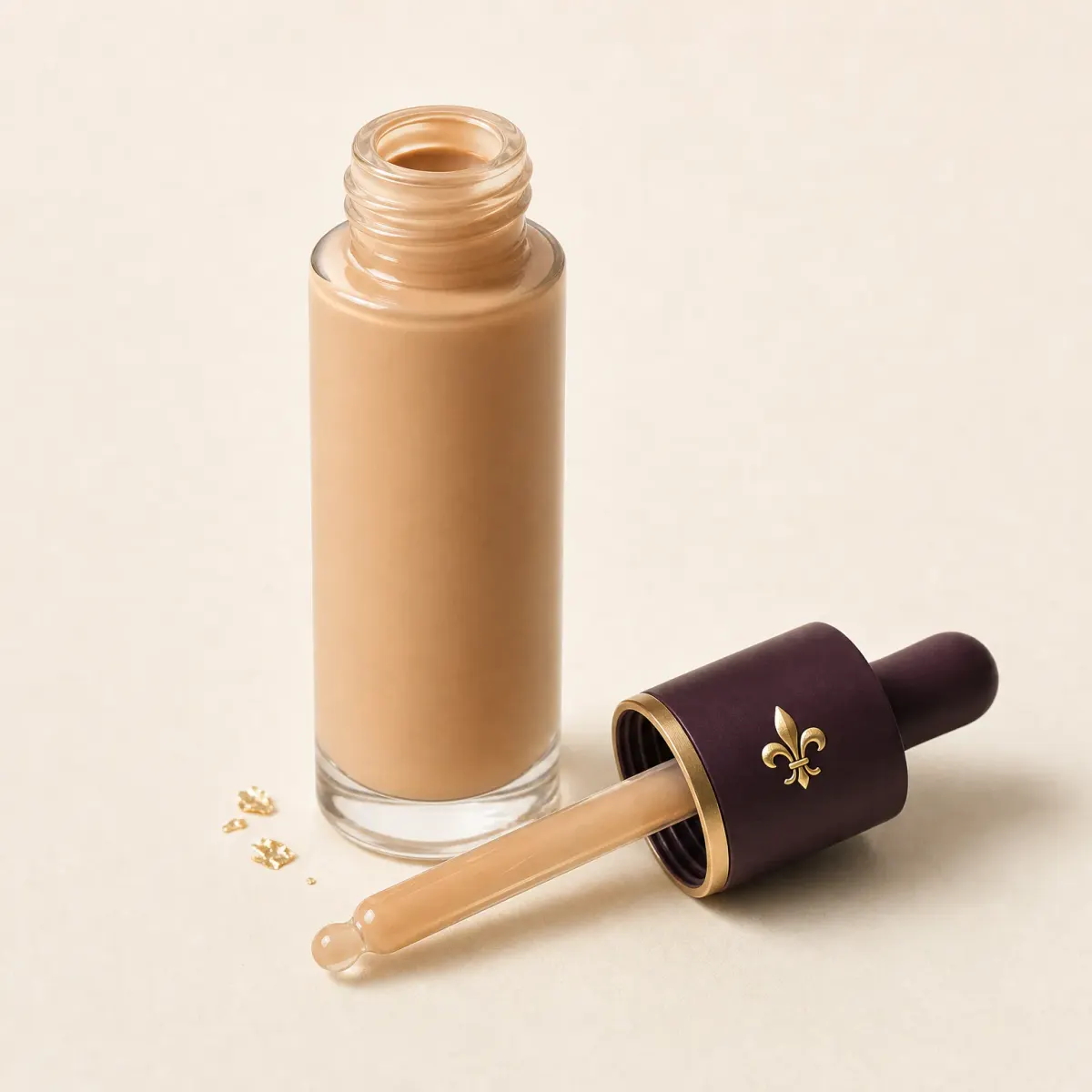
A skin tint is a thin, watery base with just enough pigment to even skin tone while freckles and texture still show: sheerer than a tinted moisturiser, and lighter than any foundation.
Our picks
Chosen to cover the range of textures, finishes and budgets — serum, gel and lotion tints, dewy and soft-matte, with and without sunscreen — from drugstore brands to the Paris houses. Each opens where its maker sells it: on Amazon, at the brand’s own shop, or at Sephora. You choose your shade on that page; sunscreen figures are the makers’ claims.
As an Amazon Associate I earn from qualifying purchases. Affiliate links — we may earn a commission at no extra cost to you. How this works
HydratingPrestige Hourglass
Veil Hydrating Skin Tint
A sheer veil of colour with a dewy finish — the choice for dry skin that wants to look rested rather than made up.
- Sheer, buildable
- Dewy
- Vegan
Mineral SPFDrugstore e.l.f. Cosmetics
Halo Glow Skin Tint SPF 50
An inexpensive tint with a light, dewy finish and a high mineral SPF claim.
- Light, buildable
- Dewy
- Mineral SPF 50
Sheer glowMid-range Glossier
Perfecting Skin Tint
One of Glossier’s four launch products: very little colour, a dewy finish, and freckles left alone.
- Sheer
- Dewy
Sheer to buildablePrestige Lancôme
Skin Idôle 3 Serum Supertint Skin Tint
Lancôme’s serum tint: sheer in one layer, buildable where needed, with a dewy finish.
- Sheer to buildable
- Dewy
- Niacinamide
Tinted serumDrugstore L'Oréal Paris
True Match Nude Hyaluronic Tinted Serum
A drugstore take on the tinted serum, in a dropper bottle.
- Lightweight
- Radiant
- 1% hyaluronic acid
Sheer and naturalMid-range Summer Fridays
Sheer Skin Tint
A sheer tint from a skincare brand, with a natural finish for those who find dewy tints too shiny.
- Sheer
- Natural finish
- Hyaluronic acid
Serum tintPrestige ILIA
Super Serum Skin Tint SPF 40
A serum-textured tint with a mineral SPF, sold as skincare, sunscreen and colour in one step.
- Light
- Dewy
- Mineral SPF 40
Soft matteDrugstore COVERGIRL
Clean Fresh Blurring Skin Tint SPF 30
Proof that a tint need not be dewy: a soft-matte finish for oilier skin, at a drugstore budget.
- Soft matte
- Mineral SPF 30
Long wearPrestige Armani Beauty
Skin Tint Longwear & Care
A tint sold on staying power as well as sheerness, for the days a tint usually does not last.
- Long-wearing
- Serum tint
Sunscreen firstMid-range Supergoop!
Protec(tint) Daily Skin Tint SPF 50
From a sun-care brand: a tint built around its sunscreen claim, with a natural rather than dewy finish.
- Light, buildable
- Natural finish
- SPF 50
LuminousPrestige MAC Cosmetics
Strobe Dewy Skin Tint
For a visible glow rather than a merely fresh finish: MAC’s light-reflecting Strobe idea, made into a tint.
- Sheer
- Dewy
- 16 shades
Vegan serumDrugstore Pacifica
Kind Tint Tinted Serum
A drugstore tinted serum sold as vegan, with a dewy finish that builds where needed.
- Dewy
- Buildable
- Vegan
Serum foundationPrestige Estée Lauder
Futurist SkinTint Serum Foundation SPF 20
Where a tint meets a foundation: Estée Lauder’s serum texture, for those who want a tint that behaves like a light base.
- Light coverage
- Serum
- SPF 20
Gel tintMid-range Milk Makeup
Hydro Grip Hydrating Gel Skin Tint
A tint in a gel rather than a serum, for skin that prefers water-light layers.
- Light, buildable
- Dewy
- Gel texture
Everyday prestigePrestige Bobbi Brown
Vitamin Enriched Skin Tint SPF 15
A hydrating tint from the makeup artist who argued that base should match skin, not mask it.
- Hydrating
- SPF 15
- Vitamins B, C and E
Water gelDrugstore Neutrogena
Hydro Boost Hydrating Tint
A water-gel tint, oil-free, for skin that dislikes anything rich.
- Water gel
- Oil-free
BlurringMid-range Fenty Beauty
Eaze Drop Blurring Skin Tint
A blurring tint dispensed in drops, for skin that wants pores softened more than colour evened.
- Blurring
- Light, buildable
Moisture boostPrestige Make Up For Ever
Super Boost Skin Tint
A moisturising tint from a Paris house with professional roots, for dry skin that wants only a little colour.
- Lightweight
- Moisturising
- Hyaluronic acid
Budget dewyDrugstore Revolution Beauty
Superdewy SPF30 Skin Tint
An inexpensive, openly dewy tint with a sunscreen, from a British drugstore brand.
- Dewy
- SPF 30
A skin tint is the thinnest thing sold as base. It is usually mostly water, with a little oil or silicone and a small load of the same pigments foundation uses — iron oxides for colour, titanium dioxide to lighten them[1] — spread so thinly that the skin’s own freckles, texture and colour stay in view. Some come as a serum in a dropper bottle, others in a slim tube or a pump bottle; all are thin and fluid. They are warmed on the fingertips and pressed on rather than blended out with a brush, and they sit on the face as a wash of colour rather than a layer.
Its neighbours blur into it, and the names are the makers’ rather than any standard. As a working rule, a skin tint is sheerer and more fluid than a tinted moisturiser, which is a cream built first to moisturise and usually carries a sunscreen. A BB cream covers more and is sold on a longer list of skincare claims; a CC cream is built to cancel redness or sallowness; and a foundation, even a light one, is made to cover rather than to let skin show. Many products wear two of these names at once — a “skin tint” on the maker’s site is often a “tinted moisturizer” on the retailer’s — so judge one by the coverage and finish it claims, not by the word on the bottle.
Choosing one
Start with the finish, because a tint has so little coverage that finish is most of what you see. A dewy tint reflects light and reads as healthy skin on dry or normal faces, and as shine on oily ones by midday. A soft-matte or satin tint holds the shine back but shows dry patches more readily. If your skin is oily in the centre and dry at the edges, a satin finish is the safer middle.
Then decide whether you want sunscreen in it. Many tints carry an SPF, and the number on the bottle is the maker’s claim. In the United States it is measured on a layer of two milligrams to every square centimetre of skin,[2] which over a whole face comes to far more than the few drops a tint is worn in. Treat a tint’s SPF as a bonus, not as your sun protection.
Shade matters less than with foundation, but not nothing. A tint that is slightly too deep or too light mostly disappears; one with the wrong undertone does not, and shows as a faint grey or orange cast along the jaw. Tints often come in fewer shades than their makers’ foundations, so check that the range reaches you before choosing on finish.
How to wear it
Put it on over skincare that has had a minute to sink in; a tint pressed into wet moisturiser slides and streaks. Shake the bottle if the maker says to — in watery formulas the pigment settles — then warm two or three drops between the fingertips and press them over the centre of the face, working outward. Pressing, rather than rubbing, leaves the colour where you put it.
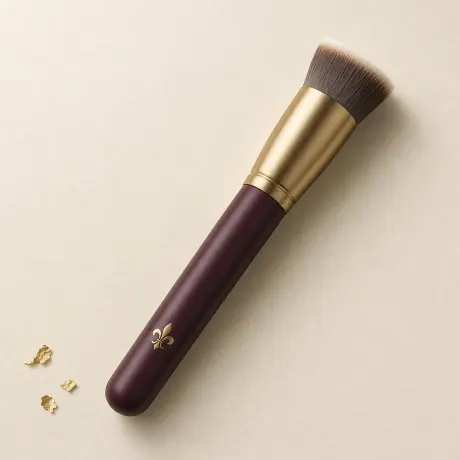
Build only where you need to. A second, smaller layer over redness around the nose or chin does more than a second layer everywhere, and a dab of concealer does more still. A damp sponge sheers a tint further and lifts off any excess; a flat-top brush gives a slightly smoother, more even result. Set, if at all, only where you shine, with a light press of powder — a full face of powder over a tint undoes the reason for wearing one.
Over a sunscreen, give the sunscreen a few minutes to settle first, for the same reason. Through the day a tint is easier to refresh than a foundation: blot any shine, then press a single drop over the places that have worn, usually the nose and chin. And because a tint lets the skin show, it shows the skin’s day too — dry patches and flaking read through it — so the skincare underneath matters more than it does under foundation.
Where it came from
The skin tint is a young product, and its birth is less documented than its growth. Sheer, coloured bases had been sold for years as tinted moisturisers before “skin tint” became a name of its own. An early use of the name came in October 2014, when Glossier made its debut with four products, one of them Perfecting Skin Tint — a sheer foundation, as The New Yorker later described it — sold under the tagline “Skin first, makeup second, smile always”.[3] Whether Glossier was the first to use the name is something the sources we have do not settle.
The category’s rise is easier to date. In 2020, with American prestige makeup sales down by a third and lip products falling furthest under face masks, tinted moisturiser — the nearest category the market researchers at NPD reported — was among the few face products to gain market share.[4] ILIA launched its Super Serum Skin Tint that year, when, in the trade site BeautyMatter’s words, the skin-tint category “barely existed”.[5]
Six years on, the same trade reporting finds tints sitting beside foundation rather than replacing it: people keep both and choose by the day.[5] That is the right way to think of one. A skin tint is not a lighter foundation but a different decision — to show the skin rather than correct it.
The techniques
- Pat
- Tap lightly with a fingertip or damp sponge so product melts in rather than moves.
- Press
- Press product onto the skin without dragging, so it stays where it is put.
Sources
- [1]Color Foundation and Base Formulas Deciphered Cosmetics & Toiletries, 2013.View source (opens in a new tab) Accessed 2026-09-22.
- [2]21 CFR 201.327: Over-the-counter sunscreen drug products; required labeling based on effectiveness testing Code of Federal Regulations, 2023 edition (U.S. Government Publishing Office), 2023.View source (opens in a new tab) Accessed 2026-09-25.
- [3]How Glossier Made Effortlessness a Billion-Dollar Brand The New Yorker, 2023.View source (opens in a new tab) Accessed 2026-09-25.
- [4]U.S. Prestige Beauty Sees Pockets of Growth Amidst the Industry's 19% Sales Decline in 2020, Reports NPD PRWeb, 2021.View source (opens in a new tab) Accessed 2026-09-25.
- [5]The New Face of Foundation: Inside Complexion’s Formulation, Supply Chain, and Consumer Shift BeautyMatter, 2026.View source (opens in a new tab) Accessed 2026-09-25.
What to apply it with

Other kinds of foundation & tinted base
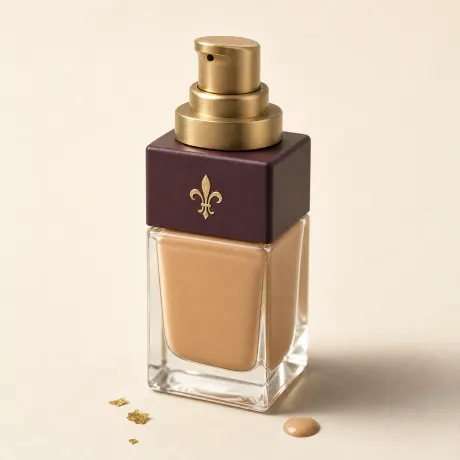
Liquid foundation
The standard base: pigment suspended in a fluid, in shades matched to the skin.
Read the guide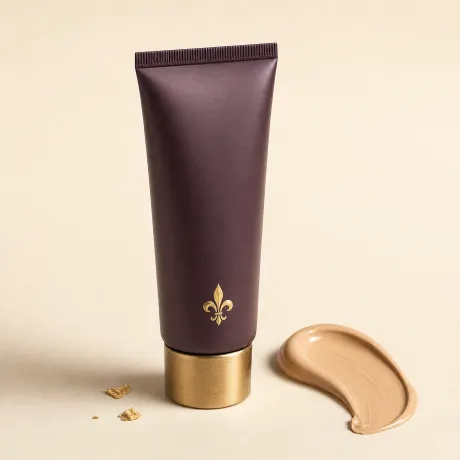
Tinted moisturiser
A moisturiser with a little pigment in it — often with sunscreen — for the lightest base.
Read the guide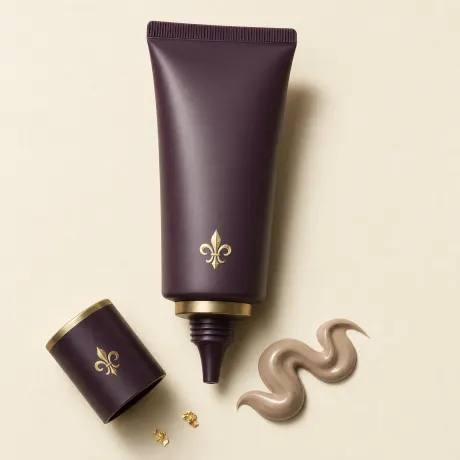
BB cream
A skincare-leaning base that tints, smooths and usually protects in one step.
Read the guide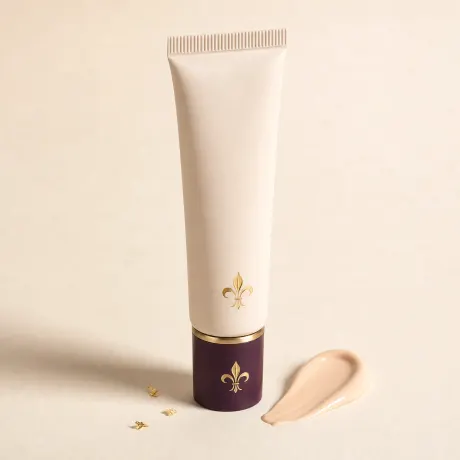
CC cream
A light base built to neutralise redness or sallowness rather than simply cover it.
Read the guide
Cream foundation
A dense, emollient base with high coverage, suited to dry skin and to photography.
Read the guide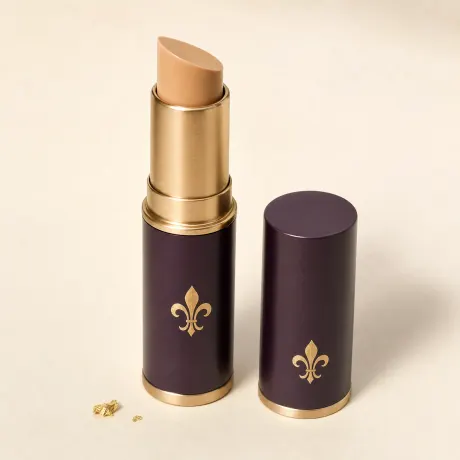
Stick foundation
Cream foundation set into a twist-up stick, for targeted coverage and travel.
Read the guide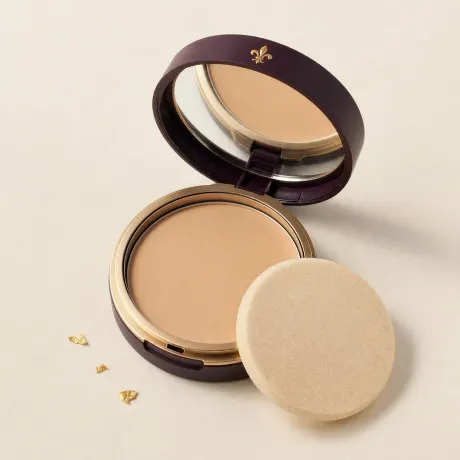
Powder foundation
Foundation pressed into a powder cake, for a quick matte base in one step.
Read the guide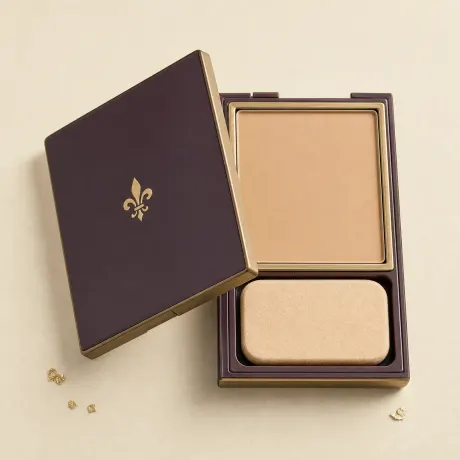
Two-way cake foundation
A pressed foundation made to be used dry for a sheer finish or with a damp sponge for coverage.
Read the guide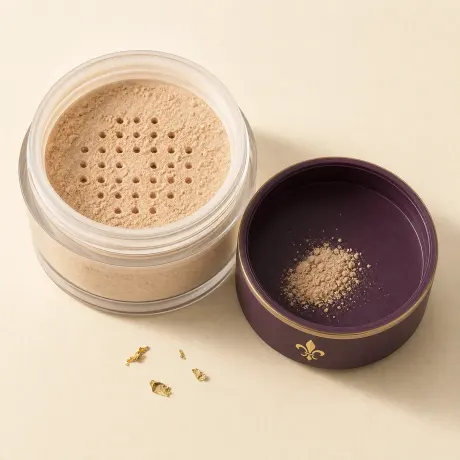
Loose mineral foundation
Foundation as a loose, finely milled mineral powder, buffed in to build coverage.
Read the guide
Cushion foundation
Liquid foundation soaked into a sponge cushion inside a compact, picked up with a puff.
Read the guide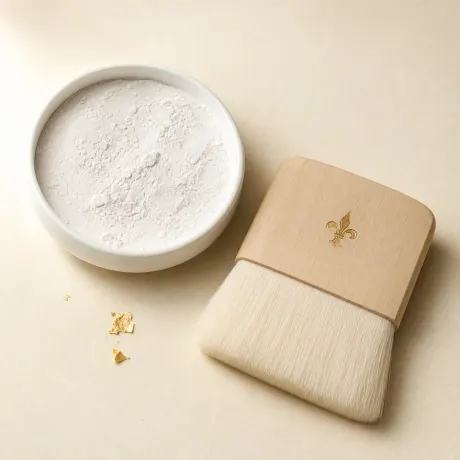
Oshiroi
Japanese white face powder, mixed with water to a paste and laid on with a broad flat brush.
Read the guide