Loose mineral foundation
Foundation as a loose powder of finely milled minerals, tapped into the lid, swirled onto a brush and buffed on in layers. What it is, how to use it, how to choose a shade — and the San Francisco company that made its name.
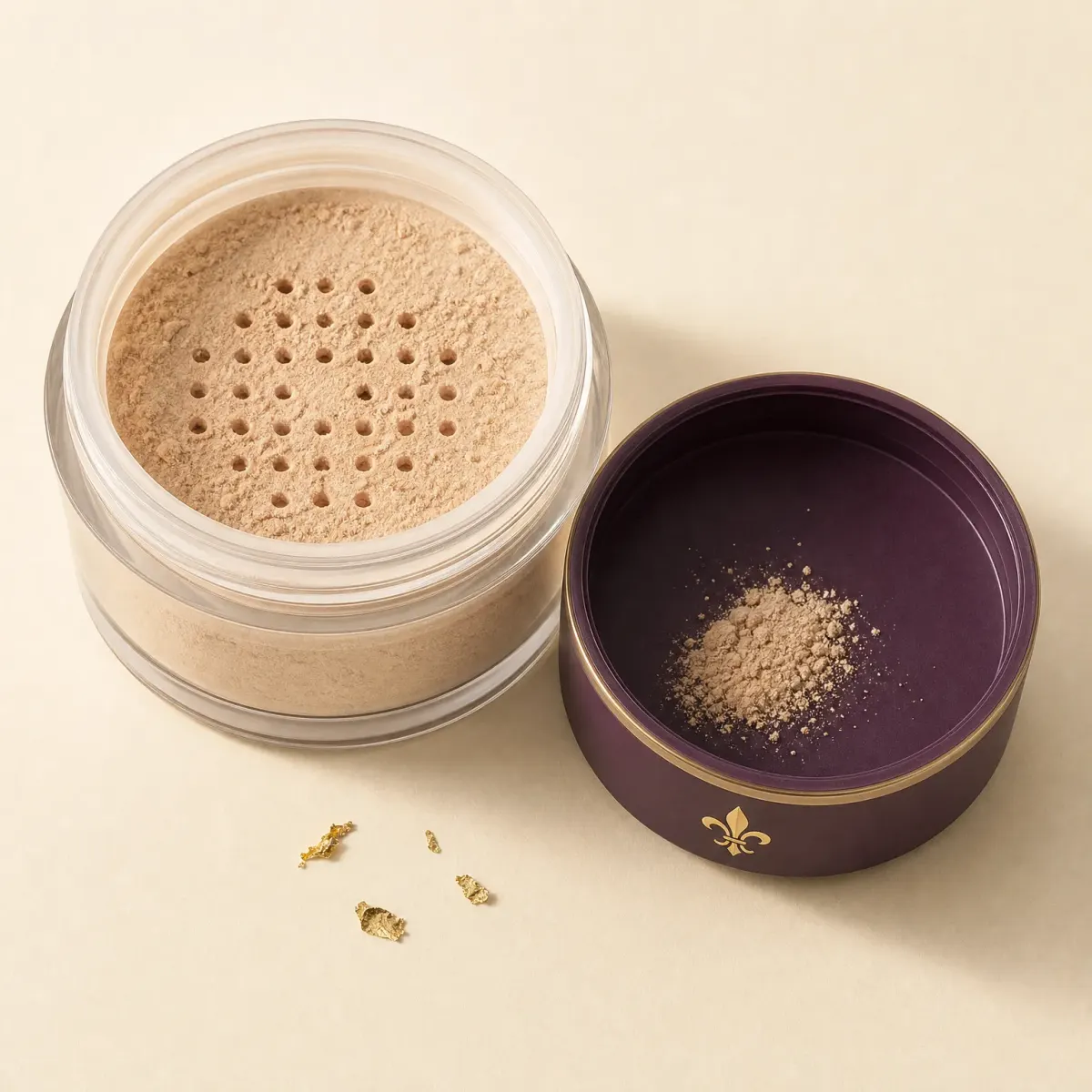
Loose mineral foundation is a loose powder foundation made mainly of finely milled mineral pigments and fillers — typically mica, titanium dioxide, zinc oxide and iron oxides — buffed onto the skin with a brush to build coverage.
Our picks
Chosen from the specialist mineral houses that still make loose mineral foundation, with a range of finishes from luminous to matte. Each opens where its maker sells it, on Amazon or at the house’s own shop, and you choose your shade on that page.
As an Amazon Associate I earn from qualifying purchases. Affiliate links — we may earn a commission at no extra cost to you. How this works
The originalMid-range bareMinerals
ORIGINAL Loose Powder Foundation SPF 15
The original from the company that sold loose mineral foundation on television, with SPF 15 built in.
- SPF 15
- Sheer to full
- Luminous
Luminous coverPrestige Jane Iredale
Amazing Base Loose Mineral Powder SPF 20/15
An airy loose mineral base, swept on for a luminous finish and built up where needed.
- SPF 20/15
- Light to full
- Luminous
British houseMid-range Lily Lolo
Mineral Foundation SPF 15
A British mineral house’s loose foundation with SPF 15, for a light, buildable base.
- SPF 15
- Loose mineral
MattePrestige Youngblood
Natural Loose Mineral Foundation
The matte choice among loose minerals, for oilier skin that finds the luminous ones too shiny.
- Matte
- Full coverage
- Vegan
Loose mineral foundation is foundation sold as a loose powder made mainly of finely milled minerals. Mica or sericite gives it slip and a soft glow; titanium dioxide and zinc oxide give it whiteness and cover; iron oxides give it colour; some formulas add bismuth oxychloride for a pearly finish. Unpressed and usually made without oils or binders, it is not so much applied as built: a little powder is buffed into the skin in thin layers until the coverage is right.
Most foundations are coloured with mineral pigments, so the word describes a form and a formula rather than a secret ingredient. What sets this kind apart from its neighbours is what is left out. A pressed mineral foundation adds binders so that it can be pressed into a compact. A loose setting powder has little or no pigment and is meant to fix a foundation, not replace one. A powder foundation is pressed and usually built on talc. Loose mineral foundation is the unbound version: adjustable, light on the skin, and messier to carry.
Tap, swirl, buff
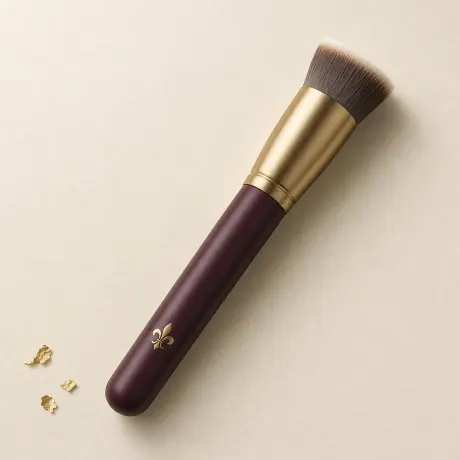
The method matters more than with any other foundation. Shake or tap a little powder through the sifter into the lid — less than seems enough. Swirl a kabuki or dense flat-top brush in the lid so the powder works down into the bristles, then tap the handle against the side so the excess falls back. Buff the brush over the face in small circles, starting at the centre and working outward, and repeat in thin layers until the coverage is where you want it.
Buffing, not sweeping, is what makes the powder look like skin: the circles press it into the surface and warm it slightly. Where you need more cover — over redness, marks or shadows — press or stipple a little extra on with a smaller brush. Start on moisturised skin that has had a few minutes to settle; on damp or oily patches the powder grabs and goes blotchy.
A loose mineral foundation also sets whatever is under it, so it can be buffed lightly over a concealer or a liquid base. For a less powdery finish at the end, mist the face with water or setting spray and let it dry.
Choosing a shade and finish
Loose minerals look different in the jar from the way they look on the skin, often lighter or pinker, and some deepen a little over the first hour of wear. Test on the jaw, buffed in rather than dabbed, and judge it in daylight after some time has passed. Undertone matters as much as depth: a shade that leans too warm or too cool shows as a cast on the face.
Finishes divide broadly into luminous and matte. The luminous ones, often with mica or bismuth oxychloride, catch the light and suit normal to dry skin; the matte ones hold down shine and suit oilier skin better. If a luminous formula looks too shiny by midday, a matte one, or a light layer of a matte powder over it, is the fix. Coverage depends on how much powder is on the brush as much as on the formula: two or three thin layers look far more like skin than one heavy one.
Keeping the mess in the jar
A loose powder travels badly. Close the sifter after each use, keep the lid tight, and tap rather than shake. Wash the buffing brush every week or so with a gentle soap, since it goes back into the lid every day, and let it dry flat.
Keep the jar upright and dry: a damp brush pushed into loose powder leaves clumps that are hard to break up, and a clogged sifter can be cleared by pushing a clean, dry cotton bud gently through the holes. For travel, a pressed mineral foundation, or a brush that holds a little powder in its handle, spares the handbag.
Where it came from
As a named category, mineral foundation is recent, and its history is best documented through one company. The Bare Escentuals brand, according to its annual report, dates back to the opening of its first boutique in 1976.[1] The company dates the launch of bareMinerals to 1995.[2]
It was sold on television. The line was on air at QVC from 1997, and from 2002 in a long-form infomercial, programmes the company said were meant to “communicate the unique properties of mineral-based cosmetics and educate the consumer regarding proper application techniques”.[1] The company went public on 4 October 2006. Its annual report filed in February 2008 described the products as “made primarily from finely milled minerals”, without the “preservatives, oil, fragrances, talc, waxes, binders” found in liquid, cream and pressed cosmetics, and noted that Avon, L’Oréal and Neutrogena had “recently launched mineral-based makeup”.[1] In January 2010 Shiseido agreed to buy the company, presenting the purchase as an expansion into “the mineral-based cosmetics market”.[3]
The record before bareMinerals is thin. The company called itself “a leader by sales and consumer awareness in mineral-based cosmetics”, a claim about its position rather than about who came first, and no source read here names a first loose mineral foundation.[1] What has lasted is less the label than the method: a little powder in the lid, a brush swirled in it, and coverage built in thin, buffed layers.
The techniques
- Buff
- Work in small circles with a dense brush until no edge remains.
Sources
- [1]Form 10-K, Annual Report for the fiscal year ended December 30, 2007 U.S. Securities and Exchange Commission (EDGAR), 2008.View source (opens in a new tab) Accessed 2026-09-25.
- [2]About bareMinerals bareMinerals (company website).View source (opens in a new tab) Accessed 2026-09-25.
- [3]Shiseido Announces Tender Offer to Acquire Bare Escentuals (news release) Shiseido Co., Ltd., 2010.View source (opens in a new tab) Accessed 2026-09-25.
What to apply it with

Other kinds of foundation & tinted base
Liquid foundation
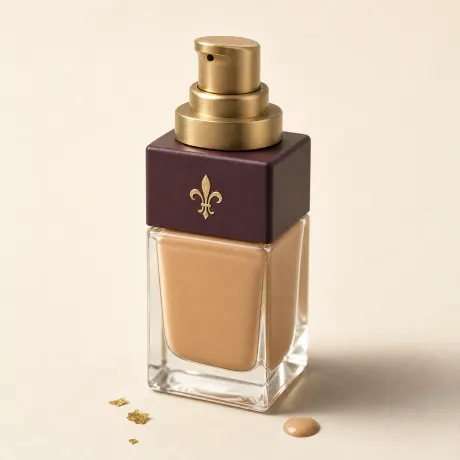
The standard base: pigment suspended in a fluid, in shades matched to the skin.
Read the guide
Skin tint
A watery, sheer base that evens tone while letting skin show through.
Read the guide
Tinted moisturiser
A moisturiser with a little pigment in it — often with sunscreen — for the lightest base.
Read the guide
BB cream
A skincare-leaning base that tints, smooths and usually protects in one step.
Read the guide
CC cream
A light base built to neutralise redness or sallowness rather than simply cover it.
Read the guide
Cream foundation
A dense, emollient base with high coverage, suited to dry skin and to photography.
Read the guide
Stick foundation
Cream foundation set into a twist-up stick, for targeted coverage and travel.
Read the guide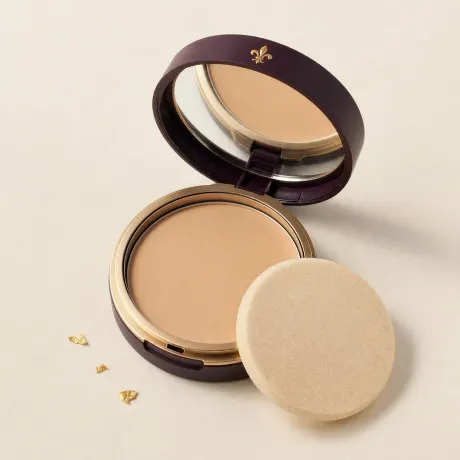
Powder foundation
Foundation pressed into a powder cake, for a quick matte base in one step.
Read the guide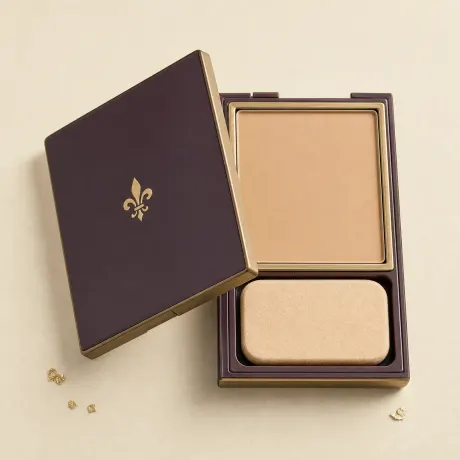
Two-way cake foundation
A pressed foundation made to be used dry for a sheer finish or with a damp sponge for coverage.
Read the guide
Cushion foundation
Liquid foundation soaked into a sponge cushion inside a compact, picked up with a puff.
Read the guide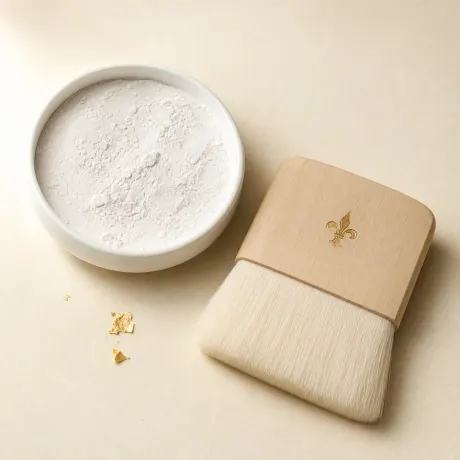
Oshiroi
Japanese white face powder, mixed with water to a paste and laid on with a broad flat brush.
Read the guide