Stick foundation
Cream foundation firmed into a twist-up stick: quick to use, easy to carry and easy to place exactly where it is needed. What it is, how to choose one, how to draw it on and blend it out — and where it came from.
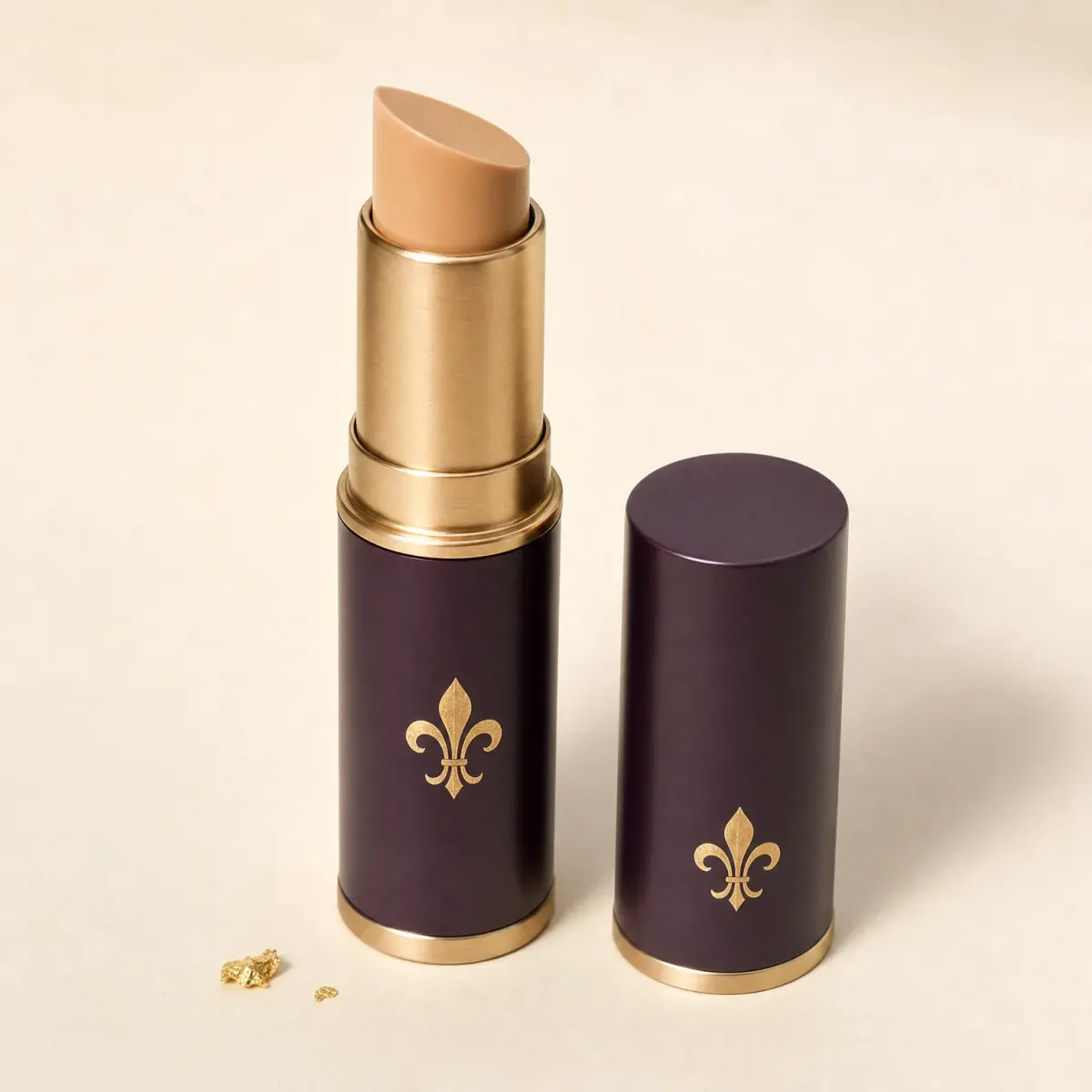
Stick foundation is cream foundation firmed with waxes into a solid, twist-up stick, drawn straight onto the skin where coverage is needed and blended out, usually for medium to full coverage.
Our picks
Chosen across coverage and finish — from a sheer glow tint to full theatrical cover — and across budgets. Each opens where its maker sells it, on Amazon or at the house’s own shop, and you choose your shade on that page.
As an Amazon Associate I earn from qualifying purchases. Affiliate links — we may earn a commission at no extra cost to you. How this works
The classic stickPrestige Bobbi Brown
Skin Foundation Stick
The reference point for the format: a creamy stick that evens tone with real-skin coverage.
- Medium to full
- Creamy
Deeper skin tonesDrugstore Black Opal
True Color Skin Perfecting Stick Foundation SPF 15
An inexpensive stick in shades made for deeper skin, from a brand built for it.
- SPF 15
- Normal to dry skin
Full coveragePrestige Hourglass
Vanish Seamless Finish Foundation Stick
Buildable full coverage with a satin finish, for evenings and photographs.
- Satin finish
- Buildable full
Cream to powderMid-range Nudestix
Tinted Blur Foundation Stick
Sets to a soft powder finish, which suits combination skin better than a creamy stick.
- Cream-to-powder
- Natural matte
Multi-usePrestige Dior
Dior Forever Skin Perfect
Made to do three jobs — foundation, concealer and touch-up — from one stick.
- Natural finish
- 24h wear
- 25 shades
Stage and screenMid-range Mehron
CreamBlend Stick
A theatrical house’s stick, for heat, lights and long performances.
- Full coverage
- Long-wear
Sheer glowPrestige Charlotte Tilbury
Unreal Skin Sheer Glow Tint Hydrating Foundation Stick
The lightest stick here: a hydrating tint for skin that needs evening, not covering.
- Sheer to light
- Buildable
- Hydrating
Undertone rangeMid-range Juvia's Place
The Shade Stick Foundation
A creamy stick with the undertone named on every shade, sold to do three jobs: foundation, concealer and contour.
- Buildable
- Creamy
- Multi-use
Second skinPrestige Westman Atelier
Vital Skin Foundation Stick
A make-up artist’s stick, meant to be layered only where coverage is needed.
- Buildable
- Second-skin finish
Long wearPrestige Lancôme
Teint Idole Ultra Wear Foundation Stick
Full, matte, long-wearing cover in stick form, for oilier skin and long days.
- Full coverage
- Natural matte
- Up to 24H
Stick foundation is cream foundation made firm enough to hold its shape: pigment carried in oils and emollients and set with waxes, then moulded into a stick that twists up like a lipstick. Drawn across the skin, the warmth of the face softens it enough to blend. It gives medium to full coverage for most formulas, though a few are made sheer, and the finish runs from satin to natural matte to a hydrated glow.
Its closest neighbours are easy to confuse. A stick concealer is smaller, drier and more heavily pigmented, made for spots and shadows rather than the whole face. A cream foundation in a jar is the same idea with less wax, softer and slower to apply. A skin-tint stick or blush stick carries far less pigment. The stick’s own case is convenience and control: no bottle to spill, no brush needed in a hurry, and coverage placed exactly where it is wanted.
Choosing a stick
Choose by texture first. A creamy, emollient stick glides and blends easily and suits normal to dry skin; a firmer, matte or cream-to-powder stick grips better on oily skin and moves less through the day. Pressed with a fingertip, a good stick should give slightly and leave a smooth swatch without drag.
Then decide on coverage. Most sticks are built for medium to full cover, which is what the format does best, but a few are sheer tints meant to be swiped on and patted in. A stick used for full coverage all over can feel heavy; many people use one only on the centre of the face, around the nose and on the chin, and leave the rest bare or sheer.
A stick is also the easiest foundation to use in more than one way, and several are now sold as multi-use. A shade that matches can go under the eyes and over marks as a concealer; a shade or two deeper can be drawn under the cheekbones as a contour. Match the main shade on the jaw in daylight, as with any foundation, and check that the range includes your depth and undertone before settling on a formula: a stick cannot be thinned with a drop of moisturiser the way a liquid can, so a shade that is slightly off is harder to rescue.
Drawing it on and blending it out
Start on moisturised skin: a stick drags on dry patches and settles into flakes. Draw a few short stripes where coverage is needed — across the forehead, down the nose, on each cheek and the chin — or dab the stick only on the places that need cover. Less is more; it is easier to add a stripe than to take one away.
Then blend at once, before the edges set. A dense flat-top or kabuki brush, buffed in small circles, gives the smoothest, fullest finish. A damp sponge, pressed and bounced, sheers it out and leaves the most skin-like result. Fingers work for sheer sticks and touch-ups. Blend outward toward the hairline and down onto the neck so no line shows at the jaw, and set only the areas that crease or shine with a light press of powder. On warm days, or with a matte stick that sets quickly, work one area at a time — forehead, then cheeks, then chin — blending each before drawing the next stripe.
For touch-ups later in the day, blot first, then dab and press rather than drawing the stick over powder, which it lifts. Keep the stick capped and out of heat, which softens it, and wipe the top with a tissue now and then: it touches the skin directly, and a clean surface keeps it that way.
Where it came from
The stick has a long theatrical history. The opera singer Ludwig Leichner established a commercial make-up business in Berlin in 1873 and, in the historian James Bennett’s words, was the one who “first commercialised the idea” of greasepaint, sold as sticks: thicker sticks for the base or foundation, thinner ones, called liners, for shadows and lines, in colours numbered from No. 1 as the lightest.[1] Off the stage, Lydia O’Leary’s Covermark range of 1936 already included a Spot-Stik for single blemishes, produced and packaged like a lipstick.[2]
One well-documented route to the everyday stick ran through the film studios. In 1946 Max Factor adapted its Pan-Cake make-up for black-and-white television, and the following year introduced Pan-Stik, “a creamy, greaseless make-up in stick form”, in professional versions made to suit black-and-white and colour film stocks and, later, television.[3] It was released as a general make-up in 1948, in five “color harmony” and two “sun tan” shades, and advertised with the line “No puff, no sponge, can’t spill or leak in your purse”; it was turned up like a lipstick, dabbed on the forehead, nose, cheeks and chin, and blended with the fingertips.[3] In Japan, according to Shiseido’s own account, the company launched Zotos Face Stick in 1950, an oil-based cream powder that it describes as the arrival of a portable stick type.[4]
The instructions have barely changed since: turn it up, dab it where it is needed, blend it out. What has changed is the range of finishes, from full theatrical cover to a sheer glow in the same shape.
The techniques
- Buff
- Work in small circles with a dense brush until no edge remains.
- Press
- Press product onto the skin without dragging, so it stays where it is put.
Sources
- [1]Greasepaint Cosmetics and Skin, 2010.View source (opens in a new tab) Accessed 2026-09-25.
- [2]Covermark Cosmetics and Skin, 2012.View source (opens in a new tab) Accessed 2026-09-25.
- [3]Max Factor (1945–1960) Cosmetics and Skin, 2026.View source (opens in a new tab) Accessed 2026-09-22.
- [4]資生堂のファンデはどうやって進化していったの? (How did Shiseido’s foundations evolve?) Shiseido, Foundation 100 Questions and 100 Answers.View source (opens in a new tab) Accessed 2026-09-25.
What to apply it with
Flat-top buffing brush
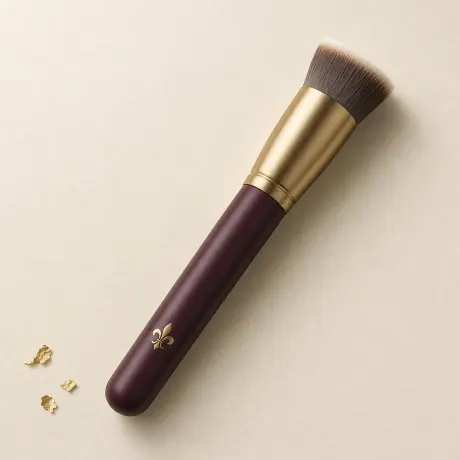
A dense brush cut straight across, which buffs liquid and cream into skin with no streaks.
Read the guide
Kabuki brush
A squat, palm-sized brush with a very dense dome of short bristles on a stubby handle, for buffing powders and creams into the skin.
Read the guide
Blending sponge
A soft, teardrop-shaped sponge, used damp, that presses liquid and cream into skin.
Read the guide
Other kinds of foundation & tinted base
Liquid foundation
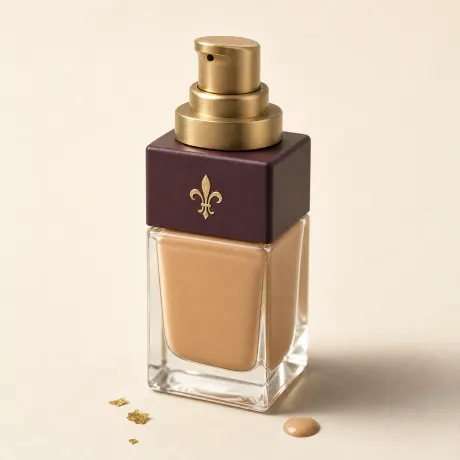
The standard base: pigment suspended in a fluid, in shades matched to the skin.
Read the guide
Skin tint
A watery, sheer base that evens tone while letting skin show through.
Read the guide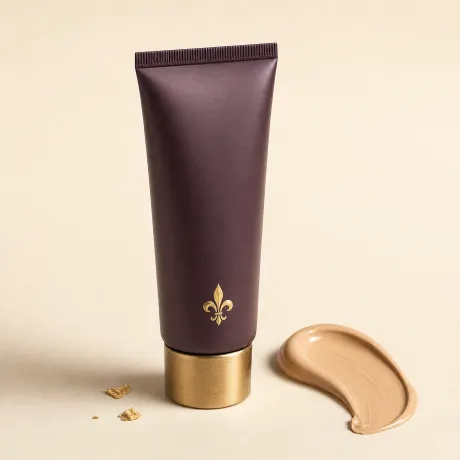
Tinted moisturiser
A moisturiser with a little pigment in it — often with sunscreen — for the lightest base.
Read the guide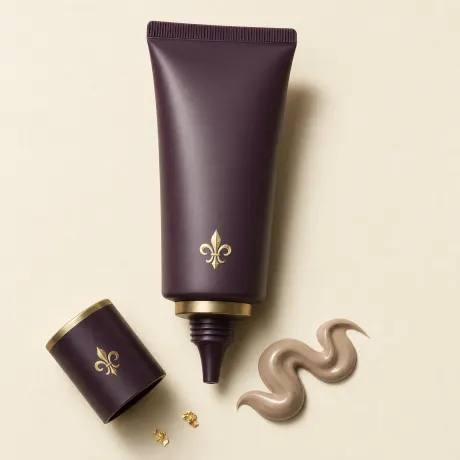
BB cream
A skincare-leaning base that tints, smooths and usually protects in one step.
Read the guide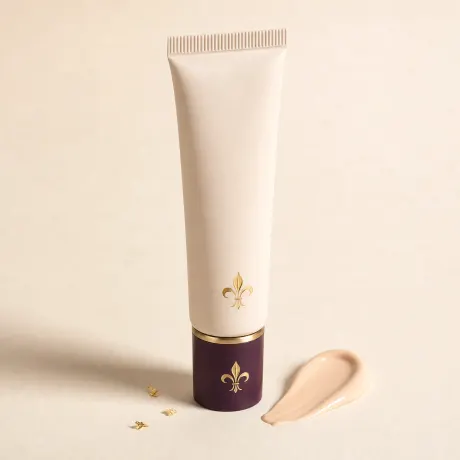
CC cream
A light base built to neutralise redness or sallowness rather than simply cover it.
Read the guide
Cream foundation
A dense, emollient base with high coverage, suited to dry skin and to photography.
Read the guide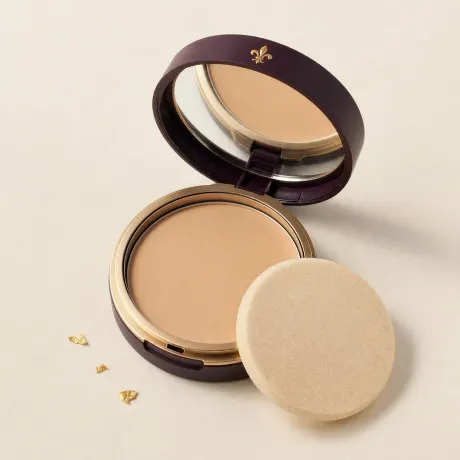
Powder foundation
Foundation pressed into a powder cake, for a quick matte base in one step.
Read the guide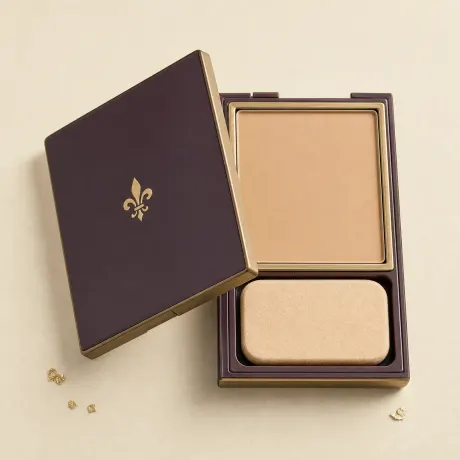
Two-way cake foundation
A pressed foundation made to be used dry for a sheer finish or with a damp sponge for coverage.
Read the guide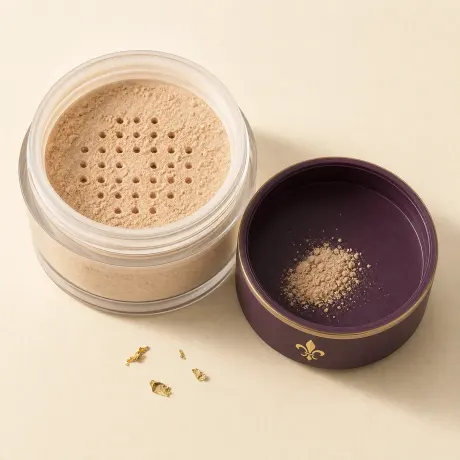
Loose mineral foundation
Foundation as a loose, finely milled mineral powder, buffed in to build coverage.
Read the guide
Cushion foundation
Liquid foundation soaked into a sponge cushion inside a compact, picked up with a puff.
Read the guide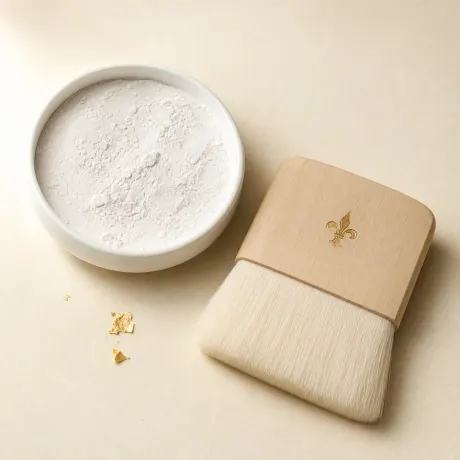
Oshiroi
Japanese white face powder, mixed with water to a paste and laid on with a broad flat brush.
Read the guide