CC cream
A light base built to correct colour — redness, sallowness, dullness — rather than simply cover it. How it differs from a BB cream, how to choose and wear one, and why its two letters have never meant one thing.
A CC cream (“colour-correcting” cream) is a tinted cream built to neutralise uneven colour — redness, sallowness or dullness — rather than hide it, usually with a sunscreen and generally with light to medium coverage.

Our picks
Chosen to show how far the name stretches — serum and cream, redness correctors and all-over tone-evening creams, medium coverage to full — across budgets from drugstore to prestige. These are the CC creams we could confirm as sold in the US by their makers; each opens on Amazon, sold by the maker or by Amazon itself, or at the maker’s own shop, and you choose your shade on that page. Sunscreen figures are the makers’ claims.
As an Amazon Associate I earn from qualifying purchases. Affiliate links — we may earn a commission at no extra cost to you. How this works
Full coveragePrestige IT Cosmetics
CC+ Cream with SPF 50+
Sold as a full-coverage foundation with a very high SPF claim — proof that the letters promise no particular coverage.
- Full coverage
- Natural finish
- SPF 50+
Budget correctionDrugstore Physicians Formula
Super CC+ Color-Correction + Care Cream
A drugstore CC sold for uneven tone, with the colour-correcting idea front and centre.
- Colour correcting
- Full coverage
Serum CCMid-range Tarte
CC Color-Correcting Tinted Serum
A CC in serum form, sold as adapting its pigment to the skin as it is blended.
- Lightweight
- Shade-adapting
- Waterproof
HydratingPrestige Clinique
Moisture Surge CC Cream Hydrating Colour Corrector SPF 30
The lighter end of the kind: a hydrating cream that corrects and protects, sold for all skin types.
- Medium coverage
- Natural finish
- SPF 30
Drugstore originalDrugstore Olay
Total Effects 7 in One CC Tone Correcting Moisturizer SPF 15
The drugstore CC counted by one analyst as the first mass-market CC in the United States, still sold by its maker.
- Tone correcting
- SPF 15
Tone-eveningPrestige Erborian
CC Cream with Centella Asiatica
A Korean-inspired CC sold on evening tone rather than hiding it, with buildable coverage.
- Buildable
- Evens tone
- 2% centella
Mineral CCMid-range Juice Beauty
Stem Cellular CC Cream SPF 30
A dewy CC with a zinc-based sunscreen, from a brand built around organic ingredients.
- Mineral SPF 30
- Dewy
Redness treatmentPrestige Dr.Jart+
Cicapair Tiger Grass Color Correcting Treatment SPF 30
Sold as a colour-correcting treatment rather than under the CC name: the CC idea in all but name, aimed at redness.
- Colour correcting
- For redness
- SPF 30
Medium to fullDrugstore e.l.f. Cosmetics
Camo CC Cream
An inexpensive CC that covers like a foundation, with a sunscreen.
- Medium to full
- SPF 30
RednessPrestige Erborian
CC Red Correct
Green in the tube and made for redness: the clearest case of a CC cream that corrects one thing.
- Green corrector
- For redness
- SPF 25
A CC cream is a tinted cream built around colour correction. Where a foundation hides uneven colour under an opaque layer, a CC cream is meant to cancel it — pigment chosen to offset a cast, green against redness for instance, or light-reflecting particles against dullness — so that less coverage is needed. Most carry a sunscreen, the finish is usually satin, and the coverage, in most makers’ telling, light to medium.
The letters do not mean one thing. They are usually read as “colour correcting”, but no standard fixes them, and sources disagree even about whether a CC covers more than a BB cream or less: a trade article of 2013 said more,[1] while a New York Times report of 2014 called the CC the BB’s “lighter sibling”.[2] In practice it depends on the maker — two of the CC creams on this page are sold as full coverage. Against its other neighbours the line is clearer: a skin tint or a tinted moisturiser is sheerer and does no deliberate correcting, a BB cream is the all-rounder sold on skincare, and foundation covers.
Choosing one
Start with what you want corrected. For redness — around the nose, across the cheeks — look for a formula sold as correcting it; some go on with a green cast that settles as you blend. For sallowness or dullness, look for one sold as brightening or light-reflecting rather than simply covering. For both at once, you are probably looking for coverage, and a full-coverage CC is a foundation by another name.
Then read the coverage claim, because the range is wide: from “medium coverage” for a hydrating cream to “full coverage” for another sold under the same two letters. Some CC creams come in only one or a few shades, on the maker’s claim that the pigment adjusts to the skin as it is blended. Test that claim on your own jaw, in daylight, before trusting it; on skin much deeper or fairer than the shade was made for, it may not disappear at all.
Finally, treat the SPF as the maker’s claim, and a CC cream as colour first. If sun protection matters that day, wear a sunscreen underneath.
Correcting by colour
Colour correction works by opposites. A green tint cancels red, which is why redness correctors, and several CC creams, look green in the tube. Peach and apricot cancel the blue-grey of shadows on light and medium skin; deeper orange and red do the same on deep skin. Lavender, or a cool pink, lifts a sallow, yellowish cast. A CC cream usually does one of these jobs gently across the whole face, where a corrector does it strongly in one place.
That is also why a CC cream can disappoint on skin that is uneven in more than one way. If you have redness across the cheeks and shadows under the eyes, let the CC deal with the larger problem, and use a little of the right corrector, or a concealer, on the other. Two tinted correcting creams layered over the whole face rarely look like skin.
How to apply it
If you wear a separate sunscreen, put it on first and give it a few minutes to settle; a CC cream worked over wet sunscreen slides, and its correcting pigment ends up in streaks. Then use a small amount, dotted where the colour is most uneven — usually the centre of the face — and blend outward with the fingertips, a damp sponge or a flat-top brush. Give it a minute before judging: colour-adjusting formulas are sold as changing as they are worked in, and one that looks grey or green at first may settle to skin tone.
Then look again, and add concealer only where something is still showing. The point of a CC cream is that it should need less on top of it; if you find yourself covering everything afterwards, a lightweight foundation would have done the job in one step.
Where it came from
The CC cream followed the BB cream out of Asia within a couple of years. A trade article of April 2013 described CC creams as new to the market from Korea; in the same publication that month, an analyst at Euromonitor counted Olay’s Total Effects CC Tone Correcting, which reached American shelves at the end of 2012, as the first mass-market CC cream in the United States, and noted that, like the BB, the trend had come from Asia.[3]
Prestige houses were not far behind. By August 2013, when Chanel’s CC Cream reached Britain after launching first in Asia — an SPF 30 mineral sunscreen with hyaluronic acid and colour-correcting mineral pigments, in a single shade — L’Oréal, Olay and Clinique already had CC creams on sale.[4]
The same Euromonitor analyst was frank about what had happened: CC creams had taken a concept that worked well, the BB, and given it “a marketing overhaul just at the moment when demand was starting to look vulnerable”.[3] That is not a reason to dismiss them. The letters guarantee nothing, but the idea underneath — correct the colour and you need less cover — is the one behind every green or peach corrector in a makeup artist’s kit, and a good CC cream is simply that idea in a tube.
The techniques
- Dot and blend
- Place small dots of product, then blend them outward.
- Pat
- Tap lightly with a fingertip or damp sponge so product melts in rather than moves.
Sources
- [1, 3]The Anatomy of BB Creams Global Cosmetic Industry, 2013.View source (opens in a new tab) Accessed 2026-09-25.
- [2]Skin Care Products From South Korea Catch On in United States The New York Times, 2014.View source (opens in a new tab) Accessed 2026-09-25.
- [4]Chanel’s CC Comes Early British Vogue, 2013.View source (opens in a new tab) Accessed 2026-09-25.
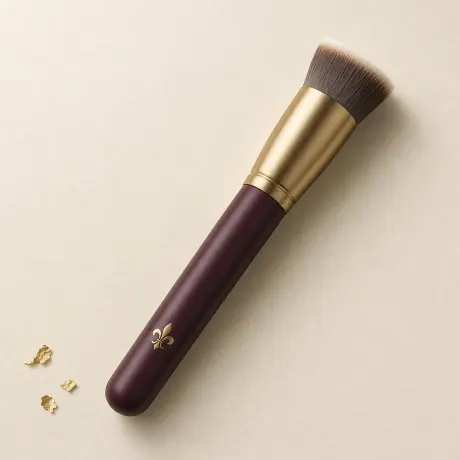
What to apply it with

Other kinds of foundation & tinted base
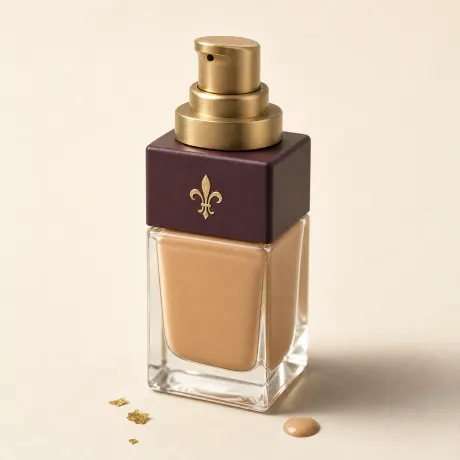
Liquid foundation
The standard base: pigment suspended in a fluid, in shades matched to the skin.
Read the guide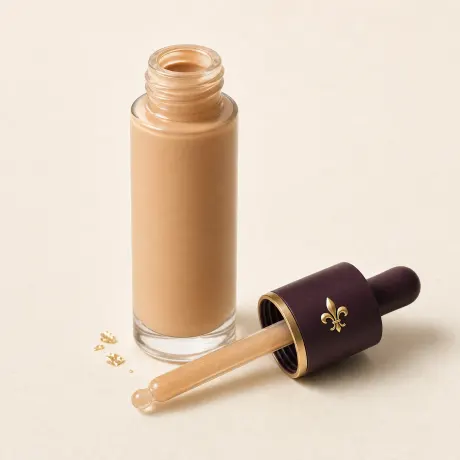
Skin tint
A watery, sheer base that evens tone while letting skin show through.
Read the guide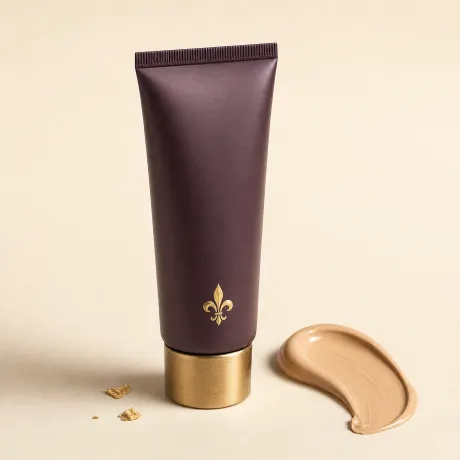
Tinted moisturiser
A moisturiser with a little pigment in it — often with sunscreen — for the lightest base.
Read the guide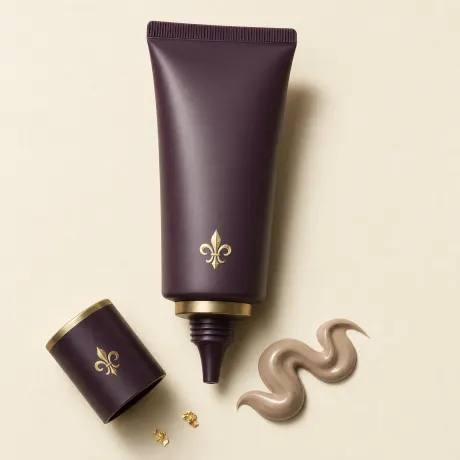
BB cream
A skincare-leaning base that tints, smooths and usually protects in one step.
Read the guide
Cream foundation
A dense, emollient base with high coverage, suited to dry skin and to photography.
Read the guide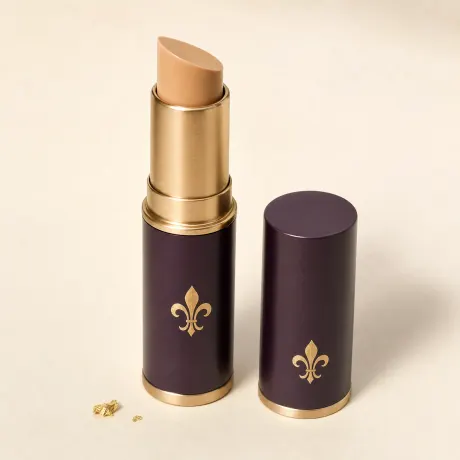
Stick foundation
Cream foundation set into a twist-up stick, for targeted coverage and travel.
Read the guide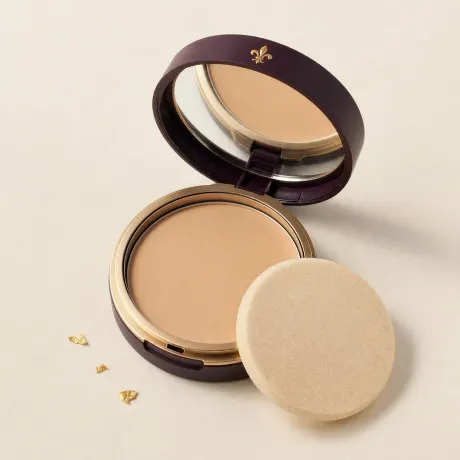
Powder foundation
Foundation pressed into a powder cake, for a quick matte base in one step.
Read the guide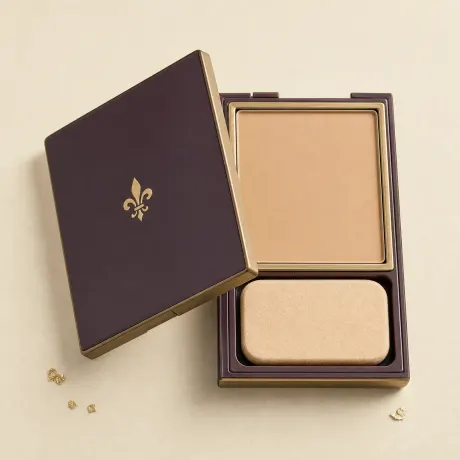
Two-way cake foundation
A pressed foundation made to be used dry for a sheer finish or with a damp sponge for coverage.
Read the guide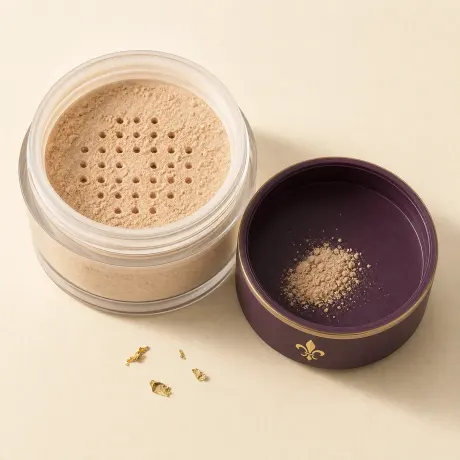
Loose mineral foundation
Foundation as a loose, finely milled mineral powder, buffed in to build coverage.
Read the guide
Cushion foundation
Liquid foundation soaked into a sponge cushion inside a compact, picked up with a puff.
Read the guide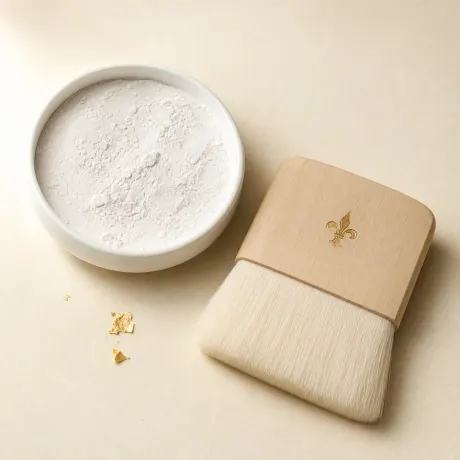
Oshiroi
Japanese white face powder, mixed with water to a paste and laid on with a broad flat brush.
Read the guide