Stippling brush
A two-layered brush that dots foundation onto the skin instead of wiping it on, for a sheer, soft finish. How the two fibres work and how to stipple, and a technique borrowed from engravers and decorators.
A stippling brush is a duo-fibre brush, a dense base of short fibres under a sparser layer of longer ones, that is bounced against the skin to dot on liquid or cream makeup for a sheer, airbrushed-looking finish.

Our picks
Chosen across the duo-fibre forms now sold, from full-face stipplers to small ones for blush and highlighter, flat-topped and domed, in goat hair and synthetic fibre, from drugstore to prestige. Each opens where its maker sells it: on Amazon, or at the house’s own shop; one Australian house ships from its own shop abroad.
As an Amazon Associate I earn from qualifying purchases. Affiliate links — we may earn a commission at no extra cost to you. How this works
Goat and syntheticPrestige Hakuhodo
J4001BkSLN Powder & Liquid Foundation Duo Fiber
The classic construction, goat hair beneath longer synthetic tips, sold by its Kumano maker as “great for stippling”.
- Goat and synthetic
- Liquid, cream or powder
Full faceDrugstore Real Techniques
Extra Big Stippling Brush
An oversized duo-fibre stippler for sheer, buildable coverage with skin tints and BB or CC creams.
- Duo fibre
- Extra large
- Skin tints, BB and CC
Wispy flat-topMid-range Sigma Beauty
F80 Air Flat Kabuki Brush
The house’s best-selling dense flat-top, by its own account, remade in soft, wispy duo fibre for a lighter, dewier finish.
- Duo fibre
- Sheer to medium
- Liquid and cream
Colour and shimmerPrestige Laura Mercier
Finishing Brush
Short fibres hold the product and long ones buff it on: made for colour and shimmer on the face and décolleté.
- Duo synthetic fibre
- Face and décolleté
Domed budgetDrugstore e.l.f. Cosmetics
Domed Stipple Brush
An inexpensive domed stippler with two layers of synthetic bristles, for soft, buildable layers.
- Two layers
- Synthetic
- Liquid, cream or powder
Tinted moisturiserMid-range bareMinerals
Smoothing Face Brush
Shorter brown fibres pick product up and longer ivory ones diffuse it: made for tinted moisturiser and other creamy formulas.
- Dual-fibre
- Synthetic
- Domed
Duo-fibre blushPrestige MAC Cosmetics
159 Synthetic Duo Fibre Blush Brush
A small, rounded, double-chiselled duo-fibre brush for blush, shading and highlight rather than a whole face.
- Duo fibre
- Synthetic
- Powder or cream
Dual fibreDrugstore NYX Professional Makeup
Pro Dual Fiber Foundation Brush
A soft, full dual-fibre brush for an airbrushed finish with liquid foundation.
- Dual fibre
- Synthetic
- Liquid foundation
Flat-domedMid-range Bdellium Tools
Golden Triangle 953 Duo Fibre Foundation
A short, flat-domed duo-fibre head, sold above all for cream foundation.
- Duo fibre
- Short, flat-domed
- Vegan synthetic
Budget stipplerDrugstore L.A. Girl
Stippling Brush
An inexpensive dual-fibre stippler for spreading liquids and creams evenly.
- Dual fibre
- Synthetic
- Liquids and creams
Large duo fibreMid-range Spectrum Collections
Pantherine D17 Large Duo Fibre Foundation Brush
Shorter bristles place the foundation and longer ones feather it outward, so there are no hard edges.
- Duo fibre
- Large head
MiniDrugstore ColourPop
Mini Duo Fiber Face Brush
A small, fluffy duo-fibre brush for blending concealer or diffusing highlighter.
- Duo fibre
- Mini
- Liquid, cream or powder
Cream blushMid-range Laura Geller
Wonder Brush
A dense duo-fibre brush made for cream and liquid blush, to blend a wash of colour or build it up.
- Duo fibre
- Dense
- Cream and liquid blush
Pro roundDrugstore Crown Brush
Pro Duo Fiber Round Blender Brush C502
A round duo-fibre brush from a professional maker: long fibres disperse the foundation while the dense base keeps the shape.
- Duo fibre
- Synthetic
- Medium to full
Short fibresMid-range Rae Morris
Jishaku #23.5 Duo Fibre Foundation Brush
A duo-fibre brush with deliberately short fibres, for fewer streaks and more control with liquids.
- Duo fibre
- Shorter fibres
- Liquids
A stippling brush holds two kinds of fibre in one head: a short, dense layer at the base and a sparser layer of longer fibres standing above it, often in a lighter colour, so that many stipplers look two-toned. The long fibres touch the skin first while the short ones hold the product back, so each tap leaves only a little, in tiny dots that blur together. The result is a sheer, even layer with a soft finish, the effect makers call airbrushed.
It is used by tapping, not wiping, which is what stippling means. A flat-top buffing brush, dense all the way through, gives fuller coverage; a flat paddle paints; a damp sponge presses and bounces much as a stippler does. The stippler suits thin liquids, skin tints, cream blush and highlighter, and anyone who wants foundation to look like less than it is.
How the two layers work
Judge a stippler by the balance between its layers. Where the long fibres stand well clear of the short ones, the brush is springy and deposits very little: good for sheer layers, blush and highlighter. Where the layers are closer, it behaves more like a flat-top and gives more coverage. Hakuhodo describes its own in just these terms: synthetic fibres that “extend further than the goat hair” give the brush its spring and let it pick up “just the right amount of product”.[1]
Size matters as much. A large, full-face stippler, such as Real Techniques’ Extra Big, covers a face quickly with a skin tint or BB cream; a small one places cream blush, concealer or highlight exactly. Most of the stipplers in the carousel are wholly synthetic, which suits liquids. The older mix, goat hair under synthetic tips, adds the grip that natural hair has for powder.[2] MAC’s large duo-fibre face brush, the 187, no longer appears in its US catalogue; the MAC here is its smaller duo-fibre blush brush.
How to stipple
Use less product than you think. Put a little foundation on the back of your hand, touch only the tips of the brush to it, and tap them onto the face, holding the brush upright and bouncing it lightly so that the long fibres flex and the short ones barely touch. Work outward from the centre of the face and build in layers, letting each settle for a moment. Do not drag or scrub, or the long fibres splay and the dots become streaks; a light circle at the end, with almost no pressure, softens any edges.
Cream blush and highlighter work the same way: tap the colour on where you want it, then bounce outward to soften the edge. Keep the head in shape. Wash a stippler after each use with liquids, from the base outward, squeeze it gently, reshape the long fibres with your fingers and dry it lying flat. One whose outer fibres have splayed into a fan deposits unevenly and is due for replacement.
Brush or sponge
A stippler and a damp sponge do nearly the same job: both press product on in dots and blur it into the skin. The differences are practical. A sponge has to be damp, so it thins the product a little and holds some of it back; a stippler is used dry and puts down more of what it picks up, so it gives a little more coverage from the same drop of foundation. A sponge presses into the corners of the nose and under the eyes more easily; a stippler covers the broad planes of the cheeks and forehead faster. Many people use both, the brush for the face and the sponge for the corners, pressing everything together at the end.
Where it came from
Stippling is older than any brush made for the face. The Getty’s art vocabulary defines it simply as marking a surface with small flicks or dots,[3] and printmakers built whole tones out of it: stipple engraving, in the same vocabulary’s words, “achieves tonal areas by directly engraving short flicks or dots”.[4] The V&A holds one such print, a stipple engraving by Victor Marie Picot published on 21 February 1776.[5]
The stippling brush itself came from decorating. In a patent application filed in 1921, the New York inventor Charles G. Hampson described the stippling brushes then in use, of “long stiff bristles set into a suitable back”, struck again and again against a coated wall “to give the well known mottled or stippling effect”, and listed their faults: the bristles bunched together, clogged when the colour was a little too thick, and wore down faster at the edges than in the middle. His answer, patented in 1923, was to stipple with a porous rubber sponge instead.[6] The brush did not disappear: a British patent published in 1957 still refines the decorator’s stippling brush, building it from separate units of bristles set in rubber on metal plates, which could be joined on one backing into a larger brush.[7] The same choice, brush or sponge, faces anyone putting on foundation today.
When the two-layered stippling brush reached the makeup counter is not well recorded: the houses that sell it describe the design, long fibres over short, but not where it came from. What it keeps from those walls is the method, a finish built out of dots too small to see.
The techniques
- Stipple
- Bounce the tips of the brush against the skin for an airbrushed, dotted-in finish.
Sources
- [1]J4001BkSLN Powder & Liquid Foundation Duo Fiber [HC0749] Hakuhodo USA.View source (opens in a new tab) Accessed 2026-09-26.
- [2]US Patent 10,966,513 B2 - Synthetic goat hair brush United States Patent and Trademark Office, 2021.View source (opens in a new tab) Accessed 2026-09-26.
- [3]stippling, Art & Architecture Thesaurus J. Paul Getty Trust.View source (opens in a new tab) Accessed 2026-09-26.
- [4]stipple engraving (printing process), Art & Architecture Thesaurus J. Paul Getty Trust.View source (opens in a new tab) Accessed 2026-09-26.
- [5]Lais the Grecian Courtesan, stipple engraving by Victor Marie Picot, published 21 February 1776, museum number E.1908-1938View source (opens in a new tab) Accessed 2026-09-26.
- [6]US Patent 1,449,856 - Method of stippling surfaces United States Patent Office, 1923.View source (opens in a new tab) Accessed 2026-09-26.
- [7]GB Patent 775,939 - Improvements relating to stippling brushes UK Patent Office, 1957.View source (opens in a new tab) Accessed 2026-09-26.
What it is used with
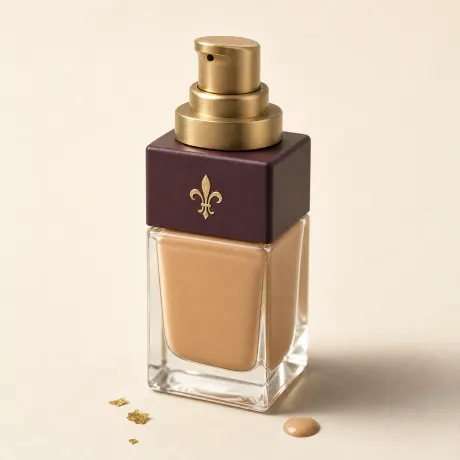
Liquid foundation
The standard base: pigment suspended in a fluid, in shades matched to the skin.
Read the guide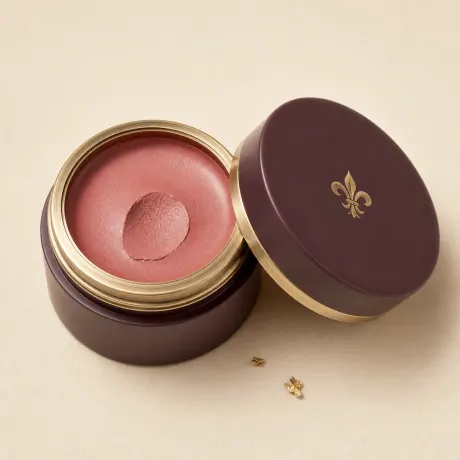
Cream blush
An emollient colour that melts into skin, often worn on the lips as well.
Read the guide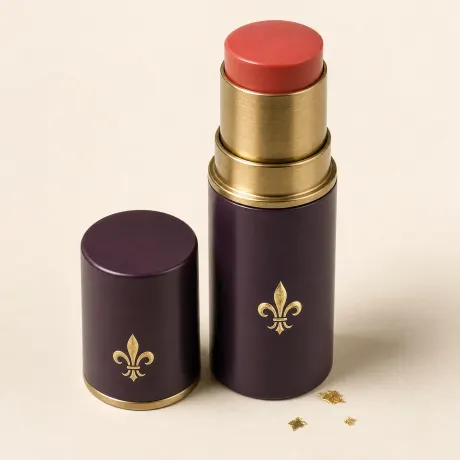
Blush stick
Cream blush in a twist-up stick, applied straight to the cheek.
Read the guide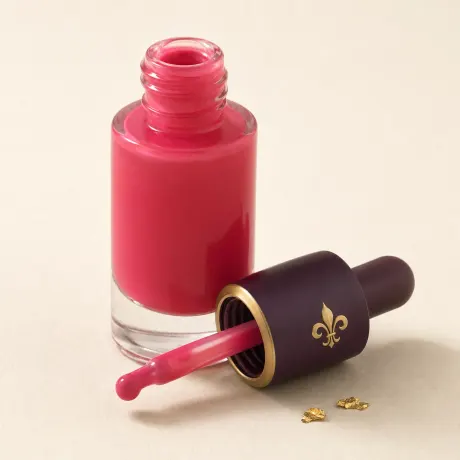
Liquid blush
Highly pigmented fluid colour for a flush that looks like it comes from under the skin.
Read the guide
Other kinds of face brushes
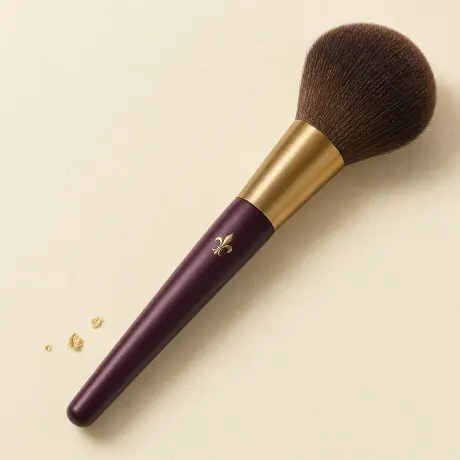
Powder brush
A large, loosely packed, fluffy brush that lays down a veil of powder rather than pushing it in.
Read the guide
Kabuki brush
A squat, palm-sized brush with a very dense dome of short bristles on a stubby handle, for buffing powders and creams into the skin.
Read the guide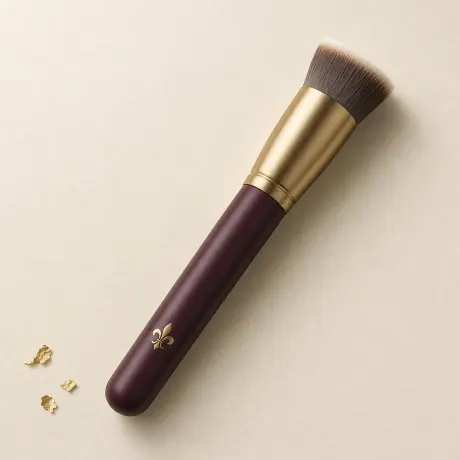
Flat-top buffing brush
A dense brush cut straight across, which buffs liquid and cream into skin with no streaks.
Read the guide
Flat foundation brush
A flat synthetic brush with a rounded edge, for painting foundation on like a primer coat.
Read the guide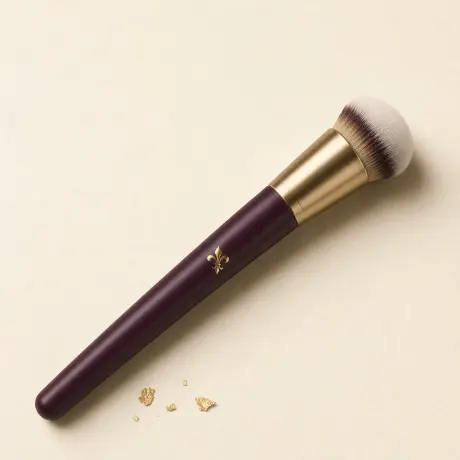
Domed buffing brush
A dense, rounded brush on a full-length handle, for buffing cream and liquid with more control than a kabuki.
Read the guide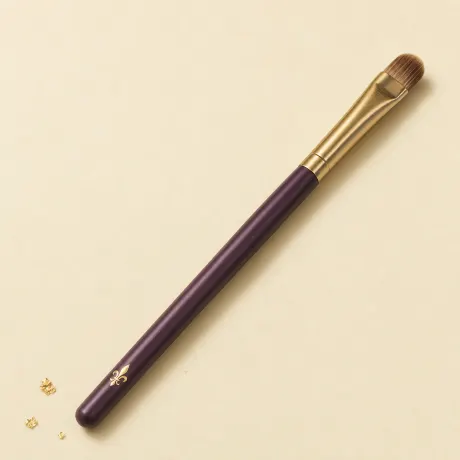
Flat concealer brush
A small, flat, tongue-shaped synthetic brush for placing concealer precisely.
Read the guide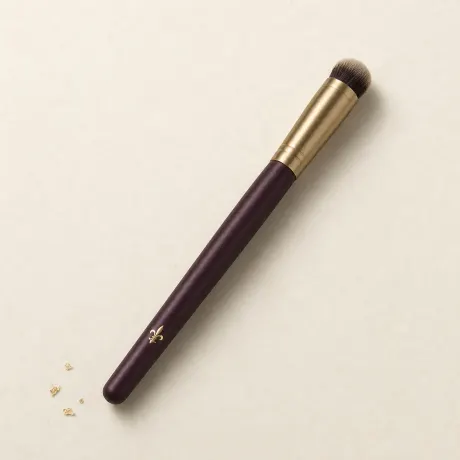
Concealer buffing brush
A small, dense, domed brush — about the size of a fingertip — that buffs concealer into skin.
Read the guide