Cream foundation
The densest form of base: pigment in a rich cream, sold in a jar or compact and built for coverage. What it is, which kind of cream to choose, how to wear it without weight — and where the word foundation came from.
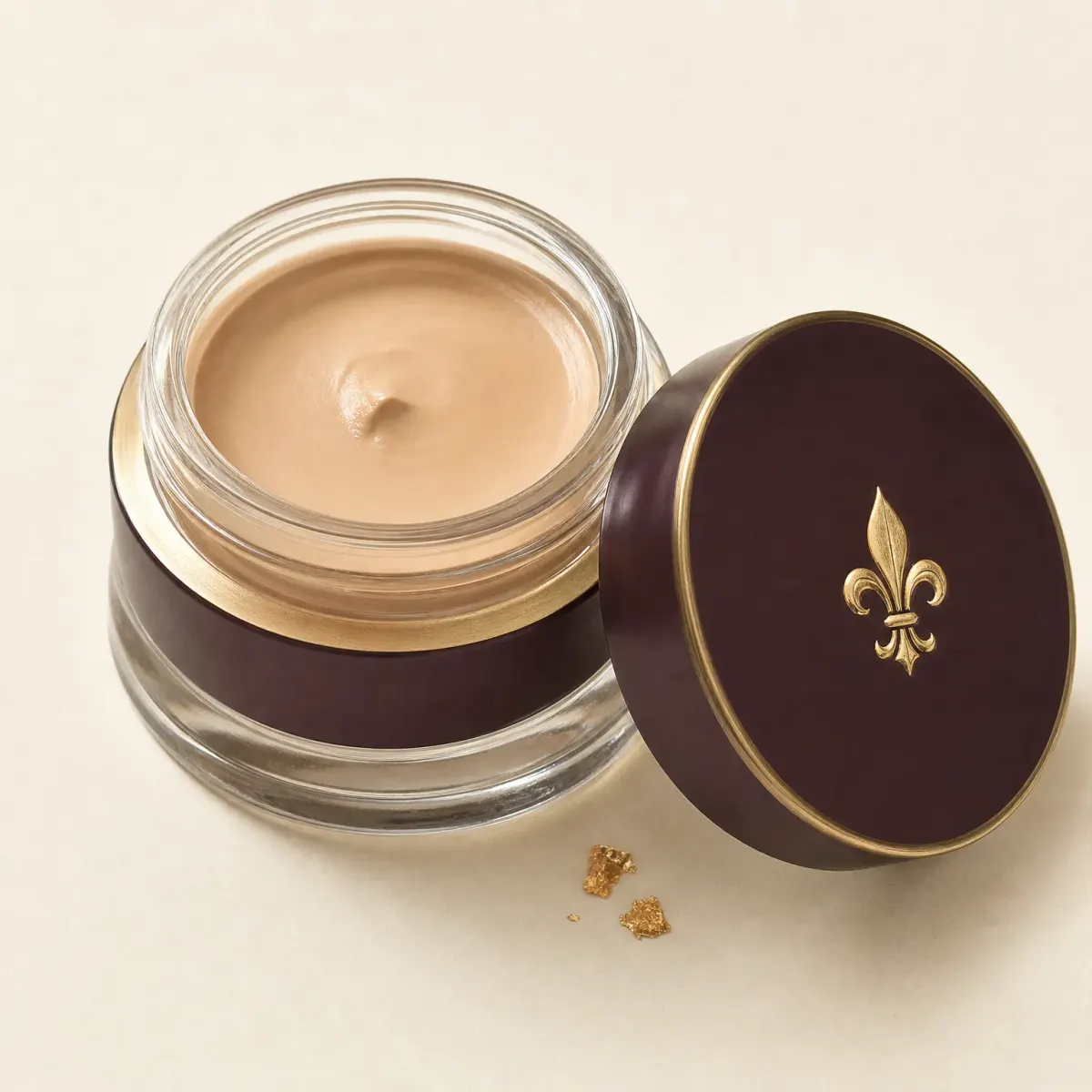
Cream foundation is pigment carried in a thick, emollient cream, usually sold in a jar or compact, that gives medium to full coverage with a satin finish and suits dry skin and the camera.
Our picks
Chosen across the forms cream foundation now takes — luxury creams, cream-to-powder compacts, corrective cover creams and professional stage and screen creams — and across budgets. Each opens where its maker sells it, on Amazon or at the house’s own shop, and you choose your shade on that page.
As an Amazon Associate I earn from qualifying purchases. Affiliate links — we may earn a commission at no extra cost to you. How this works
Luxury creamPrestige Clé de Peau Beauté
Radiant Cream Foundation SPF 25
The classic luxury jar: a rich cream that builds to full coverage and still finishes with a sheen.
- Dewy
- Buildable to full
- SPF 25
Mature skinDrugstore COVERGIRL
Simply Ageless Instant Wrinkle-Defying Foundation
An inexpensive cream compact made for drier, older skin, where a powdery base would settle into lines.
- Cream
- Made with Olay
Full coverMid-range Dermablend
Cover Creme Foundation SPF 30
The corrective cream: dense enough to cover birthmarks, scars and tattoos, as its maker sells it.
- Full coverage
- SPF 30
Refillable compactPrestige Kjaer Weis
Cream Foundation
A cream that melts into the skin for a no-makeup look, in a metal compact made to be refilled.
- Flexible coverage
- Refillable
Cream to powderDrugstore Black Opal
True Color Mineral Matte Crème Powder Foundation SPF 15
Goes on as a cream and sets to powder, which keeps a full cover from turning shiny on oilier skin.
- Cream-to-powder
- Matte
- SPF 15
Stage and screenMid-range Mehron
Celebré Pro-HD Cream Foundation
A professional cream from a theatrical house, for faces that will be seen under stage and studio light.
- Oil-free
- Buildable full coverage
Natural glowPrestige RMS Beauty
UnCoverup Cream Foundation
A soft, rich cream for dry skin that should look lit rather than made up.
- Natural glow
- Medium to full
Deeper skin tonesDrugstore Flori Roberts
Creme to Powder Foundation
Flori Roberts’s own cream-to-powder: medium to full cover that sets matte, made for deeper skin tones.
- Cream-to-powder
- Medium to full
- Matte
High definitionMid-range Graftobian
Glamour Crème Ultra HD Professional Foundation
A make-up artist’s cream with a high pigment load, built for high-definition cameras: a little covers a great deal.
- Full coverage
- Skin-like finish
Cream foundation is pigment carried in a thick, emollient base — more oil and wax, and less water, than a liquid — packed into a jar or a compact. It does not pour; it moves only when it is warmed and worked, and that is its character. A little spreads a long way, the pigment load is high, and the film it leaves is dense enough to cover what a liquid only softens.
Its neighbours are close. A liquid is the same colour in a thinner, more adjustable vehicle. A stick foundation is a cream firmed with more wax so that it can be twisted up and drawn on. A cream-to-powder foundation is a cream made to dry to a matte, powdery surface. Tinted moisturisers and BB creams are lighter still, closer to skincare than to cover. Cream foundation sits at the heavy end of the family: the base for dry skin, for discolouration, and for faces that will be photographed under hard light.
Which kind of cream
What is sold as cream foundation now comes in three distinct forms, and the first decision is which one suits the skin. Emollient creams, often in a heavy glass jar, stay soft on the face and finish satin or dewy. They are kindest to dry and mature skin, which a matte base tends to emphasise, and least suited to skin that shines by midday.
Cream-to-powder compacts go on as a cream and set to a matte, powdery surface within a minute or two. They give much of a cream’s coverage with far less shine, which is why they have long been made for oilier and deeper skin tones, where a greasy finish reads as grey. Professional and corrective creams — the theatrical, film and camouflage lines — carry the most pigment of all. They are made to cover birthmarks, scars, tattoos and uneven tone, and to hold up under studio lights, and a small dab of one goes further than a large dab of anything else in the carousel.
Density makes shade matter more. A sheer liquid slightly off tone can pass; a full-coverage cream in the wrong colour shows as a mask at the jaw. Match it on the jawline in daylight, and go by undertone as well as depth. The Black Opal and Flori Roberts compacts in the carousel were made for deeper skin tones.
Wearing it without weight
The mistake with cream foundation is using too much of it. Take a little from the jar with a clean spatula or the back of a brush, warm it on the back of the hand, and start at the centre of the face, where most people need the most coverage. A dense buffing brush, worked in small circles, blends it thinnest and gives the smoothest surface. A damp sponge, pressed rather than wiped, sheers it out and leaves the most skin-like finish. Fingers warm it quickest and suit the softer, oil-rich creams.
Build coverage only where it is needed: one thin layer everywhere, then a second, pressed on, over redness or marks. Cream sits best on moisturised skin and under cream products — blush, bronzer, highlighter — rather than over powder, which it lifts and streaks. Set only the places that crease or shine, the sides of the nose and under the eyes, with a light press of powder. Make-up artists who work from palettes mix two shades on the back of the hand to hit the one in between.
A jar is opened with fingers and brushes, so keep it clean: use a spatula, close the lid, and throw it away if the smell or texture changes. The open-jar symbol on the pack, with a number of months beside it, is the maker’s guide to how long it keeps once opened.
Where it came from
The word began literally. Early loose face powders did not cling well, and women smoothed a vanishing cream on first to hold them. A trade article of 1928 said the stearate creams were favoured because they are absorbed quickly and “so provide a foundation for the application of face powders”.[1] Makers soon tinted them to match the powder or to hide small blemishes, and some claimed their “powder cream” could replace powder altogether: Dorothy Gray sold a Make-up Foundation Cream in 1934 in White, Natural and Rachel, and Max Factor recommended his own, in White, Flesh, Rachelle and Natural, applied very sparingly and blended well in.[1]
The heavy, covering cream came from a different need. Lydia O’Leary, who had a port-wine stain across one side of her face, developed Covermark by 1928 and sold it from 1931. It began as a liquid applied with a brush and was soon replaced by a cream that covered better; by 1936 it came in eight shades, made, the historian James Bennett observes, with lighter skin tones in mind.[2] Her patent, filed in 1930 and granted in 1932, describes a preparation meant to conceal birthmarks and blemishes while simulating skin in texture, flexibility and colour.[3] The line of corrective creams continued: Flori Roberts, whose company made cosmetics for Black women from the 1960s, later founded Dermablend.[4]
What survives is the division those two histories drew. The light cream became the everyday liquid; the dense one stayed with the people who need real cover — for skin that is marked, for the stage, and for the camera.
The techniques
- Buff
- Work in small circles with a dense brush until no edge remains.
- Press
- Press product onto the skin without dragging, so it stays where it is put.
Sources
- [1]Powder Creams Cosmetics and Skin, 2018.View source (opens in a new tab) Accessed 2026-09-25.
- [2]Covermark Cosmetics and Skin, 2012.View source (opens in a new tab) Accessed 2026-09-25.
- [3]US Patent 1,877,952 — Dermal Cover Preparation United States Patent Office, 1932.View source (opens in a new tab) Accessed 2026-09-22.
- [4]Flori Roberts Dies Happi (Household and Personal Products Industry), 2020.View source (opens in a new tab) Accessed 2026-09-22.
What to apply it with
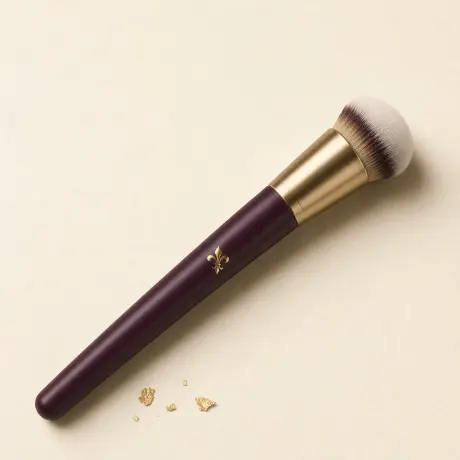
Domed buffing brush
A dense, rounded brush on a full-length handle, for buffing cream and liquid with more control than a kabuki.
Read the guide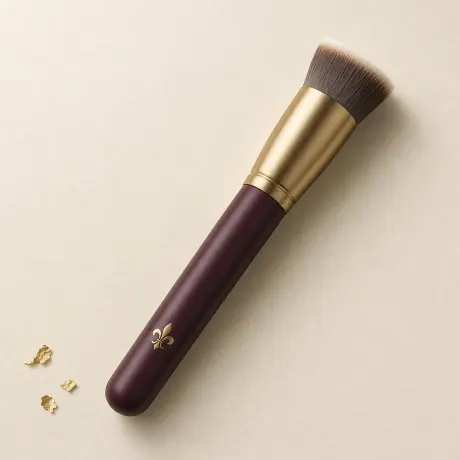
Flat-top buffing brush
A dense brush cut straight across, which buffs liquid and cream into skin with no streaks.
Read the guide
Blending sponge
A soft, teardrop-shaped sponge, used damp, that presses liquid and cream into skin.
Read the guide
Other kinds of foundation & tinted base
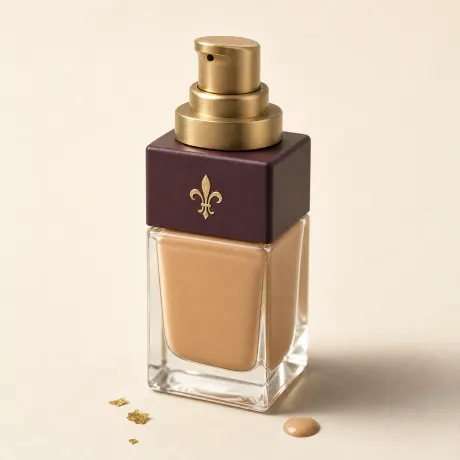
Liquid foundation
The standard base: pigment suspended in a fluid, in shades matched to the skin.
Read the guide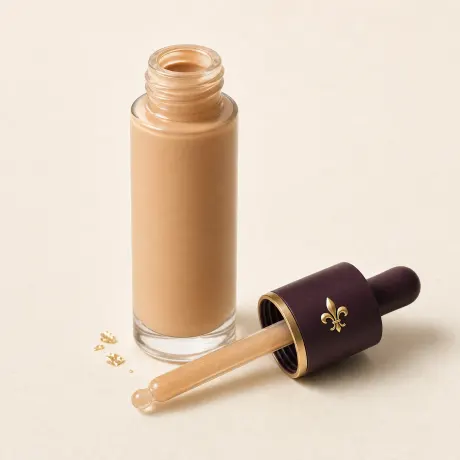
Skin tint
A watery, sheer base that evens tone while letting skin show through.
Read the guide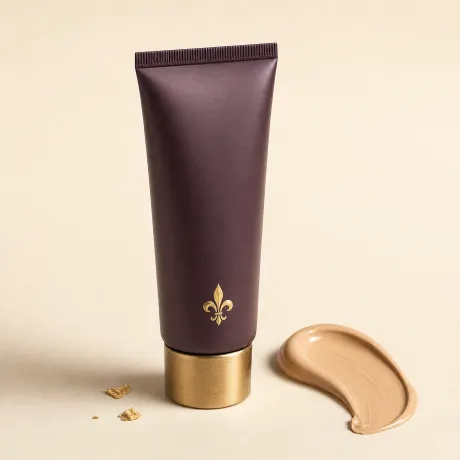
Tinted moisturiser
A moisturiser with a little pigment in it — often with sunscreen — for the lightest base.
Read the guide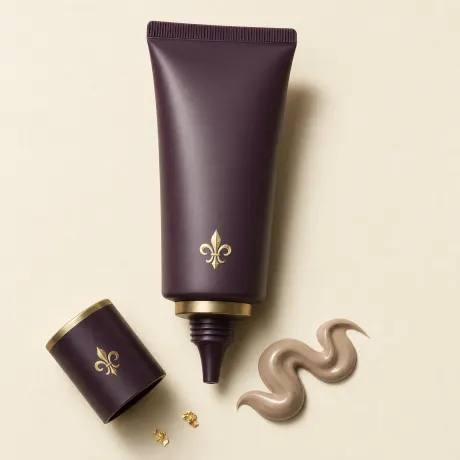
BB cream
A skincare-leaning base that tints, smooths and usually protects in one step.
Read the guide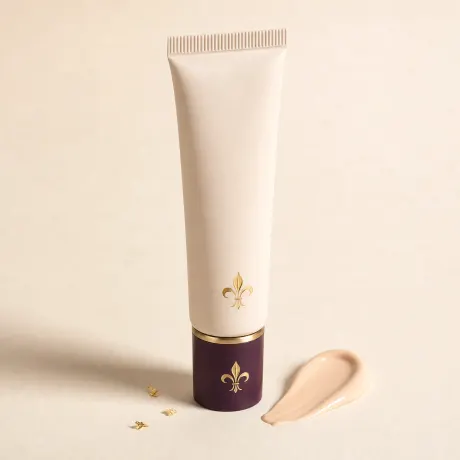
CC cream
A light base built to neutralise redness or sallowness rather than simply cover it.
Read the guide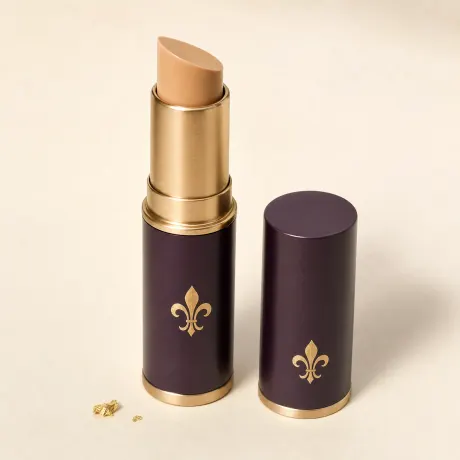
Stick foundation
Cream foundation set into a twist-up stick, for targeted coverage and travel.
Read the guide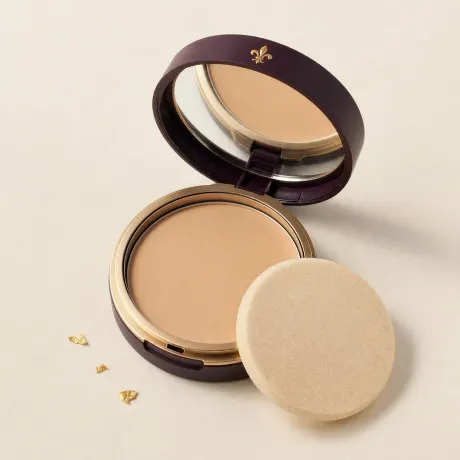
Powder foundation
Foundation pressed into a powder cake, for a quick matte base in one step.
Read the guide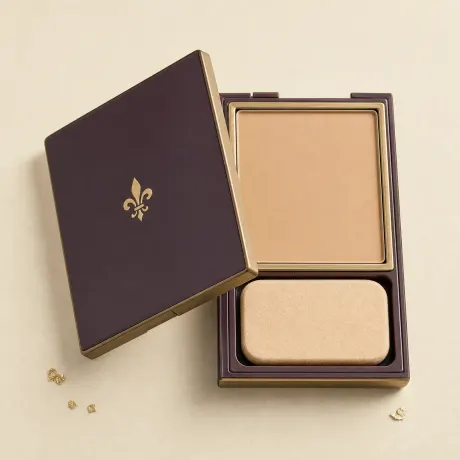
Two-way cake foundation
A pressed foundation made to be used dry for a sheer finish or with a damp sponge for coverage.
Read the guide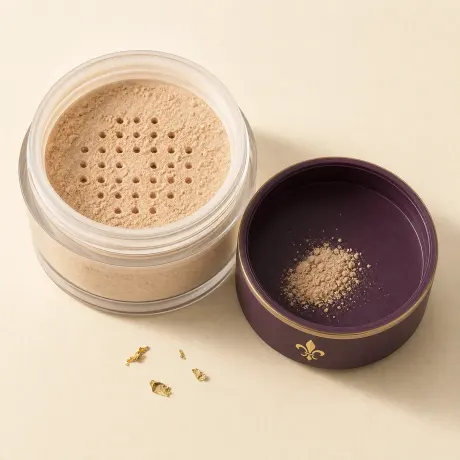
Loose mineral foundation
Foundation as a loose, finely milled mineral powder, buffed in to build coverage.
Read the guide
Cushion foundation
Liquid foundation soaked into a sponge cushion inside a compact, picked up with a puff.
Read the guide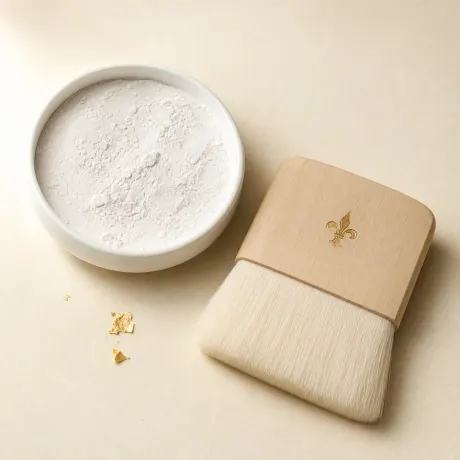
Oshiroi
Japanese white face powder, mixed with water to a paste and laid on with a broad flat brush.
Read the guide