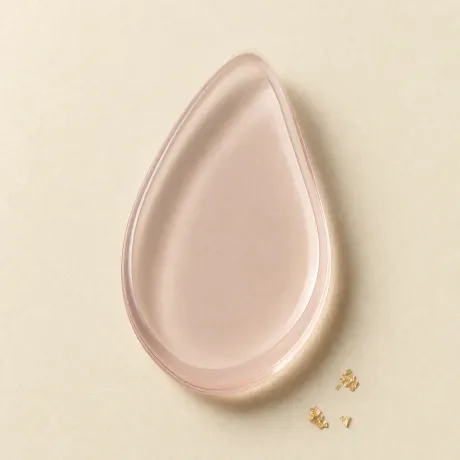
Blending sponge
A soft egg of foam, used damp and bounced on, that presses liquid and cream into a thin, skin-like layer. How to choose one, use it and keep it clean — and how a television makeup artist’s hand-cut sponge became the egg in every makeup bag.
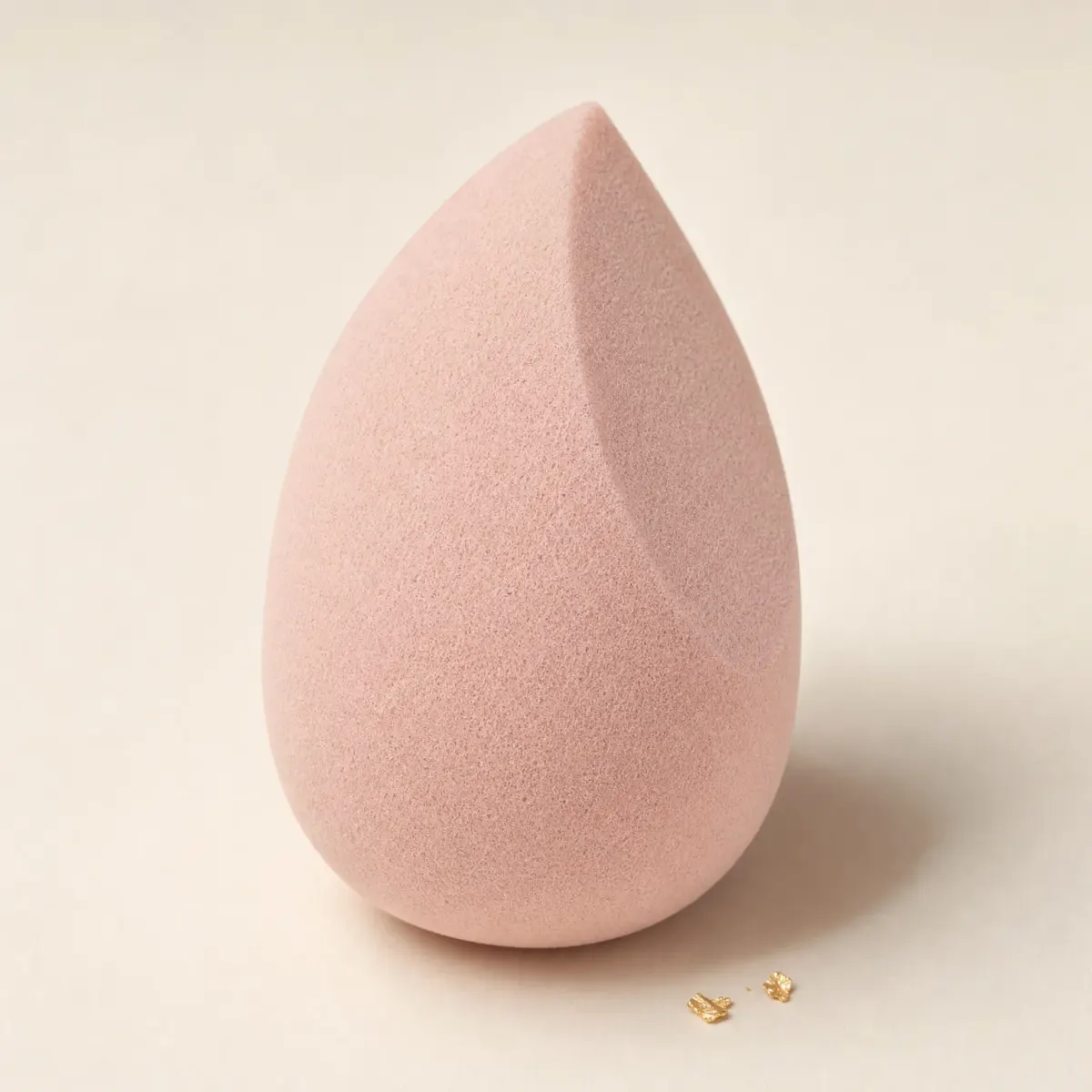
A blending sponge is a soft, reusable foam sponge, usually egg- or teardrop-shaped, used damp to press and bounce liquid or cream makeup onto the skin in a thin, even layer, its point reaching the corners of the face.
Our picks
Chosen across sizes, shapes and foams — the original egg and its concealer-size minis, flat-cut and faceted sponges, microfibre-covered and compostable ones — from drugstore to prestige, with an Australian house beside the American ones. Each opens where its maker sells it: on Amazon, or at the house’s own shop.
As an Amazon Associate I earn from qualifying purchases. Affiliate links — we may earn a commission at no extra cost to you. How this works
The originalPrestige beautyblender
Beautyblender Original Makeup Sponge
The pink egg Rea Ann Silva cut for high-definition television, and the reference point for every sponge after it.
- Latex-free
- Use damp
- Reusable
Three-pointDrugstore Real Techniques
Miracle Complexion Sponge
A drugstore egg with a flat-cut top, a point and a rounded side, each for its own job.
- Latex-free
- Flat edge
- Precision tip
WaterdropMid-range Rare Beauty
Soft Touch Makeup Blending Sponge
A multi-angled waterdrop, sold for use damp or dry, for a seamless base.
- Latex-free
- Damp or dry
- Multi-angled
CompostableDrugstore EcoTools
Bioblender Makeup Sponge
A biodegradable sponge its maker says to compost after thirty days of use, with three edges for base, concealer and contour.
- Compostable
- Three edges
Five sidesMid-range Patrick Ta
Major Skin 5-In-1 Blending Sponge
A makeup artist’s large sponge, cut with five faces for everything from foundation to highlighter.
- Five sides
- Cream and liquid
- Powder too
FacetedPrestige Trish McEvoy
Place and Blend Sponge
A prestige artist’s sponge with a rounded base for blending and a flat top for placing product where it is needed.
- Multifaceted
- Flat teardrop top
AngledDrugstore e.l.f. Cosmetics
Total Face Blending Sponge
An inexpensive latex-free sponge with an angled face for concealer and a rounded one for foundation.
- Latex-free
- Angled and rounded sides
Dual densityMid-range Juvia's Place
I Am Magic Duo Density Makeup Sponge
A water-drop sponge in two densities with a slanted cut, from a house known for deep-skin shades.
- Water-drop shape
- Slant cut
- Two densities
MicrofibreDrugstore JUNO & Co.
Microfiber Makeup Sponge
A slant-cut sponge wrapped in microfibre, sold as absorbing less and as working with powder as well as liquid.
- Microfibre layer
- Powder and liquid
Velvet coverMid-range Danessa Myricks Beauty
Yummy Skin Microfiber Velvet Sponge
A microfibre-covered teardrop from a makeup artist’s house, in a deep brown rather than the usual pink.
- Microfibre velvet
- Dark Chocolate
Chiselled edgeDrugstore Morphe
One & Done Multifunctional Makeup Sponge
One sponge with rounded edges, a flat face, a fine point and a chiselled edge for cleaning up lines.
- Wet or dry
- Fine point
- Chiselled edge
Concealer sizePrestige beautyblender
Micro Mini Pro Makeup Sponges
The original’s fingertip-size version, sold in pairs, for concealer under the eyes and around the nose.
- Pair of minis
- Concealer and highlighter
Angled edgesMid-range Sigma Beauty
3DHD Blender
A faceted sponge whose angled edges are made for sculpting and concealing as well as blending.
- Latex-free
- Angled edges
- Sheer to medium
First spongeDrugstore wet n wild
Makeup Sponge
An inexpensive edgeless egg with a point and a flat side, for anyone buying a first sponge.
- Egg-shaped
- Flat side
- Wet or dry
Classic teardropMid-range Kylie Cosmetics
Makeup Sponge
A plain pink teardrop from a colour-cosmetics house, for foundation and concealer.
- Soft and gentle
- Vegan
AustralianDrugstore MCoBeauty
Magic Blender Sponge
An inexpensive teardrop from an Australian house, sold for use wet or dry.
- Latex-free
- Wet or dry
Half-dozenMid-range Beauty Bakerie
Bakeware Blending Egg Beauty Sponges
Six egg sponges to a carton, for anyone who likes to start each week with a fresh one.
- Six sponges
- Non-latex
- Washable
EverydayDrugstore ColourPop
Complexion Blending Sponge
A plain, inexpensive latex-free sponge for everyday foundation.
- Latex-free
- Reusable
Curved cutMid-range Wonderskin
Curve Blender Makeup Sponge
A teardrop with a curved face cut into it, which sits under the eye and along the side of the nose.
- Foundation and creams
- Powders too
Store brandDrugstore Ulta Beauty Collection
Teardrop Blender Sponge
Ulta’s own-brand teardrop, a plain sponge for cream and liquid products.
- Cream and liquid
- Blending and contouring
A blending sponge is a small egg of soft, open-pored foam, used damp. Wetted, it swells and holds water in its pores, and so takes up less of the foundation it touches. Bounced against the skin, it presses liquid or cream into a thin, even layer and lifts off the excess. The shape does the rest: the round base covers the cheeks and forehead, the point reaches the inner corner of the eye and the sides of the nose, and many are now cut with a flat face for pressing concealer on.
It is not the same tool as its neighbours. A wedge is denser and used dry, for more coverage and a clean edge; a silicone applicator absorbs nothing and spreads rather than presses; a cushion puff is flat, used dry to tap foundation from a compact. The blending sponge sheers a formula out as it presses it in, which is why it gives the most skin-like finish with liquid and cream.
Choosing one
Size. A full-size sponge is for foundation over the whole face. A mini, about the size of a fingertip, is for concealer under the eyes and around the nose, and a mid-size one suits cream blush. Shape. The classic egg is edgeless all round; others add a flat-cut face, a sharper point or several facets, which press product on more firmly and give a crisper line along the jaw.
Foam. Denser sponges give more coverage and softer ones a sheerer, dewier layer. Some are wrapped in microfibre, sold as absorbing less and as working damp or dry; others are sold as partly plant-based or compostable. Almost all are now sold as latex-free, which matters if you are allergic to natural rubber latex: check the pack, since the claim is the maker’s.
How to use it
Wet the sponge until it stops growing, then squeeze it hard inside a towel: damp, not dripping, or the foundation slides and streaks. Put the product on the back of your hand, pick up a little on the round end, and bounce it over the skin from the centre of the face outward. Press and lift; never wipe, which drags the formula into stripes and wears the foam.
Use the point for the inner corners of the eyes, the sides of the nose and the corners of the mouth, and the flat face, where there is one, to press concealer onto a blemish. To bake, press a thick layer of loose powder under the eyes with the damp sponge, leave it a few minutes and sweep the excess away with a brush. Finish with a clean part of the sponge over any edge.
Keeping it clean
A damp sponge put away dirty is the tool to worry about. When Aston University researchers cultured used makeup donated in the UK, sponges were the most contaminated items: they averaged more than a million bacterial colony-forming units per millilitre, fungi turned up in over half of them, 93 per cent had never been cleaned, and 64 per cent had been dropped on the floor and used again.[1]
Wash it after every use, as beautyblender advises: work in soap or a sponge cleanser, rinse and squeeze until the water runs clear, then leave it to dry completely in the open air, never shut in a pouch while damp and never under a hairdryer, which the company says damages the foam.[2] Replace it on a schedule: the company says every three months, sooner with daily use;[2] EcoTools tells buyers of its compostable sponge to clean it weekly and replace it after 30 days.[3] Throw a sponge out sooner if it tears or stays stained after washing, and keep it to yourself.
Where it came from
The damp sponge is older than the egg. Cake make-up, which a wet applicator turned back into a liquid, needed one: Marinello’s Phantom Powder of 1914 came in a flat jar with a domed cap to hold its sponge, and a Max Factor advertisement for Pan-Cake in 1953 gave an instruction that still holds: “Use a sponge that’s wet, not just moist, and squeeze just short of the dripping point.”[4] By then Harriet Hubbard Ayer was selling packets of foam-rubber sponges for “every item of make-up to the last dab of powder”, an idea that did not catch on: brushes and puffs were easier, and fitted in a compact.[5]
The egg came from television. Rea Ann Silva, a makeup artist on the sets of Los Angeles, was working on Girlfriends, a sitcom that began on UPN in 2000 and was one of the first shows filmed in high definition, which showed every flaw. Airbrushing took actors off set and her sponges could not reach the corners of a face, so she cut her own, settling on an egg with no edges and a pointed tip, used wet, as a class for union makeup artists had taught her.[6] The Smithsonian’s catalogue dates her first sponges to 2002 and records that by 2003 she had incorporated the company and the pink sponge was on sale.[7] In the company’s own telling, her sponges kept disappearing from set, which is when she saw a business in them.[8]
What was new was less the shape than the habit. Sponges had been used a few times and thrown away; this one was made to be washed and kept, worked with any brand’s makeup, and was carried by YouTube and social media from film sets to bathroom shelves. In 2008 the company moved to Pennsylvania’s Lehigh Valley and opened a factory where its sponges were cut by hand; the Smithsonian now keeps a run of Silva’s prototypes.[6] Nearly every house below makes an egg of its own.
The techniques
- Pat
- Tap lightly with a fingertip or damp sponge so product melts in rather than moves.
- Press
- Press product onto the skin without dragging, so it stays where it is put.
- Bake
- Leave a thick layer of loose powder to sit for several minutes, then dust away the excess.
Sources
- [1]Microbiological study of used cosmetic products: highlighting possible impact on consumer health Journal of Applied Microbiology 128 (2): 598–605, 2020.View source (opens in a new tab) Accessed 2026-09-26.
- [2]7 Signs It's Time to Replace Your Beautyblender Beautyblender, 2024.View source (opens in a new tab) Accessed 2026-09-26.
- [3]Bioblender Makeup Sponge EcoTools, 2026.View source (opens in a new tab) Accessed 2026-09-26.
- [4]Pan-Cake Make-up Cosmetics and Skin, 2026.View source (opens in a new tab) Accessed 2026-09-22.
- [5]Harriet Hubbard Ayer (post 1947) Cosmetics and Skin, 2022.View source (opens in a new tab) Accessed 2026-09-26.
- [6]Rea Ann Silva: The woman behind Beautyblender National Museum of American History, Smithsonian Institution, 2020.View source (opens in a new tab) Accessed 2026-09-26.
- [7]beautyblender makeup sponge and pouch, 2005 (catalogue no. 2019.0335.07) Smithsonian Institution.View source (opens in a new tab) Accessed 2026-09-26.
- [8]Fun Facts About BeautyBlender CEO—And Birthday Gal—Rea Ann Silva Beautyblender, 2020.View source (opens in a new tab) Accessed 2026-09-26.
What it is used with
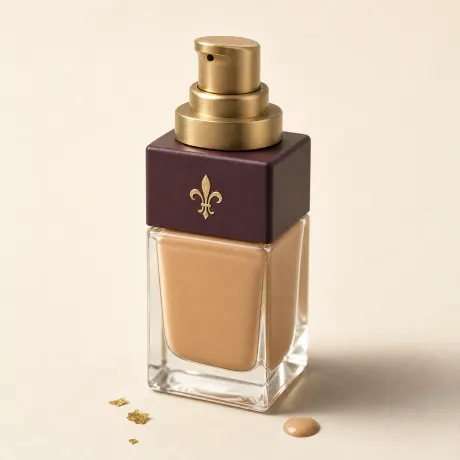
Liquid foundation
The standard base: pigment suspended in a fluid, in shades matched to the skin.
Read the guide
Skin tint
A watery, sheer base that evens tone while letting skin show through.
Read the guide
BB cream
A skincare-leaning base that tints, smooths and usually protects in one step.
Read the guide
CC cream
A light base built to neutralise redness or sallowness rather than simply cover it.
Read the guide
Cream foundation
A dense, emollient base with high coverage, suited to dry skin and to photography.
Read the guide
Stick foundation
Cream foundation set into a twist-up stick, for targeted coverage and travel.
Read the guide
Liquid concealer
A fluid concealer in a wand tube, the most versatile form for the under-eye.
Read the guide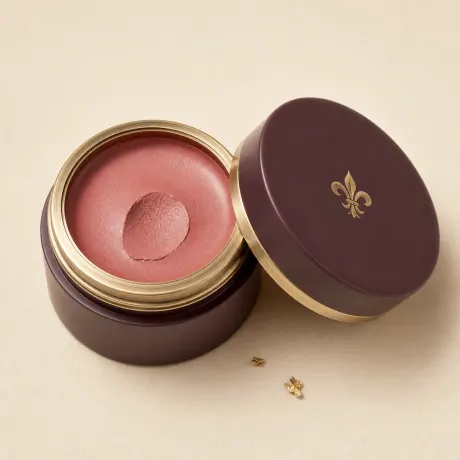
Cream blush
An emollient colour that melts into skin, often worn on the lips as well.
Read the guide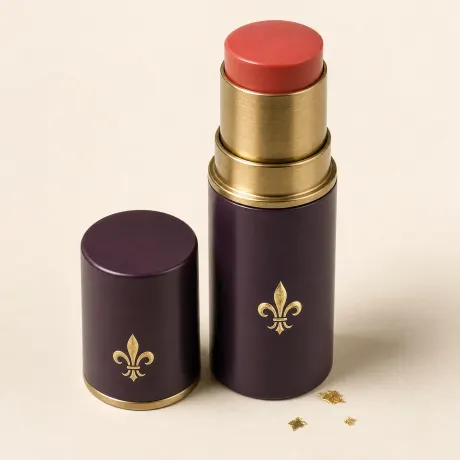
Blush stick
Cream blush in a twist-up stick, applied straight to the cheek.
Read the guide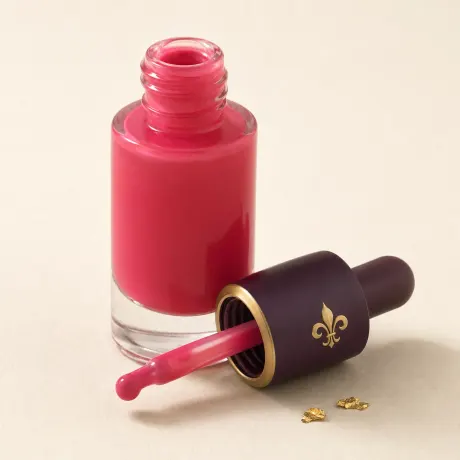
Liquid blush
Highly pigmented fluid colour for a flush that looks like it comes from under the skin.
Read the guide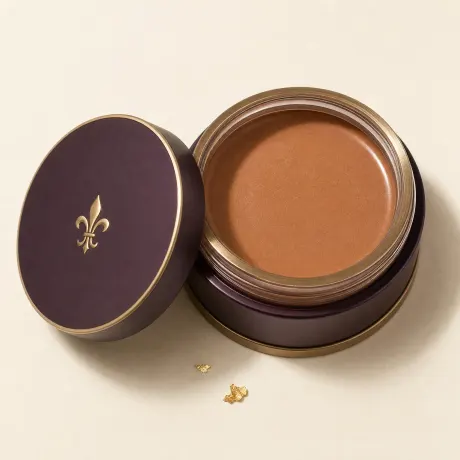
Cream bronzer
Bronzer in a cream base, which melts into skin and reads as skin rather than powder.
Read the guide
Cream contour stick
Contour shade in a twist-up cream stick, drawn straight onto the face.
Read the guide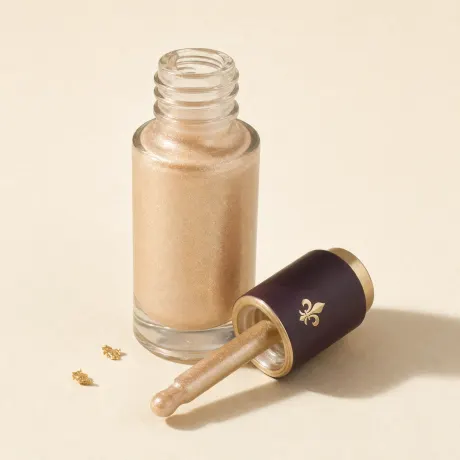
Liquid highlighter
A pearlescent fluid for an all-over glow or a precise high shine.
Read the guide