Tinted moisturiser
A moisturiser with a little colour in it, and usually a sunscreen: the lightest base that still counts as skincare. What sets it apart from a skin tint or a BB cream, how to choose and wear one — and what its history really shows.
Tinted moisturiser is a moisturising cream or lotion with a small amount of pigment, often combined with sunscreen, that gives sheer to light coverage — richer than a watery skin tint, and sheerer than a BB cream or foundation.

Our picks
Chosen to cover the range of finishes, textures, skin types and budgets — creams, gel-creams and a bronzing tint, from drugstore brands to French and Japanese houses. Each opens where its maker sells it: on Amazon, at the house’s own shop, or at Sephora. You choose your shade on that page; sunscreen figures are the makers’ claims.
As an Amazon Associate I earn from qualifying purchases. Affiliate links — we may earn a commission at no extra cost to you. How this works
Natural dewyPrestige Laura Mercier
Tinted Moisturizer Natural Dewy SPF 30
Laura Mercier’s tinted moisturiser, in its current dewy formula: sheer colour and SPF 30.
- Natural dewy
- SPF 30
Budget basicDrugstore Black Radiance
True Complexion Tinted Moisturizer SPF 15
A plain, inexpensive tinted moisturiser with a sunscreen, in shade bands that run from fair to deep.
- SPF 15
- Neutral undertone
Mineral SPFMid-range Saie
Slip Tint Tinted Moisturizer
Sheer and dewy, with a zinc-based sunscreen for those who prefer mineral filters.
- Sheer
- Dewy
- Mineral SPF 35
Botanical luxuryPrestige Chantecaille
Just Skin Tinted Moisturizer SPF 15
A light, dewy tinted moisturiser with botanical actives, at the luxury end of the kind.
- Lightweight
- Dewy
- SPF 15
Budget glowDrugstore ColourPop
Pretty Fresh Hyaluronic Acid Tinted Moisturizer
An inexpensive, glowy tinted moisturiser with hyaluronic acid, sold direct by its maker.
- Lightweight
- Glowy
- Hyaluronic acid
RefillableMid-range Fenty Beauty
Hydra Vizor Huez Tinted Moisturizer Mineral SPF 30
Fenty Skin’s mineral-SPF moisturiser with a tint in it, sold in a refillable case.
- Mineral SPF 30
- Refillable
RadiantPrestige NARS
Pure Radiant Tinted Moisturizer SPF 30
Sheer coverage that builds, with a radiant finish, for those who want a little more than a tint.
- Sheer, buildable
- Radiant
- SPF 30
Semi-matteDrugstore wet n wild
Bare Focus Tinted Hydrator
A tinted moisturiser that stops short of dewy — the one for oilier skin on a drugstore budget.
- Sheer to medium
- Semi-matte
Natural glowMid-range Rare Beauty
Positive Light Tinted Moisturizer SPF 20
A light, breathable formula that blends like moisturiser, with a glow rather than a shine.
- Breathable
- Natural glow
- SPF 20
Sun-kissedPrestige Charlotte Tilbury
Unisex Healthy Glow Tinted Moisturiser
Warmth rather than a match: bronzing pigments for a sunnier face, sold for anyone who wants one.
- Bronzing tint
- Hydrating
Water-resistantMid-range Jane Iredale
Dream Tint Tinted Moisturizer SPF 15
A light mineral tint sold as water-resistant, for humid days and long ones.
- Lightweight
- Water-resistant
- Mineral SPF 15
Japanese gelPrestige Shiseido
Synchro Skin Tinted Gel Cream SPF 30
Shiseido’s gel take on the tinted moisturiser: sheer and natural, for skin that dislikes cream.
- Sheer
- Natural finish
- SPF 30
Four in oneMid-range PÜR
4-in-1 Tinted Moisturizer SPF 20
Sold as moisturiser, primer and foundation in one: the tinted moisturiser as a single morning step.
- Hydrating
- SPF 20
- Vegan
Sheer hydrationPrestige Clinique
Moisture Surge Sheertint Hydrator SPF 25
A moisturiser first, with just enough colour to even the tone.
- Sheer
- Natural finish
- SPF 25
Gel-creamMid-range bareMinerals
Complexion Rescue Tinted Moisturizer SPF 30
A gel-cream texture that sits between a lotion and a tint, with a mineral sunscreen.
- Gel-cream
- Dewy, buildable
- Mineral SPF 30
Fruit pigmentsMid-range 100% PURE
Tinted Moisturizer
A dewy tint that its maker colours with fruit pigments, for those who look for plant-based formulas.
- Lightweight
- Dewy
- Vegan
A tinted moisturiser is what its name says: a moisturiser — a cream or lotion of water, oils and humectants, made to hold water in the skin’s outer layer[1] — with enough pigment added to even out its tone. The coverage is sheer to light, the finish usually dewy or satin, and most carry a sunscreen, so that one step does the work of three. It goes on like skincare, with the fingertips, as the last step of the morning routine.
Its neighbours overlap, and makers use the names loosely. A skin tint is thinner and more fluid — sometimes a serum in a dropper bottle — and less concerned with moisturising. A BB cream usually covers more and is sold on a longer list of skincare claims; a CC cream is built to neutralise redness or sallowness. Foundation is made to cover first. Tinted moisturiser is the one of these that is a moisturiser before it is makeup — which is why it suits dry skin best, and why on oily skin it can be one layer too many. When a product calls itself two of these at once, as many do, go by the coverage and finish it claims.
Choosing one
Choose by skin first. Dry skin suits a creamier formula with a dewy or radiant finish, and may need nothing else underneath. Oily or combination skin does better with a gel-cream or a formula sold as semi-matte, worn over little or no moisturiser, since the product is one already. If you prefer mineral sunscreen filters — zinc oxide, titanium dioxide — several makers now use them in tinted formulas.
Shade is more forgiving than with foundation, because so little pigment is involved, but undertone still shows: a tint that leans too pink or too yellow reads as a cast rather than as colour. Ranges are often shorter than for foundation, and some are sold in broad bands rather than exact shades. A bronzing tinted moisturiser is a different tool again — worn to warm the face, not to match it.
How to wear it
Apply it as the last step of skincare, on skin that is still slightly soft from moisturiser but no longer wet — or, on oily skin, on bare skin after a light serum, since a tinted moisturiser is a moisturiser too. Warm a small amount between the fingertips and sweep it outward from the centre of the face, then pat a little more over the places that need it: the sides of the nose, the chin, any redness on the cheeks. Sweeping spreads the colour thin; patting presses it in.
Take it past the jaw rather than stopping at it, so the colour fades out instead of ending in a line, and blend the edges into the hairline. Concealer goes on afterwards, and only where it is needed. Set, if at all, with a light press of powder down the centre of the face; a full powdering turns a tinted moisturiser into something flatter and heavier than it was. On a long day, blot rather than powder again, and press a little more on with a fingertip where it has worn.
The sunscreen in it
Most tinted moisturisers carry an SPF, and the number is the maker’s claim. In the United States it is measured on a set layer of two milligrams of product to every square centimetre of skin.[2] How it is spread matters as much. In a study published in 2019, 84 people applying an SPF 30 moisturiser as they normally would missed about a sixth of the face — more than when the same people used sunscreen — and more of the eyelid area too, without noticing.[3] Those moisturisers were untinted, but the habit is the same.
If you rely on the SPF, use more than feels necessary, take it to the hairline, jaw and ears, and do not skip the area around the eyes. Otherwise, treat the sunscreen in a tinted moisturiser as a bonus, and wear a sunscreen underneath it.
Where it came from
The moisturiser came first. The word was applied to skin creams only in the 1950s, after the Harvard researcher Irvin H. Blank showed that it is water in the skin’s outer layer, not oil, that keeps it supple; by the 1960s, moisturising was what most people expected a skin cream to do.[4]
When colour was first added to such a cream is harder to say, and the record we have does not settle it. Laura Mercier’s Tinted Moisturizer, launched with her brand in 1996, has been called the world’s first by at least one London newspaper.[5] A sponsored feature in British Vogue, written in partnership with the brand, says instead that the idea came from “the French idea of a sheer tinted moisturiser” — which suggests the category is older than the claim.[6] By 2019, when that product was reformulated, it carried SPF 20, raised then to 30, and its shades went from 15 to 20, sorted by undertone.[5]
The category had a notable year in 2020. With American prestige makeup sales down by a third and lip products falling furthest under face masks, tinted moisturiser was among the few face products to gain market share.[7] A base that asks little of the skin suited a year in which, for many people, little was asked of the face.
The techniques
- Sweep
- Long, light strokes that deposit a veil of product.
- Pat
- Tap lightly with a fingertip or damp sponge so product melts in rather than moves.
Sources
- [1, 4]Moisturisers Cosmetics and Skin, 2022.View source (opens in a new tab) Accessed 2026-09-25.
- [2]21 CFR 201.327: Over-the-counter sunscreen drug products; required labeling based on effectiveness testing Code of Federal Regulations, 2023 edition (U.S. Government Publishing Office), 2023.View source (opens in a new tab) Accessed 2026-09-25.
- [3]Application of SPF moisturisers is inferior to sunscreens in coverage of facial and eyelid regions PLOS ONE, 14(4): e0212548, 2019.View source (opens in a new tab) Accessed 2026-09-25.
- [5]Laura Mercier has re-released her iconic tinted moisturiser in a more inclusive range of shades Evening Standard, 2019.View source (opens in a new tab) Accessed 2026-09-25.
- [6]Beauty Heroes: Laura Mercier Tinted Moisturizer and Tinted Moisturizer Illuminating British Vogue, 2019.View source (opens in a new tab) Accessed 2026-09-25.
- [7]U.S. Prestige Beauty Sees Pockets of Growth Amidst the Industry's 19% Sales Decline in 2020, Reports NPD PRWeb, 2021.View source (opens in a new tab) Accessed 2026-09-25.
Other kinds of foundation & tinted base
Liquid foundation
The standard base: pigment suspended in a fluid, in shades matched to the skin.
Read the guide
Skin tint
A watery, sheer base that evens tone while letting skin show through.
Read the guide
BB cream
A skincare-leaning base that tints, smooths and usually protects in one step.
Read the guide
CC cream
A light base built to neutralise redness or sallowness rather than simply cover it.
Read the guide
Cream foundation
A dense, emollient base with high coverage, suited to dry skin and to photography.
Read the guide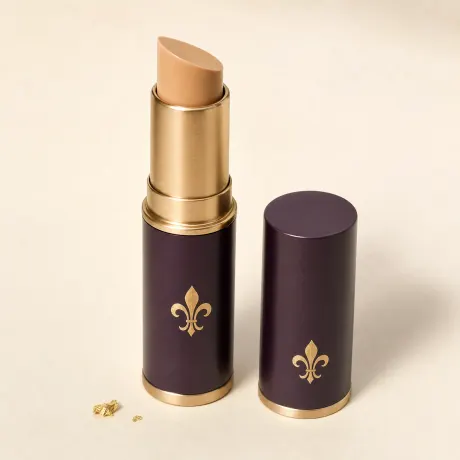
Stick foundation
Cream foundation set into a twist-up stick, for targeted coverage and travel.
Read the guide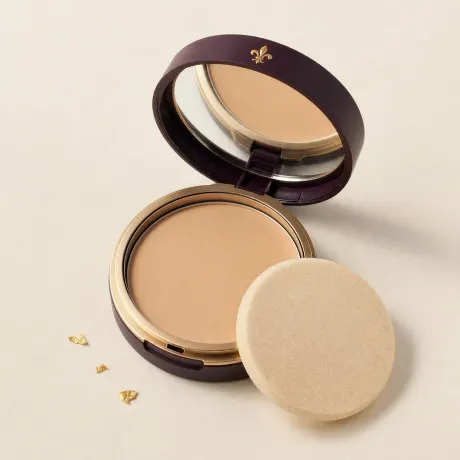
Powder foundation
Foundation pressed into a powder cake, for a quick matte base in one step.
Read the guide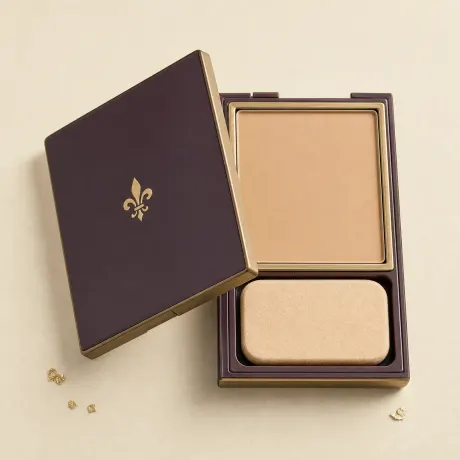
Two-way cake foundation
A pressed foundation made to be used dry for a sheer finish or with a damp sponge for coverage.
Read the guide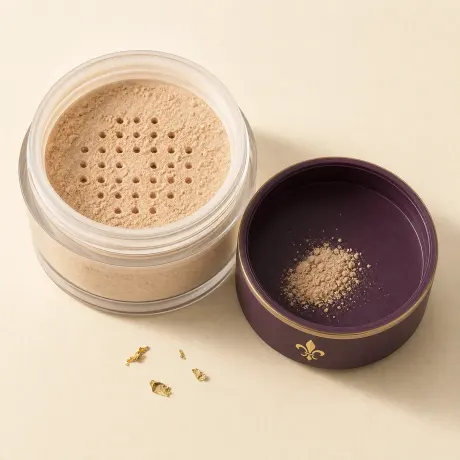
Loose mineral foundation
Foundation as a loose, finely milled mineral powder, buffed in to build coverage.
Read the guide
Cushion foundation
Liquid foundation soaked into a sponge cushion inside a compact, picked up with a puff.
Read the guide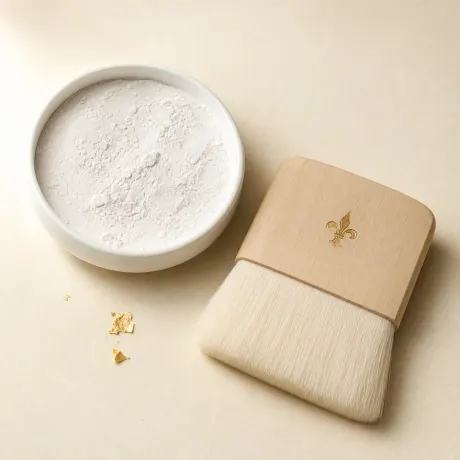
Oshiroi
Japanese white face powder, mixed with water to a paste and laid on with a broad flat brush.
Read the guide