Viva Glam: The Lipstick That Paid for an AIDS Fund
In 1994 a makeup company from Toronto made one red lipstick and gave its profits to a fund for people living with AIDS. Its first face was a drag queen in a blonde wig.
In short
M·A·C created the M·A·C AIDS Fund in Toronto in September 1994 and a deep red lipstick, Viva Glam, to pay for it, with the company covering its cost and the stores giving up their margin; RuPaul became its face in 1995, k.d. lang in 1997, and by 1998 the Fund had raised $16 million.
- 6min read
- 6chapters
- 3sources
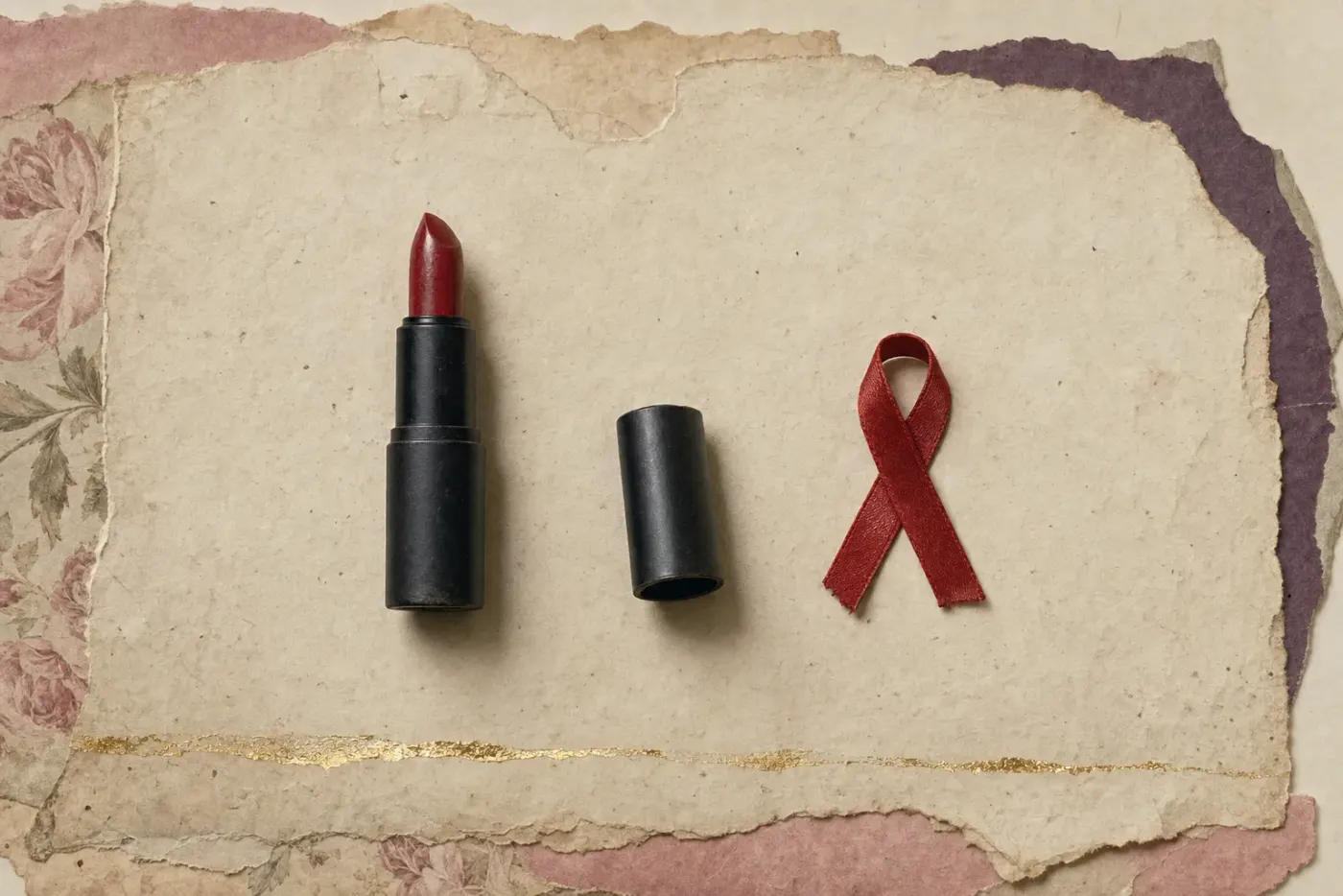
Most lipsticks are made to sell. This one was made to give its money away. In September 1994 M·A·C, a makeup company from Toronto, created a fund for AIDS organisations and a single lipstick to pay for it: a deep red called Viva Glam, designed, its historian writes, “to have universal appeal, and thus optimal sales.”[1]
Its first face was a man in a blonde wig. That was the point.
The Franks
M·A·C — Makeup Art Cosmetics — was created in Toronto in 1984 by the makeup artist Frank Toskan and the hairstylist Frank Angelo, known in the city’s fashion trade as “the Franks”. They began with a professional line made in their kitchen for their own technical and photographic needs: neutral shades instead of the pinks and purples that dominated the major houses, matte textures that photographed better, and a range wide enough for all skin colours, darker ones in particular.[2]
It sold from counters at Simpson’s flagship store on Queen Street and at The Bay, staffed by makeup artists rather than interchangeable sales associates.[2] By 1994 the Estée Lauder Companies had bought a majority interest in it.[3]
The Fund
While the company’s reputation grew, so did the epidemic. AIDS deaths in Canada rose every year through the late 1980s and early 1990s, to 1,317 in 1993, and support for people living with AIDS was, as the campaign’s historian puts it, controversial for government, and particularly for corporations.[4]
M·A·C’s answer, in September 1994, was the M·A·C AIDS Fund, created to support Toronto’s AIDS organisations, the AIDS Committee of Toronto among them, in their day-to-day work with people living with AIDS. Viva Glam was its sole means of raising money. M·A·C covered the full cost of making the lipstick, and the department stores that sold it were required to give up their margin, so that all the profits went to the Fund.[4]
Marketers call the usual version of this a purchase-triggered donation: a product made for a cause, with a portion of each sale given to it.[4] Viva Glam gave the lot.
Who Is the MAC Girl?
M·A·C had never advertised, calling the expense prohibitive. For the Fund it did. Its first spokesperson and honorary chair was RuPaul, the New York drag queen and singer whose club hit “Supermodel (You Better Work)” had recently topped the charts, announced at a launch party in New York in March 1995 in a campaign titled “Who is the MAC Girl?”: a blonde wig, a red bustier and red thigh-high boots. Another advertisement had RuPaul’s body spelling out the name of the lipstick.[5]
The campaign’s historian finds no apparent precedent in the industry for a man fronting a cosmetics campaign aimed at women; prestige contracts had gone to top models and, increasingly, to celebrities. Toskan’s explanation, as the Toronto press reported it in 1995, began simply: “We couldn’t find anyone who wore more makeup and had so much fun doing it.”[5]
… all sexes, all races, all ages. But RuPaul is male, he’s female, and he’s ageless. He fits the bill.
The Response
Not everyone liked it. Some were very uncomfortable with RuPaul and others called the choice brilliant; American Vogue received angry letters and approving ones after it ran the advertisement. Some asked whether women would want to buy lipstick from a brand so closely associated with a Black drag queen and with AIDS.[7]
Many did. Demand for M·A·C surged at Henri Bendel in New York and at Nordstrom after the announcement. By the middle of 1995 Viva Glam had raised more than $2 million for the Fund, mostly through word of mouth, press coverage and promotion at the counter, and by the end of the year $3 million.[7]
The Second Face
In 1997 the campaign for Viva Glam II featured the Canadian singer k.d. lang, a woman known for not wearing makeup, with an Elvis-style pompadour and a lipstick print on her cheek, left by another wearer of the shade. A year earlier she had called it “very courageous of such a large company to have two queer people as spokesmodels”.[8]
By 1998 the Fund had raised $16 million, and that year the Estée Lauder Companies completed its purchase of M·A·C.[8][9] The Fund carried on under its new owner. By its historian’s count it raised $34 million in its first ten years, when print advertising was the only medium promoting the lipstick — the same sum as it later raised in the single period, around 2010, when Lady Gaga and Cyndi Lauper fronted it.[8]
What Is Not Known
The company says Viva Glam has raised more than $540 million since 1994.[10] That is its own figure; the sums for the 1990s given here come instead from the press of the time, as gathered by the campaign’s historian. Whether the campaign changed attitudes to AIDS or to gay people is, in her judgement, debatable, and she found little empirical evidence that buying the lipstick is connected to a greater understanding of the disease.[11]
The Fund’s purpose has since widened: the company now describes Viva Glam’s money as going to charities that support gender, sexual, racial and environmental equality.[10] Nor do the sources used here give the lipstick’s first price, or say where it was first sold outside Canada.
Sources
- [1, 2, 4, 5, 6, 7, 8, 11]“From Our Lips:” Lipstick as Consumer Technology and the MAC VIVA GLAM Advertising Campaigns Scientia Canadensis 36, no. 1 (2013): 111–132, 2013.View source (opens in a new tab) Accessed 2026-10-03.
- [3, 9]Form 10-K: annual report for the fiscal year ended June 30, 2026 U.S. Securities and Exchange Commission, filed 19 August 2026, 2026.View source (opens in a new tab) Accessed 2026-09-26.
- [10]VIVA GLAM Timeline M·A·C Cosmetics.View source (opens in a new tab) Accessed 2026-10-03.
Filed under