The Face Above the Mask: Makeup in the Pandemic Years
For a year and more the mouth went behind a mask. Lipstick sales fell, the eyes carried the face, and a theory about lipstick in hard times met a crisis it had not allowed for.
In short
In the four weeks to 11 April 2020 McKinsey’s tracking of American Amazon sales showed lip care and colour falling 15 per cent, the steepest drop of any beauty segment, while eye cosmetics rose 5 per cent; a year later IRI counted US lipstick sales more than 80 per cent up, though still short of their pre-pandemic level.
- 6min read
- 6chapters
- 5sources
In the spring of 2020 masks went on in public, and the most visible part of a made-up face became the part above the cloth.[1]
For the cosmetics business that was not a detail. The product most closely tied to the mouth was also the subject of the industry’s best-known piece of economics, and the pandemic put it to an unusual test: it hid the mouth.[2]
The Lipstick Index
The theory was Leonard Lauder’s. The son of Estée Lauder, and chairman emeritus of the company she founded, he coined the “lipstick index” in the downturn after the September 11 attacks: in hard times, the argument ran, people give up large purchases but still buy themselves a small luxury, and lipstick is the classic one.[3][4] A cosmetic chemist in Cincinnati, Kelly Dobos, described it to NPR as “a little pick-me-up even during a downturn”.[3]
It was always easier to repeat than to prove. Fortune called it “shaky, but compelling”: lipstick sales are not usually published as a figure of their own, and in 2009, at the height of the previous crisis, they fell nearly 10 per cent by the NPD Group’s figures.[4]
What the Mask Did
The figures come from different firms in different countries, and they agree in direction. McKinsey’s tracking of Amazon sales in the United States in the four weeks to 11 April 2020 showed lip care and colour falling further than any other beauty segment, sales down 15 per cent and prices down 28; with salons shut, hair colouring rose 172 per cent and nail care 218 per cent.[5] In Canada the NPD Group recorded a 75 per cent fall in prestige lip colour sales in April, a loss of $9.9 million in that month alone, and Nielsen put the fall in mass-market lipstick brands at 45 per cent.[6]
McKinsey proposed a successor to the old indicator, the “nail-polish effect”.[5] On NPR the same month the chemist who had explained the lipstick index offered a name of her own: “the new nail index”, while a McKinsey partner described the market without ceremony.[7]
What we see now, obviously, with masks is that people are not buying lipstick.
The Eyes Have It
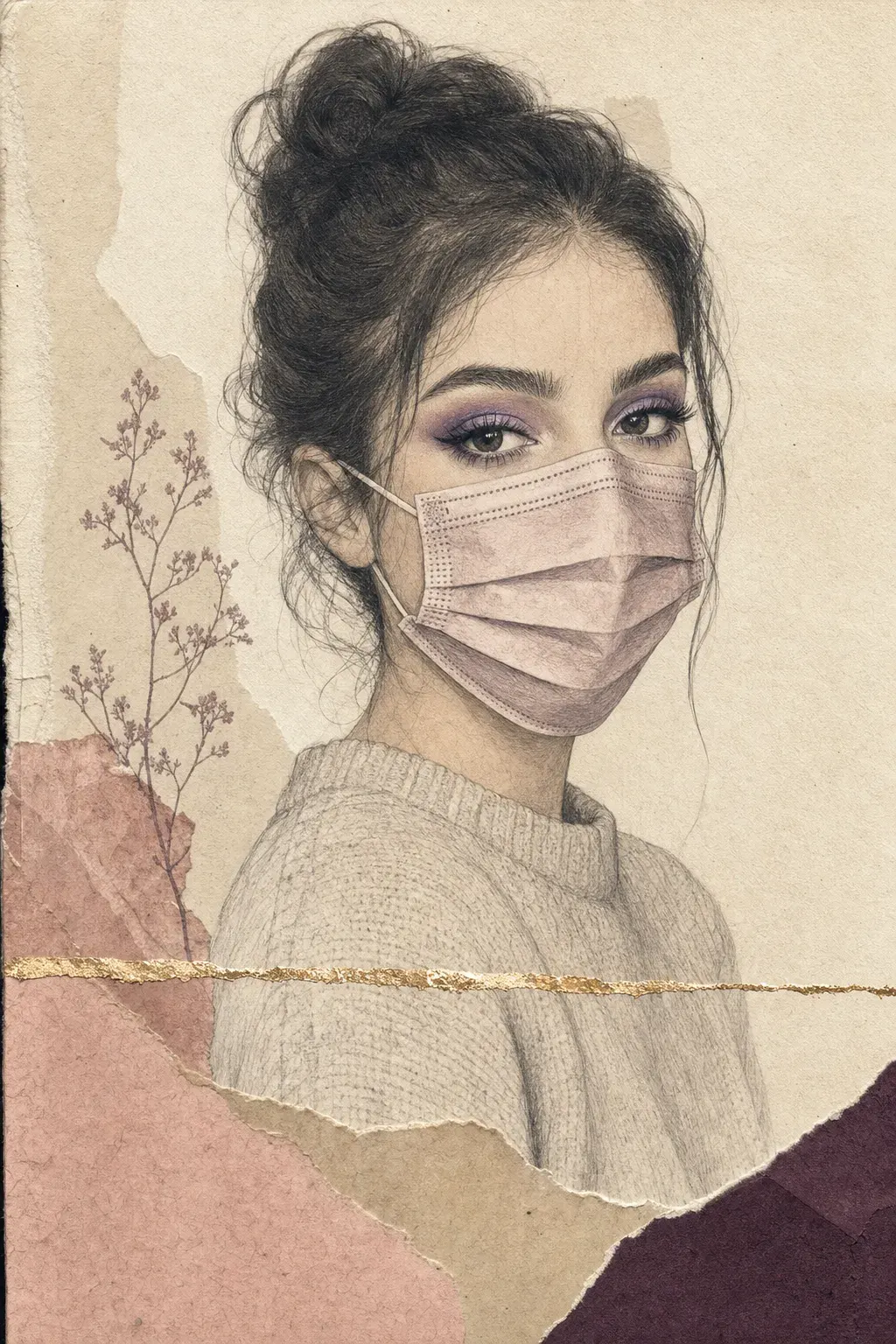
What the mask left showing was sold harder. CNN’s review of 2020 recorded an uptick in eye shadows, brow pencils and mascaras; in Britain, by NPD’s figures, eye shadow’s share of the prestige beauty market grew from 22 to 25 per cent during lockdown, and on Amazon in the United States eye cosmetics rose 5 per cent while lipstick fell.[9] In China, where the virus first struck, Alibaba reported that the term “mask makeup looks” began trending on social media early in the year.[9]
An analyst at NPD had expected as much. “In the short term, we’ll see a shift towards eye makeup as consumers try to get those smiling eyes and perfect brows,” Alecsandra Hancas told The Globe and Mail in July 2020, adding that in the long term she expected lipstick to be a big part of a return to normality. Even within the lip category the mask sorted the products: long-wear lipsticks, NPD found, were faring better than the kind that smeared.[10]
On Camera
The face did not disappear; it moved onto screens. With salons shut, people learned from YouTube makeup tutorials, and TikTok became a destination for beauty tutorials and hacks.[11] Video calls turned attention to the lower face from an unflattering angle. A Beverly Hills doctor told CNN that when her clinic reopened “lots of people came to get lower face work … because, with Zoom, the camera points up from below.”[11]
The same screens could turn on a look. The “fox eye”, makeup imitating a lifted, almond-shaped eye, trended from April 2020 until August, when it was criticised as cultural appropriation, and a number of influencers who had posted it deleted their images and apologised.[11]
The Mouth Returns
Lipstick began to recover as vaccination spread. In the four weeks to 18 April 2021, according to the market researcher IRI, American lipstick sales reached $34.2 million, more than 80 per cent above the same weeks a year earlier but still short of their pre-pandemic level of over $40 million.[12]
What returned had learned from the mask. Walmart told CNN that its shoppers showed a strong preference for long-wear and smudge-proof lipsticks that did not rub off as easily inside one, and were buying bright purples and blues as well as browns.[12] “We have been preparing for this renaissance in makeup for the last six months,” said Sam Cheow of the Estée Lauder Companies, who named the texture of the moment: “Satin lipsticks are exploding as we speak.”[12] An old promise, that a lipstick would stay where it was put, had found a new reason.
What Is Not Known
The figures here are not one series. They come from McKinsey’s tracking of one retailer’s American sales, from NPD in Canada and Britain, from Nielsen and from IRI, over different weeks and different kinds of shop, and none of the sources used here gives a worldwide figure for how far lipstick fell.[13][14][15][16]
Whether the eye-first face outlasted the mask is not measured by these sources either. They describe a shift in 2020 and a recovering lipstick market in the spring of 2021; they do not say whether eye makeup kept the share it had gained. And the lipstick index itself, as one of them notes, was never easy to measure in the first place.[13]
Sources
- [1, 3, 7, 8]Pandemic Puts An End To The ‘Lipstick Index’ NPR (All Things Considered), 2020.View source (opens in a new tab) Accessed 2026-10-03.
- [2, 4, 5, 13]Face masks may have killed off the ‘lipstick index.’ What’s the lipstick index? Fortune, 2020.View source (opens in a new tab) Accessed 2026-10-03.
- [6, 10, 14]Lipstick sales are in decline. The issue? Masks The Globe and Mail, 2020.View source (opens in a new tab) Accessed 2026-10-03.
- [9, 11, 15]2020 biggest beauty trends: DIY self-care, ‘Zoom face,’ genderless makeup CNN Style, 2020.View source (opens in a new tab) Accessed 2026-10-03.
- [12, 16]Lipstick sales just jumped more than 80% CNN Business, 2021.View source (opens in a new tab) Accessed 2026-10-03.
Filed under