The Artist at the Counter
Makeup artists put their names on the counter, a lipstick was sold for an AIDS fund with a drag queen as its face, a new company asked whether pink made you puke, and a French shop let its customers pick up the tester themselves.
HOM · Era1990 – 1999Artists & Outsiders
All of The 1990s Era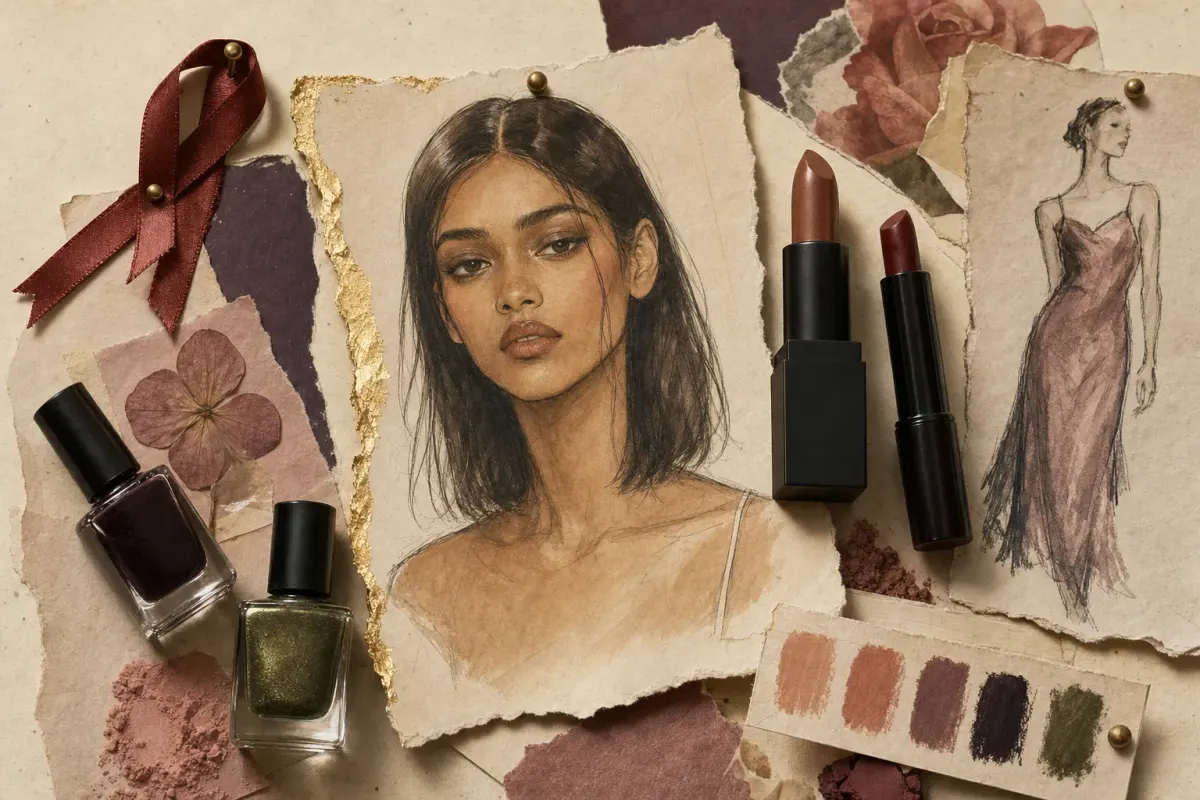
In short
The 1990s opened with a makeup artist’s ten brown-based lipsticks at Bergdorf Goodman, saw M·A·C sell a red lipstick for its AIDS fund with RuPaul as its face and Urban Decay ask whether pink made you puke, and closed with Sephora’s first American store, every tester within reach.
- 8min read
- 7chapters
- 32sources

Vivien
Your guide through time
Listen to this essay
11 min listenVivien reads our essays aloud, word for word — every date and every name in its place — so you can listen the way you would be walked through a gallery.
An AI voice, designed for History of Makeup
The 1950s built the machine that sells makeup, and the 1960s turned it towards the young. The 1990s handed a good part of it to the people who did makeup for a living. Makeup artists put their own names on lipsticks, wrote their methods down for anyone to follow, and staffed counters with people who could apply what they sold.
The decade argued, too. A lipstick was sold to fund the work of AIDS organisations, with a drag queen as its face; a new company asked its customers whether pink made them puke; a former model who had spent years mixing foundations for her own skin launched sixteen of her own. By its end a French shop had opened in New York that let customers pick up every tester themselves. What follows is the story of a counter that opened up, and of who was let in.
The Artist’s Line
The decade opened on a small table at Bergdorf Goodman in New York. In February 1991, by her own account, the makeup artist Bobbi Brown put ten brown-based lipsticks on sale there, creamy, matte and odourless and made to be mixed;[1] her aim, she later told CNN, had been a lipstick that looked like lips.[2] François Nars followed in November 1994 with twelve lipsticks at Barneys New York,[3] and early in 1996 Laura Mercier’s line was announced for a first counter at Neiman Marcus in Dallas.[4]
M·A·C, from Toronto, had shown the way. It began as a professional line made to suit its founders’ own photographic work: neutral shades instead of the pinks and purples that dominated the major houses, and matte textures that photographed better. Its counters were staffed with makeup artists “of both sexes (and all genders)” rather than interchangeable sales associates.[5] By August 1997 Women’s Wear Daily was describing a whole category of artists’ lines that had followed it, Bobbi Brown Essentials, Trish McEvoy and François Nars among them, and retailers who said the older houses had answered by going into the brush business, reworking their testers and bringing back the makeover.[6] The Estée Lauder Companies bought its way in: a majority interest in M·A·C in 1994, and the whole of Bobbi Brown Essentials in October 1995.[7][8]
The artists published as well. Kevyn Aucoin’s The Art of Makeup appeared in 1994 and Making Faces in 1997, technique set out as photographed steps with the products named,[9][10] and Bobbi Brown’s first book came out the same year.[11] The trade’s knowledge was now sold alongside its products.
Against Pink
The colour of the decade’s argument was not pink. In 1994 Chanel’s Vamp, a blackberry nail colour devised by Dominique Moncourtois, a makeup creator at the house, made its debut on the Paris runways, reaching consumers whom a magazine looking back in 2023 described as “fed a steady diet of wan neutrals and one-note reds.”[12]
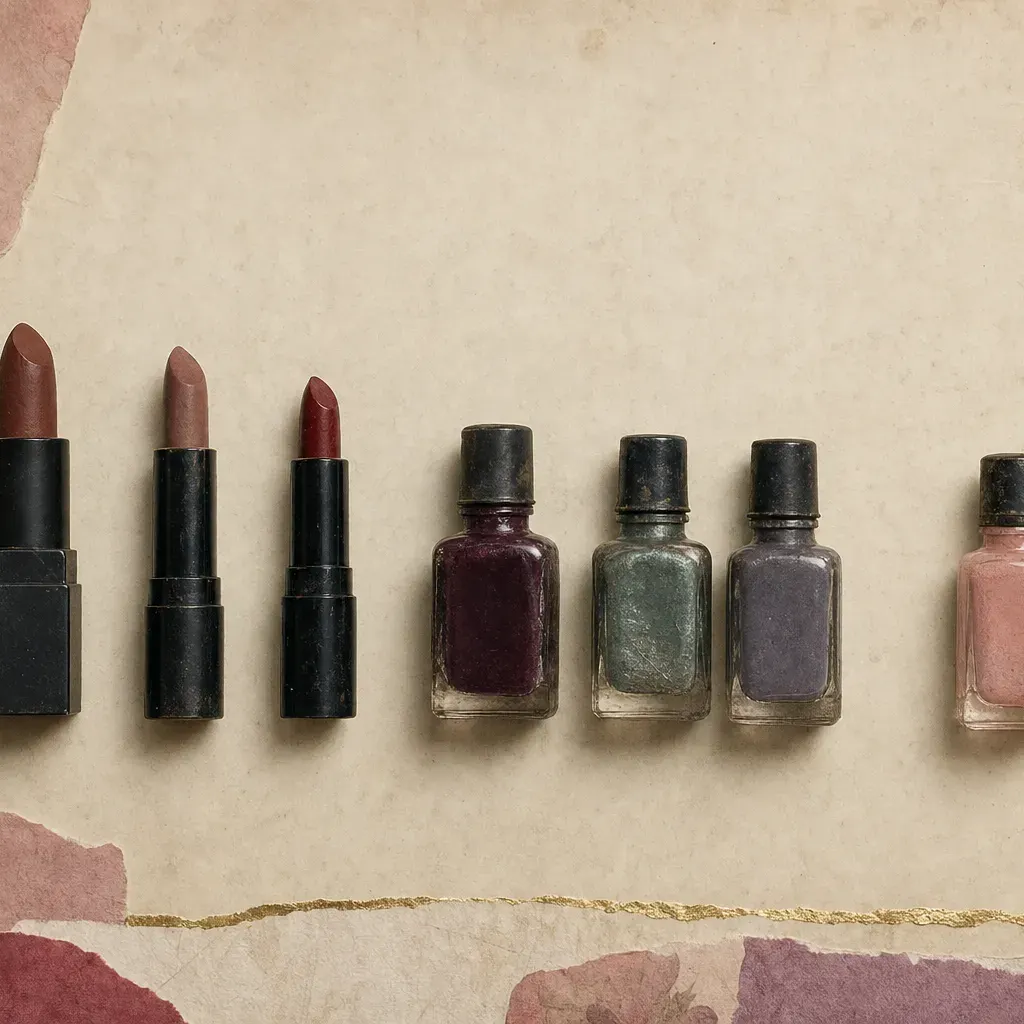
Two years later the argument became a company. Urban Decay launched in January 1996 with ten lipsticks and twelve nail enamels named Roach, Smog, Rust, Oil Slick and Acid Rain,[13] under the tag line “Does Pink Make You Puke?”[14] Its founder, Sandy Lerner, had by the company’s own account searched for months for polish in unusual colours, “lamenting the fact that there were 500 colors of pink polishes, but no greens or purples.”[14] By 1998 its website called the line “the alternative to the predictable palette of traditional color cosmetics.”[15]
The rebellion sold through ordinary channels. Nordstrom and Urban Outfitters carried it,[14] and in 2000 the company was bought by LVMH.[13]
Between us, RuPaul and I break every concept of the beauty myth – the race thing, the gender thing, everything.
A Lipstick for a Fund
The decade’s most original product was not a new formula. In September 1994 M·A·C created the M·A·C AIDS Fund to support AIDS organisations in Toronto, the city where the company had begun, and made one lipstick, a deep red called Viva Glam, the Fund’s only way of raising money. M·A·C paid for making it and the department stores that sold it gave up their margin, so that all the profits went to the Fund.[17]
Its face was RuPaul, announced at a launch party in New York in March 1995 in a campaign titled “Who is the MAC Girl?”, in a blonde wig, a red bustier and red thigh-high boots. The campaign’s historian finds no apparent precedent in the industry for a man fronting a cosmetics campaign aimed at women. By the end of 1995 the lipstick had raised $3 million, and by 1998 the Fund’s total stood at $16 million.[17] The company now says that Viva Glam has raised more than $540 million.[18]
Wider Ranges
Range was the decade’s other argument, and it was made by people who had lived with the lack of it. As a model, Iman recalled in 1994, she had been “constantly mixing and matching to get one foundation and powder for my own skin tone.” That summer she launched her own line at JCPenney for African-American, Asian, Hispanic and Native American women, with sixteen foundations to be worn, she said, “from the lightest Japanese to the blackest African”; on QVC the weekend before, by her account, women had bought five thousand of its kits.[19]
The idea was not new. Flori Roberts had sold makeup made for Black skin at department-store counters since the 1960s, and in 1992 the line was sold, with her Dermablend, to Ivax Pharmaceuticals;[20] Fashion Fair had done the same since 1973.[21] M·A·C’s early range was built to suit all skin colours, darker ones in particular,[22] and Bobbi Brown’s first lipsticks were organised around the wearer rather than the season, a story told in full elsewhere in this archive. What the decade did not do was make a wide range the industry’s standard. That waited for the foundation ranges of the late 2010s, and for the measurements that tested them.[23]
The Face of the Decade
Put together, the artists’ products and their own accounts describe the face they argued for. Bobbi Brown remembered the fashionable face of the 1980s — white skin, red lips and contouring — as what she disliked.[24] Style.com dated her yellow-toned foundation stick to 1992,[25] and she later recalled going into stores to teach women why blush should be the colour of the cheek.[26] François Nars became known in the 1990s for fresh-faced looks that let the texture of the skin show through, unlike the heavier, more opaque foundations popular at the time,[27] and his blush Orgasm, a peach powder with a gold cast, dates from 1999.[28]
The plate here is reconstructed from those products rather than from any one woman’s routine: a sheer, matched base, groomed natural brows, a matte neutral eye, a warm flush and a mouth the colour of lips. The steps beside it say what each one takes to do now.

The Shelf and the Label
The counter itself was opening up. In a department store the beauty adviser had generally represented a single brand and been paid commission on her sales; Sephora, a French chain owned since 1997 by LVMH, set rival brands side by side, arranged by product rather than by house and within the customer’s reach.[29] Its first American store opened at 555 Broadway in SoHo in July 1998, 8,100 square feet of it,[30] with 190 brands.[31] At the opening a fragrance consultant predicted that it would change the way cosmetics are sold, and Leonard Lauder asked how a shop without gifts with purchase would fare in the malls.[30]
Europe, meanwhile, was changing what went on the box. A directive of 1993 required cosmetics sold in the Community to list their ingredients in descending order of weight, and named 1 January 1998 as the date after which products containing ingredients tested on animals to meet its requirements were to be kept off the market, unless alternative tests had not been validated by then.[32][33] They had not, and in 1997 the date was moved to 30 June 2000.[33] The ban the decade had promised arrived in the next one.[34]
What Is Not Known
The decade’s look is harder to document than its products. Popular accounts give it a “grunge” face and, later, “heroin chic”; this archive has not found a source it can cite for either as a dated makeup fashion, which is why the plate above is built from the products the decade’s artists sold and described. The one documented brow in the sources used here, François Nars shaving off a model’s eyebrows for Anna Sui’s show of 1992, belongs to a single show, not a fashion.[35]
Many of the figures are the companies’ own. The sums Viva Glam raised in the 1990s come from the press of the time as gathered by its historian; the total of more than $540 million is the company’s figure and has not been checked here.[36][37] Even the date of Sephora’s American opening wavers: the trade paper’s report, dated Friday 17 July 1998, describes a debut on the Thursday, while the same paper’s later timeline gives 17 July.[38][39]
Nor do the sources settle what the artists’ lines did to the industry. The trade press of 1997 recorded retailers who believed the older houses had changed their counters in response; that is the retailers’ judgement, and it is reported here as theirs.[40]
Sources
- [1]Bobbi Brown: I’m Ready To Start Another Revolution Refinery29, 12 January 2017, 2017.View source (opens in a new tab) Accessed 2026-09-26.
- [2]Bobbi Brown’s billion-dollar idea: ‘Lipstick like lips’ CNN, 15 July 2014, 2014.View source (opens in a new tab) Accessed 2026-09-26.
- [3]François Nars Honored With the Légion d’Honneur Shiseido Company, news release datelined New York, 10 November 2016, 2016.View source (opens in a new tab) Accessed 2026-09-26.
- [4]Top Notes WWD, 16 February 1996, 1996.View source (opens in a new tab) Accessed 2026-09-26.
- [5, 16, 17, 22, 36]“From Our Lips:” Lipstick as Consumer Technology and the MAC VIVA GLAM Advertising Campaigns Scientia Canadensis 36, no. 1 (2013): 111–132, 2013.View source (opens in a new tab) Accessed 2026-10-03.
- [6, 40]Makeup Artist Make Their Mark WWD, 8 August 1997, 1997.View source (opens in a new tab) Accessed 2026-09-26.
- [7]Form 10-K: annual report for the fiscal year ended June 30, 2026 U.S. Securities and Exchange Commission, filed 19 August 2026, 2026.View source (opens in a new tab) Accessed 2026-09-26.
- [8]Form 10-K: annual report for the fiscal year ended June 30, 1998 U.S. Securities and Exchange Commission, filed 11 September 1998, 1998.View source (opens in a new tab) Accessed 2026-09-26.
- [9]The Art of Makeup HarperCollins, 1994.
- [10]Making Faces Little, Brown and Company, 1997.
- [11]Bobbi Brown Beauty: The Ultimate Beauty Resource HarperStyle, New York, 1997.
- [12]Blood on Your Hands! Air Mail, April 2023, 2023.View source (opens in a new tab) Accessed 2026-10-03.
- [13]Urban Decay’s Metro Moves Orange County Business Journal, 7 September 2014, 2014.View source (opens in a new tab) Accessed 2026-10-03.
- [14]Urban Decay Info urbandecay.com, as captured by the Internet Archive on 28 January 1999, 1999.View source (opens in a new tab) Accessed 2026-10-03.
- [15]Urban Decay — the makeup of self expression urbandecay.com, as captured by the Internet Archive on 12 December 1998, 1998.View source (opens in a new tab) Accessed 2026-10-03.
- [18, 37]VIVA GLAM Timeline M·A·C Cosmetics.View source (opens in a new tab) Accessed 2026-10-03.
- [19]Model-Actress Iman Launches Line of Cosmetics at JCPenney The Virginian-Pilot, Daily Break, p. E3, 14 July 1994, 1994.View source (opens in a new tab) Accessed 2026-10-03.
- [20]Flori Roberts Dies Happi (Household and Personal Products Industry), 2020.View source (opens in a new tab) Accessed 2026-09-22.
- [21]New documentary captures legacy of Fashion Fair, one of the first Black-owned makeup lines NBC News, 2022.View source (opens in a new tab) Accessed 2026-09-22.
- [23]The Diversity of Makeup Shades The Pudding, 2018.View source (opens in a new tab) Accessed 2026-09-22.
- [24]How I Did It: Bobbi Brown, Founder and CEO, Bobbi Brown Cosmetics Inc., 1 November 2007, 2007.View source (opens in a new tab) Accessed 2026-09-26.
- [25]The 411: Bobbi Brown Style.com (Condé Nast), 8 September 2011, archived by the Internet Archive, 2011.View source (opens in a new tab) Accessed 2026-09-26.
- [26]Bobbi Brown Is Launching a Makeup Line of Her Own WWD, 26 October 2020, 2020.View source (opens in a new tab) Accessed 2026-09-26.
- [27]Nars Celebrates 20 Years WWD, 15 August 2014, 2014.View source (opens in a new tab) Accessed 2026-09-26.
- [28]How Nars Made Its Orgasm Last 20 Years The Business of Fashion, 19 July 2019, 2019.View source (opens in a new tab) Accessed 2026-09-26.
- [29]Sephora Holdings S.A. International Directory of Company Histories, via referenceforbusiness.com.View source (opens in a new tab) Accessed 2026-09-22.
- [30, 38]France’s Sephora Makes the SoHo Connection WWD, 17 July 1998, 1998.View source (opens in a new tab) Accessed 2026-10-03.
- [31, 39]A Sephora U.S. Timeline WWD, 30 June 2023, 2023.View source (opens in a new tab) Accessed 2026-10-03.
- [32]Council Directive 93/35/EEC of 14 June 1993 amending for the sixth time Directive 76/768/EEC on the approximation of the laws of the Member States relating to cosmetic products Official Journal of the European Communities, L 151, 23 June 1993, 1993.View source (opens in a new tab) Accessed 2026-10-03.
- [33]Commission Directive 97/18/EC of 17 April 1997 postponing the date after which animal tests are prohibited for ingredients or combinations of ingredients of cosmetic products Official Journal of the European Communities, L 114, 1 May 1997, pp. 43–44, 1997.View source (opens in a new tab) Accessed 2026-10-03.
- [34]Ban on animal testing European Commission.View source (opens in a new tab) Accessed 2026-10-03.
- [35]François Nars The Business of Fashion, BoF 500 profile (undated; member since 2013).View source (opens in a new tab) Accessed 2026-09-26.
Continue in The 1990s Era
Artists & Outsiders
Browse all 10 articles