Against Pink: Urban Decay and the Colours of 1996
A founder of Cisco Systems could not find a green nail polish, so she mixed her own. The company that followed launched in 1996 with colours named for the city and a question about pink.
In short
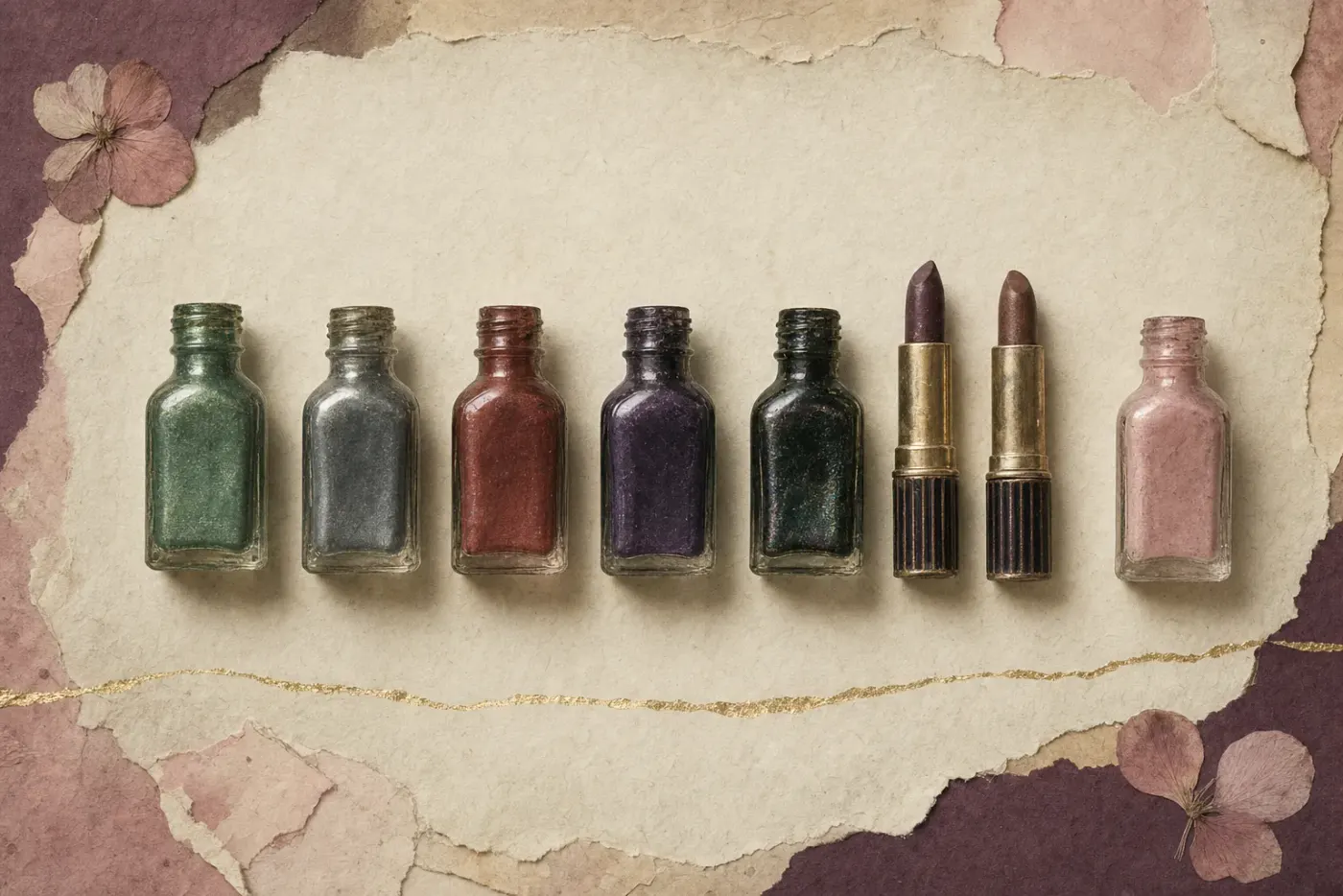
Urban Decay launched in January 1996 with ten lipsticks and twelve nail enamels in colours named Roach, Smog, Rust, Oil Slick and Acid Rain, under the tag line “Does Pink Make You Puke?”; its founders sold it to LVMH in 2000 for $22 million.
- 6min read
- 6chapters
- 5sources
By its own account, Urban Decay began with a shortage. Sandy Lerner had searched for months for nail polish of department-store quality in unusual colours, “lamenting the fact that there were 500 colors of pink polishes, but no greens or purples.” Unable to find them, she mixed her own.[1]
The company that followed sold the colours the counter did not, and asked its customers, in print, what they thought of pink.
The Founders
Lerner had co-founded Cisco Systems, the Silicon Valley networking company. For the cosmetics business, the company’s history says, she “hooked up with business whiz David Soward and marketing dynamo Wende Zomnir”.[2] Zomnir had worked her way up from an Elizabeth Arden makeup counter in Texas, and she later remembered sitting in Lerner’s yard and asking, “Wouldn’t it be cool if we put nail polish in a medicine bottle?”[3]
The company was run at first from Zomnir’s living room in Laguna Beach, with new colours mixed on her patio, and its orders went out from a warehouse in Mountain View, California.[2]
Roach, Smog and Oil Slick
Urban Decay launched in January 1996 with ten shades of lipstick and twelve of nail enamel.[4] The names came from the city: Roach, Smog, Rust, Oil Slick and Acid Rain.[5] By 1998 the company’s website offered “never-before-seen shades like Shattered, Gash, Asphyxia and Acid Rain”, and called the line “the alternative to the predictable palette of traditional color cosmetics.”[6]
The names did the same work as the colours. A shade called Roach was not sold on the promise of flattering anyone; it said which side of the counter its wearer stood on.
Does Pink Make You Puke?
The first advertisements carried the tag line “Does Pink Make You Puke?” and ran, by the company’s account, in national magazines such as Rolling Stone, Spin and Details, music and style titles rather than the beauty pages. The company recalled that the demand they created needed more staff at the warehouse, and that Nordstrom, Urban Outfitters and boutiques such as Fred Segal began to carry the line.[7]
In the summer of 1996 it went after Barbie, with a campaign headed “Burn, Barbie Burn/Be a Person, not a Doll” and a tattooed model in a leopard-print bra. Mattel’s lawyers, the company said, demanded that it “cease and desist”.[7]
This is industrial-chic, super deluxe make-up in cutting edge colors for anyone who wants to rattle the notion of what beauty is.
Not the Only Dark Colour
Urban Decay was not alone in turning from pink, and it was not first. In 1994 Chanel’s Vamp, a blackberry nail colour devised by Dominique Moncourtois, a makeup creator at the house, made its debut on the Paris runways; a magazine looking back in 2023 described the consumers it reached as “fed a steady diet of wan neutrals and one-note reds.”[9] M·A·C had built its line since the 1980s on neutral, matte shades in place of the pinks and purples that dominated the major houses.[10]
What Urban Decay added was the tone of the advertising. Chanel’s dark colour came down a couture runway. Urban Decay’s came with a question about whether its customers felt sick.
Rebellion for Sale
The rebellion sold. Lerner and Zomnir sold the company in 2000 to LVMH Moët Hennessy Louis Vuitton for $22 million; LVMH sold it two years later to the Falic Group, a duty-free operator in Miami, and the private equity firm Castanea Partners took it over in 2009. In 2012 L’Oréal bought it, in a deal estimated at $350 million.[11]
By 2014 Urban Decay sold about three-quarters of its volume through cosmetics chains such as Sephora and Ulta, and its chief executive, Tim Warner, described a strategy of being important to “the No. 1 retailer in the U.S., and that’s Sephora.”[11] The company that had asked whether pink made you puke ended up on the open shelf, a few feet from the pinks.
What Is Not Known
Most of the early history here is the company’s own, written for its website in the late 1990s, and it is cited as such: a brand describing its founding, its advertising and the reaction to them.[12] The magazines it names, the stores it lists and the letter it says Mattel’s lawyers sent have not been checked against independent sources.
Accounts of who founded the company differ in emphasis. The company’s history of 1999 says that Lerner founded Urban Decay and then joined forces with Soward and Zomnir; a business newspaper’s profile of 2014 calls Zomnir a cofounder.[12][13] The sources used here do not settle the question, and they give no prices for the first lipsticks and enamels.
Sources
- [1, 2, 4, 7, 8, 12]Urban Decay Info urbandecay.com, as captured by the Internet Archive on 28 January 1999, 1999.View source (opens in a new tab) Accessed 2026-10-03.
- [3, 5, 11, 13]Urban Decay’s Metro Moves Orange County Business Journal, 7 September 2014, 2014.View source (opens in a new tab) Accessed 2026-10-03.
- [6]Urban Decay — the makeup of self expression urbandecay.com, as captured by the Internet Archive on 12 December 1998, 1998.View source (opens in a new tab) Accessed 2026-10-03.
- [9]Blood on Your Hands! Air Mail, April 2023, 2023.View source (opens in a new tab) Accessed 2026-10-03.
- [10]“From Our Lips:” Lipstick as Consumer Technology and the MAC VIVA GLAM Advertising Campaigns Scientia Canadensis 36, no. 1 (2013): 111–132, 2013.View source (opens in a new tab) Accessed 2026-10-03.
Filed under