Flat shader brush
The small, flat, firm eye brush that presses shadow onto the lid instead of sweeping it on. How to choose one by size, firmness and fibre, how to pack colour and foil it wet — and the paintbox it borrows from.
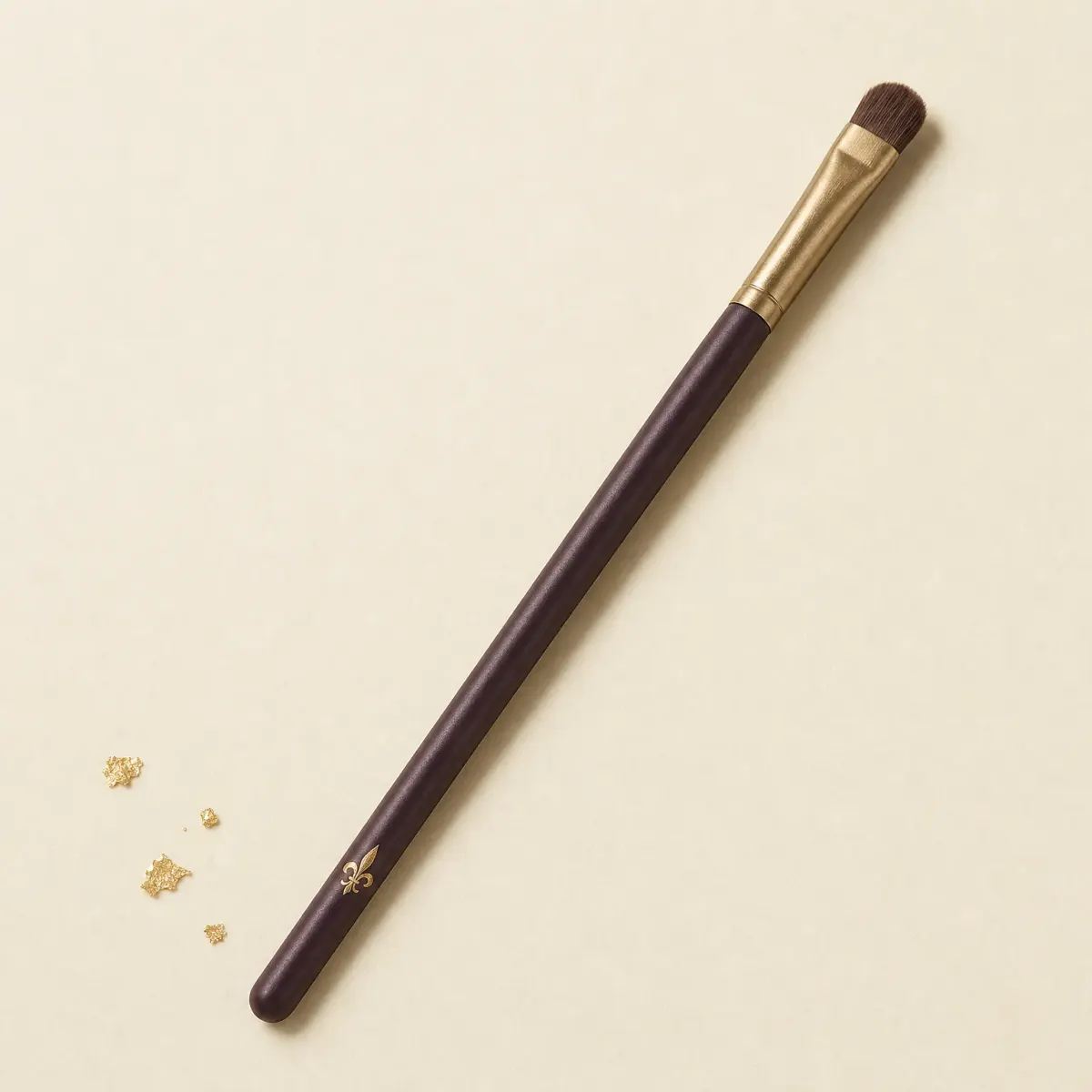
A flat shader brush is a small, flat eye brush of firm, closely packed fibres with a rounded edge, used to pat or press eyeshadow onto the lid for dense, even colour.
Our picks
Chosen across the flat shapes makers give the eye brush, from paddles and ovals to filberts and tapered flats, in goat hair and synthetic fibre, and from drugstore to prestige, with a Japanese brush from Kumano. Each opens at the maker’s own shop; one Australian house ships from its own shop abroad.
Affiliate links — we may earn a commission at no extra cost to you. How this works
Classic shaderPrestige MAC Cosmetics
239 Synthetic Eye Shader Brush
Soft but dense, with a rounded edge of firm fibres: MAC’s shader for packing colour onto the lid or softening it.
- Rounded edge
- Firm, fine fibres
- Synthetic
Paddle packerDrugstore Morphe
M302 Medium Paddle Packer Eyeshadow Brush
A very dense medium paddle made for stamping and patting colour on at full strength.
- Paddle
- Very dense
- Powder, cream or liquid
Small and firmMid-range Sigma Beauty
E57 Firm Shader Brush
A small, dense, flat head for laying intense colour across the lid with control and little fallout.
- Small, flat head
- Dense
- Cream or powder
Goat hairPrestige Hakuhodo
J5523BkSLN Eyeshadow Round & Flat
From the Kumano maker Hakuhodo: a goat-hair brush for the upper lid, in the shape it calls round and flat.
- Goat hair
- Round and flat
- Upper lid
Budget detailDrugstore ColourPop
Small Shader Brush
An inexpensive small shader with a flat, firm tip, for precise colour or concealer on the lid.
- Flat, firm tip
- Powder, cream or liquid
Tapered flatMid-range ILIA
Shadow Brush
A flat, tapered head that packs, presses or sweeps colour onto the lid.
- Flat, tapered head
- Wooden handle
Large paddlePrestige NARS
#20 Allover Eyeshadow Brush
A large paddle for laying colour over the whole lid in a few presses.
- Paddle-shaped
- Large
- All over the lid
Base and shadowDrugstore Real Techniques
All-Over Base & Shadow Brush
A soft, flat head for packing on pigment, and for laying eye primer before it.
- Soft, flat head
- Primer too
- Liquid, cream or powder
Eye baseMid-range Glo Skin Beauty
301 Eye Base Brush
Soft, dense bristles with a flat edge, for an even base of cream or powder shadow across the lid.
- Flat-edged
- Soft, dense
- Cream or powder
Bevelled flatPrestige Laura Mercier
All Over Eye Color Brush
A large flat head with a bevelled edge, for a smooth, even base shade.
- Large flat head
- Bevelled edge
- Synthetic
Budget paddleDrugstore Milani
Full-Coverage Eyeshadow Brush
An inexpensive tapered paddle that lays colour evenly from the lash line to the brow bone.
- Paddle-shaped
- Tapered
- Lash line to brow
Flat filbertMid-range Cinema Secrets
E23 Flat Filbert Eyeshadow Brush
The painter’s flat filbert, rounded at the tip, from a professional make-up house.
- Flat filbert
- Rounded tip
Cream shadowPrestige Westman Atelier
Eye Shadow I Brush
Tapered, flat bristles for smoothing cream shadow onto the lid and defining the lashes.
- Tapered, flat
- Nylon fibres
- Birch handle
Small flatDrugstore L.A. Girl
Small Shader Brush
An inexpensive dense, precise flat brush for colour in the small areas of the eye.
- Dense, flat
- Small areas
Flexible ovalMid-range Make-up Designory
#320 Oval Shadow Brush
A flat, flexible oval from a makeup school’s own line, for colour on the lid and definition in the crease.
- Flat oval
- Flexible
- Lid or crease
Shadow or concealerDrugstore KIKO Milano
Eyes 51 Shader Brush
An inexpensive flat synthetic brush for cream or powder shadow, and for concealer.
- Flat
- Synthetic
ConcentratedMid-range Jane Iredale
Flat Eye Brush
A small flat brush for concentrated cream or powder colour, from a mineral-makeup house.
- Small, flat
- Cream or powder
Pro ovalDrugstore Crown Brush
Pro Oval Shader C510
A dense, flat oval from a professional brush maker, for controlled placement of shadow on the lid.
- Dense, flat head
- Controlled placement
Oval, two waysMid-range Rae Morris
Jishaku #11 Medium Oval Shadow Brush
Used flat, it washes colour across the lid; turned on its thin side, it works the socket.
- Oval
- Thin profile
A flat shader is the eye brush that paints. Its head is a small, flat bundle of firm fibres, gathered in a pinched metal collar and rounded or tapered at the tip, like a painter’s flat cut down to fit an eyelid. Where a fluffy brush sweeps shadow on and spreads it thin, a shader picks up a dense load and presses it onto the lid, so the colour arrives as it looked in the pan: opaque, even and exactly where it was put. That makes it the brush for the lid shade, for shimmers and metallics, and for cream shadow and eye base, which it spreads in a smooth, thin coat.
Its neighbours share part of the work. A sponge-tip applicator presses colour on too, but carries less and blends badly. A domed blending brush places colour and softens it; a crease brush lays a line of shadow in the socket. Most eye looks use a shader first, for the colour, and one of the others afterwards, for the edge.
Choosing one
Start with size. A shader about the width of a fingernail covers most lids in two or three presses; a large paddle lays a base shade or a cream wash quickly; a small one works along the lower lash line, in the inner corner and on hooded lids, where there is little lid to work with. Then firmness. A firm, dense shader deposits the most colour and holds a clean edge, which suits shimmer and pressed pigment; a softer, springier one lays a sheerer layer and blends a little as it goes.
Fibre follows the formula. Synthetic fibre is not porous, so it is the choice for cream shadow, eye primer, glitter and anything used wet, and it rinses clean. Hair grips powder: Hakuhodo, in Japan, makes its J5523 in goat hair, and the same shape in horse hair and in blends of the two. Look at the ferrule, too. On a flat brush the metal collar is pinched to hold the fibres in a plane, and a shader whose head has begun to splay has lost the very thing it is for.
The edge decides the line it leaves. A rounded edge, the commonest, blends a little as it goes and leaves no corner; a tapered flat reaches into the inner corner and runs along the lashes; an oval or a filbert, flat with a curved tip, does both at a larger size. Choose the edge that matches the line you want on the lid.
Packing, and foiling
Press, don’t sweep. Touch the flat of the brush to the pan, tap off the excess and pat the colour onto the centre of the lid, working outward in small presses; a sweep lifts nearly as much colour as it lays. Build intensity with a second thin layer rather than one heavy one, and keep the shader to the mobile lid: its clean edge is a line, and the crease above it wants a softer brush to blur it.
For the most intense shimmer, use the brush damp. Mist it with water or setting spray, or press it on a damp sponge, then pick up the shadow and pat it on; many pressed shimmers used this way go on like foil. Leave the pan open to dry before closing it. The shader also lays primer or concealer across the lid before colour, and presses loose pigment or glitter onto a tacky base, where a fluffy brush would scatter it.
Two habits account for most patchy lids: too much shadow on the brush, which falls onto the cheek as it is pressed, and a shader carried up into the crease, where it leaves a hard stripe. Tap off before every press, and do the lower lash line last, once any fallout has been dusted away. Wash the brush after cream, glitter or wet use, and once a week otherwise, and dry it lying flat, so that water does not run back into the ferrule and loosen the glue that holds the head.
Where it came from
Eye colour came with a brush from early on. When Helena Rubinstein added eye make-up to her range in 1907, her Valaze Tablette Indienne was a cake to be “applied with a soft brush”, meant to extend the arch of the brows and “delicately darken the eyelids and eyelashes”; its companion, Kohol Jet Grains, came with an ivory stick.[1]
The wet brush came later, and it looks like a painter’s habit. Mary Quant, whose make-up was launched in 1966, claimed to have experimented with artists’ materials, paint brushes and water-colour paint boxes among them.[2] Max Factor’s Water Power Eye Shadow of 1969 needed water to mix it,[3] and a Revlon patent granted in 1976 describes a pressed eye shadow to be put on the lids by finger, brush or sponge, or with a wet applicator, the cake drying out afterwards to be used again wet or dry.[4]
The sponge tip, which has a page of its own, stayed in the compact. The flat brush left it: every shader in the carousel is sold on its own, and it remains the one eye brush meant to be used as readily wet as dry, for shadow laid down in a single dense stroke rather than built up in veils.
The techniques
- Pack
- Pat colour onto the lid for full, dense payoff rather than sweeping it.
- Press
- Press product onto the skin without dragging, so it stays where it is put.
Sources
- [1]Helena RubinsteinView source (opens in a new tab) Accessed 2026-09-22.
- [2]The story of Mary Quant make-upView source (opens in a new tab) Accessed 2026-09-22.
- [3]Max Factor (post 1960) Cosmetics and Skin, 2013.View source (opens in a new tab) Accessed 2026-09-25.
- [4]US Patent 3,978,207 — Pressed powder cosmetic composition United States Patent Office, 1976.View source (opens in a new tab) Accessed 2026-09-26.
What it is used with
Cream eye base
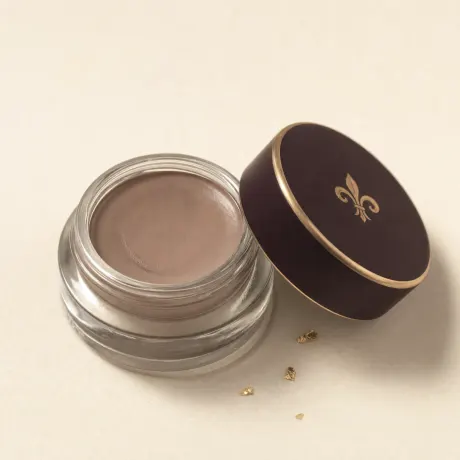
An opaque cream colour worn under shadow to deepen it, or alone as a wash.
Read the guide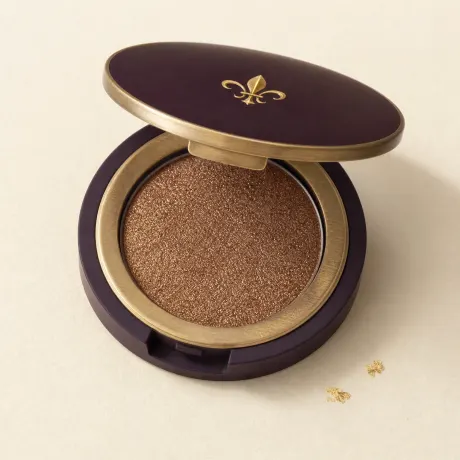
Single eyeshadow
One pressed shade in its own small compact.
Read the guide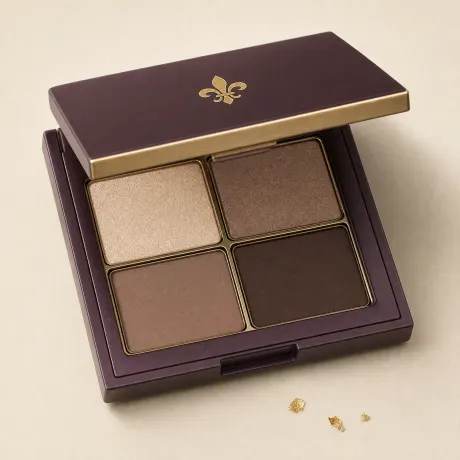
Eyeshadow quad
Four coordinated shades — typically light, medium, deep and a shimmer — for one complete eye.
Read the guide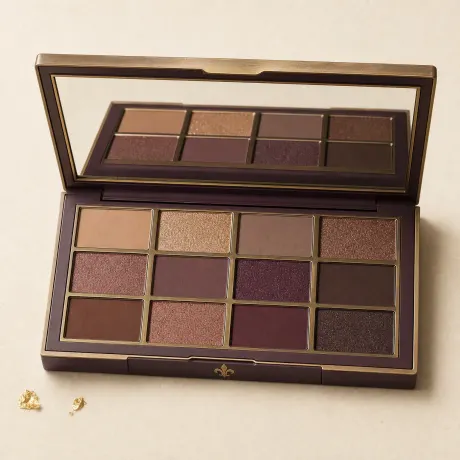
Eyeshadow palette
A large range of shades in one case, for building many looks from one kit.
Read the guide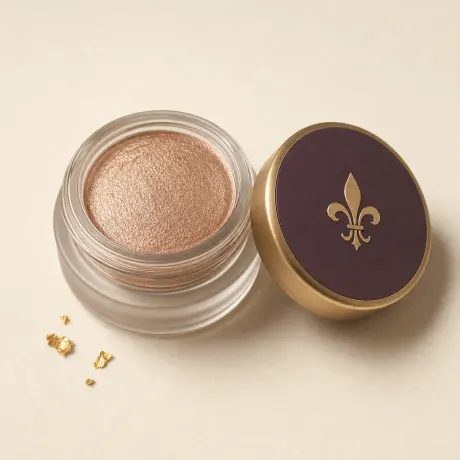
Cream eyeshadow
Shadow in a cream base, for a fast wash of colour that sets in place.
Read the guide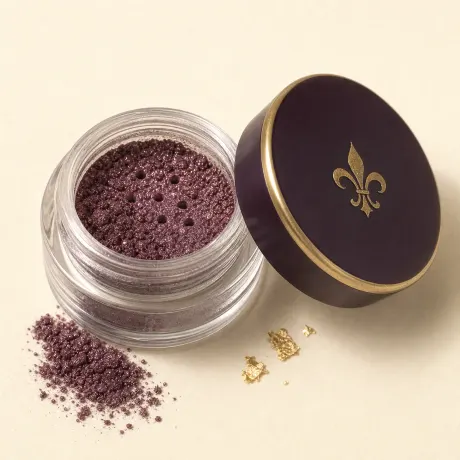
Loose pigment
Shadow as an unpressed powder, for the most intense colour and shine.
Read the guide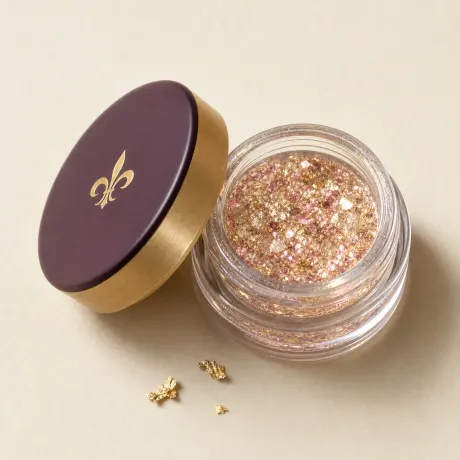
Glitter eyeshadow
Glitter suspended in a gel binder, so it stays on the lid instead of falling onto the cheek.
Read the guide
Baked eyeshadow
Shadow baked into a dome, giving a foiled, metallic finish that intensifies when wet.
Read the guide
Other kinds of eye brushes
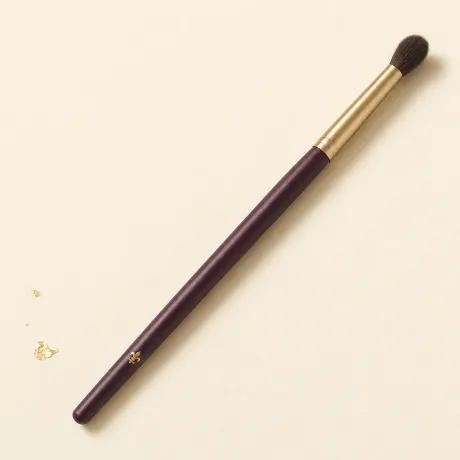
Fluffy blending brush
Long, loose bristles rising to a soft point — the brush that removes edges.
Read the guide
Domed blending brush
A rounded eye brush of medium density that both places and diffuses colour.
Read the guide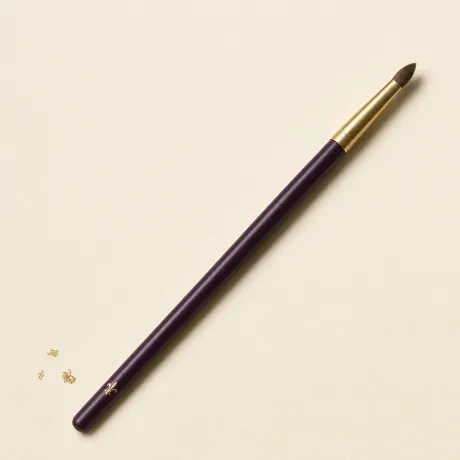
Crease brush
A small, tapered, pointed brush that fits into the socket line.
Read the guide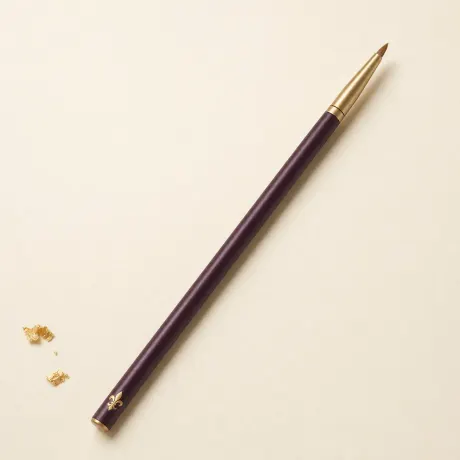
Pencil brush
Tightly packed bristles shaped to a firm point, for detail along the lash line and in the inner corner.
Read the guide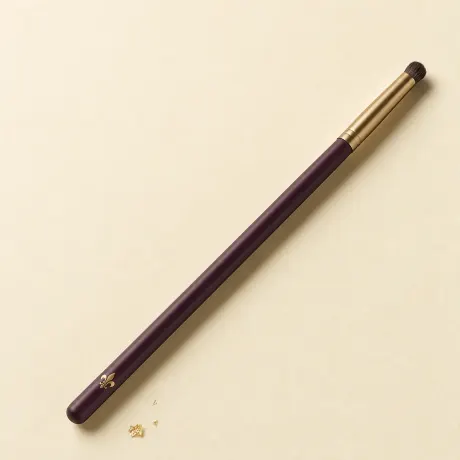
Smudger brush
A short, very dense, slightly domed tuft on a slim eye-brush handle — made to press liner and shadow into the lash line and soften it into smoke.
Read the guide
Angled shading brush
An eye brush cut on an angle, for deepening the outer corner.
Read the guide