Fluffy blending brush
The loose, tapered eye brush that takes an edge away, turning two shadows into one gradient. How to choose one by size and softness, how to blend without muddying — and the blended eye it inherited from silent film.
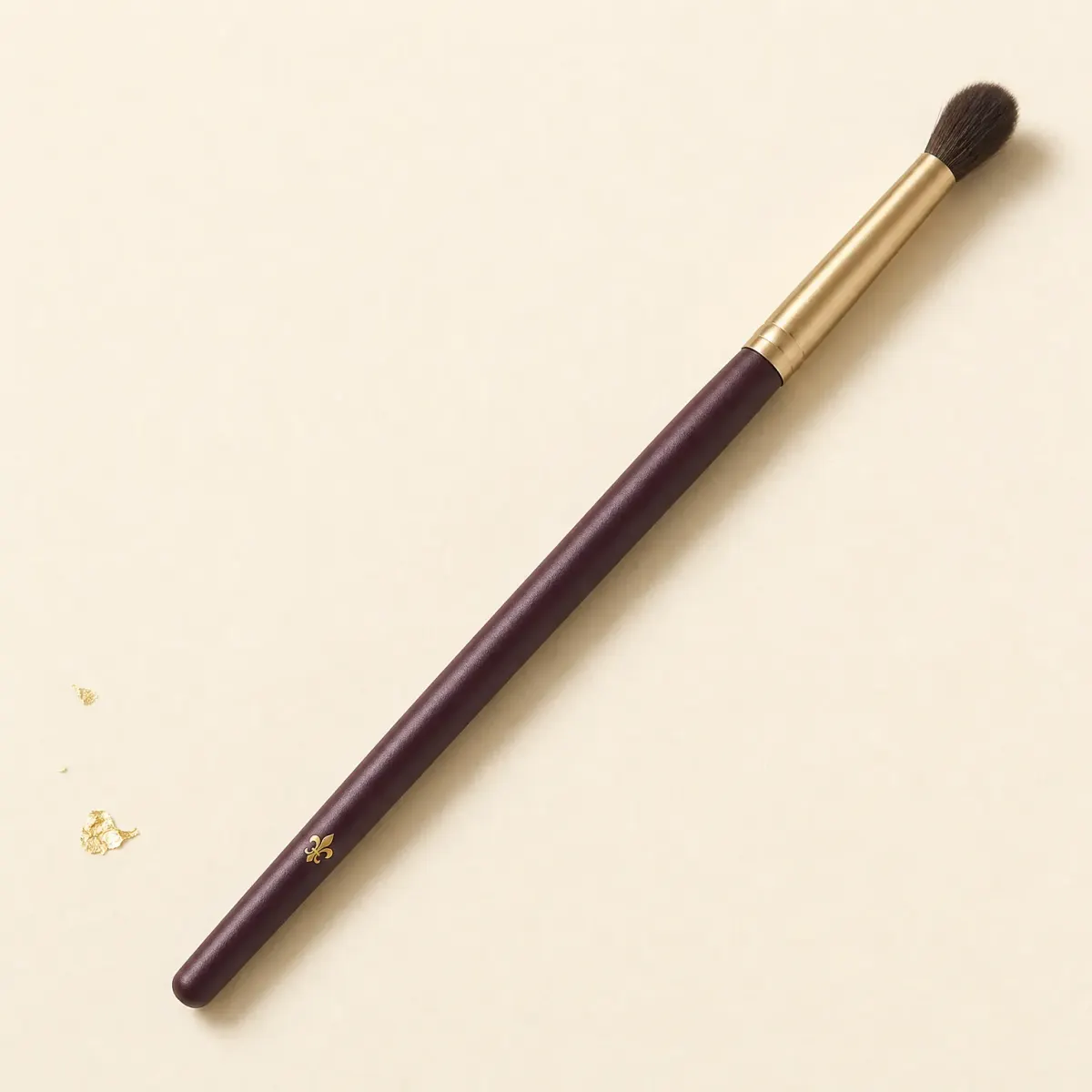
A fluffy blending brush is a loosely packed eye brush of long, soft fibres rising to a tapered tip, swept back and forth through the crease to diffuse eyeshadow until no hard line remains.
Our picks
Chosen across the sizes, tapers and softness of the loose eye blender, in synthetic fibre and natural hair, from drugstore to prestige. Each opens where its maker sells it: on Amazon where the house sells there, or at its own shop.
As an Amazon Associate I earn from qualifying purchases. Affiliate links — we may earn a commission at no extra cost to you. How this works
Wispy taperPrestige MAC Cosmetics
224 Synthetic Tapered Blending Brush
A tapered blender of soft, wispy fibres that sheers shadow out and contours the crease.
- Tapered
- Soft, wispy fibres
- Synthetic
Budget fluffyDrugstore e.l.f. Cosmetics
Fluffy Eye Blender Brush
An inexpensive fluffy blender that blurs the edges of shadow, and sets concealer too.
- Fluffy
- Synthetic
- Soft-focus
Fluffy taperMid-range Sigma Beauty
E40 Tapered Blending Brush
A soft, fluffy tapered blender, a cult favourite by its maker’s account, swept back and forth through the crease.
- Fluffy head
- Synthetic
- Sheer to medium
Smoky eyePrestige Charlotte Tilbury
Eye Blender Brush
The house’s eye blender, sold for a smoky eye or a softly blended natural one.
- Soft, synthetic bristles
- Smoky or natural
All-over fluffyDrugstore EcoTools
All-Over Eye Brush
A full, fluffy brush that sweeps shadow over the lid and blends it into the crease.
- Full, fluffy
- Lid and crease
- Synthetic
Natural hairMid-range Anastasia Beverly Hills
A10 Pro Brush – Diffuser Brush
A fluffy, tapered diffuser of natural fibres for applying and softening powder shadow in the crease.
- Fluffy, tapered
- Natural fibres
- Eyes and face
Large taperPrestige NARS
#22 Blending Brush
A large, tapered, fluffy brush for blending shadow through the crease.
- Large
- Tapered, fluffy
- Crease
LightweightDrugstore Real Techniques
Blending Crease Brush
A lightweight, fluffy head that diffuses powder shadow in the crease or across the lid.
- Fluffy head
- Crease or lid
Curved fluffMid-range Make-up Designory
#630 Shadow Fluff Brush
Soft, fluffy, curved bristles from a makeup school’s own line, for colour in the crease or on the lid.
- Fluffy, curved
- Synthetic
- Cream or powder
Long fibresPrestige Bobbi Brown
Eyeshadow Applicator Brush
Fluffy, long fibres for blending and building powder or cream shadow on the lid, the crease and the lash line.
- Fluffy, long fibres
- Powder or cream
Cut taperDrugstore Morphe
M331 Tapered Blender Eyeshadow Brush
A fluffy tip cut to a taper, for targeted blending that keeps colour concentrated in the crease.
- Fluffy
- Tapered tip
- Crease
Curved fluffyMid-range Cinema Secrets
E37 Fluffy Curved Eyeshadow Brush
A fluffy, softly curved blender from a professional make-up house.
- Fluffy
- Curved silhouette
Softly roundedPrestige By Terry
Tool-Expert Eye Blender Brush
A tapered, softly rounded blender made for seamless gradients and diffused transitions.
- Tapered
- Softly rounded
- Vegan synthetic
Budget taperDrugstore ColourPop
Tapered Blending Brush
An inexpensive tapered blender that fits the crease to blend and diffuse shadow.
- Tapered
- Super soft
- Powder or cream
Everyday washMid-range Jones Road
Eye Fluffy Brush
A fluffy brush for an even wash of colour across the lid, or for blending all over.
- Fluffy
- All-over
Soft roundedPrestige Westman Atelier
Eye Shadow II Brush
Fluffy bristles in a soft, rounded shape for diffusing and refining colour.
- Fluffy
- Soft, rounded shape
- Nylon fibres
Mixed fibreDrugstore L.A. Girl
Tapered Blending Brush
An inexpensive tapered blender of mixed synthetic and natural fibre, for softening harsh lines.
- Tapered
- Synthetic and natural
Small fluffyMid-range Jane Iredale
Fluffy Eye Brush
A small, fluffy brush for cream and powder eye colour, from a mineral-makeup house.
- Small, fluffy
- Cream or powder
Light washPrestige Victoria Beckham Beauty
20. Soft Blend Brush
A soft, fluffy brush shaped to the eye, for a light wash across the lid or for circling shades together.
- Soft, fluffy
- Wash or blend
Sheer fluffDrugstore Crown Brush
Deluxe Blending Fluff Brush SS021
A blending fluff from a professional brush maker, for a sheer layer of shadow blended out in the crease.
- Fluffy
- Sheer coverage
- Crease
Small contoursPrestige Hourglass
Nº 6 Tapered Blender Brush
A tapered blender made to work in and around the small contours of the eye.
- Tapered
- Vegan
A fluffy blending brush does one thing better than any other eye brush: it takes an edge away. Its head is long, loose and tapered, a small plume of soft fibres in a round ferrule, and because the fibres stand apart it carries little colour and puts down less than it picks up. Swept back and forth across a line of shadow, it spreads the pigment thinner and thinner at the border until the line has gone. That is how a crease shade melts into the lid, a deep outer corner into the transition shade, and a smudged liner into shadow.
Its neighbours are denser. A domed blending brush packs more fibres into a rounder head, so it places colour as well as softening it; a crease brush is smaller and more pointed, made to lay a line in the socket rather than to dissolve one. The fluffy blender is the loosest of the three and the least precise, which is exactly its use.
Choosing one
Match the size to the eye. A large, loose blender covers the whole socket in a few strokes and suits transition shades and wide lids; a smaller, more tapered one reaches into a deep-set or hooded crease without carrying colour up onto the brow bone. The taper matters as much as the size: a pronounced point puts colour exactly in the socket before the sides of the brush soften it, while a rounder, fuller tip gives a hazier, wider blend.
Softness decides how much the brush moves. The airiest blenders are almost impossible to overdo but slow to build colour; a slightly firmer one blends and deposits at once, which helps where a transition shade has to show, as it often must on deeper skin. Most blenders in the carousel are synthetic, which suits cream shadow as well as powder and washes clean; Anastasia Beverly Hills describes its A10 as natural fibre, a choice for powder. One blender is usually the first eye brush to wear out, and a second, kept clean for the last softening strokes, earns its place before a third brown shadow does.
Care matters more than it does for a dense brush. A loose head that dries bent, or clogged with old shadow, stops spreading colour evenly and starts to drag it. Wash the blender once a week, squeeze it out, reshape the taper between your fingers and leave it to dry lying flat.
How to blend
Blend light to deep, with an almost empty brush. Put the transition shade in the crease first, sweeping the blender from side to side like a windscreen wiper, holding the handle near its end so that the brush can only brush. Add the deeper shade with a smaller brush, then go back with the blender, clean or carrying only the transition shade, and work the border in small circles and short strokes until it disappears. Look straight ahead into the mirror while you work: an eye seen from below hides the crease you are shading.
The same brush does more than the crease. Run it along the lower lash line with whatever is left on it, to join the lower shadow to the upper; sweep it over the edge of a smudged liner to turn the line into a haze; and use it clean at the very end, over the whole eye, to soften any border the smaller brushes left behind.
Muddiness is the usual mistake. A blender that carries a dark shade into a light one mixes them into grey, so wipe it on a towel between colours, or keep one brush for dark shades and one for light. Hard edges more often mean too much shadow on the brush than too little blending: tap off, and blend with less.
Where it came from
The blended eye is older than the blending brush. Silent film asked for it: a guide for newcomers to the film studios, published in 1921, has the edge of the upper lid lined and the shade then “worked back toward the eyebrow, getting constantly lighter, until it finally blends with the grease paint of the face”. Helena Chalmers, writing on make-up for stage and screen in 1925, named the tool: “Blur and blend it with a finger until you have a shaded portion darkest at the edge of the eyelid and fading off towards the eyebrow.” The finger was not the only way. A photograph of the actress Pola Negri making up in 1922 appears to show her taking colour from a palette of four with a brush.[1]
At the dressing table the finger lasted longer. Advice published by the cosmetics house Richard Hudnut in about 1937 was to apply eye shadow “with your finger (most girls like the little finger for this)”, as close to the lashes as possible, “and blend it over the lid”.[2]
Nothing read for this article dates the moment a loose, tapered brush took that work over. But the gradient those instructions describe, darkest at the lashes and fading to nothing below the brow, is exactly what a fluffy blender is sold to make: the aim of the 1920s, pursued with a tool that can be washed between one colour and the next.
The techniques
- Blend
- Soften an edge until one colour passes into the next without a line.
- Windscreen wiper
- Side-to-side strokes along the crease to diffuse colour upward.
Sources
- [1]Early (Silent) Movie Make-up Cosmetics and Skin, 2023.View source (opens in a new tab) Accessed 2026-09-26.
- [2]Eye Shadow Cosmetics and Skin, 2019.View source (opens in a new tab) Accessed 2026-09-26.
What it is used with
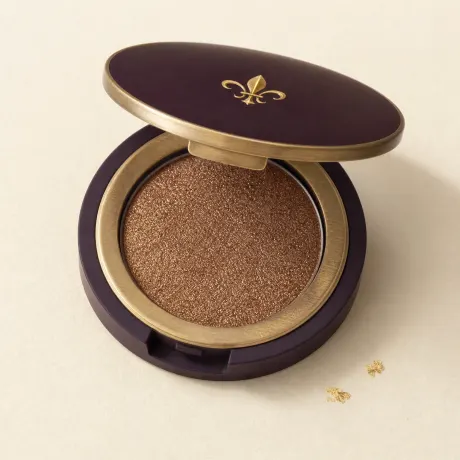
Single eyeshadow
One pressed shade in its own small compact.
Read the guide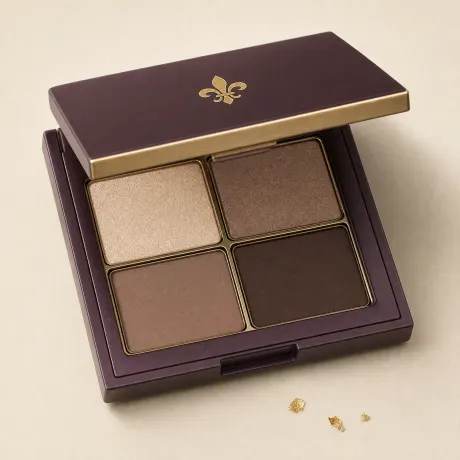
Eyeshadow quad
Four coordinated shades — typically light, medium, deep and a shimmer — for one complete eye.
Read the guide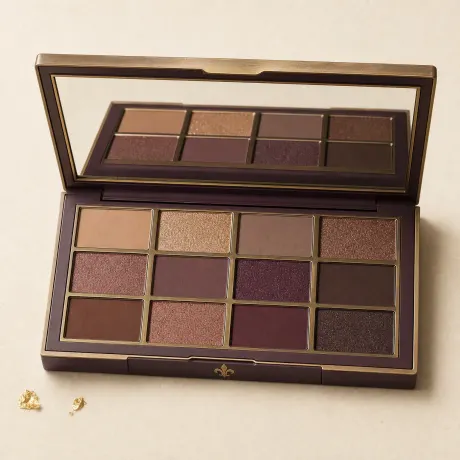
Eyeshadow palette
A large range of shades in one case, for building many looks from one kit.
Read the guide
Other kinds of eye brushes
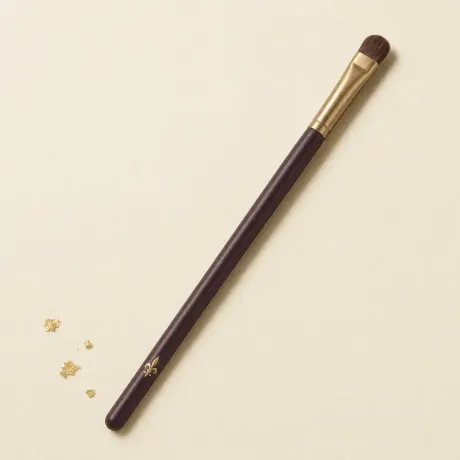
Flat shader brush
A flat eye brush with firm bristles and a rounded edge, for packing colour onto the lid.
Read the guide
Domed blending brush
A rounded eye brush of medium density that both places and diffuses colour.
Read the guide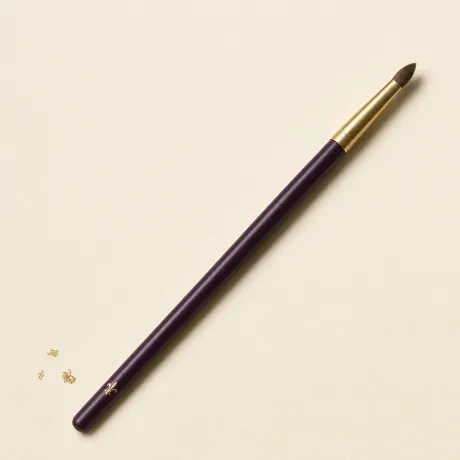
Crease brush
A small, tapered, pointed brush that fits into the socket line.
Read the guide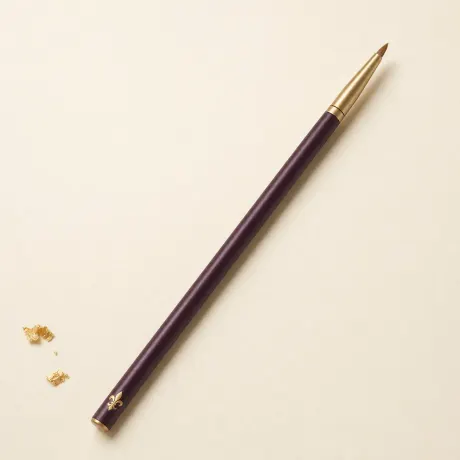
Pencil brush
Tightly packed bristles shaped to a firm point, for detail along the lash line and in the inner corner.
Read the guide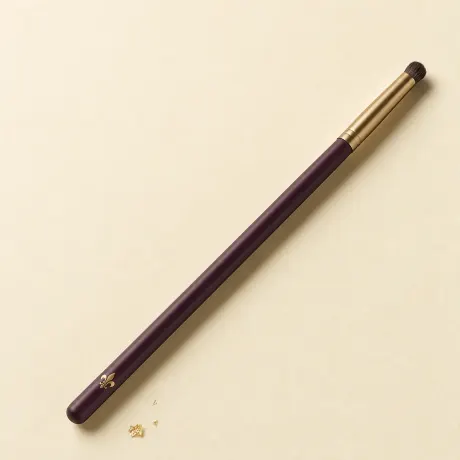
Smudger brush
A short, very dense, slightly domed tuft on a slim eye-brush handle — made to press liner and shadow into the lash line and soften it into smoke.
Read the guide
Angled shading brush
An eye brush cut on an angle, for deepening the outer corner.
Read the guide