Glitter eyeshadow
Glitter made to stay on the eyelid, held in a gel or a cream or pressed onto a base. What it is made of, how to wear it without fallout, what regulators say about glitter near the eye, and where the plastic flake came from.
Glitter eyeshadow is glitter — reflective flakes, most often of plastic — suspended in a gel or cream binder, or pressed loose onto a cosmetic adhesive, so that it holds on the eyelid instead of falling onto the cheek.

Our picks
Glitter sold specifically for the eyes is a small category, since most glitter gels are sold for the face and body. These are genuine eye products from their makers, in gel, cream and loose forms, from a drugstore gel to a prestige cream. Each opens where its maker sells it, on Amazon or at the house’s own shop.
As an Amazon Associate I earn from qualifying purchases. Affiliate links — we may earn a commission at no extra cost to you. How this works
Creamy glitterMid-range Too Faced
Disco Crush High Shine Glitter Eye + Face Sparkle
A creamy glitter that presses on with a fingertip, for the lid or the inner corner.
- Creamy
- Multichrome
- Eye and face
Wearable glitterPrestige Hourglass
Scattered Light Glitter Eyeshadow
Fine glitter in a cream that dries down, sparkle soft enough to wear by day.
- Cream-to-powder
- Micro-glitter and pearl
Chrome flakesMid-range Danessa Myricks Beauty
Infinite Chrome Flakes
Large colour-shifting flakes in a gel that sets, for the boldest effect with the least mess.
- Water-based gel
- No glue needed
- Multichrome
Glitter gelDrugstore Unleashia
Get Loose Glitter Gel
A clear gel full of holographic glitter, patted over shadow for a party.
- Water gel
- Holographic
- Vegan
Loose glitterMid-range Lit Cosmetics
Size #2 Glitter
The most control and the most choice: loose glitter placed exactly, over the maker’s own base.
- Loose glitter
- Rounded flakes
- Worn with a base
Glitter eyeshadow is glitter made to stay on the eyelid. The flakes are larger than the pearl in a shimmer shadow, so they catch the light as separate points rather than as a sheen, and most glitter is plastic, very often polyethylene terephthalate — PET, a polyester.[1] On its own a flake has nothing to hold it to skin, so the real product is the binder: a clear gel that sets, a cream that dries down, or a separate adhesive laid on first.
The binder is also what separates glitter eyeshadow from its neighbours. A shimmer or metallic shadow uses finer pearl and reads as polished rather than sparkling. A liquid glitter in a tube with a wand is a liquid eyeshadow, and a pressed glitter in a compact is a powder shadow. The products here come in pots and jars, to be patted on over bare skin or over shadow.
Gel, cream or loose
Look first at how the glitter is held. Gels suspend the flakes in a clear, water-based binder that sets as it dries; they give the most sparkle for the least mess and need no glue. Creams and cream-to-powder formulas mix finer glitter with pearl for a softer shine that can be worn to work. Loose glitter is pressed onto a separate adhesive, which gives the most control over where each flake lands, and the most flakes on the floor. Then look at the size and the cut: fine glitter reads as shimmer with a spark in it, while chunky glitter, stars and holographic cuts read as decoration.
Above all, read what the maker says the glitter is for. Glitter is sold for crafts, for the body and for the face, and a gel labelled for the face and body is not necessarily meant for the eyelid; some makers say as much on their own pages. Choose one sold for the eyes, and follow its maker’s instructions for putting it on and taking it off.
Wearing it near the eye
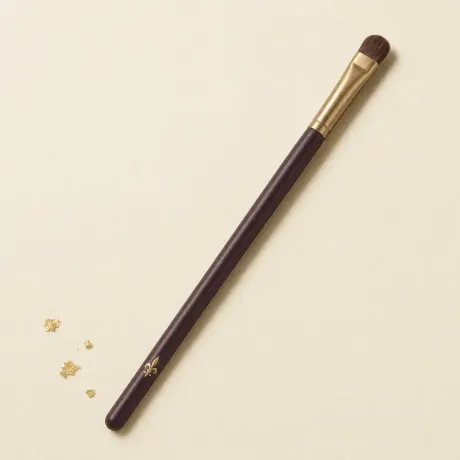
Put glitter on last, after powder shadow and liner, so that the powder does not cling to it. Pat it on with a fingertip or a small flat brush, starting at the centre of the lid and working outward, and keep it off the lash line and the inner rim of the eye. For loose glitter, lay a thin layer of adhesive only where the glitter should go and press the flakes into it while it is still tacky. Tape, rolled with the sticky side out, lifts stray flakes from the cheek without smearing the base beneath.
Take it off the same way before cleansing — tape, or a remover pressed on and lifted — rather than rubbing across the closed eye. If a flake gets into the eye, do not rub it. The FDA’s general advice for eye cosmetics applies: stop using any product that irritates, and see a doctor if the irritation persists.[2]
What the regulators say
In the United States, glitter is regulated through its colours. Every colour additive in a cosmetic must be approved, however novel the effect, and a colour may be used in the area of the eye — the lids, lashes and brows and the skin around them — only if the regulation that lists it says so.[3] The FDA’s table of permitted colours shows which qualify: aluminium, bronze and copper powders, mica, bismuth oxychloride and iron oxides are all listed for use around the eye.[4] Combinations are another matter. Colours combined for special effects, the agency warns, may form new pigments that are not approved for the use intended, and its example is holographic glitter: aluminium, itself an approved colour, bonded to an etched plastic film.[3]
The European Union regulates glitter as a plastic. Its restriction on intentionally added microplastics banned loose plastic glitter for uses such as crafts and toys from October 2023. Glitter in make-up may still be sold until October 2035, but from October 2031 it must carry a label saying that it contains microplastics. Glitter of glass, metal or other inorganic, natural, biodegradable or soluble material falls outside the restriction.[5]
Where it came from
Sparkle on the face is ancient; glitter as a manufactured product is not. Mica flakes were used for their light-catching quality in cave paintings and by the civilisations of Egypt, China, Greece and Rome. In 1934, according to a short history in New York Magazine, a machinist in Bernardsville, New Jersey, Henry Ruschmann, found a way of making large quantities of glitter from plastic, and founded Meadowbrook Inventions to make it.[6]
Not all cosmetic sparkle is plastic. In mica pigments, the historian James Bennett notes, the size of the plate decides the effect — smaller platelets give a sheen, larger ones glitter — and later substrates such as aluminium oxide, silica, glass and synthetic mica widened the range of sparkle a cosmetic could carry.[7] The plastic flake brought a problem of its own. By 2019 environmental scientists were tracking glitter, used in large volumes in make-up and often made of PET, as an overlooked source of microplastics,[8] and four years later the European Union began to restrict it.[9] The flake on the eyelid is now judged twice: as a colour that must be approved for the eye, and as a plastic that must answer for where it goes once it is washed away.
The techniques
- Pat
- Tap lightly with a fingertip or damp sponge so product melts in rather than moves.
- Press
- Press product onto the skin without dragging, so it stays where it is put.
Sources
- [1, 8]Tiny, shiny, and colorful microplastics: Are regular glitters a significant source of microplastics? Marine Pollution Bulletin 146: 678–682, 2019.View source (opens in a new tab) Accessed 2026-09-26.
- [2]Eye Cosmetic Safety US Food and Drug Administration.View source (opens in a new tab) Accessed 2026-09-22.
- [3]Color Additives and Cosmetics: Fact Sheet U.S. Food and Drug Administration, 2022.View source (opens in a new tab) Accessed 2026-09-26.
- [4]Color Additives Permitted for Use in Cosmetics, 21 CFR Parts 73 and 74View source (opens in a new tab) Accessed 2026-09-22.
- [5, 9]Commission Regulation (EU) 2023/2055 - Restriction of microplastics intentionally added to products European Commission, Directorate-General for Internal Market, Industry, Entrepreneurship and SMEs, 2025.View source (opens in a new tab) Accessed 2026-09-26.
- [6]Glitter: A Brief History New York Magazine, 7 October 2007, 2007.View source (opens in a new tab) Accessed 2026-09-26.
- [7]Pearl Essence Cosmetics and Skin, 2009.View source (opens in a new tab) Accessed 2026-09-22.
What to apply it with
Other kinds of eyeshadow
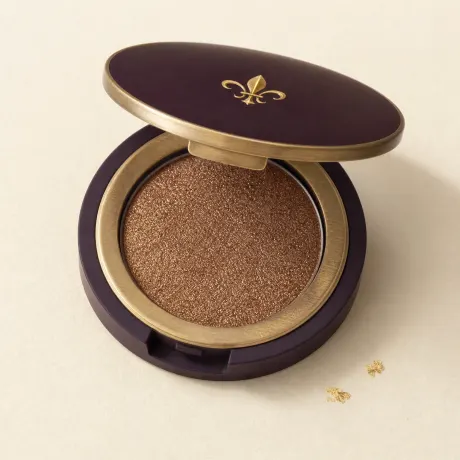
Single eyeshadow
One pressed shade in its own small compact.
Read the guide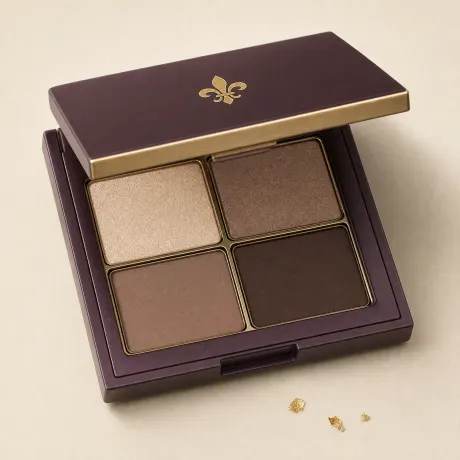
Eyeshadow quad
Four coordinated shades — typically light, medium, deep and a shimmer — for one complete eye.
Read the guide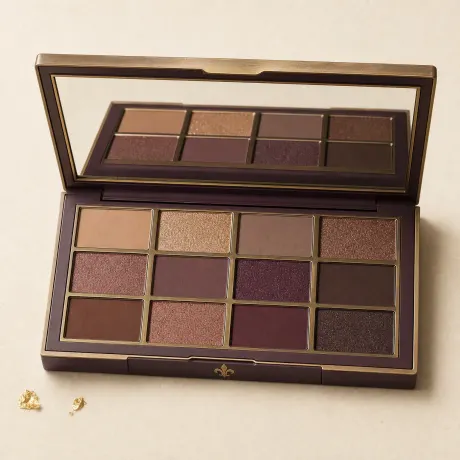
Eyeshadow palette
A large range of shades in one case, for building many looks from one kit.
Read the guide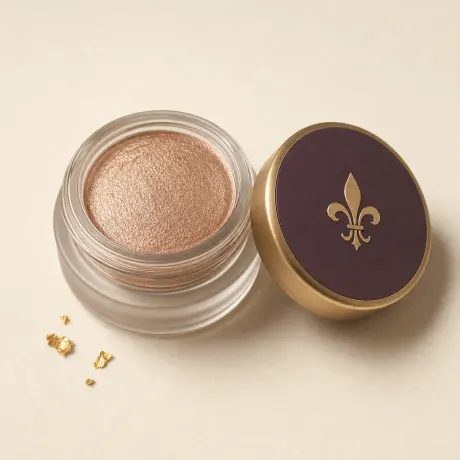
Cream eyeshadow
Shadow in a cream base, for a fast wash of colour that sets in place.
Read the guide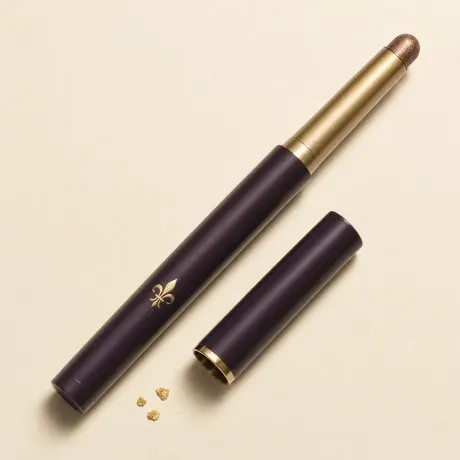
Eyeshadow stick
Cream shadow in a twist-up stick, drawn straight onto the lid.
Read the guide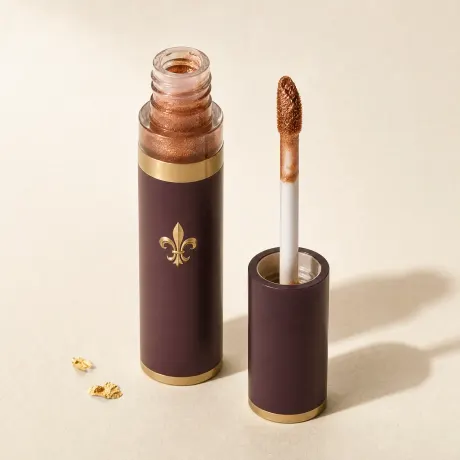
Liquid eyeshadow
A fluid shadow, often metallic, that dries down to a crease-proof film.
Read the guide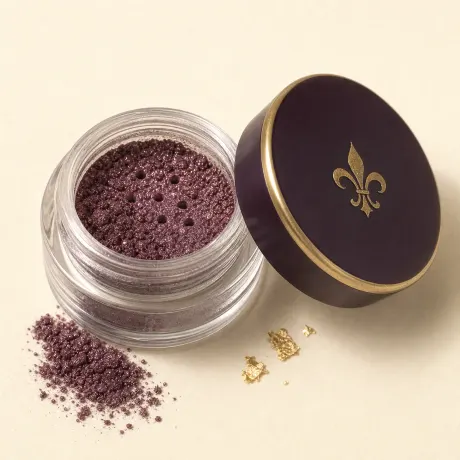
Loose pigment
Shadow as an unpressed powder, for the most intense colour and shine.
Read the guide
Baked eyeshadow
Shadow baked into a dome, giving a foiled, metallic finish that intensifies when wet.
Read the guide