Crease brush
A small, tapered brush that lays shadow in the socket line and blurs it upward, so the lid looks deeper than it is. How to choose one for your eye shape and how to place a crease — and the drawn 1960s eye it softened.
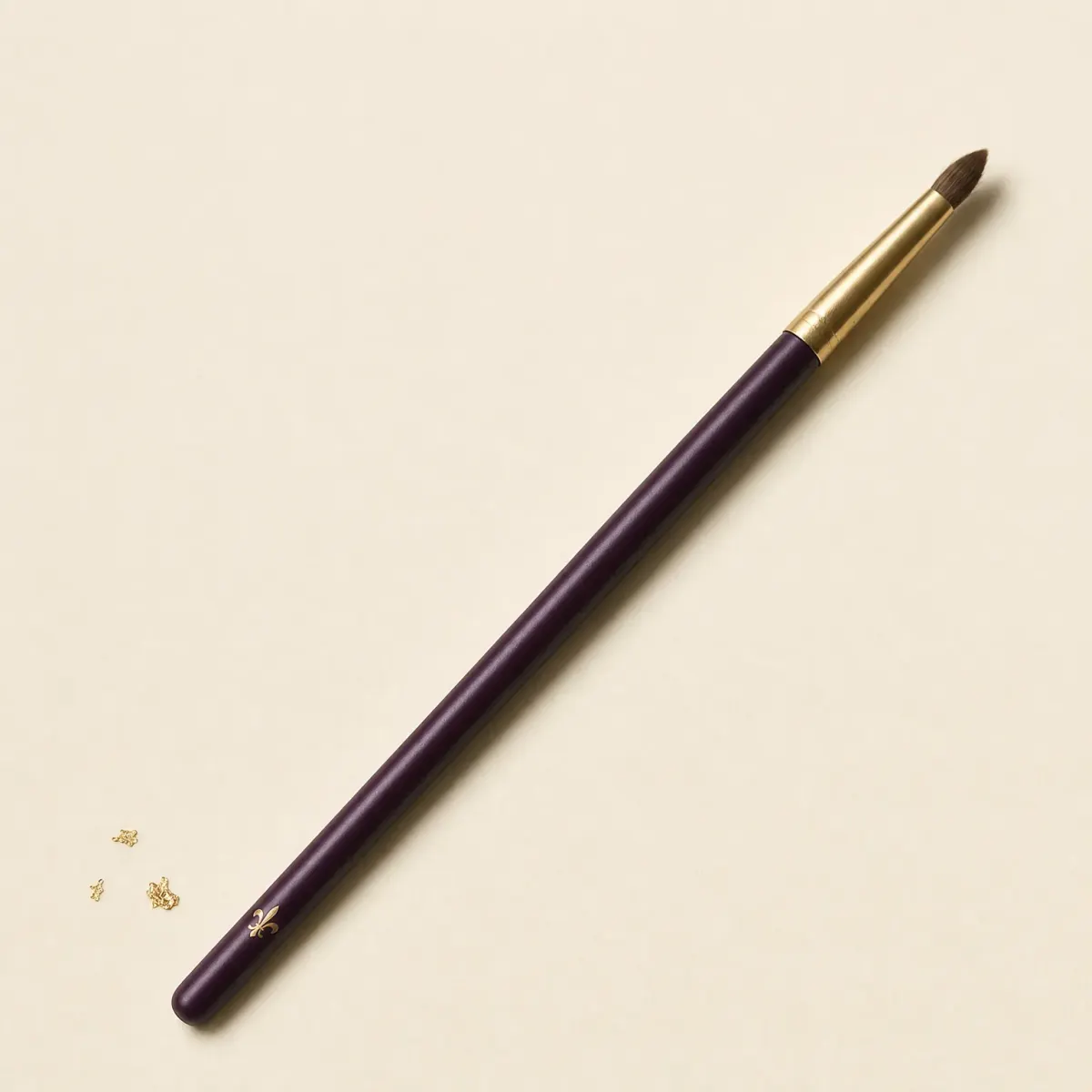
A crease brush is a small, tapered eye brush with a soft point, used to place eyeshadow in the socket line above the lid and blend it upward to add depth.
Our picks
Every house found selling a single tapered brush for the crease whose page could be verified, one brush each, from drugstore to prestige, among them one handmade in Kumano and one from an Australian makeup artist’s own range. Few prestige houses describe one; most sell domed or fluffy blenders instead. Each opens where its maker sells it: on Amazon, or at the house’s own shop.
As an Amazon Associate I earn from qualifying purchases. Affiliate links — we may earn a commission at no extra cost to you. How this works
Mini taperPrestige MAC Cosmetics
221 Synthetic Mini Tapered Blending Brush
A mini tapered blender whose small, tapered tip defines the crease with precision.
- Mini, tapered tip
- Fluffy
- Synthetic
Pointed tipMid-range Sigma Beauty
E45 Small Tapered Blending Brush
A small, pointed crease brush for depth and definition; its maker suggests it for hooded eyes.
- Very tapered, pointed
- Hooded eyes
- Synthetic
Budget taperDrugstore EcoTools
Tapered Eye Crease Brush
A custom-cut tapered head that fits the natural crease and puts pigment exactly there.
- Tapered head
- Cream, liquid or powder
Broad basePrestige Laura Mercier
Eye Crease Brush
A broad base and tapered bristles, for precise application of shadow to the crease.
- Broad base
- Tapered bristles
Small and roundMid-range Anastasia Beverly Hills
A26 Pro Brush – Crease Blending Brush
A small, round, fluffy crease brush for powder and cream products.
- Small, round
- Fluffy
- Synthetic
Long tipDrugstore wet n wild
Crease Brush
An inexpensive long-tipped, tapered brush for picking up shadow and blending it into the crease.
- Long-tipped
- Tapered
Precision contourPrestige Hourglass
Nº 4 Crease Brush
Made for precision contouring and blending of shadow in the crease.
- Crease
- Contouring and blending
Contrast coloursMid-range Bdellium Tools
Golden Triangle 781 Crease
Made for the crease, especially with contrasting colours; the tip alone gives a fine line.
- Crease area
- Vegan synthetic
Small taperDrugstore ColourPop
Small Tapered Brush
The smaller sister of the house’s tapered blender, for precise blending and defining the crease.
- Small, tapered
- Crease
Fluffy pointPrestige NARS
#23 Precision Blending Brush
Sold as a precision blender for smoky eyes; its small, tapered, fluffy head is the crease brush’s shape.
- Small, tapered
- Fluffy
- Smoky eye
Hooded eyesMid-range rephr
brush 14
A small crease brush made for hooded eyes, handmade in Kumano of uncut natural hair, by its maker’s account.
- Slightly tapered tip
- Natural hair
- Made in Kumano
Soft creaseDrugstore Crown Brush
Deluxe Crease Brush SS012
Ultra-soft synthetic bristles from a professional brush maker, for blending shadow out in the crease.
- Ultra-soft synthetic
- Crease
Point shaderMid-range Rae Morris
Jishaku #7 Deluxe Point Shader Brush
A point shader its maker calls the eye brush she uses most: a defined socket with light pressure, a full shade with more.
- Pointed end
- Eye socket
Budget precisionDrugstore e.l.f. Cosmetics
Precise Blending Brush
A small, tapered head that places colour precisely and blends it on the lids, the crease and the inner corners.
- Small, tapered head
- Lids, crease, corners
SculptingMid-range Laura Geller
Blending Crease Brush
A precision crease brush made to sculpt the shape of the eye with blended colour.
- Precision crease
- Blending
MultipurposeMid-range Jane Iredale
Crease Brush
A small, tapered brush for powder eye colour, from a mineral-makeup house.
- Small, tapered
- Powder eye colour
Long taperMid-range Make-up Designory
#800 Crease Brush
Long, tapered bristles from a makeup school’s own line, for blending and defining colour in the crease.
- Long, tapered bristles
- Synthetic
A crease brush is a small, tapered eye brush: a narrow bundle of fibres coming to a soft point, dense enough to hold its shape and loose enough to blend. The point goes into the socket, the fold between the moving lid and the brow bone, and lays a line of deeper shadow there; the sides of the brush then soften its upper edge. The effect is depth. Shadow set where the eye naturally recedes makes the lid look deeper-set and the eye larger.
It is the most precise of the blending brushes. A fluffy blender is larger and looser and diffuses more than it places; a domed brush is rounder and packs more colour; a pencil brush is shorter and firmer still, made for the lash line. The crease brush also does small jobs well: the outer V, a transition shade on a small lid, and softening liner at the outer corner.
Choosing one for your eye
Size the brush to the socket. On a deep-set eye with plenty of lid, a medium tapered brush lays a wide transition shade quickly; on a small, close-set or hooded eye, a small crease brush with a fine tip places colour exactly, and two in the carousel are sold with hooded lids in mind. The finer the point, the more precise the line, and the more blending it will need afterwards.
On hooded eyes, the crease to shade is not the natural fold, which disappears when the eye is open, but a line a little above it. Look straight ahead into the mirror, find where the fold of skin meets the brow bone, and place the colour there, so that it shows with the eyes open. A monolid has no fold at all; there the brush works a gradient upward from the lash line instead, deepest at the lashes.
Fibre makes less difference here than on larger brushes. Most crease brushes are synthetic and work with cream as well as powder; Rephr has its small crease brushes made by hand in Kumano, in Japan, of natural hair. What matters more is that the tip keeps its point after washing.
Placing a crease
Hold the brush near the end of the handle and set the tip in the socket at the outer corner. Sweep it inward in short back-and-forth strokes, no further than above the centre of the pupil, then lighten the pressure and let the sides of the brush blur the upper edge upward. Build a second, deeper layer only at the outer third. Keep the lower edge crisper than the upper: a crease reads as depth when it fades towards the brow and holds its line against the lid.
The same brush draws the outer V. Set the tip at the outer end of the lash line, sweep it up and out to meet the end of the crease line, and fill the small triangle between them with the deepest shade, blending its inner edge into the lid.
A cut crease sharpens that lower edge on purpose. Lay the shadow in the socket with the crease brush and blend it upward, then press concealer or a pale shade across the lid with a flat brush, stopping exactly at the socket line, so that the line becomes an edge.
Common mistakes
Three habits account for most muddy creases. Starting too far in: colour carried past the centre of the eye towards the nose closes the eye up, so keep the deepest shade to the outer third. Too much colour at once: a crease built in two thin layers blends more evenly than one heavy one. And blending with a loaded brush: once the shade is placed, finish with the crease brush almost empty, or with a clean fluffy blender, so that the edge fades instead of spreading. If a crease still looks like a stripe, its upper edge is too hard: soften it with a clean fluffy blender and a touch of the transition shade, rather than adding more of the deep one.
Where it came from
Eye make-up came into its own in the 1960s. Eye shadow had not been a major seller before the Second World War; its sales rose in the late 1950s and early 1960s, as lipsticks went pale and mascara, eyeliner and eye shadow came into colourful use.[1] Mary Quant, launching her make-up in 1966, aimed at what the journalist Margaret Allen, writing in 1981, called the “pale unmade-up look on the face and lips with all the focus on the eyes”.[2]
The crease line belongs to that decade too, and it was drawn as much as shaded. Allure, describing the mod eye’s return in 2021, dates its “pastel colors, dark creases, and exaggerated lash lines” to the 1960s and to figures such as Twiggy and Cher, and the makeup artists it quotes place the crease line not in the natural fold but just above it, “to create the illusion of bigger, deeper-set eyes”.[3]
The crease brush is that line softened. It puts the shadow where the mod eye drew its stroke, a little above the natural fold, and blurs it upward, so that the depth stays and the line goes. The cut crease, which keeps the lower edge sharp, is the same drawing with the edge left in.
The techniques
- Windscreen wiper
- Side-to-side strokes along the crease to diffuse colour upward.
- Cut crease
- Carve a sharp line along the crease with concealer, then fill the lid beneath it.
- Blend
- Soften an edge until one colour passes into the next without a line.
Sources
- [1]Eye Shadow Cosmetics and Skin, 2019.View source (opens in a new tab) Accessed 2026-09-26.
- [2]The story of Mary Quant make-upView source (opens in a new tab) Accessed 2026-09-22.
- [3]How to Do 1960s-Inspired Mod Eye Makeup — Expert Tips Allure, 6 April 2021, 2021.View source (opens in a new tab) Accessed 2026-09-26.
What it is used with
Other kinds of eye brushes
Flat shader brush
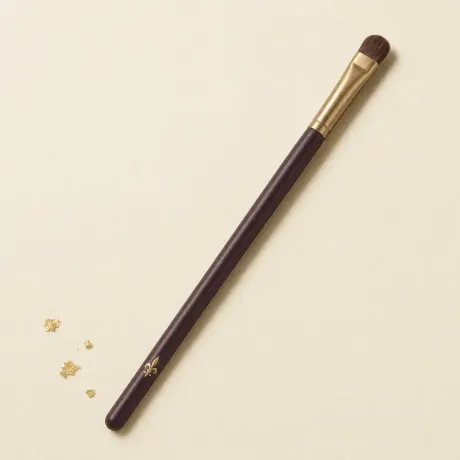
A flat eye brush with firm bristles and a rounded edge, for packing colour onto the lid.
Read the guide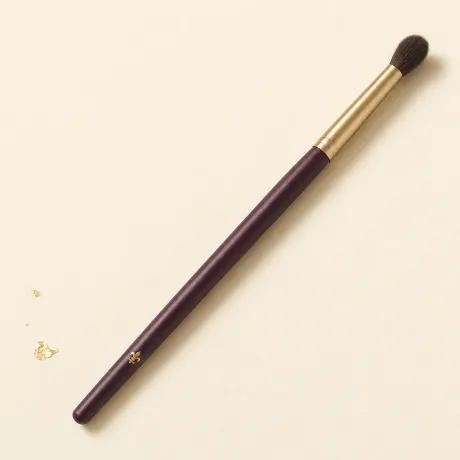
Fluffy blending brush
Long, loose bristles rising to a soft point — the brush that removes edges.
Read the guide
Domed blending brush
A rounded eye brush of medium density that both places and diffuses colour.
Read the guide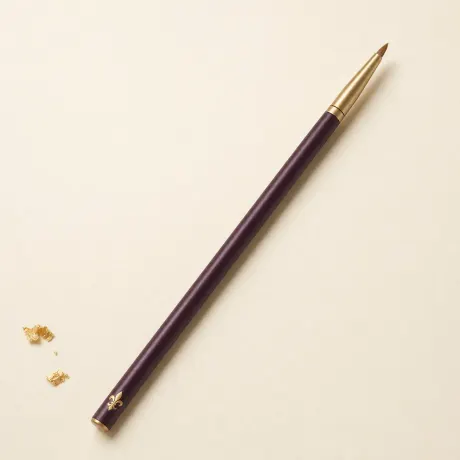
Pencil brush
Tightly packed bristles shaped to a firm point, for detail along the lash line and in the inner corner.
Read the guide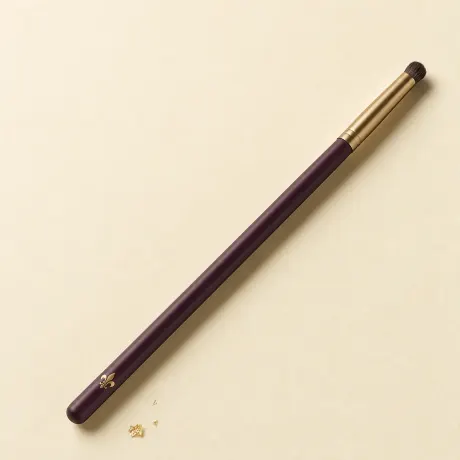
Smudger brush
A short, very dense, slightly domed tuft on a slim eye-brush handle — made to press liner and shadow into the lash line and soften it into smoke.
Read the guide
Angled shading brush
An eye brush cut on an angle, for deepening the outer corner.
Read the guide