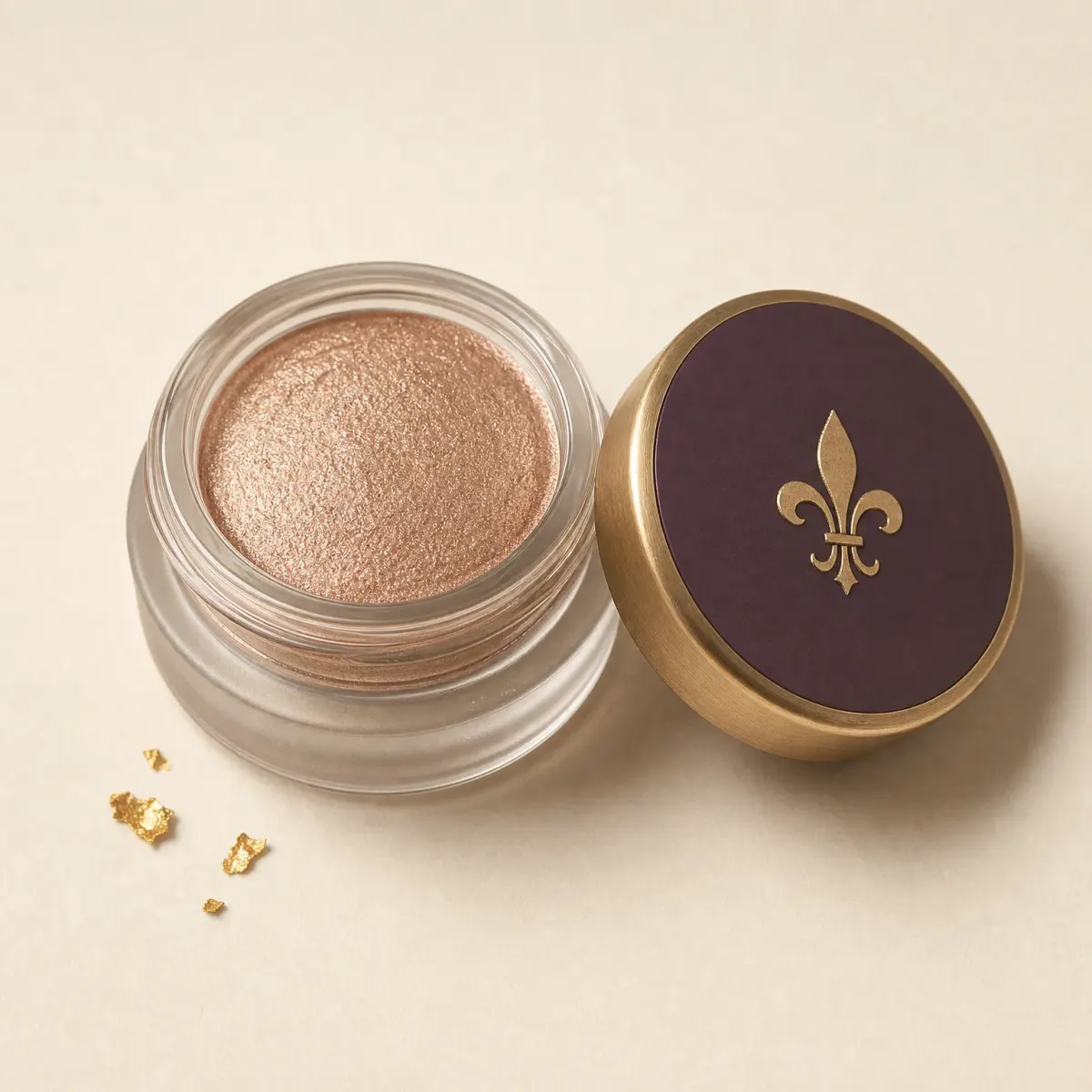
Cream eyeshadow
Colour in a soft cream, in a small pot: the quickest shadow to put on and the easiest to overdo. How setting and soft creams differ, how to apply one before it sets, how to keep a pot clean — and how the pre-war paste became the modern cream.
Cream eyeshadow is eyeshadow in a soft, emollient cream or cream-to-powder base, sold in a small pot and applied with a fingertip or brush, often made to set to a crease-resistant finish.
Our picks
Eight cream shadows in pots and small compacts, from setting cream-to-powder formulas to a soft oil-based balm, across budgets. Fewer than in the other eyeshadow guides, because fewer genuine pots are sold by their makers. Each opens where its maker sells it — on Amazon or at the house’s own shop — and you choose your shade on that page.
As an Amazon Associate I earn from qualifying purchases. Affiliate links — we may earn a commission at no extra cost to you. How this works
Metallic creamPrestige Charlotte Tilbury
Eyes to Mesmerise
A water-infused metallic cream in a pot, sold as long-lasting and crease-resistant: one shade, one step.
- Metallic
- Crease-resistant
Drugstore long wearDrugstore Revlon
ColorStay Creme Eye Shadow
A drugstore cream in matte and shimmer finishes, sold to stay put all day.
- Matte & shimmer
- Claims 24-hour wear
DuochromeMid-range Kulfi
Zari Eyes Eyeshadow
A highly pigmented cream-to-powder shimmer, with two duochromes among its shades.
- Cream-to-powder
- Crease-proof
Japanese creamPrestige Decorté
Eye Glow Gem Skin Shadow
A bouncy “mochi” cream-to-powder from the Japanese house, swept on with a fingertip, in a dewy or a silky matte version.
- Cream-to-powder
- Crease-proof
- Dewy glow
Sheer washMid-range Jones Road
Just A Sec
A cushiony cream for a quick, luminous wash on the lid, the inner corner or the brow bone.
- Luminous wash
- Weightless
Budget potDrugstore ColourPop
Super Shock Shadow
A small pot of crème-to-powder shadow that sets and resists creasing, sold one shade at a time.
- Crème-to-powder
- Ultra-metallic
RefillablePrestige Kjaer Weis
Cream Eye Shadow
Creamy colour that builds from a sheer wash, in a metal compact made to be refilled.
- Buildable
- Refillable compact
Oil-based balmMid-range RMS Beauty
Eye Polish
A nourishing oil-based cream in a glass jar, for a light-reflective sheen on dry lids.
- Light-reflective
- Natural oil base
Cream eyeshadow is colour in a soft base of oils, waxes and emollients, sold in a small pot and pressed onto the lid with a fingertip or a flat brush. It gives a fast wash of colour, more even from one layer than powder, with nothing loose to fall onto the cheek, and it suits satin, shimmer and metallic finishes better than a flat matte. Most modern creams are made to set: they stay workable for a minute or so, then dry to a film that holds in place.
It sits between two neighbours. A cream eye base is made to be worn under powder, to deepen its colour or make it last; a cream shadow is made to be worn on its own, though it can do the base’s job too. An eyeshadow stick is often much the same cream in a twist-up case: tidier to carry, with less control over how much goes on. Against pressed powder, a cream gives more intensity and less fallout, and asks for a quicker, lighter hand.
Setting creams and soft creams
The main choice is between a cream that sets and one that stays soft. A setting cream, often sold as long-wear or waterproof, dries within a minute or two to a film that resists creasing and transfer; it has to be blended quickly and is hard to adjust once dry. A soft cream or balm stays movable, gives a glossier, more lived-in finish and is easier to blend, but on an oily lid it travels and gathers in the crease, which has been the complaint about cream shadow for as long as it has been sold.[1]
So choose by lid as much as by colour. Oily and hooded lids, where the skin folds over the crease, need a setting formula; dry and mature lids are often more comfortable in a soft one, worn thinly. Shimmer and metallic creams hide texture less well than satins, so test them on the lid, not the hand.
Finish and colour
Cream flatters light-catching finishes. Satin, shimmer and metallic creams read as polished skin; mattes exist, but a flat cream can look chalky over a dry lid. The easiest shades are those a little deeper than your skin, a taupe, bronze or champagne, which can be worn alone as a one-step wash. Deeper colours, plum, olive or navy, are best pressed along the lash line and softened upward, where their intensity reads as depth rather than a block of colour. On deep skin, a rich metallic usually gives more light than a pale shimmer, which can look grey.
How to apply it
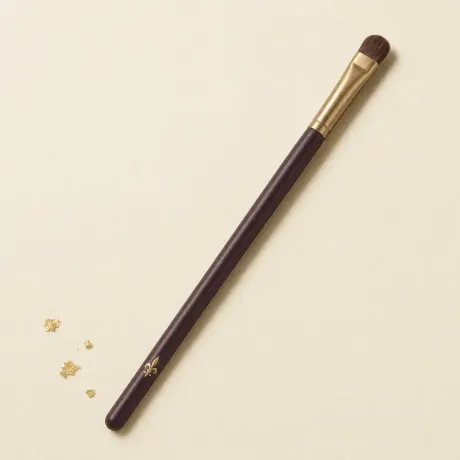
Use a clean fingertip: its warmth softens the cream and presses the colour on evenly. Take very little, tap it onto the centre of the lid and pat outward towards the crease, keeping the layer thin, and blend the top edge before it sets. A second thin layer, once the first is dry, looks better than one thick one. A flat synthetic brush gives a neater edge along the lash line and keeps fingers out of the pot.
Cream also works under powder. A neutral cream topped with a powder of a similar shade makes the powder brighter and longer-lasting; a metallic cream with a little deeper powder at the outer corner gives depth without a hard line. To hold a soft cream in place, press a little translucent powder over it. That slows creasing; it does not stop it.[2]
Keeping a pot
A pot is opened and touched every time it is used, which makes hygiene part of the choice. Wash your hands before dipping a finger in, or lift the cream out with a clean spatula or brush, and do not share it: that is the FDA’s advice for all eye cosmetics.[3] Close the lid firmly after use, because a setting cream left open dries to a crust, and keep the pot out of hot cars and sunny windowsills: the agency advises against storing cosmetics above 85°F, about 29°C.[3] Throw away a pot whose smell or texture has changed.
Where it came from
Cream, or something close to it, is the older form of commercial eye shadow. Before the Second World War the commonest eye shadow was a paste: a colourless base of petrolatum, mineral oil and lanolin stiffened with beeswax, tinted, milled, poured into small plastic or metal containers and flamed to give a smooth surface. It was smoothed on with the little finger and left a sheen. Its fault was one its makers never cured: it soon settled into the creases of the lid, which powdering over could delay but not stop. Emulsion creams, less greasy, were made too, but their water needed preservatives and evaporated, so they were usually packed in tubes.[4]
The pot outlived pressed powder’s rise. Estée Lauder, who later said her first eye shadow came in a single shade, turquoise, was selling a creme eyeshadow in the 1950s;[5] Elizabeth Arden offered its eye shadow as cream, cake or powder in 1966;[6] and in 1972 Noxell’s Cover Girl line added Shiny Shadow, a cream eyeshadow in pots,[7] the year Aziza sold Silken Creme Shadows.[4] What has changed since is the promise. The creasing that powder could only delay is what makers of long-wear creams now claim to prevent.
The techniques
- Pat
- Tap lightly with a fingertip or damp sponge so product melts in rather than moves.
- Pack
- Pat colour onto the lid for full, dense payoff rather than sweeping it.
Sources
- [1, 2, 4]Eye Shadow Cosmetics and Skin, 2019.View source (opens in a new tab) Accessed 2026-09-26.
- [3]Eye Cosmetic Safety US Food and Drug Administration.View source (opens in a new tab) Accessed 2026-09-22.
- [5]Estée Lauder Cosmetics and Skin, 2023.View source (opens in a new tab) Accessed 2026-09-26.
- [6]Elizabeth Arden (Post 1945) Cosmetics and Skin, 2018.View source (opens in a new tab) Accessed 2026-09-26.
- [7]Cover Girl Cosmetics and Skin, 2016.View source (opens in a new tab) Accessed 2026-09-26.
What to apply it with
Other kinds of eyeshadow
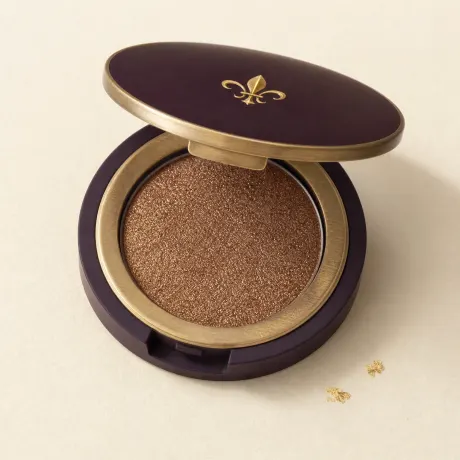
Single eyeshadow
One pressed shade in its own small compact.
Read the guide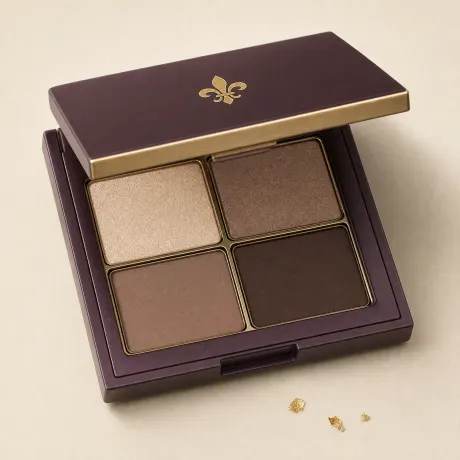
Eyeshadow quad
Four coordinated shades — typically light, medium, deep and a shimmer — for one complete eye.
Read the guide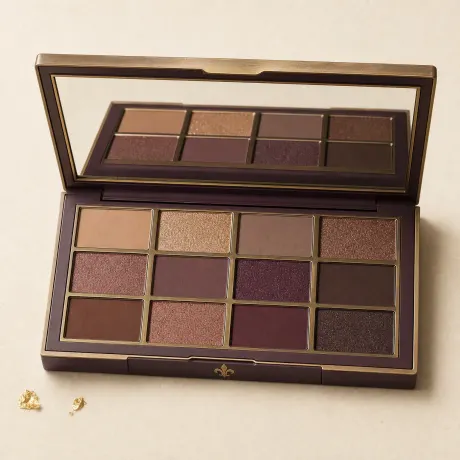
Eyeshadow palette
A large range of shades in one case, for building many looks from one kit.
Read the guide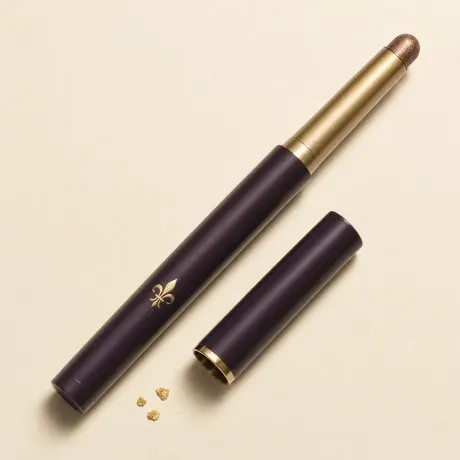
Eyeshadow stick
Cream shadow in a twist-up stick, drawn straight onto the lid.
Read the guide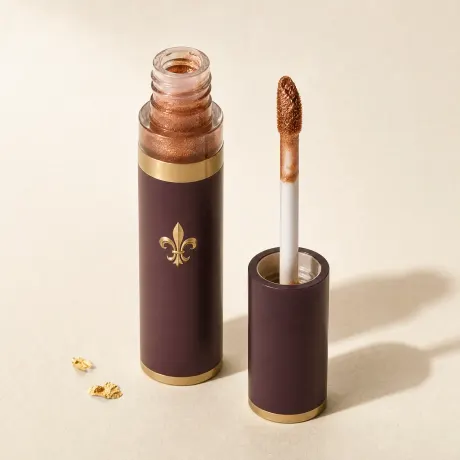
Liquid eyeshadow
A fluid shadow, often metallic, that dries down to a crease-proof film.
Read the guide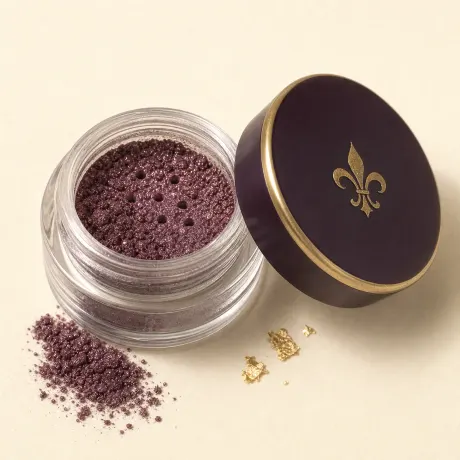
Loose pigment
Shadow as an unpressed powder, for the most intense colour and shine.
Read the guide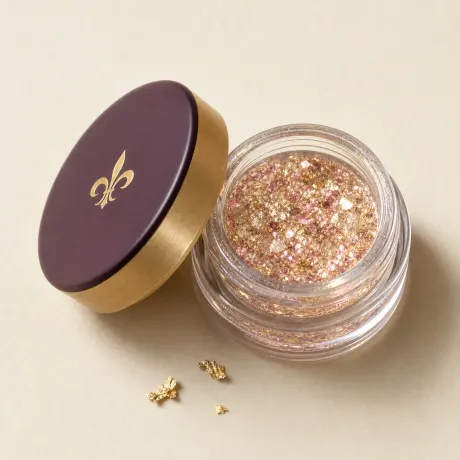
Glitter eyeshadow
Glitter suspended in a gel binder, so it stays on the lid instead of falling onto the cheek.
Read the guide
Baked eyeshadow
Shadow baked into a dome, giving a foiled, metallic finish that intensifies when wet.
Read the guide