Loose pigment
Eyeshadow sold as a loose powder in a small jar: the most concentrated form of shimmer, and the messiest. What loose pigment is, how to press it on without fallout, which colours are made for the eyes, and where the loose form came from.
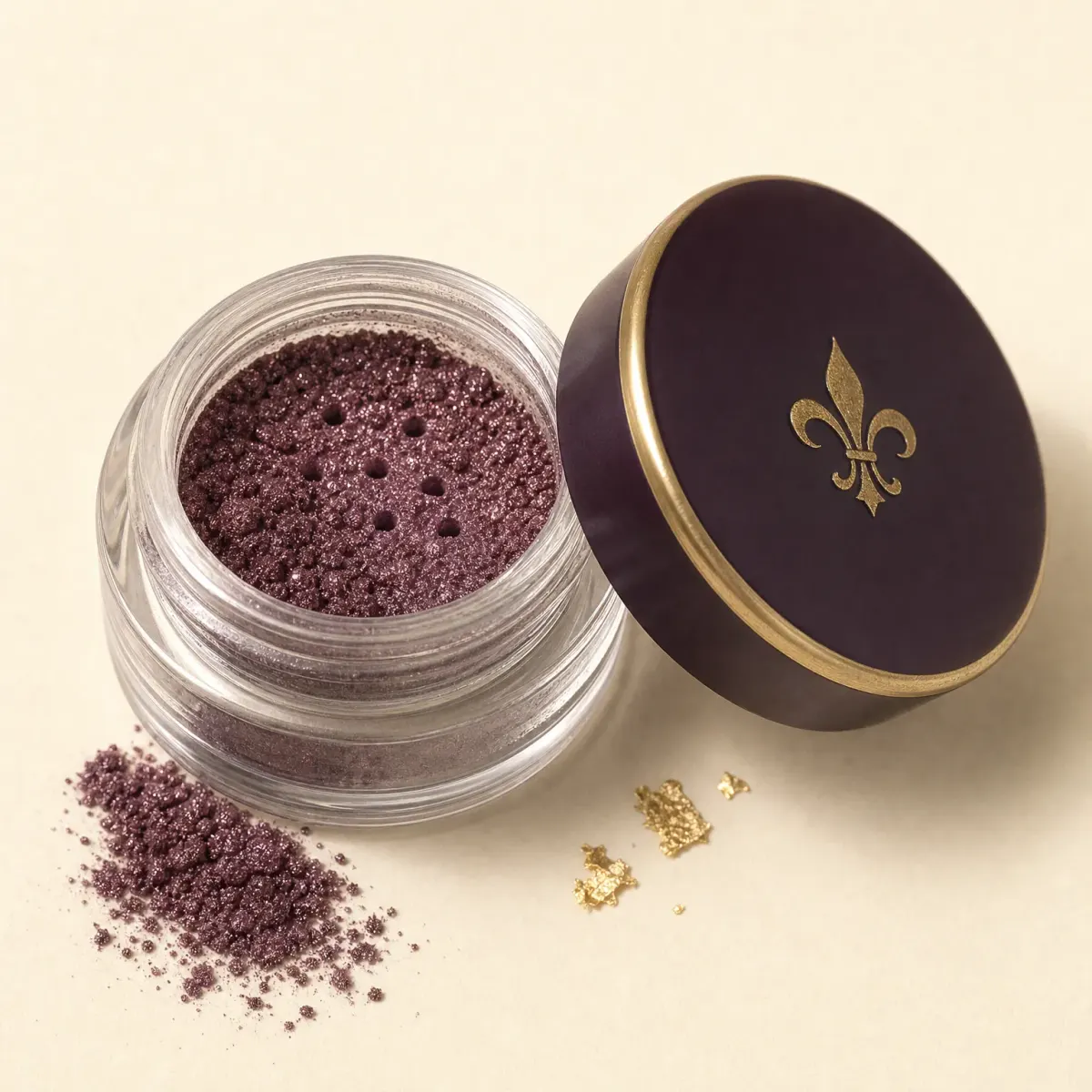
Loose pigment is eyeshadow sold as an unpressed powder — usually pearl pigment, with little or no binder — tapped from a sifter jar and pressed onto the lid with a brush, dry or damp, for the most intense shimmer or metallic finish.
Our picks
Few houses still make loose eyeshadow. These are the genuine ones that could be linked from their makers, from MAC’s to mineral, theatrical and independent makers. Each opens where its maker sells it, on Amazon or at the house’s own shop; where a maker sells each shade on its own page, the link opens on one shade.
As an Amazon Associate I earn from qualifying purchases. Affiliate links — we may earn a commission at no extra cost to you. How this works
Reference pigmentPrestige MAC Cosmetics
Pigment
MAC’s concentrated loose colour, which the company says works wet or dry, for a wash of colour or an intense effect.
- Concentrated
- Wet or dry
Theatrical metalDrugstore Mehron
Metallic Powder
A theatrical metal powder for stage, costume and bold eye looks; check the label of each shade for the eye area.
- High-shine metallic
- Theatrical
MineralMid-range bareMinerals
Loose Mineral Eye Color
A soft mineral powder that builds from a sheer wash to full colour, the gentlest start with loose shadow.
- Mineral
- Wet or dry
- Buildable
Small makerDrugstore Sterling Minerals
Mineral Eye Shadow
Single shades of loose mineral shadow from a small American maker, including quiet everyday neutrals.
- Loose mineral
- Pearl finish
Metallic shineMid-range Sugarpill
Loose Eyeshadow
Loose shadows that glisten like glitter with the coverage of a shadow, from an independent Los Angeles brand.
- Highly reflective
- Opaque
Loose pigment is eyeshadow before it has been pressed. A pressed shadow is powder mixed with a binder and compressed into a pan; a loose one is sold as the powder itself, in a small jar with a sifter, with little or no binder in it. Most loose pigments are built on pearl — flat platelets of mica coated with titanium dioxide or other pigments, whose lustre comes from light reflected and refracted through the plate[1] — and because nothing dilutes them, a loose pigment gives a stronger, more metallic shine than the same colour pressed.
The trade-off is control. Loose powder travels: it falls onto the cheek, it spills, and it needs a brush and a steady hand. Loose pigment is also not glitter. Glitter is a flake that sits on the skin as a separate point of light; pigment is a fine powder that lies down as a continuous film of colour and sheen. Many pigments are sold for the cheeks, lips and body as well as the eyes, which is why the label deserves a careful reading.
Choosing one
Loose pigments differ most in the size of their particles. Fine particles give a smooth sheen, from satin to metal, that blends like a powder shadow; coarser ones sparkle, and edge towards glitter. Duochrome pigments shift colour with the angle of the light, and a few matte loose shadows exist, mostly from mineral brands, which behave much like pressed ones. For a first jar, choose a metallic neutral — champagne, bronze or copper — that works alone, pressed over a cream base, or tapped over powder shadow as a topper.
On deep skin, gold, copper and bronze pigments show their full shine, where pale, sheer ones can look ashy. On fair skin, a champagne or rose-gold reads as light rather than colour. Most pigments are sold by weight rather than volume, and a jar that looks half-empty on arrival has usually settled in the post.
How to apply it
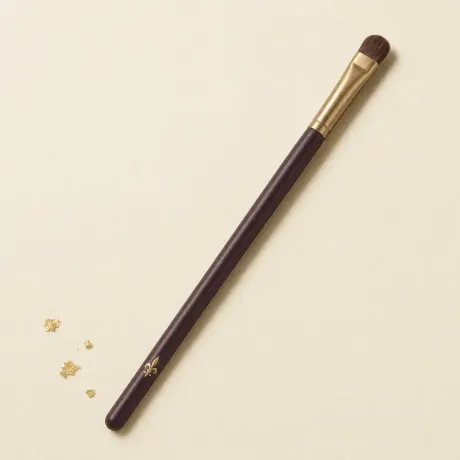
Tap a little pigment into the lid of the jar rather than dipping a brush into the jar itself, and tap the brush on the rim before it reaches the eye. Press the colour onto the lid with a small, flat, dense brush: pressing rather than sweeping keeps the powder where it lands and keeps fallout down. Do the eyes before the rest of the face, or hold a tissue under the eye to catch what falls, and brush the stray grains away afterwards.
Worn dry over a primer, a loose pigment gives a soft, luminous sheen. Worn damp — the brush misted with a setting spray or a mixing medium, or the pigment pressed over a cream base — it gives a dense, foiled finish, so that one jar does the work of two shadows; MAC and bareMinerals both sell theirs for wet or dry use. A little goes a long way, since a jar holds only a few grams. Keep water out of the jar itself, where it makes the powder clump, and close the sifter before closing the lid.
Colours for the eyes
Not every pigment in a jar is made for the eyes, and the reason is regulatory. In the United States a colour additive may be used in the area of the eye only if the regulation that lists it permits that use, and the area is drawn widely: the brows, the lids and lashes, and the skin within the bony ridges of the eye socket.[2] The FDA’s table shows how much that narrows the palette. Mica, iron oxides, titanium dioxide, bismuth oxychloride, ultramarines, chromium oxide greens, manganese violet, carmine, and aluminium, bronze and copper powders are listed for the eye area; most of the certified synthetic reds, oranges and yellows are not.[3] Only seven fluorescent colours are approved for cosmetics at all,[2] and none of them is listed for use around the eye.[3]
That is why a neon or very bright pigment can be legal on the cheek and not on the lid. Read the label, and the directions on the maker’s page, before the brush goes near the lashes, and keep pigments sold only for the face, lips or body away from the eyes. Theatrical pigments are held to the same colour rules as everyday make-up.[2]
Where it came from
Loose powders for the eyes are old, but in the West they long stayed a curiosity. Elizabeth Arden’s Kôhl-Arabia of 1955 was a superfine powder in brown, blue, grey-black and green, in small urn-shaped glass flacons with a wand.[4] James Bennett, the historian behind Cosmetics and Skin, argues that powders of this kind never came into wide use in the West partly for practical reasons: a powder needs more skill, a bottle and a separate applicator, and it can spill. The pencil, in his account, was simpler and safer to carry.[4]
The shine came from chemistry. Pearl essence, the fish-scale extract that gave the first pearly cosmetics their lustre, could not be dried without clumping, so it could not go into powders; laboratory-made bismuth oxychloride gave a dry pearl from the 1930s, and mica coated with titanium dioxide, described in 1942, became widely available in the 1960s.[5] MAC made the loose form a line of its own. In the United States the name “MÄC Pigment” was registered as a trademark in 2000 for “colored powder for use on the face, eyes, cheeks and lips”, with its first use given as September 1996.[6] The description still fits the kind: loose pigment is sold for everywhere, and read carefully for the eyes.
The techniques
- Press
- Press product onto the skin without dragging, so it stays where it is put.
- Pack
- Pat colour onto the lid for full, dense payoff rather than sweeping it.
Sources
- [1, 5]Pearl Essence Cosmetics and Skin, 2009.View source (opens in a new tab) Accessed 2026-09-22.
- [2]Color Additives and Cosmetics: Fact Sheet U.S. Food and Drug Administration, 2022.View source (opens in a new tab) Accessed 2026-09-26.
- [3]Color Additives Permitted for Use in Cosmetics, 21 CFR Parts 73 and 74View source (opens in a new tab) Accessed 2026-09-22.
- [4]Kohl Cosmetics and Skin, 2012.View source (opens in a new tab) Accessed 2026-09-25.
- [6]MÄC PIGMENT, US trademark serial no. 75844463, registration no. 2395819 (TSDR status record) United States Patent and Trademark Office, 2000.View source (opens in a new tab) Accessed 2026-09-26.
What to apply it with
Other kinds of eyeshadow
Single eyeshadow
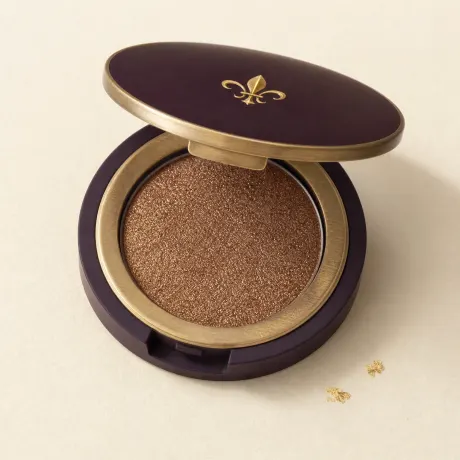
One pressed shade in its own small compact.
Read the guide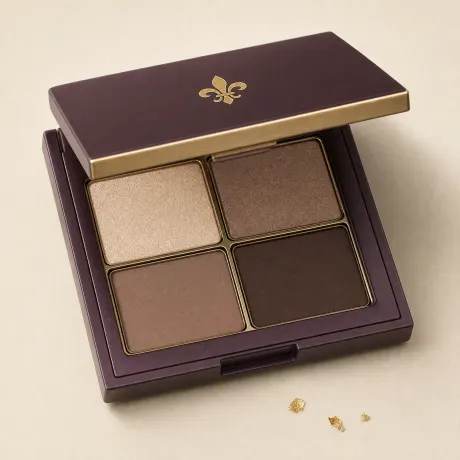
Eyeshadow quad
Four coordinated shades — typically light, medium, deep and a shimmer — for one complete eye.
Read the guide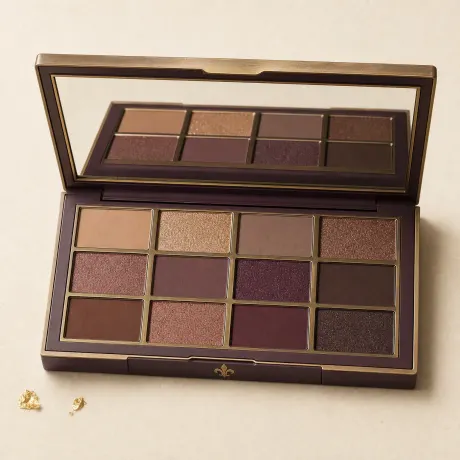
Eyeshadow palette
A large range of shades in one case, for building many looks from one kit.
Read the guide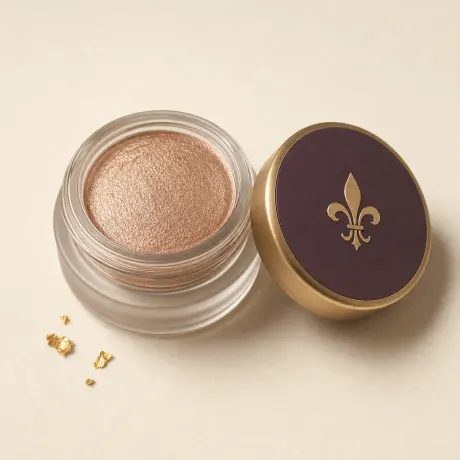
Cream eyeshadow
Shadow in a cream base, for a fast wash of colour that sets in place.
Read the guide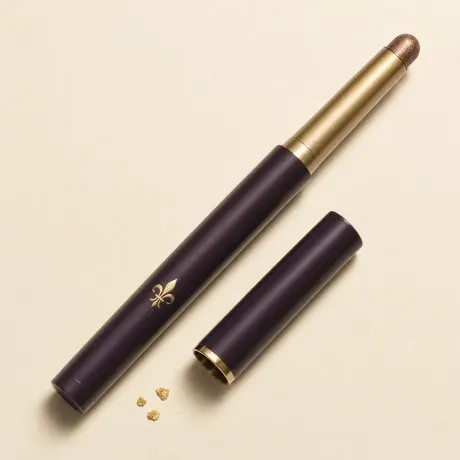
Eyeshadow stick
Cream shadow in a twist-up stick, drawn straight onto the lid.
Read the guide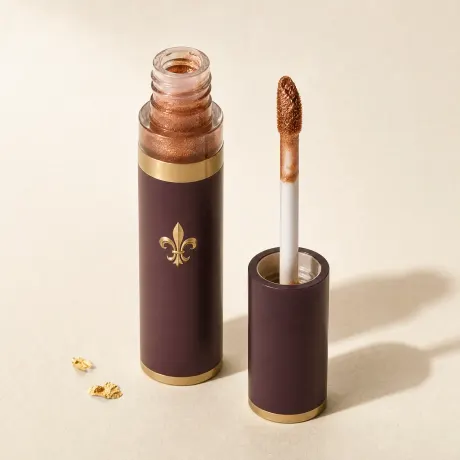
Liquid eyeshadow
A fluid shadow, often metallic, that dries down to a crease-proof film.
Read the guide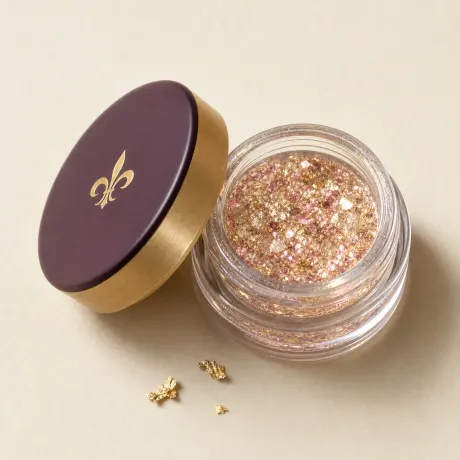
Glitter eyeshadow
Glitter suspended in a gel binder, so it stays on the lid instead of falling onto the cheek.
Read the guide
Baked eyeshadow
Shadow baked into a dome, giving a foiled, metallic finish that intensifies when wet.
Read the guide