Baked eyeshadow
Eyeshadow made as a wet paste and dried slowly into a hard, often domed cake: a soft sheen used dry, a foiled shine used damp. How baking differs from pressing, how to wear one, and why the trade went to the trouble.
Baked eyeshadow is shadow made from a wet paste of powders, pearl and binders, shaped in its pan and dried slowly in an oven, giving a hard, often domed and marbled cake that is used dry for a sheen or damp for a foiled, metallic finish.

Our picks
Baked eyeshadow sold as a single is a small category. These are the genuine ones that could be linked from their makers, from demi-matte neutrals to a marbled trio, and each opens at the house’s own shop, where you choose your shade.
Affiliate links — we may earn a commission at no extra cost to you. How this works
Demi-matteMid-range Saie
SuperSuede Baked Eyeshadow
Baking used for softness rather than foil: suede-like neutrals, sold as needing no primer.
- Demi-matte or shimmer
- Talc-free
- Claims 16-hour wear
Marbled trioDrugstore J.Cat Beauty
Triple Crown Baked Shadow
Three marbled tones in one cake, enough for lid, crease and outer corner, at a drugstore price.
- Three tones
- Dry or wet
- Foiled when wet
Split panMid-range Laura Geller
Baked Eyeshadow, Sunstone/Almond
Two baked shades side by side, from a house that bakes much of its range.
- Two shades
- Baked
Baked eyeshadow is made wet and sold dry. Instead of pressing dry powder into a pan, the maker mixes powders, pearl and binders with water into a creamy paste, shapes it — often into a dome — and dries it in an oven, the water escaping through a porous base until the cake sets hard.[1] In the patent literature the method is tied closely to eye shadow. A patent application from the Korean company Amorepacific names baked eye shadow, with two-way cake, as the products developed to carry more pearl than a press can hold, and its own worked example is an eye shadow dried for twelve to eighteen hours.[2]
The result behaves differently from a pressed shadow. The surface is harder and smoother, so a dry brush picks up a thin, luminous layer; a damp brush picks up far more and lays it down as a dense, foiled metallic. That double use is the reason to own one. Against a loose pigment, a baked shadow gives much of the same foil with a fraction of the mess; against a pressed shimmer, it gives more shine, at the cost of blending less easily.
Dry, damp or as a liner
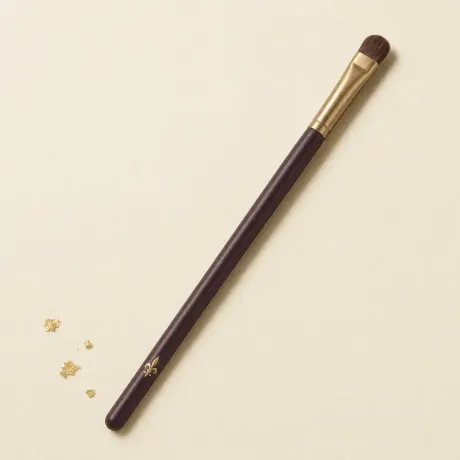
Used dry, sweep a flat or fluffy brush across the whole surface, so it takes up every tone in a marbled cake, tap off the excess and press the colour onto the lid, building it in thin layers. Used damp, mist the brush with water or setting spray, squeeze it almost dry on a tissue, press it onto the cake and pat the colour onto the centre of the lid, where the foil looks deliberate. Damp colour sets within moments, so soften its edge straight away with a clean, dry brush. A damp angled brush drawn along the upper lashes turns a deep baked shade into a shimmering liner.
Wet the brush, never the pan. Water left standing on the cake can glaze its surface into a hard shell that no longer gives up colour, and a cake closed while damp stays damp. Leave the compact open until the surface is dry again.
Keeping it clean
Wet use is what makes a baked shadow special, and it is also its weak point. The FDA warns, of mascara, that adding water to an eye cosmetic may introduce bacteria and dilute the preservative meant to protect it, and that saliva should never be used to moisten one.[3] The same reasoning argues for misting the brush with clean water or a setting spray, never wetting it in the mouth, and never pouring anything into the pan. Wash damp brushes more often than dry ones, do not share an eye product, and throw away any you were using when you had an eye infection, as the agency also advises.[3] Kept dry between uses, a baked cake lasts a long time.
Choosing one
Most baked shadows are shimmers or metallics, because shine is what the method was developed for, but not all: some makers now bake demi-matte shades, which give a soft, suede-like finish rather than foil. A marbled or split cake, with two or three colours swirled or set side by side, gives a slightly different result depending on where the brush lands, which suits anyone who likes to vary a look and frustrates anyone who wants the same lid every day. A trio in one cake can make a whole eye: the lightest tone under the brow, the medium on the lid, the deepest in the crease.
Shimmer shows texture, so on crêpey lids keep the foil to the centre of the lid and use the baked shade dry elsewhere. The dome needs a little care of its own: it stands proud of the pan, so it is the first thing to crack if a compact is dropped, and it wears into a shallow dip where the brush meets it most.
Where it came from
Wet colour for the eyes came before baked colour. In 1969 Max Factor sold a Water Power Eye Shadow that required water to mix up the shadow.[4] The manufacturing story is later, and it runs through the patents. In 1996 the Connecticut manufacturer U.S. Cosmetics Corporation filed a patent aimed at the press itself: pressing powder into a pan, it said, gave cakes of uneven surface colour and hardness, made multi-coloured and shaped cakes expensive because the moulds were machined from metal, wasted powder and filled workrooms with dust. Its answer was an eye shadow of mica, talc and pigment injected into its pan as a watery slurry, drained through a filter and dried at 60°C for an hour.[5]
Baking took the wet route further. Amorepacific’s application, filed in 2006, explains that pressed make-up breaks apart once pearl passes about forty per cent, and that baked eye shadows were developed to overcome it.[6] A patent filed in 2009 by the Italian manufacturer Chromavis sets out the process as the trade knew it — a creamy paste set on a permeable base, pressed into a dome and dried in an oven while the water escapes — and lists eye shadow first among the baked products.[7] The method is still spreading. In August 2026 Saie, which already baked its bronzer, blush and powder, launched a baked eyeshadow that it called its biggest launch to date.[8]
The techniques
- Pack
- Pat colour onto the lid for full, dense payoff rather than sweeping it.
- Press
- Press product onto the skin without dragging, so it stays where it is put.
Sources
- [1, 7]EP 2 218 350 B1 — Baked make-up product of preferably flat form European Patent Office, 2014.View source (opens in a new tab) Accessed 2026-09-25.
- [2, 6]WO 2007/119916 A1 — Plate for baked type make-up cosmetic compositions World Intellectual Property Organization, 2007.View source (opens in a new tab) Accessed 2026-09-25.
- [3]Eye Cosmetic Safety US Food and Drug Administration.View source (opens in a new tab) Accessed 2026-09-22.
- [4]Max Factor (post 1960) Cosmetics and Skin, 2013.View source (opens in a new tab) Accessed 2026-09-25.
- [5]US Patent 5,897,868 - Slurry composition for cosmetic product and method of use United States Patent and Trademark Office, 1999.View source (opens in a new tab) Accessed 2026-09-26.
- [8]Saie Enters Eye Shadow Category With SuperSuede Collection WWD, 10 August 2026, 2026.View source (opens in a new tab) Accessed 2026-09-26.
What to apply it with
Other kinds of eyeshadow
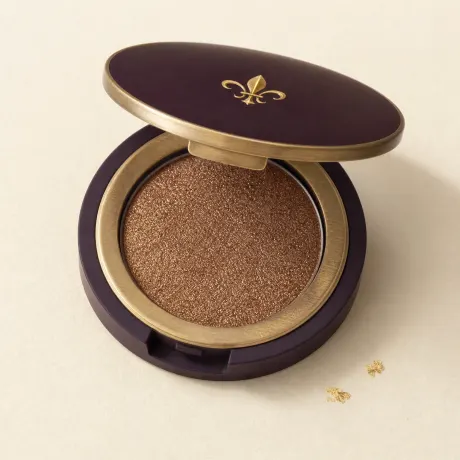
Single eyeshadow
One pressed shade in its own small compact.
Read the guide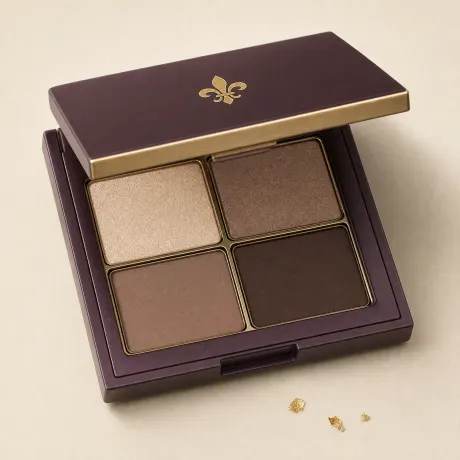
Eyeshadow quad
Four coordinated shades — typically light, medium, deep and a shimmer — for one complete eye.
Read the guide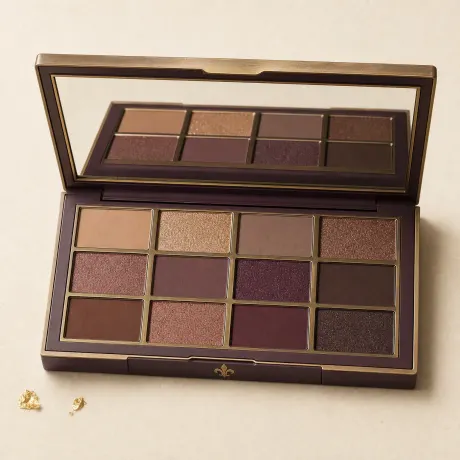
Eyeshadow palette
A large range of shades in one case, for building many looks from one kit.
Read the guide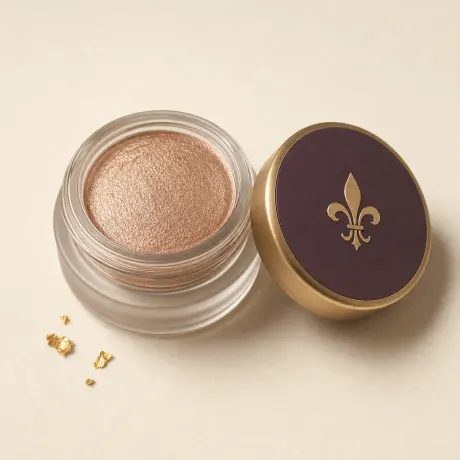
Cream eyeshadow
Shadow in a cream base, for a fast wash of colour that sets in place.
Read the guide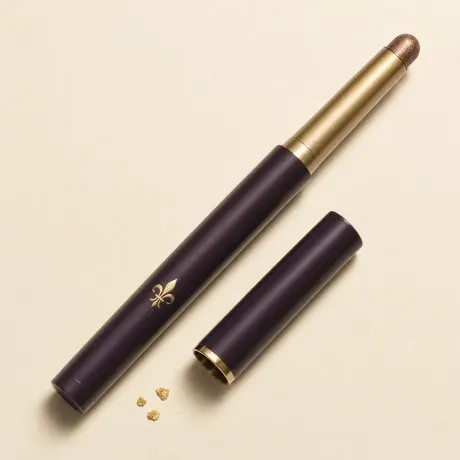
Eyeshadow stick
Cream shadow in a twist-up stick, drawn straight onto the lid.
Read the guide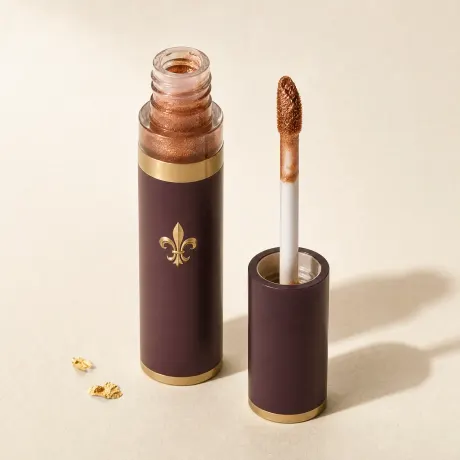
Liquid eyeshadow
A fluid shadow, often metallic, that dries down to a crease-proof film.
Read the guide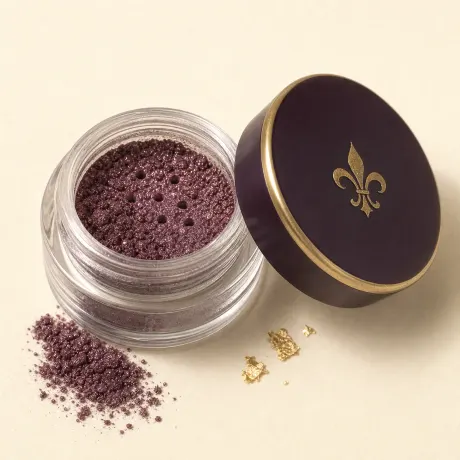
Loose pigment
Shadow as an unpressed powder, for the most intense colour and shine.
Read the guide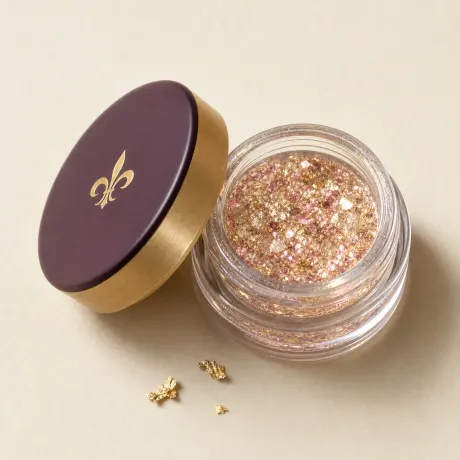
Glitter eyeshadow
Glitter suspended in a gel binder, so it stays on the lid instead of falling onto the cheek.
Read the guide