Cream eye base
An opaque cream colour for the eyelid, worn alone as a wash or under powder to deepen it and help it last. How a base differs from a primer, how to choose and use one, and the short history of a product named for its job.
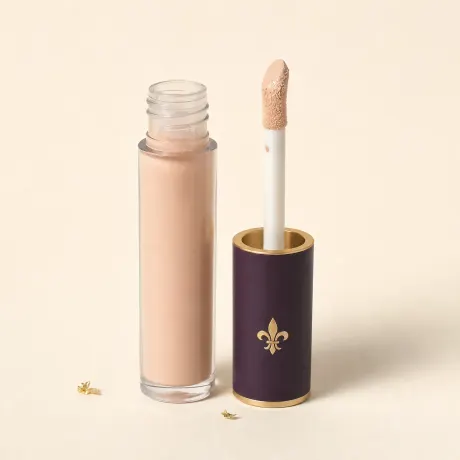
A cream eye base is an opaque, coloured cream for the eyelid — usually long-wearing and quick to set — patted on alone as a wash of colour, or under powder shadow to deepen it and help it last.

Our picks
Few products are sold as coloured eye bases rather than as primers or cream shadows. These are the genuine ones that could be linked from their makers, from neutral everyday shades to a wide range of brights, and each opens where its maker sells it, on Amazon or at the house’s own shop.
As an Amazon Associate I earn from qualifying purchases. Affiliate links — we may earn a commission at no extra cost to you. How this works
Reference basePrestige MAC Cosmetics
Pro Longwear Paint Pot
A long-wearing cream in neutral and deeper shades; a neutral one grounds almost any powder laid over it.
- Primer or shadow
- Dries to a long-wear finish
Base crayonMid-range Sigma Beauty
Eyeshadow Base Primer
A base in crayon form, quick to draw on and blend, in two soft neutrals.
- Retractable crayon
- Matte shades
- Worn alone or under
Sensitive eyesPrestige Clinique
Touch Base For Eyes
A soft nude cream sold as allergy-tested and fragrance-free, and as suitable for sensitive eyes and contact-lens wearers.
- Nude shades
- Worn alone or under
- Fragrance-free
Vivid colourMid-range P.Louise
Colored Eye Base
Bright and deep bases that change the powder laid over them, sold for cut creases as well as for priming.
- Wide shade range
- Cut crease
- Multi-use
A cream eye base is colour first and primer second. It is an opaque cream, often sold in a small pot, that sets on the lid to a thin, flexible layer. Worn alone it is a wash of colour that lasts; under powder shadow it does two jobs at once, gripping the powder as a primer does and changing its colour from underneath. A sheer taupe powder over a taupe base reads deeper and more even than the same powder on bare skin; a shimmer over a pale base looks brighter; a matte brown over a brown base looks like more of itself.
That is the line between it and its neighbours. An eyeshadow primer is clear or skin-toned and meant to disappear. A cream eyeshadow is sold as the finished colour, to be worn as it is. A cream eye base is sold for both jobs at once, and its makers describe it that way: as a shadow that works as a base, or a primer that can be worn alone. Because it sets, it makes a firmer footing for powder than a soft cream shadow does, and it is the quickest way to make a pressed shadow look richer than it does in the pan.
Choosing a shade
Choose the base by the job it has to do. A neutral base a shade or two deeper than your lid — a soft taupe, a beige, a warm brown — gives an everyday wash on its own and grounds any powder laid over it; it is the one to own first. A matching base, from the same colour family as the shadow above it, intensifies the powder and helps it last: a brown base under brown shadow gives a smoky eye that keeps its shape. A contrasting base changes the powder: a pale or white base brightens sheer and pastel shades, and a black one deepens whatever is laid over it.
Finish matters as much as colour. Matte bases sit quietly under any powder; satin and shimmer bases add their own sheen, which is lovely alone and can muddy a matte shadow on top. On deep skin, choose bases with enough pigment to show, since a pale base can turn grey over a deep lid, and look for ranges that run to rich browns, bronzes and plums. On fair skin, a base only slightly deeper than the lid looks the most natural.
How to apply it
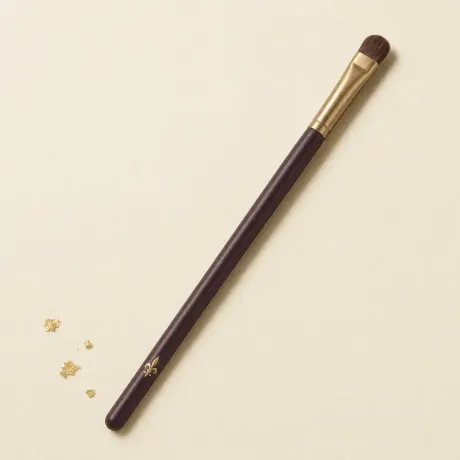
Most cream bases set quickly, so work one eye at a time. Warm a little on a fingertip or a small flat synthetic brush and pat it over the lid from the lash line to the crease; tap rather than stroke, so the layer stays thin and even, and soften the upper edge with a clean finger before it sets. Worn alone, it can be left as it is, or pressed with a matching powder to take off the shine and make it last longer. Under shadow, let it set first, then pat the powder on and blend.
A base is also the working surface of the cut crease, in which a sharp line of colour is carved across the lid: the base is laid on below the crease and powder is packed onto it. One maker, P.Louise, sells its coloured bases for exactly that, as well as for priming the lid. Crayon bases, drawn straight on and blended with a finger, are the quickest to use on the move.
Looking after it
A base in a pot is usually applied with a fingertip, which makes clean hands part of the product. The FDA advises washing your hands before applying eye cosmetics, never sharing them, and throwing away any you were using when you had an eye infection.[1] Close the pot straight after use, since creams dry out when left open, and keep it out of the heat of a car or a sunny windowsill. A brush used for a base should be washed more often than a powder brush, because cream holds on to what it touches.
Long-wearing bases are made to resist water and rubbing, so take them off as you would a waterproof mascara: hold an oil-based remover or micellar water on the closed eye for a few seconds, then wipe gently outward rather than scrubbing the lid.
Where it came from
The cream eye base is a young category, and its history is thin: the firmest dates are the ones its makers gave when they registered its names. The United States trademark for Clinique’s Touch Base for Eyes, registered in 2008, gives the name’s first use as April 1985.[2] MAC’s Paint Pot is later. Its trademark, filed in 2009 and now held by Estée Lauder Cosmetics, gives the first use as 31 August 2007.[3] Dates of first use are the owners’ own declarations, not independent records of a launch, and no fuller account of either launch was found.
The two names say what the product was for. One is a base to be touched on; the other is paint in a pot. Both are sold today as cream colours that can stand alone or sit under powder, and that double use is what still separates a base from the clear primers on one side and the cream shadows on the other.
The techniques
- Pat
- Tap lightly with a fingertip or damp sponge so product melts in rather than moves.
- Pack
- Pat colour onto the lid for full, dense payoff rather than sweeping it.
Sources
- [1]Eye Cosmetic Safety US Food and Drug Administration.View source (opens in a new tab) Accessed 2026-09-22.
- [2]TOUCH BASE FOR EYES, US trademark serial no. 77329402, registration no. 3461862 (TSDR status record) United States Patent and Trademark Office, 2008.View source (opens in a new tab) Accessed 2026-09-26.
- [3]PAINT POT, US trademark serial no. 77697091, registration no. 3692371 (TSDR status record) United States Patent and Trademark Office, 2009.View source (opens in a new tab) Accessed 2026-09-26.