Single eyeshadow
One shade of pressed powder in its own compact: the most flexible way to buy eyeshadow, and the easiest to replace. How the finishes differ, which four singles do most of the work, how to apply and keep them — and how powder became the usual form.
A single eyeshadow is one shade of pressed-powder eyeshadow sold on its own, in a small compact or as a pan for a refillable case, rather than as part of a quad or palette.

Our picks
Chosen to cover the finishes, from flat matte to multichrome, and every budget from drugstore to prestige, including pans made for refillable cases. Each opens where its maker sells it — on Amazon or at the house’s own shop — and you choose your shade on that page.
As an Amazon Associate I earn from qualifying purchases. Affiliate links — we may earn a commission at no extra cost to you. How this works
Classic singlePrestige MAC Cosmetics
Small Eye Shadow
A professional single in a wide spread of textures and finishes, sold on its colour in one swipe.
- Many finishes
- High colour payoff
Long wearMid-range Urban Decay
24/7 Eyeshadow
Matte, shimmer, metallic and satin singles made for long days, and for a damp brush when you want more intensity.
- Claims 12-hour wear
- Wet or dry
Creamy powderPrestige Dior
Diorshow Mono Couleur
Dior’s mono: a long-wearing powder with a creamy feel, in shades drawn from the house’s wardrobe.
- Creamy texture
- Long-wearing
Five finishesDrugstore KIKO Milano
High Pigment Eyeshadow
An inexpensive single from Milan in five finishes, sold as highly pigmented and buildable.
- Matte to metallic
- High pigment
True mattePrestige Laura Mercier
Matte Eye Shadow
A dense matte that goes on in one stroke: the definition shade for the crease and the outer corner.
- Matte
- Crease-resistant
- Non-dusting
One famous shadeMid-range Stila
Kitten Eye Shadow Compact
One shade, a shimmering rosy nude that Stila calls universally flattering, for the centre of the lid.
- Shimmery rosy nude
- Long-lasting
Sensitive eyesPrestige Clinique
All About Shadow Single
A buildable powder in a mirrored compact with a sponge tip, tested for sensitive eyes and contact-lens wearers.
- Claims 12-hour wear
- Ophthalmologist tested
MultichromeDrugstore wet n wild
Chameleon Chrome Eyeshadow
An inexpensive way to try a colour-shifting finish before spending more on one.
- Multichrome
- Light-shifting
Wet or dryPrestige Bobbi Brown
Luxe Shimmer Eyeshadow
A shimmer single for the centre of the lid: dry for sparkle, or pressed on with a damp brush for liquid metal.
- Lustre, metal, sparkle
- Foil when wet
Minimal kitMid-range Jones Road
The Best Eyeshadow
A plain, blendable powder that goes sheer with a fluffy brush and dense with a tight one.
- Matte or shimmer
- Buildable
Build a palettePrestige Hourglass
Curator Eyeshadow
A single pan made to fill a refillable Curator case, in matte, satin, metallic and shimmer.
- Talc-free
- Refill pan
Budget shimmerDrugstore essence
mono eyeshadow pearly
A pearly single at the bottom of the price range, for trying a lid shade before committing to one.
- Pearly
- Vegan
Refillable compactPrestige Kjaer Weis
Powder Eye Shadow
A powder sold in a metal compact that is refilled rather than thrown away.
- Refillable
- Long-wearing
MineralMid-range Jane Iredale
PurePressed Eye Shadow Single
Neutral matte and shimmer shades from a mineral makeup house, sold as gentle on sensitive eyes.
- Mineral
- Sensitive eyes
Matte neutralsPrestige Kevyn Aucoin
The Individual Eyeshadow
Four matte neutrals made for washing, shading and highlighting, after the makeup artist Kevyn Aucoin’s techniques.
- Super-matte
- Minimal fallout
Own brandDrugstore Ulta Beauty Collection
Eyeshadow Singles
A retailer’s own single, soft and buildable, in a wide run of colours at a low price.
- Matte, shimmer, metallic
- Buildable
Artist refillPrestige Trish McEvoy
Classic Eye Shadow Refill
A pigmented, silky powder sold as a refill for the makeup artist Trish McEvoy’s compacts.
- Silky finish
- Refill
Custom paletteMid-range Inglot
Freedom System Eye Shadow Matte
A square matte pan from the Polish house whose Freedom System lets you build a palette of almost any size.
- Matte
- Oil-free
- Crease-resistant
Pro mattePrestige Viseart
Single Shadows – Grande Pro 1X
Magnetic matte pans from a Paris house that makes palettes for working makeup artists.
- Matte
- Magnetic pan
A single eyeshadow is one colour of pressed powder in its own small compact. The powder is mostly a smooth mineral base, traditionally talc, with pigments for colour, a metallic soap such as zinc stearate to help it cling to the lid, and a little binder to hold everything together when it is pressed into the pan.[1] The same cake, multiplied, fills a quad or a palette. What a single changes is how the colour is bought.
Buying shadow one shade at a time means paying only for the colours you wear, replacing only the pan that runs out, and never owning the eight shades a palette includes to make up its numbers. It is how exact colours are found, too: the right brown for a crease, a particular blue, a shimmer for the centre of the lid. Many singles are now sold as bare pans that drop into a magnetic case, so a set can be built one pan at a time. Against a cream shadow, pressed powder blends more easily and is less inclined to settle into the crease;[1] what it gives up is intensity from a single layer.
Matte, satin, shimmer or metallic
The finish decides where a single earns its place. A matte shade has no shine and reads as shadow, which is why the transition shade in the crease and the deep shade at the outer corner are usually matte. A satin has a soft sheen and suits the whole lid on most skin. Shimmer and metallic shades carry reflective particles, mica or synthetic pearl, and belong in the centre of the lid, where the light catches them; on crêpey or textured lids they show the texture, and a satin usually looks better.
Shimmer behaves differently in the pan, too. It is harder to press than matte powder: a Revlon patent of 1976 notes that cakes of more than about a third mica compacted poorly, and that the oils added to bind them caused surface glazing, “a common defect in such preparations”.[2] Pressed shadows have long been made to be used wet as well as dry,[3] and many metallic singles are still sold that way: a damp brush turns a sheen into foil.
A working set
Four singles cover most of what eyeshadow does. Start with a transition shade, a matte a little deeper than your skin, to blend through the crease; a lid shade in satin or shimmer; a deep matte for the outer corner and the lash line; and, if your skin needs one, a pale matte or satin for the brow bone and inner corner. Colour comes after: a single blue or green is easier to wear when the neutrals around it are already right.
Pigment varies more than the pans suggest, so judge a shade on the lid, where most shadows go on sheerer than a finger swatch. Deep skin needs deeper transition and definition shades than many neutral ranges include, which is one more argument for buying them singly.
Applying it, and looking after it
Tap the brush on the pan rather than swirling it, and knock off the excess before it reaches the eye. A flat shader brush packs colour onto the lid, pressed rather than swept; a fluffy blending brush diffuses it through the crease in small back-and-forth strokes. Work from the lightest shade to the deepest and blend the edges last. A thin primer or base underneath keeps the colour true to the pan and slows creasing.
A pan that turns hard and shiny on top has glazed: oil from fingers or a damp brush has sealed the surface. A clean, dry brush, or a light scrape of the top layer, usually brings it back. Keep brushes clean and the pan to yourself; the FDA advises washing your hands before applying eye cosmetics and not sharing them.[4]
Where it came from
Western eye shadow began partly as a powder. Helena Rubinstein sold a black powder, Kohol Jet Grains, in 1907, and Elizabeth Arden a soft brown Venetian Shading Powder in 1914, though before the Second World War the commonest eye shadow was a paste, smoothed on with the little finger.[5] Eye shadow in a compact was on sale by 1930, when the Kurlash company introduced Shadette and Arden’s eye range included Venetian Eye Sha-Do in a compact, each shade a purchase of its own.[6][7]
Pressed powder became common only after the war, and in the 1960s it became the most popular form: it blended easily, could be made matt or glossy, and was less prone than paste to form lines in the crease.[5] The switch shows in the catalogues. Max Factor’s Hi-Fi Powder Eye Shadow of 1961 was a loose powder with its own applicator; its Shadow Play Brush Eye Shadow of 1965 was compressed.[8] Revlon’s Brush-On Eyeshadow, one of its “Beautiful Young Brush-Ons” of the mid-1960s, was a pressed powder “frosted or not”, part of the house’s answer to the natural look.[9]
The single pan has since become a unit of its own. A Kanebo patent granted in the United States in 1991, from an application first filed there in 1982, starts from the problem that pans glued into a palette-type case meant throwing the case away when one ran out, and holds them with magnets instead, so they can be rearranged or replaced.[10] That is how many singles are now sold: as a pan for a case of one’s own choosing.
The techniques
- Pack
- Pat colour onto the lid for full, dense payoff rather than sweeping it.
- Blend
- Soften an edge until one colour passes into the next without a line.
- Windscreen wiper
- Side-to-side strokes along the crease to diffuse colour upward.
Sources
- [1, 3, 5]Eye Shadow Cosmetics and Skin, 2019.View source (opens in a new tab) Accessed 2026-09-26.
- [2]US Patent 3,978,207 — Pressed powder cosmetic composition United States Patent Office, 1976.View source (opens in a new tab) Accessed 2026-09-26.
- [4]Eye Cosmetic Safety US Food and Drug Administration.View source (opens in a new tab) Accessed 2026-09-22.
- [6]Kurlash Cosmetics and Skin.View source (opens in a new tab) Accessed 2026-09-25.
- [7]Elizabeth Arden (1930-1945) Cosmetics and Skin.View source (opens in a new tab) Accessed 2026-09-22.
- [8]Max Factor (post 1960) Cosmetics and Skin, 2013.View source (opens in a new tab) Accessed 2026-09-25.
- [9]Revlon (post 1960) Cosmetics and Skin, 2012.View source (opens in a new tab) Accessed 2026-09-26.
- [10]US Patent 5,005,697 — Make-up case United States Patent Office, 1991.View source (opens in a new tab) Accessed 2026-09-26.
What to apply it with
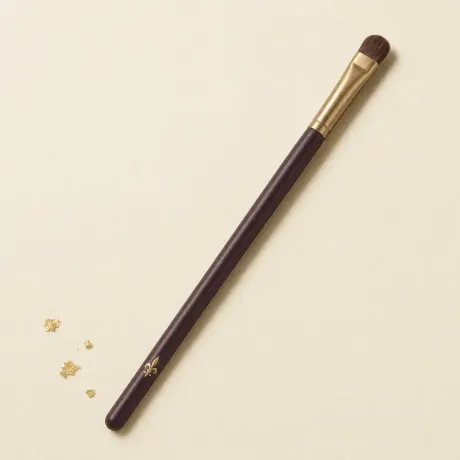
Flat shader brush
A flat eye brush with firm bristles and a rounded edge, for packing colour onto the lid.
Read the guide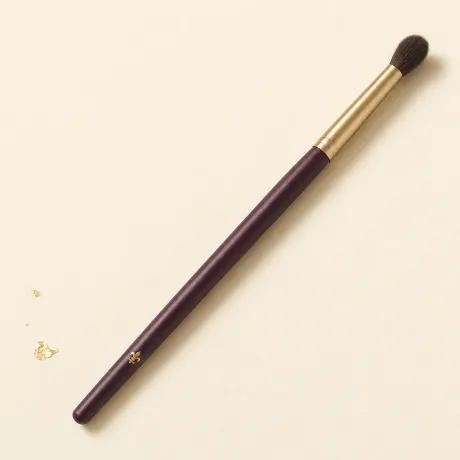
Fluffy blending brush
Long, loose bristles rising to a soft point — the brush that removes edges.
Read the guide
Domed blending brush
A rounded eye brush of medium density that both places and diffuses colour.
Read the guide
Sponge-tip applicator
A double-ended stick with a small foam tip at each end, for pressing shadow on and smudging it.
Read the guide
Other kinds of eyeshadow
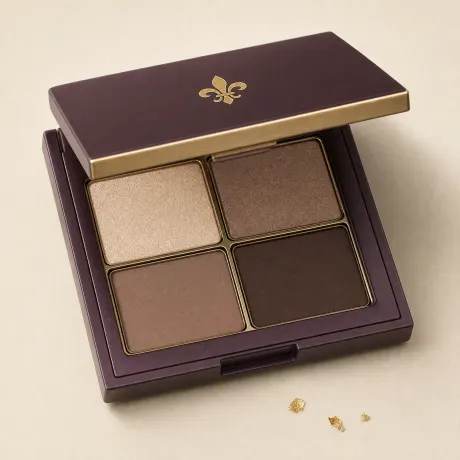
Eyeshadow quad
Four coordinated shades — typically light, medium, deep and a shimmer — for one complete eye.
Read the guide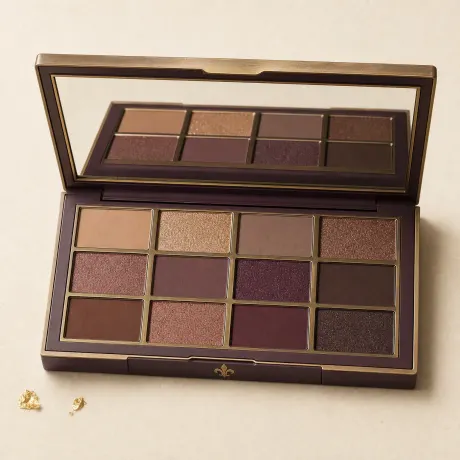
Eyeshadow palette
A large range of shades in one case, for building many looks from one kit.
Read the guide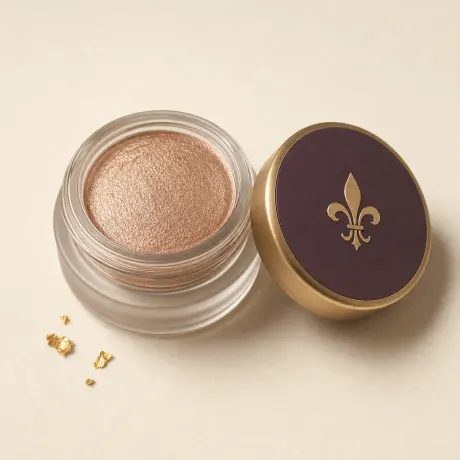
Cream eyeshadow
Shadow in a cream base, for a fast wash of colour that sets in place.
Read the guide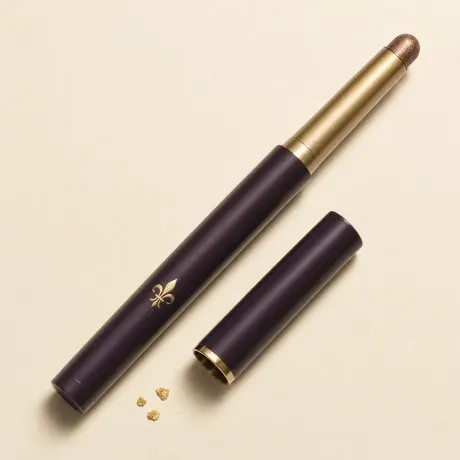
Eyeshadow stick
Cream shadow in a twist-up stick, drawn straight onto the lid.
Read the guide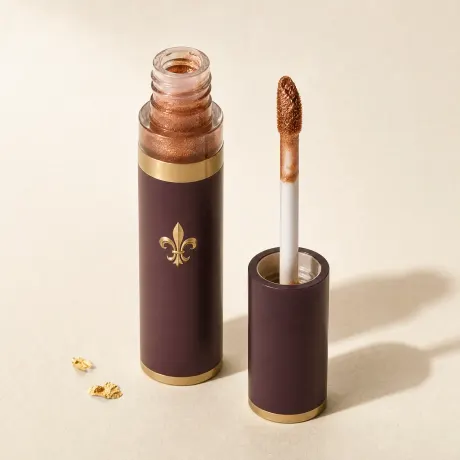
Liquid eyeshadow
A fluid shadow, often metallic, that dries down to a crease-proof film.
Read the guide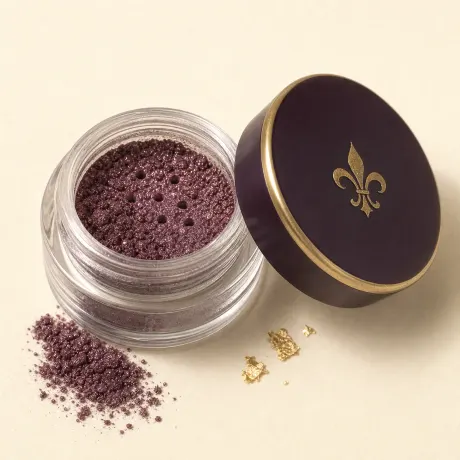
Loose pigment
Shadow as an unpressed powder, for the most intense colour and shine.
Read the guide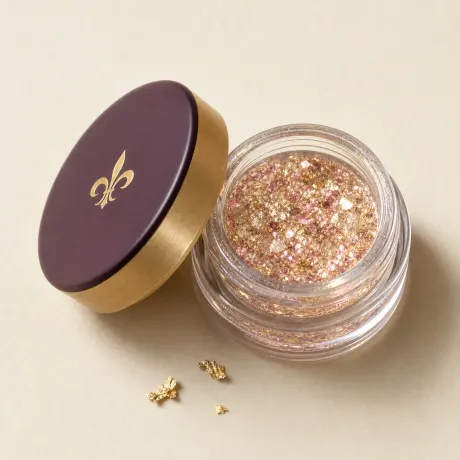
Glitter eyeshadow
Glitter suspended in a gel binder, so it stays on the lid instead of falling onto the cheek.
Read the guide
Baked eyeshadow
Shadow baked into a dome, giving a foiled, metallic finish that intensifies when wet.
Read the guide