Pencil brush
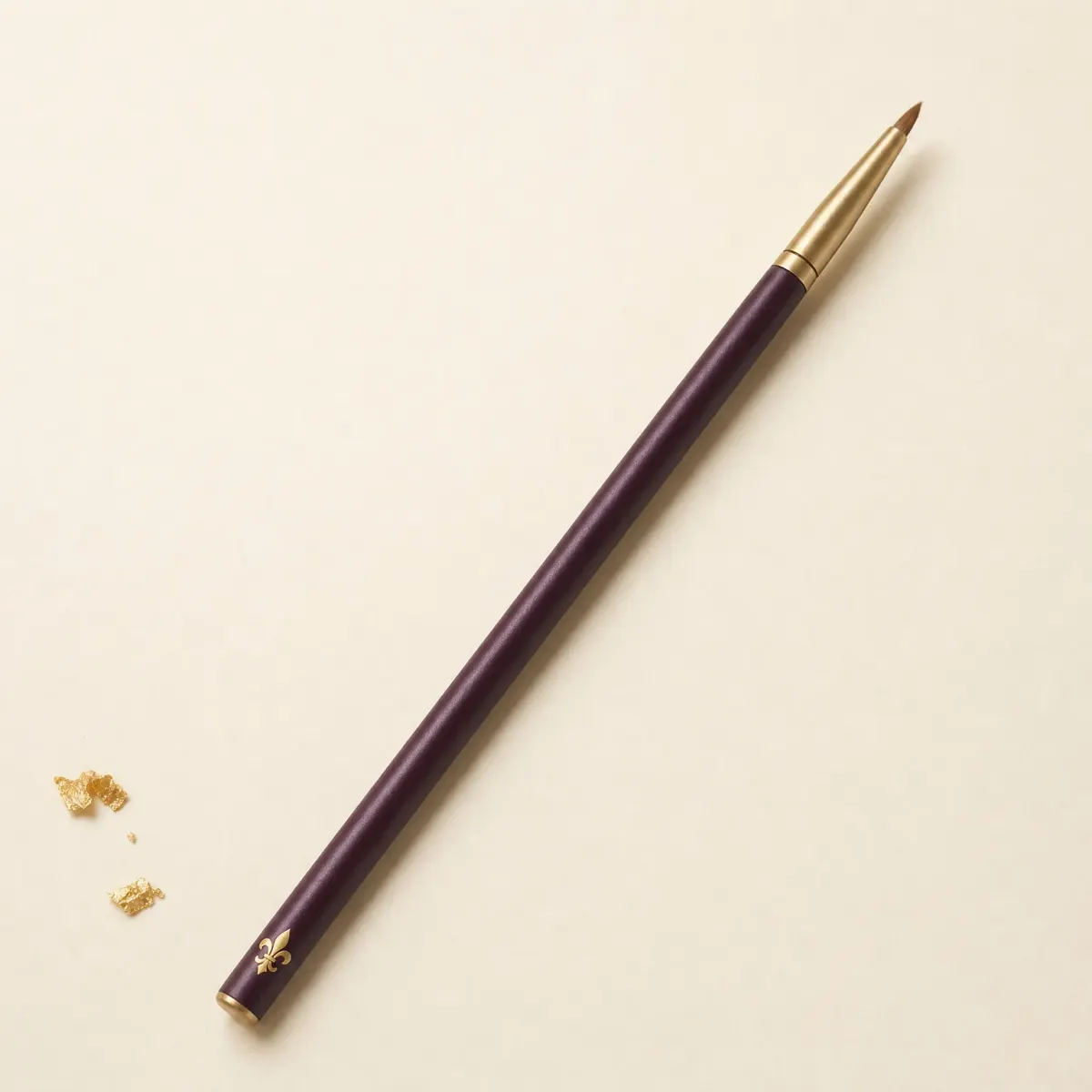
A short, dense eye brush cut to a point like a sharpened pencil, for colour along the lash line and in the corners of the eye. How to choose and use one — and why a brush is named after a pencil, when the pencil was named after a brush.
A pencil brush is a small eye brush of short, tightly packed fibres shaped to a firm point, used to draw and smudge eyeshadow or liner along the lash line and to place colour in the inner and outer corners.
Our picks
Every house found selling a single pencil-shaped or pointed eye brush whose page could be verified, one brush each, from drugstore to prestige, in synthetic fibre and in goat, horse and natural hair, among them two brushes from Kumano. Most prestige houses sell smudgers for this job instead. Each opens where its maker sells it: on Amazon, or at the house’s own shop.
As an Amazon Associate I earn from qualifying purchases. Affiliate links — we may earn a commission at no extra cost to you. How this works
Pencil shapePrestige MAC Cosmetics
219 Synthetic Pencil Brush
A small pencil-shaped brush with a soft, tapered tip, for shading the lid, defining the crease or smudging liner.
- Pencil-shaped
- Soft, tapered tip
- Synthetic
Budget smokeDrugstore ColourPop
Pencil Brush
An inexpensive pencil brush for smoking out liner or shadow along the upper or lower lashes.
- Small, tapered tip
- Lash line
Soft pencil tipMid-range Sigma Beauty
E30 Pencil Brush
A soft, tapered pencil tip for softening pencil liner and highlighting the inner corner.
- Tapered pencil tip
- Synthetic
- Inner corner
Horse hairPrestige Hakuhodo
G5515BkSLN Eyeshadow Tapered
From the Kumano maker Hakuhodo: a small, tapered brush of horse hair for smudged liner, blended shadow and placed glitter.
- Horse hair
- Small, tapered
Precision pointDrugstore Morphe
M383 Pointed Detail Eye Brush
A small precision point for inner-corner highlight, outer-corner depth and smoked-out liner.
- Precision point
- Inner and outer corners
Firm naturalMid-range Anastasia Beverly Hills
A14 Pro Brush – Pencil Brush
A small, round pencil brush of firm natural fibres for detail in the crease and under the lash line.
- Round, tapered tip
- Firm natural fibres
Cream detailPrestige Laura Mercier
Crème Eye Detail Brush
A pointed tip for detail with cream eye colour; pressed flatter, it gives more control.
- Pointed tip
- Cream eye colour
- Synthetic
Narrow taperDrugstore EcoTools
Precision Detail Brush
A narrow, tapered head for inner-corner colour, brow-bone highlight and smudged liner.
- Tapered, narrow head
- Inner corners
Fine pointMid-range rephr
brush 03
A fine, firm point of uncut natural hair, handmade in Kumano, by its maker’s account, for detail near the lashes.
- Fine-pointed, firm
- Natural hair
- Made in Kumano
Compact pointDrugstore KIKO Milano
Eyes 60 Pencil Eye Brush
An inexpensive compact point for blending pencil and shadow along the lashes and into the outer corner.
- Compact, pointed tip
- Synthetic
- Lash line
Pencil tipMid-range Bdellium Tools
Golden Triangle 780 Pencil
A pencil-shaped tip for precise shading on the lid, the crease and the lash line, and for blending liner into shadow.
- Pencil-shaped tip
- Vegan synthetic
Budget pencilDrugstore essence
pencil brush
The least expensive pencil brush here, for the upper and lower lash lines and the inner corner.
- Soft bristles
- Lash lines
- Inner corner
Extra-small tipMid-range Glo Skin Beauty
306 Detail Shader Brush
Firm, densely packed fibres and an extra-small point, for precise placement and a smoky lash line.
- Extra-small pointed tip
- Densely packed
Bullet shapeDrugstore Crown Brush
Pro Detail Crease C513
Sold as a detail crease brush, but bullet-shaped by its maker’s description: dense goat hair for the crease, the lash line and the inner corner.
- Bullet shape
- Goat hair
- Lash line and corners
Finest pointMid-range Rae Morris
Jishaku #9.1 Pencil Point Shader Brush
The finest and smallest blending brush in an Australian makeup artist’s own range, by her account.
- Pencil point
- Smallest in its range
Soft pointMid-range Make-up Designory
#625 Precision Blender Makeup Brush
Short, dense bristles tapering to a soft point, for smudging liner and blending colour along the lash line.
- Short, dense bristles
- Soft point
A pencil brush is the smallest shadow brush in the kit: a short, dense tuft of fibres cut to a point, like the tip of a sharpened pencil, on a long, slim handle. It does detail. The point draws shadow along the upper or lower lash line as a soft line, presses highlight into the inner corner, deepens the outer corner and, run over pencil liner, smokes it out without spreading it far. It is also the brush for eyeliner made of shadow: a dark matte shadow pressed along the upper lashes with the point gives a line softer than a pencil’s.
Its neighbours are close in size and different in shape. A smudger is short and dense too, but domed rather than pointed, and made to push colour into the lashes and blur it; an angled liner brush is flat and draws a sharp line; a crease brush is larger and softer, for the socket. The pencil brush sits between line and shadow, which is why it is the brush for a smoky lower lash line.
Choosing one
The point and the firmness decide what it can do. A fine, firm point draws a narrow line close to the lashes and puts highlight exactly into the inner corner; a softer, blunter tip diffuses more, and suits smoking out liner. Try the tip against the back of your hand: it should hold its point after it has been pressed, not splay into a fan, and it should feel soft enough to use along the lower lash line, where the skin is thin.
Synthetic fibre suits cream shadow, gel and pencil liner, which it can be worked over directly, and it washes clean quickly, which matters on a brush this dense. Some makers sell pencil brushes of hair for powder: Anastasia Beverly Hills describes the firm fibres of its A14 as natural, Hakuhodo makes its small G5515 of horse hair, and Crown Brush its bullet-shaped C513 of goat hair.
Size is the last choice. Most pencil brushes are a few millimetres across; a very small one, like Rae Morris’s #9.1, places colour in a thin line close to the lashes, while a slightly fuller point, like Sigma’s E30, blends it out a little further. Whatever the size, hold the handle close to the ferrule for work along the lashes: the shorter the lever, the steadier the line.
Using it
For a soft lower lash line, pick up a little matte shadow on the tip, tap off the excess and draw it along the lower lashes from the outer corner inward, stopping about two-thirds of the way; go back over it once with the side of the tip to soften it. On the upper lid, press the point into the roots of the lashes for depth without a visible line. For a smoky finish, draw pencil liner first and work it outward with the brush before it sets.
For the inner corner, press a small dot of pale shimmer or matte highlight into the corner with the point, then soften it outward once. For the outer corner, draw a short line of the deepest shade from the lash line up towards the end of the crease, and let the side of the point soften its upper edge.
The commonest mistake is too heavy a line under the eye. Take the colour only as far as it needs to go, keep it closest to the lashes, and check it in daylight: a lower line that looks soft under a bathroom light often reads much heavier outdoors.
Keep it clean between shades, because a dark colour left in a dense tip muddies the next one: wipe it on a towel as you work, and wash it after cream, gel or pencil. Reshape the point between your fingers while it is wet, and dry it lying flat.
Where it came from
Before it was a stick of graphite, a pencil was a brush. The word came into English in the fourteenth century for an artist’s small, fine brush, from the Latin penicillus, a painter’s brush, literally a “little tail”, and seems to have passed to the graphite writing stick only after sticks of graphite came into use in England in the sixteenth century.[1] The older sense lasted a long time. The V&A still catalogues a drawing by Alexander Cozens, signed and dated 1763, as “drawn in bistre with a camel’s hair pencil”.[2]
At the dressing table, that small brush was the tool for the finest work around the eye. The Ugly-Girl Papers, a book of toilet advice published in New York in 1874, told its readers that all preparations for darkening the brows and lashes “must be put on with a small hair-pencil. The ‘dirty-finger’ effect is not good.” It recommended a fine black line round the rim of the eyelid, which, “when properly done, should not be detected, and its effect in softening and enlarging the appearance of the eyes is well known by all amateur players”.[3]
The pencil brush has come back to its name from the other side: a short, dense brush cut to the point of a sharpened pencil. Its work has not moved. It still lays colour along the rim of the lid, a little softer than a line and a little sharper than a shadow.
The techniques
- Smudge
- Soften a drawn line into a haze while the product is still workable.
- Draw
- A single controlled line, built from short strokes where the hand needs it.
- Press
- Press product onto the skin without dragging, so it stays where it is put.
Sources
- [1]pencil (n.) Online Etymology Dictionary, 2026.View source (opens in a new tab) Accessed 2026-09-26.
- [2]Drawing (forest scenery with a pond), Alexander Cozens, 1763, museum number DYCE.668View source (opens in a new tab) Accessed 2026-09-26.
- [3]The Ugly-Girl Papers; or, Hints for the Toilet Harper and Brothers, New York; Project Gutenberg eBook #75279, 1874.View source (opens in a new tab) Accessed 2026-09-25.
What it is used with
Other kinds of eye brushes
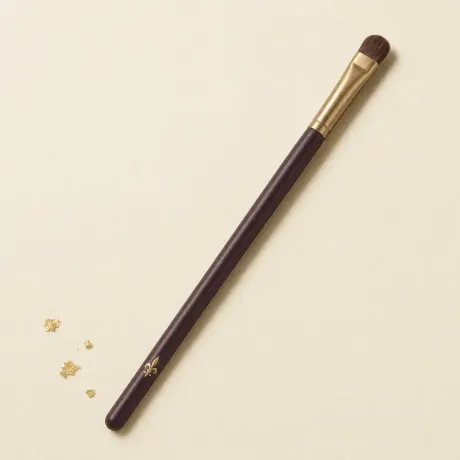
Flat shader brush
A flat eye brush with firm bristles and a rounded edge, for packing colour onto the lid.
Read the guide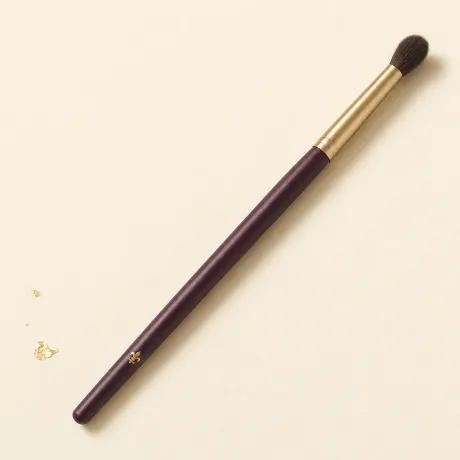
Fluffy blending brush
Long, loose bristles rising to a soft point — the brush that removes edges.
Read the guide
Domed blending brush
A rounded eye brush of medium density that both places and diffuses colour.
Read the guide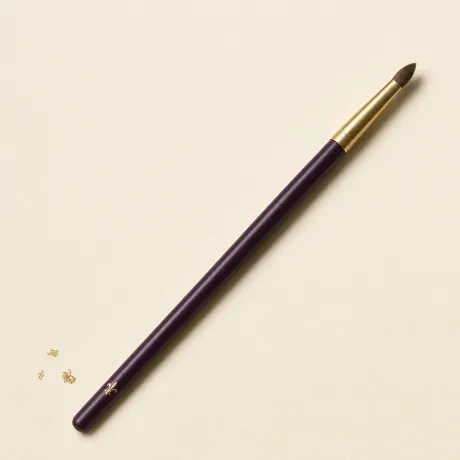
Crease brush
A small, tapered, pointed brush that fits into the socket line.
Read the guide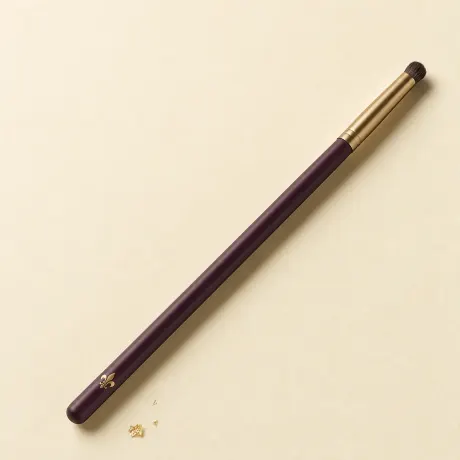
Smudger brush
A short, very dense, slightly domed tuft on a slim eye-brush handle — made to press liner and shadow into the lash line and soften it into smoke.
Read the guide
Angled shading brush
An eye brush cut on an angle, for deepening the outer corner.
Read the guide