Stick concealer
The firmest concealer, wound up from a slim case like a lipstick and pressed straight onto a spot. What it does well, where it fails — and how it came down from the stage.
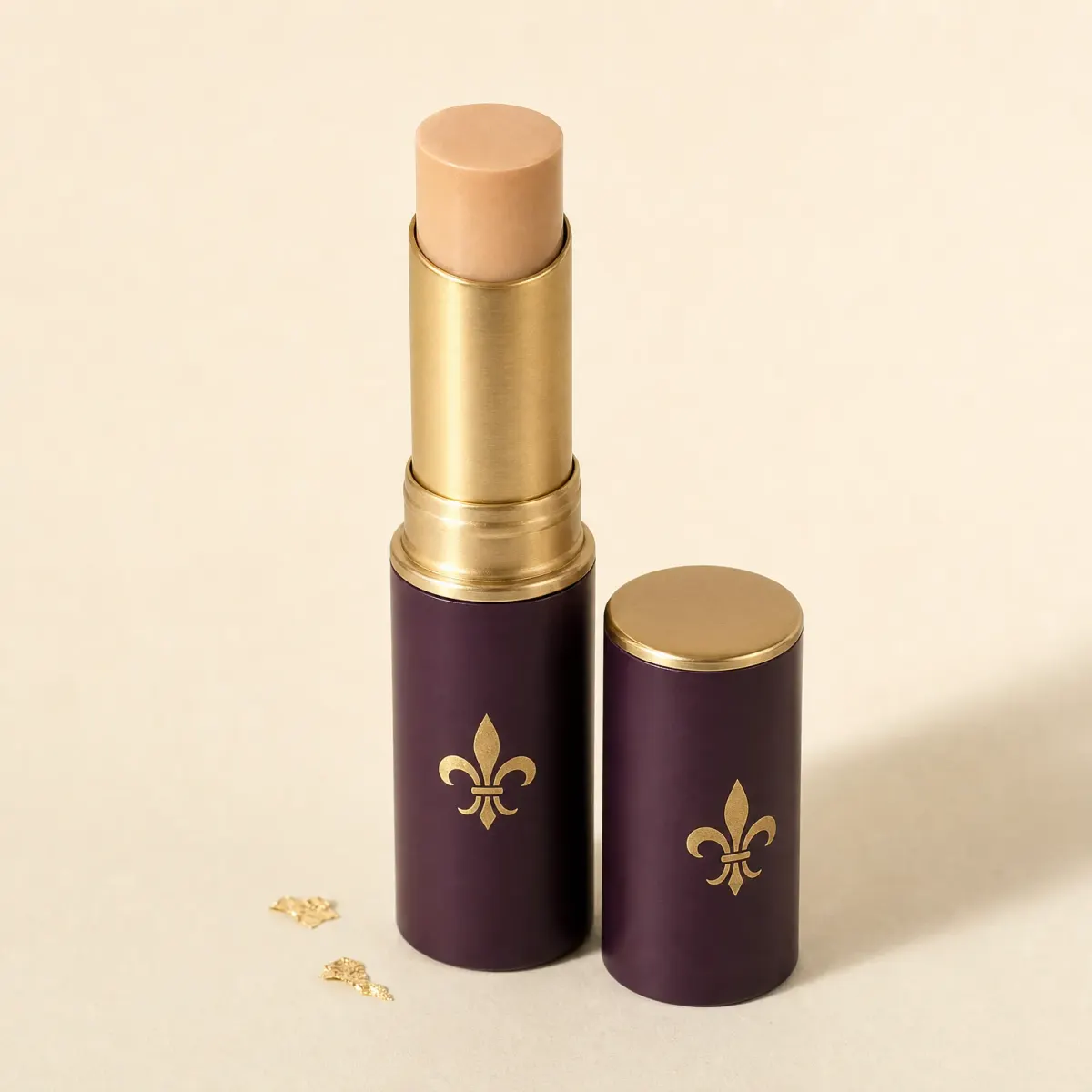
Stick concealer is a firm, wax-based concealer in a twist-up case, touched directly onto a blemish or mark and blended only at the edges, for concentrated coverage in one small place.
Our picks
Chosen across texture — creamy, matte, gel, double-ended — and across shade ranges and budgets, from drugstore to prestige. Each opens where its maker sells it — on Amazon, or at the house’s own shop — and you choose your shade on that page.
As an Amazon Associate I earn from qualifying purchases. Affiliate links — we may earn a commission at no extra cost to you. How this works
Creamy stickPrestige Bobbi Brown
Skin Concealer Stick
A creamy twist-up stick that blends easily enough for the under-eye as well as for spots.
- Creamy
- 12-hour wear
Slim stickDrugstore NYX Professional Makeup
Pro Fix Stick Correcting Concealer
A slim, inexpensive stick of buildable coverage, precise enough for a single spot.
- Medium, buildable
- Slim twist-up
Precision tipMid-range Tarte
Shape Tape Blur Concealer Stick
Full coverage from a diamond-shaped tip, precise enough for the inner corner and the sides of the nose.
- Full coverage
- Crease-proof
- Precision tip
Full coveragePrestige Clé de Peau Beauté
Concealer SPF 27
Full coverage from a smooth, firm stick that still finishes like skin, with SPF 27.
- Full
- Natural finish
- SPF 27
Plain and simpleDrugstore Physicians Formula
Gentle Cover Concealer Stick
A plain, full-coverage stick for blemishes and small marks, sold as non-drying.
- Full
- Non-drying
- Dermatologist tested
Gel to creamMid-range Milk Makeup
Hydro Grip Gel Concealer
A gel stick that melts to a dewy cream: light enough for the under-eye, buildable on a spot.
- Gel stick
- Dewy
- Buildable
Two shadesPrestige Laura Mercier
Secret Camouflage Brighten & Correct Duo
Two sticks in one: a match for blemishes at one end, a brighter shade for the under-eye at the other.
- Two shades
- Buildable full
CrayonDrugstore L'Oréal Paris
True Match Super-Blendable Crayon Concealer
A crayon-shaped stick, quick to draw onto a spot and soften at the edges.
- Crayon
- Blendable
CamouflageMid-range Dermablend
Quick-Fix Concealer
From a house built on camouflage makeup: a dense stick for scars and marks, buildable to full coverage.
- Full coverage
- Buildable
- All-day hydration
Blurring gelPrestige Shiseido
Synchro Skin Correcting GelStick Concealer
A lighter gel stick that blurs rather than masks — the stick to try if others look heavy.
- Medium, buildable
- 24-hour wear
- Crease-resistant
Deeper skinDrugstore Black Opal
True Color Flawless Perfecting Concealer
A full-coverage matte stick from a house that has made its complexion ranges for deeper skin.
- Full coverage
- Matte
Brightening stickMid-range Exa Beauty
High Fidelity Brightening Concealer Stick
A creamy, highly pigmented stick that brightens as it covers, for when one stick has to do under-eyes and spots.
- Brightening
- Creamy
Long-lastingDrugstore KIKO Milano
Universal Stick Concealer
An inexpensive creamy stick from Milan, sold as long-lasting full coverage.
- Creamy
- Full coverage
- Up to 24-hour wear
Hydrating stickMid-range Laura Geller
Easy Cover Up Hydrating Concealer Stick
A soft, hydrating stick for drier skin that finds firmer sticks draggy.
- Hydrating
- Creamy
MoisturisingDrugstore COVERGIRL
Smoothers Moisturizing Concealer Stick
An inexpensive, moisturising stick made for dark circles rather than spots.
- Moisturising
- For dark circles
Brighten and concealMid-range DIBS Beauty
The Edit Stick
A double-ended stick: a brightener for the under-eye at one end, a concealer for spots at the other.
- Dual-ended
- Brightener and concealer
Three shadesDrugstore Black Radiance
Concealer Stick
An inexpensive stick in three shades, from a house whose ranges are made for Black women.
- Three shades
- Spot coverage
Herbal stickDrugstore Palladio
Herbal Stick Concealer
A plain drugstore stick of medium to full coverage, sold in skin shades and correcting ones.
- Medium to full
- Long-lasting
Stick concealer is the most solid form the product takes: pigment held in a base with enough wax to stand up in a twist-up case, so it can be drawn straight across a spot without a brush or a pot. Its texture runs from creamy sticks that soften on contact, through drier matte ones, to translucent gel sticks that grip with far less wax, but all of them lay down a lot of pigment in one pass.
That makes a stick the natural tool for small, fixed targets: a spot, a mark, redness at the side of the nose, a scar. It is less suited to the under-eye, where a firm texture drags on thin skin and a thick layer creases. Beside a cream concealer in a pot it is tidier and travels better; beside a liquid it is less flexible, but covers more for the same touch.
Texture and shade
Choose by texture first. A creamy stick blends more easily and can be used lightly under the eyes; a matte one lasts longer on oily skin and the centre of the face, but can look dry on flaky patches. Gel sticks are lighter and more translucent, covering by blur rather than weight. Some sticks come double-ended, one shade matched to the skin and a lighter one for the eyes, which settles the question of carrying two.
Shade matters more in a stick than almost anywhere else, because it goes on single spots in plain view: it should match the skin, or the foundation, around the mark exactly. A lighter stick on a spot turns it into a pale dot. If you want to brighten under the eyes, use a separate, lighter product there rather than the stick you keep for blemishes.
Finding a stick in your shade
Shade ranges for concealer sticks vary widely: some houses make dozens of shades, others three. Check the lightest and deepest ends of a range before settling on a formula, and judge undertone as well as depth. A stick that is right in depth but too pink or too ashy shows as a patch on the very spot it was meant to hide. Several houses, Black Opal and Black Radiance among them, build their complexion ranges around deeper skin and are worth seeking out for that alone.
If no single stick matches, a shade with the right undertone and a little too much depth looks more natural than one of the right depth and the wrong undertone. Two neighbouring shades can also be warmed together on the back of the hand and pressed on as one.
Touch, press, blend the edges
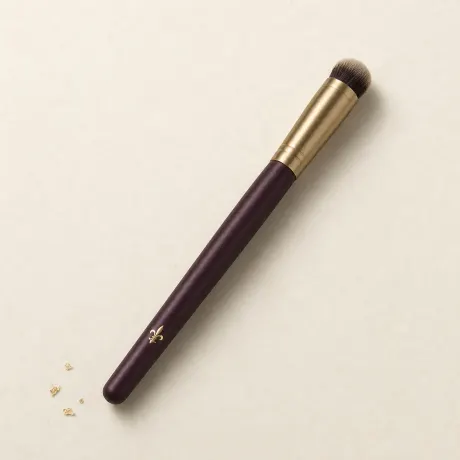
If the stick feels stiff, warm the tip for a moment on the back of the hand. Then touch it directly onto the blemish, or take a little onto a small buffing brush for more control, and press rather than rub: rubbing lifts pigment off the centre, the one place it is needed. Blend only the outer edge into the surrounding skin with a fingertip or the brush, leave the centre alone, and set it with a little powder.
On a raised spot, cover the colour and accept the shape; building a thick layer only makes a bump more visible. And because a stick touches the skin directly, it picks up oil from every spot it covers. Wipe the tip with a tissue after use, keep the cap on, and do not share it.
Where it came from
The stick came down from the stage. Actors had mixed pigment into grease for decades, but on the historian James Bennett’s account it was the opera singer Ludwig Leichner, who set up a makeup business in Berlin in 1873, who first made a commercial product of it, and he made it in sticks: thick ones for the base, thinner ones called liners for shadows, highlights and lines.[1] Some writers traced greasepaint further back, to wig-paste, the flesh-coloured mixture used to hide the join between an actor’s wig and forehead. Carl Baudin of the Leipzig State Theatre had sold one made of zinc, ochre and lard, and a writer in 1899 could call grease paints identical with it, the flesh colour known as No. 3 and sold in sticks.[1] Stage makeup in sticks, in other words, was already concealing something.
The earliest concealer stick for the street that Bennett records came from camouflage makeup. In 1936 Lydia O’Leary, who made the Covermark cover cream for birthmarks and scars, added Spot-Stik to her range, produced and packaged like a lipstick, for the occasional pimple or minor blemish.[2] Max Factor then put a whole base in a lipstick case: Pan-Stik, a creamy makeup in stick form introduced in 1947 and sold to the public from 1948, was wound up, dabbed on and blended with the fingertips, and advertised as needing no puff or sponge and unable to spill or leak in a purse. The same firm’s Erace, launched in 1954, is often called the first stick concealer; it was not, Spot-Stik having preceded it by eighteen years.[3] Erace arrived in the same year as Charles Antell’s Touch-Up Stik and Westmore’s Beauty-Stick, all sold on television, where a tired face could be transformed in seconds, and in 1954 American sales of stick concealers rose from thousands of units to millions, helped by a case that looked like a lipstick and went into a handbag.[4] A trade recipe of 1957 shows what was inside: castor oil, petrolatum, beeswax, ozokerite and paraffin, carrying titanium dioxide at a quarter of the whole.[4]
The techniques
- Press
- Press product onto the skin without dragging, so it stays where it is put.
- Pat
- Tap lightly with a fingertip or damp sponge so product melts in rather than moves.
Sources
- [1]Greasepaint Cosmetics and Skin, 2010.View source (opens in a new tab) Accessed 2026-09-25.
- [2]Covermark Cosmetics and Skin, 2012.View source (opens in a new tab) Accessed 2026-09-25.
- [3]Max Factor (1945–1960) Cosmetics and Skin, 2026.View source (opens in a new tab) Accessed 2026-09-22.
- [4]Corrective Make-up (Concealers) Cosmetics and Skin, 2016.View source (opens in a new tab) Accessed 2026-09-25.
What to apply it with
Other kinds of concealer
Liquid concealer
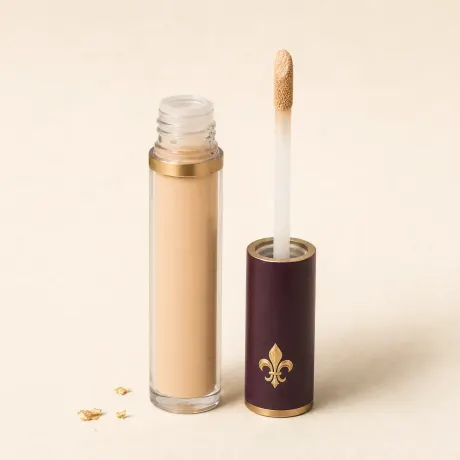
A fluid concealer in a wand tube, the most versatile form for the under-eye.
Read the guide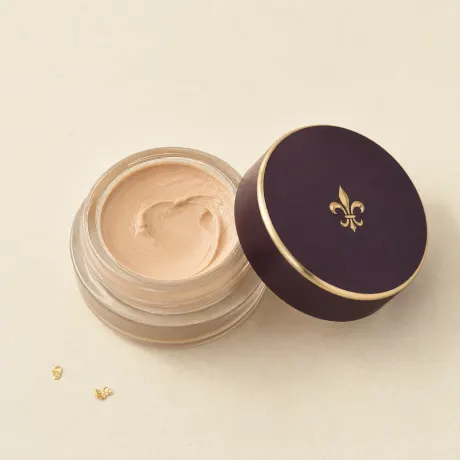
Cream concealer
A thick, high-coverage concealer in a small pot, for blemishes and deep shadow.
Read the guide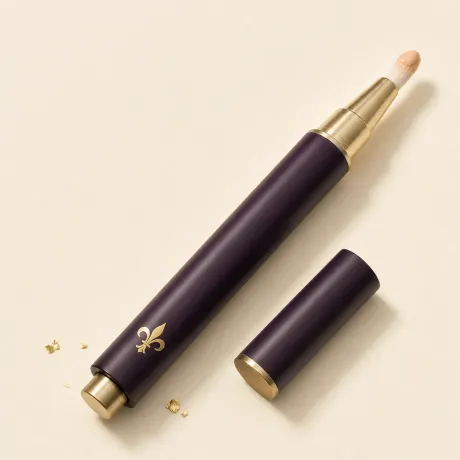
Brightening pen
A light-reflecting concealer in a click pen with a brush tip, for lifting shadows rather than covering them.
Read the guide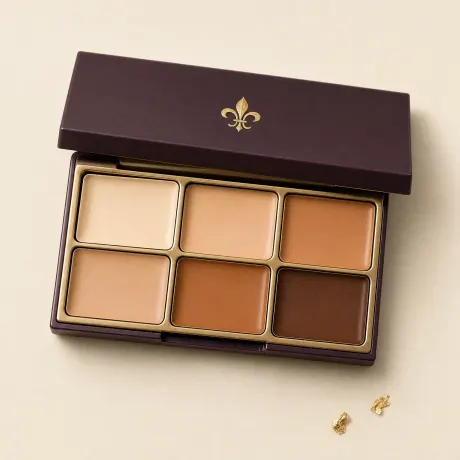
Concealer palette
Several cream concealers in one palette, to mix a match or correct and conceal together.
Read the guide