Silicone applicator
A flexible pad of silicone that spreads foundation without soaking any up. What it does well and what it does not, how to use and clean one — and the short, loud craze that made it famous.
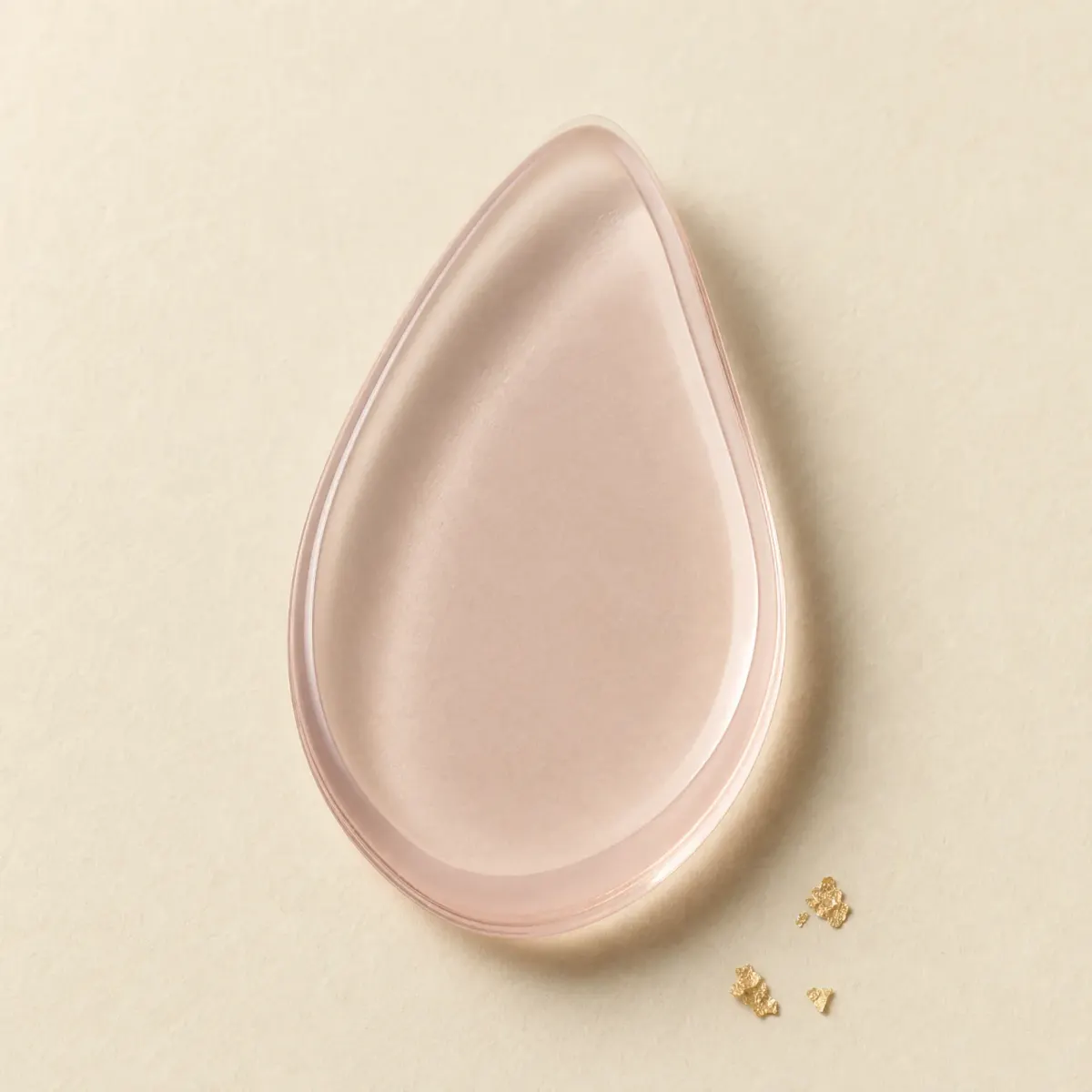
A silicone applicator is a flexible, non-absorbent pad of silicone, often clear, used to spread liquid and cream makeup over the skin without soaking any of it up, then tapped to soften the strokes.
Our picks
The silicone applicators we could confirm as sold by makeup houses themselves: a clear pad, a primer applicator and a foam sponge with a silicone face. Most silicone sponges on sale come from sellers that make nothing else, which is why the carousel is short. Each opens on Amazon or at the house’s own shop.
As an Amazon Associate I earn from qualifying purchases. Affiliate links — we may earn a commission at no extra cost to you. How this works
Clear padDrugstore SHANY
Stay Jelly Silicone Sponge, Hourglass
The form the craze made famous: a clear silicone pad with rounded sides, a flat face and a point.
- Non-absorbent
- Clear silicone
- Soap and water
For primerDrugstore NYX Professional Makeup
Plump Right Back Silicone Applicator
A silicone applicator sold to partner a serum primer, the thin kind of product silicone spreads best.
- Made for primer
- Streak-free claim
HybridDrugstore e.l.f. Cosmetics
Halo Glow Angled Silicone Face Sponge
A foam sponge with a silicone base: spread foundation with the silicone, then blend with the foam.
- Silicone base
- Latex-free foam
- Three sides
A silicone applicator is a pad of soft, flexible silicone a few centimetres across, usually clear, sometimes silicone sealed in a thin plastic skin. Nothing soaks into it. Foundation sits on its surface until it touches the face, so none is lost inside the tool, and afterwards it rinses clean in seconds, with no water held in it to dry out.
It works more like a fingertip than a sponge. A blending sponge presses product in and lifts the excess away, and a brush buffs it; silicone spreads it, as a spatula does. On smooth skin, with a thin formula, that gives a fine, even film. With a thick foundation, or on skin with texture, it can leave streaks and skate over the surface, which is why most people who keep one use it for a single job and finish with their fingers or a damp sponge.
What it is good for
The case for silicone is waste and cleaning. The brands that make silicone sponges point to their non-porous surface, which does not absorb product, and to cleaning that takes seconds and needs no drying time.[1] The case against is the finish. When Allure asked professional makeup artists for their favourites, every one it asked said they did not like them: silicone, said one, “wipes the product off instead of actually blending it”; another compared it to spreading butter on toast with a spatula.[1]
Both are right, for different jobs. Silicone suits thin, slippery products that need spreading rather than pressing: a primer, a serum or skin tint, a liquid highlighter tapped onto the cheekbone. It suits a full-coverage foundation less well, and uneven texture least of all. Use it where a sheer, even layer is the whole aim, and keep a sponge or a brush for coverage.
Choosing one
Shape matters more than it does with a sponge, because silicone will not squash into a corner on its own. A teardrop or hourglass gives a broad end for the cheeks and forehead and a narrow one for the nose; a flat oval or round is simplest for spreading primer over the whole face. Some pads are solid silicone. Others, like the original SiliSponge, seal silicone inside a thin, flexible skin, and last only as long as the skin does.[2]
Then decide whether you want silicone alone. A hybrid, such as a foam sponge with a silicone base, lets you lay foundation down with the silicone and blend it with the foam, two jobs in one tool. If you already own a good sponge, a plain pad for primer is enough.
How to use it
Put a little product on the back of the hand rather than on the pad; you will need less than with a sponge, since none disappears into the tool. Pick it up on the flat face and spread it in short strokes from the centre of the face outward, as you would with fingertips. Then, before it sets, tap the whole area lightly with the pad, or press it with a damp sponge, to break up the lines the strokes leave.
Work one area at a time. Silicone moves product only where it touches, and a formula that has begun to dry will drag and lift under it. The narrow end or point reaches the sides of the nose and the corners of the eyes, and a clean pad presses a cream highlighter onto the cheekbone without disturbing the base beneath.
Cleaning it
Cleaning is where silicone earns its place. Wash it after each use with a gentle soap and warm water, as SHANY and NYX both advise, rub the surface with your fingertips, rinse and pat it dry; it is ready to use again at once. Because nothing soaks in, there is nothing to squeeze out.
Two cautions. Silicone picks up lint and dust, so keep it in a case or a clean pouch rather than loose in a bag. And look at it before each use: a pad whose skin has split can hold product in the tear, and should go. Molly Cosmetics told buyers of its SiliSponge to keep it until the outer layer showed wear.[3]
Where it came from
Few makeup tools have a birthday this clear. In November 2016 a Reddit user turned up the SiliSponge, a clear applicator sold by Molly Cosmetics of Hong Kong, which said it applied makeup without dirtying the fingers or soaking up product. The Makeup Addiction forum could not agree whether it was a gimmick, and the company’s site did not say what it was made of.[4] Allure reported the next day that it was silicone inside a shell of thermoplastic polyurethane, washed with soap and water, and that it kept selling out.[5] While it was out of stock, people improvised with silicone bra inserts, which the beauty press reported as a stand-in.[4]
By March 2018 the silicone sponge was being made in different shapes, sizes and colours by dozens of beauty brands, and Allure could not find a professional makeup artist who would recommend one.[6] What survived is smaller than the craze: a clear pad kept for primer and thin formulas, and hybrids such as e.l.f.’s, which put a silicone base under a foam sponge.
The techniques
- Sweep
- Long, light strokes that deposit a veil of product.
- Pat
- Tap lightly with a fingertip or damp sponge so product melts in rather than moves.
Sources
- [1, 6]Why You Won't Find Silicone Makeup Sponges in a Professional Makeup Artist's Kit Allure, 2018.View source (opens in a new tab) Accessed 2026-09-26.
- [2, 3, 5]The Molly Cosmetics SiliSponge Is Being Called the Next Beautyblender Allure, 2016.View source (opens in a new tab) Accessed 2026-09-26.
- [4]Is This The Next Beautyblender? Refinery29, 2016.View source (opens in a new tab) Accessed 2026-09-26.