Blush stick
Cream blush in a twist-up stick, dabbed straight onto the cheek and tapped in. How it compares with a pot of cream, how to use one without leaving a stripe — and how the stick rouge gave blush its modern name.
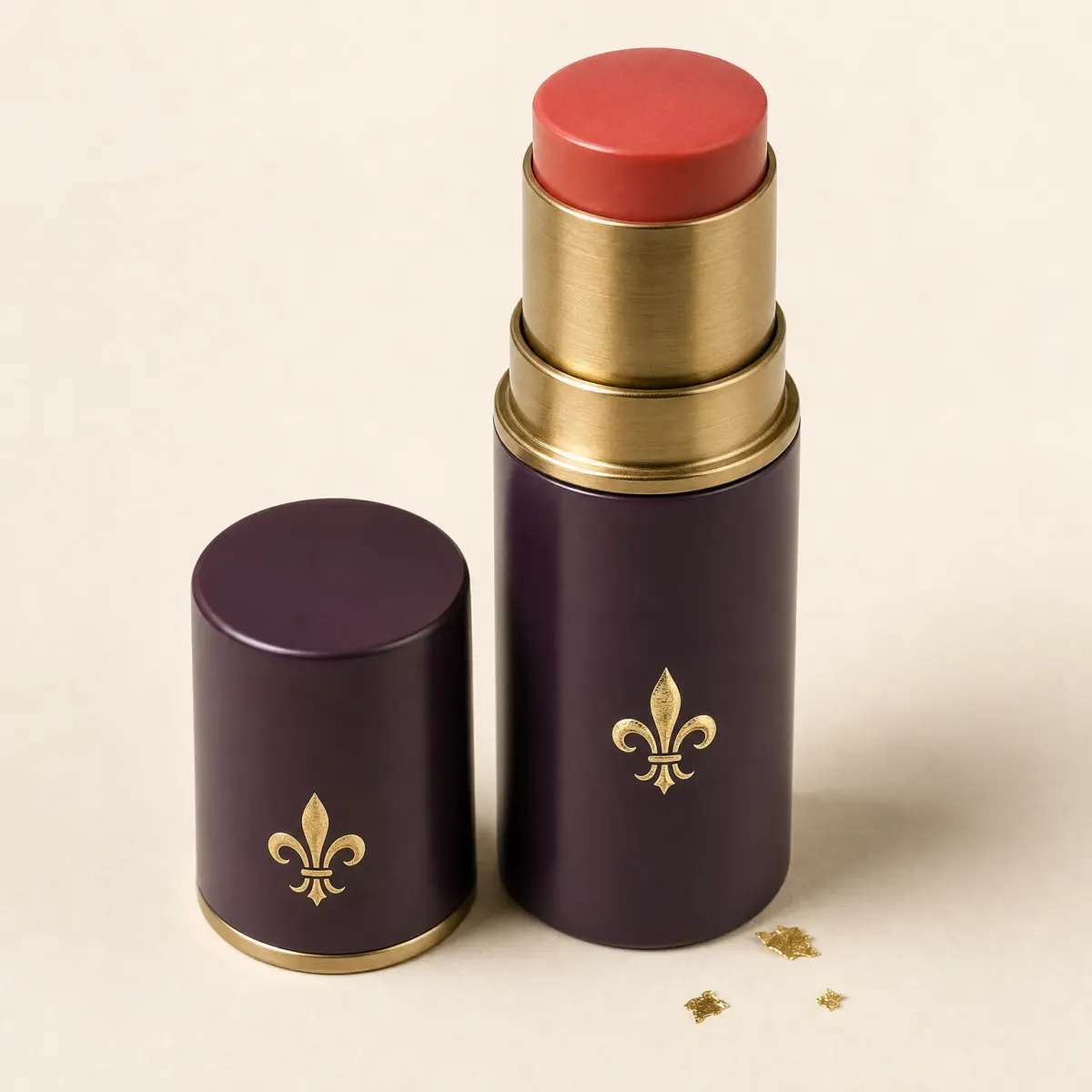
A blush stick is cream blush moulded into a twist-up stick like a lipstick, dabbed straight onto the cheek and tapped or blended in for a satin or dewy flush.
Our picks
Chosen to cover the textures, from soft balm and gel-cream to cream-to-powder, and budgets from drugstore to prestige, with houses from London, Milan, Paris and Sydney as well as America. Prestige houses make few sticks, so most here are mid-range. Each opens where its maker sells it — on Amazon, at the house’s own shop, or at Sephora — and you choose your shade on that page.
As an Amazon Associate I earn from qualifying purchases. Affiliate links — we may earn a commission at no extra cost to you. How this works
SatinPrestige Westman Atelier
Baby Cheeks Blush Stick
A creamy stick of medium coverage that blends to a satin finish on the cheeks or the mouth.
- Satin finish
- Medium coverage
- Cheeks and lips
BalmDrugstore COVERGIRL
TruBlend Skin Enhancer Blush Balm Stick
A soft balm stick sold as non-greasy and crease-free, at a drugstore price.
- Balm
- Non-greasy
- Vegan
Satin stickMid-range Milk Makeup
Lip + Cheek
An ultra-creamy stick for cheeks and mouth alike, with a satin, second-skin finish.
- Cheeks and lips
- Satin finish
- Claims 8-hour wear
Gel-creamMid-range Benefit Cosmetics
Juice Stick Dewy Gel-Cream Blush
A gel-cream in a stick, for a dewy rather than satin flush.
- Gel-cream
- Dewy
SheerPrestige Chanel
Les Beiges Healthy Glow Sheer Colour Stick
A sheer stick that melts into the cheek, for a flush with no edge to it.
- Sheer
- Melts in
EverydayDrugstore e.l.f. Cosmetics
Soft Glam Cream Blush Stick
A light, buildable cream stick with a satin finish: an easy first stick.
- Soft satin finish
- Buildable
Dual-endedMid-range Makeup by Mario
Soft Pop Blush Stick
A stick with its own brush at the other end, so the colour goes on and is blended in one tool.
- Brush at the other end
- Medium coverage
- Dewy
Colour-adaptiveMid-range Fenty Beauty
Match Stix Color-Adaptive Cheek + Lip Stick
A cream stick sold as adapting its colour to the wearer, for cheeks and lips.
- Cheeks and lips
- Colour-adaptive
Healthy glowPrestige Charlotte Tilbury
Unreal Blush Healthy Glow Stick
Charlotte Tilbury’s cream stick, sold for the healthy glow the house builds its complexion range around.
- Cream
- Healthy glow
DewyDrugstore ColourPop
Blush Stix
A glowy stick in a wide spread of shades, at the bottom of the price range.
- Dewy, glowy finish
- Vegan
Built-in toolMid-range Anastasia Beverly Hills
Stick Blush
A weightless cream with a blending tool at the other end, for a soft-focus rather than wet finish.
- Soft-focus luminous
- Dual-ended tool
- Buildable
GlassyMid-range Haus Labs
Color Fuse Glassy Blush Balm Stick
A balm stick for the glassy, high-shine cheek, and for lips in the same shade.
- Cheeks and lips
- Glassy finish
- Twelve shades
Rosy glowPrestige Dior
Rosy Glow Blush Stick
Dior’s Rosy Glow blush, better known as a powder, in a cream stick.
- Cream stick
- Rosy glow
LuminousDrugstore Milani
Cheek Kiss Blush Stick in Luminoso
A non-greasy stick in Milani’s Luminoso shade, at a drugstore price.
- Non-greasy
- Luminous
Buttery tintMid-range Jones Road
Blushing Stick
A buttery stick that starts sheer and builds, from Bobbi Brown’s later brand.
- Cheeks and lips
- Buildable
pH-reactiveMid-range Wonderskin
pHlush Stick
A stick sold as shifting its colour to suit the skin, the stick form of the changeable rouges of the 1920s.
- pH-activated
- Cheeks and lips
Italian houseDrugstore KIKO Milano
Velvet Touch Creamy Stick Blush
The Milan house’s radiant cream stick, with a shaped tip for precise placement.
- Radiant
- Non-comedogenic
Cream-to-powderMid-range Iconic London
Blurring Blush Cream to Powder Lip and Cheek Stick
A London brand’s stick that goes on as cream and sets to a blurring powder, for oilier skin.
- Cream-to-powder
- Cheeks and lips
- Blurring
GlowMid-range LYS Beauty
Higher Standard Cream Glow Blush Stick
A glowy cream stick, for a fresh rather than matte flush.
- Cream
- Glow finish
AustralianDrugstore MCoBeauty
Baby Face Cream Blush Stick
An inexpensive Australian stick for cheeks and lips, with a buildable, dewy finish.
- Cheeks and lips
- Dewy
- Vegan
OrganicMid-range Ogee
Sculpted Face Stick (Blush)
A certified-organic cream stick, for anyone who reads the ingredient list first.
- Certified organic
- Cheeks and lips
Balm with ceramidesMid-range Iris&Romeo
Ceramide Multi-balm Lip+Cheek Cream Blush Stick
A soft balm stick made with ceramides, sold for cheeks and lips.
- Cheeks and lips
- Ceramides
A blush stick is cream blush firm enough to stand up on its own. The formula is built like a lipstick’s, oils and colour held in a structure of waxes, soft enough to melt at the touch of warm skin and firm enough not to snap in the case. Some stay balmy and dewy; others are cream-to-powder and set to a soft matte. A handbook of cosmetic manufacture summed the form up in 1975: similar to lipstick, stable and easy to apply, but in need of tight control in the making.[1]
Against a pot of cream it has two advantages: no fingers go into the product, and it can be carried in a pocket and used without a mirror. Against it: a stick lays colour down in a line rather than a dab, so it is easy to put on too much, and a firm stick dragged across set foundation lifts the base with it. Many are sold for the lips as well. Sticks sold for the eyelids too belong to a neighbouring kind, the multi-use stick.
Soft or firm
Sticks divide by how much they give. A balm stick is soft, glides and leaves a dewy sheen; it suits dry skin and bare skin, and it can slide on oily skin by the afternoon. A cream-to-powder stick is firmer, goes on creamy and sets to a velvety finish that lasts longer in heat. Between them sit the satin creams most ranges sell.
Two newer kinds sit at the edges. Gel-cream sticks are lighter and dewier than a balm and look best on bare or lightly made-up skin. Sticks sold as pH-reactive or colour-adaptive promise a shade that shifts to suit the wearer, which is an old promise: in 1924 Princess Pat was selling a rouge that looked orange in the compact and turned red on the cheek.[2]
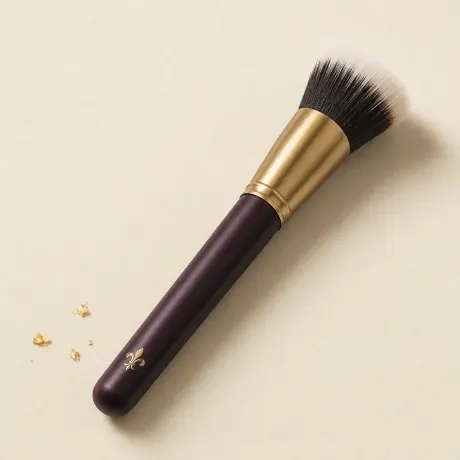
Look at the tip, too. A rounded dome is for dabbing dots; an angled or triangular one is for drawing a short line along the cheekbone; a broad, flat stick covers more of the cheek at once and needs a lighter hand. Some sticks carry a brush or sponge at the other end, which saves carrying a tool. Choose the shade as for any blush, depth first and undertone second, and if the stick is sold for the lips, try it there before deciding.
How to apply it
Apply it after foundation and before powder. Dab two or three dots on the apple of the cheek, or a short line along the top of the cheekbone, then tap them together with a fingertip, a damp teardrop sponge or a stippling brush. Tapping rather than rubbing keeps the base intact. Start with less than you want: a second pass is easy, and taking colour away is not.
If the face is already powdered, do not drag the stick across it. Warm the tip on the back of the hand and pick the colour up from there with a finger or brush. To make it last, press a light layer of powder blush over the top.
Keeping it clean
A stick touches the face directly, so it picks up whatever is already there: foundation, sunscreen, the skin’s own oil. Wipe the tip with a tissue after each use, because the surface that touched the skin is the surface that goes back under the cap. If the top turns grey or streaky, shave a thin layer off with a clean spatula rather than working through it. And keep the cap on: an open stick in a warm bag softens and collects dust.
Sticks sold for the lips as well as the cheeks raise a question of order. Use the stick on the cheeks first and the mouth last, so that nothing from the lips goes back onto the face, or keep one stick for each. Heat is the other risk. A cream stick left in a car or on a sunny windowsill softens, can sweat oil and may crack as it cools, so store it as you would a lipstick, and throw it away if it starts to smell of old oil.
Where it came from
Sticks of make-up are older than the blush stick. In 1873 Ludwig Leichner began manufacturing greasepaint, which suited the brighter gas lighting of the theatre better than powder did, and French houses including Dorin and Bourjois answered with greasepaint of their own; a Bourjois catalogue of 1898 lists bâtons pour le grime, sticks of stage make-up.[3] Stick rouge for the cheeks existed before the Second World War: Revlon introduced a Cheek Stick in 1940, its colours harmonised with the brand’s nail enamel and lipstick.[4]
The stick mattered more after the war. The newer, more opaque foundations of the 1940s and 1950s did not suit many older kinds of rouge, and their use declined. Cosmetic chemists answered by changing the base, and stick rouges were probably the most important of the new forms. They were generally marketed as blushers, though they were not necessarily red, and they were wider than the pre-war sticks and used to shape the face rather than to make the cheeks look rosy.[4] Revlon’s Face Gleamer stick blusher of 1967, in Blush, Peach and Tawny, was more concerned with the cheekbones than with the cheeks.[4]
So the stick gave the category its modern name. The post-war sticks were sold as blushers, and the word outlived the fashion for shading the face. The sticks sold now have gone back to the older purpose, a flush in the middle of the cheek, and many are sold for the mouth as well, as rouge so often was.[4]
The techniques
- Dot and blend
- Place small dots of product, then blend them outward.
- Pat
- Tap lightly with a fingertip or damp sponge so product melts in rather than moves.
Sources
- [1, 2, 4]Rouge Cosmetics and Skin, 2010.View source (opens in a new tab) Accessed 2026-09-25.
- [3]Bourjois Cosmetics and Skin, 2023.View source (opens in a new tab) Accessed 2026-09-25.
What to apply it with

Other kinds of blush
Powder blush
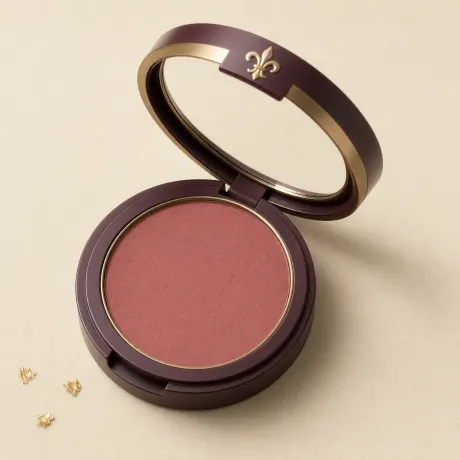
Pressed colour for the cheeks, the most common form of blush.
Read the guide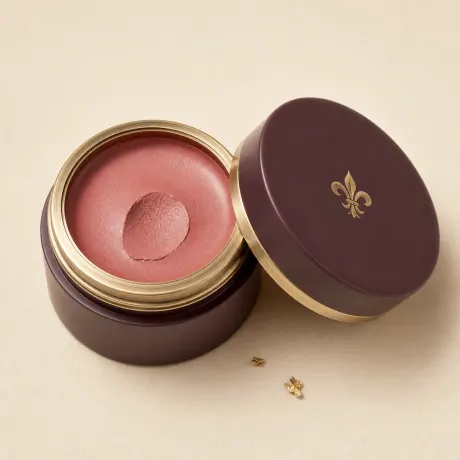
Cream blush
An emollient colour that melts into skin, often worn on the lips as well.
Read the guide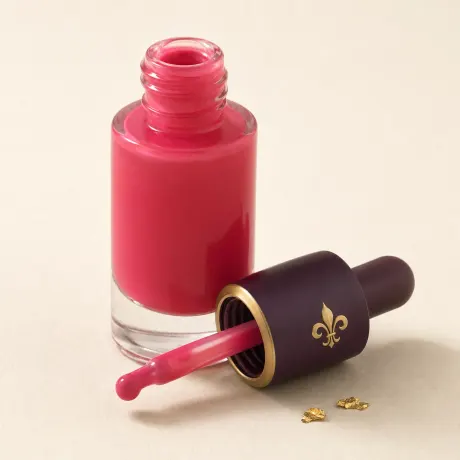
Liquid blush
Highly pigmented fluid colour for a flush that looks like it comes from under the skin.
Read the guide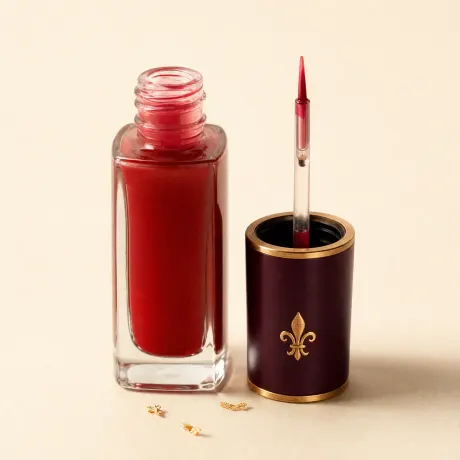
Cheek and lip tint
A water-thin stain that dyes rather than coats, and lasts through the day.
Read the guide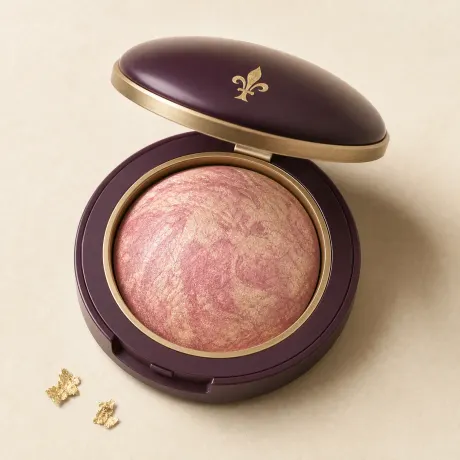
Baked blush
Blush baked into a domed cake from a cream base, with a luminous, marbled finish.
Read the guide