Fan brush
A thin, flat spread of bristles, the lightest touch in the kit, for a sheer band of highlight and for sweeping away what other brushes leave behind. How to choose and use one, and the painter’s fan that did the same job.
A fan brush is a thin, flat, semicircular spread of soft bristles, used to sweep a sheer band of highlighter or powder onto the face and to brush away excess powder and eyeshadow fallout.

Our picks
Chosen across the forms a fan now takes, from thin, airy fans for a sheer glow to short, dense ones for a stronger highlight and a Japanese fan with a curved surface, in synthetic fibre and in goat hair, and from drugstore to prestige. Each opens where its maker sells it: on Amazon, or at the house’s own shop; one Australian maker ships from its own shop abroad.
As an Amazon Associate I earn from qualifying purchases. Affiliate links — we may earn a commission at no extra cost to you. How this works
FeatherweightPrestige MAC Cosmetics
184 Synthetic Duo Fibre Fan Brush
A flat fan of blended synthetic fibres for the lightest layer of powder or pigment, and for clearing what is left over.
- Flat fan
- Duo synthetic fibre
- Clears excess
Budget fanDrugstore e.l.f. Cosmetics
Fan Brush
An inexpensive synthetic fan, used wet or dry, for a soft wash of colour or a little loose powder.
- Synthetic
- Wet or dry
Short and denseMid-range Sigma Beauty
F42 Strobing Fan Brush
A short, dense fan that lays down more highlight than an airy one, for a deliberate strobe along the cheekbone.
- Short, dense fan
- Cream or powder
- Strobing
Japanese fanPrestige Hakuhodo
Fan Brush (Goat)
The Kumano maker’s traditional fan, compact and curved over its whole surface, for measured powder and touch-ups away from home.
- Goat hair
- Curved surface
- Compact
Clean-up fanDrugstore wet n wild
Fan Brush
A large, flat fan at the bottom of the price range, for dusting powder and sweeping away fallout.
- Large, flat
- Synthetic
- Fallout clean-up
Precise fanMid-range Rae Morris
Jishaku #25 Fan Highlighter Brush
A refined, curved fan from an Australian makeup artist, made to keep shimmer exactly where it is placed.
- Curved profile
- Highlighter
- Less flick-out
Stippling fanPrestige Hourglass
No. 16 Highlighter Brush
A fanned-out head of dense stippling bristles, made for liquid highlighter as well as cream and powder.
- Fanned-out
- Dense stippling bristles
- Vegan fibres
Highlight fanDrugstore ColourPop
Fan Brush
An inexpensive fan sold for highlighter in any formula, powder, cream or liquid.
- Fan shape
- Powder, cream or liquid
Powder fanMid-range Bdellium Tools
Golden Triangle 991 Powder Fan
A professional maker’s fan for highlighter, bronzer and translucent powder, swept on in soft strokes.
- Vegan synthetic
- Highlighter and bronzer
Full-sizePrestige Trish McEvoy
Brush 62 Fan
A full-size fan on a lacquered wooden handle, for a soft-focus sweep of powder, bronzer or highlighter.
- Full-size fan
- Powder, bronzer, highlighter
Thin fanDrugstore Crown Brush
Pro Highlighter Fan C545
A thin synthetic fan from a professional maker, for a sheer line of highlight and for brushing off excess.
- Thin fan
- Synthetic
- Sheer
Under-eye clean-upMid-range Make-up Designory
#510 Large White Fan Brush
A makeup school’s large, extra-soft fan for lifting powder from under the eyes and dusting off the excess.
- Large
- Extra-soft
- Under-eye powder
Sweeping drapePrestige Victoria Beckham Beauty
14. Fan Brush
A fan made for a sweeping drape of powder and for the house’s two-step bronzing technique.
- Fan
- Powder and bronzer
Finishing fanDrugstore KIKO Milano
Face 12 Powder Fan Brush
A synthetic fan for the last step: a delicate layer of powder and a sweep to clear excess make-up.
- Fan-shaped
- Synthetic
- Removes excess
Micro-shimmerMid-range Graftobian
OMNIA Fan Brush
A traditional fan from a make-up house that works for film and the stage, for micro-shimmer and excess powder.
- Traditional fan
- Micro-shimmer
Soft budgetDrugstore L.A. Girl
Fan Brush
An inexpensive soft fan for highlighting and for removing excess product.
- Soft fan
- Synthetic
- Birch handle
Tapered fanPrestige Laura Mercier
Fan Powder Brush
A fan of tapered synthetic bristles for a light, even layer of colour or powder.
- Tapered synthetic bristles
- Pressed or loose powder
Fallout fanDrugstore Beauty Creations
Fan Brush – Bebella Bling Brush
A low-cost fan sold for a touch of glow and for clearing eyeshadow fallout from the cheek.
- Fan
- Glow and fallout
A fan brush is a thin, flat, semicircular spread of soft bristles gathered into a flattened ferrule. It is the lightest touch in the kit. Because the bristles lie in a single thin layer, they hold very little product and let it go easily, so a fan lays down a sheer band of highlighter along the cheekbone, or a veil of powder, rather than a patch. The same lightness makes it the tool for tidying up: swept over the face, a clean fan lifts loose powder from under the eyes and the fallout that eyeshadow leaves on the cheek.
It is not a powder brush, which is a full, round dome, nor a tapered highlighter brush, which comes to a point and places highlight in a smaller, brighter spot. Fans vary more than they look. A long, thin, airy fan is for the sheerest glow and for clean-up; a short, dense one carries more product and gives a stronger highlight; and a few large, fluffy fans are made for bronzer, and are found on the bronzer brush page.
Choosing one
Decide what the fan is for. For a soft, barely there highlight and for clearing fallout, choose a thin, flexible fan with long bristles, such as MAC’s 184S or Crown’s C545. For a highlight you mean to be seen, choose a shorter, denser fan, such as Sigma’s F42, which picks up more product and lays it more precisely; Hourglass makes its No. 16 with dense stippling bristles for liquid highlighter. For under-eye clean-up, size matters: a large fan like Make-up Designory’s #510 covers the area in one pass without touching the lashes.
Synthetic fibre suits every formula and is the one to choose for cream and liquid highlighter. A fan of hair, like Hakuhodo’s goat fan, is for powder; its Japanese shape, flat and compact with the whole surface curved, picks up a measured amount and travels well. Check the edge before buying: a good fan has an even, rounded outline, and bristles that spring back into line rather than separating into clumps.
How to use it
For highlighter, touch the flat of the fan lightly to the pan, or dab it once into a cream, and tap off the excess. Lay the edge along the top of the cheekbone, from about the outer corner of the eye towards the temple, and sweep it back and forth a few times; the fan lays a narrow, even band and softens its edges as it goes. Use the tip of the fan for the bridge of the nose and the cupid’s bow. Build a second pass rather than loading more product.
For clean-up, keep a clean fan apart from the one used for highlighter. After eyeshadow, sweep it lightly downward over the under-eye area and the cheek to lift away fallout, and after setting powder, flick it over the face to remove what has not settled. A thin fan also lays a sheer veil of shimmer over the collarbones.
Fans lose their shape more easily than round brushes. Wash one gently, pressing the bristles flat between finger and thumb rather than scrubbing, and dry it lying flat, fanned out, so it keeps its spread.
Common mistakes
Most of what goes wrong with a fan comes from asking it to do too much. Loading it heavily defeats the point: a fan carries little by design, and a thick coat of highlighter on its tip lands as a stripe. Pressing it into the skin splays the bristles and deposits product in streaks, so sweep instead, with the handle held towards its end. Using one fan for everything spreads shimmer where it is not wanted; the brush that has carried highlighter will leave a trace of it under the eyes during clean-up. And a dense, short fan is the wrong tool for fallout, which needs the longest, loosest fan you have.
Where it came from
The fan brush is also a painter’s tool. The Getty’s art vocabulary files fan brushes among artists’ brushes and defines them as “soft, very flat brushes of fan shape, made in either sable or bristle and set in a metal ferrule, often used for blending and to produce wispy effects”.[1]
A painter writing for students in 1898 described its job exactly. The fan brush, Daniel Burleigh Parkhurst wrote in The Painter in Oil, “is a useful brush, not to paint with, but to flick or drag across an outline or other part of a painting when it is getting too hard and liney. You may not want it once a month, but it is very useful when you do want it.”[2]
That is still what a fan does on a face. It softens what another tool has put down: a highlight with too hard an edge, powder settled under the eyes, eyeshadow scattered on the cheek. Several of the brushes here are sold for exactly that, from Make-up Designory’s fan for lifting powder from under the eyes to wet n wild’s, which it calls a clean-up tool for fallout. The other job, laying a thin band of highlight, uses the same quality, a spread of bristles too sparse to deposit much. When the fan joined the make-up kit is not recorded in anything read for this article. What it brought with it is clear enough: a brush made not to add colour but to take the hardness out of it.
The techniques
- Sweep
- Long, light strokes that deposit a veil of product.
- Strobe
- Highlight the high points alone, with no shading to set them against.
Sources
- [1]fan brushes, Art & Architecture Thesaurus J. Paul Getty Trust.View source (opens in a new tab) Accessed 2026-09-26.
- [2]The Painter in Oil: A Complete Treatise on the Principles and Technique Necessary to the Painting of Pictures in Oil Colors Lothrop, Lee & Shepard Co., Boston; Project Gutenberg eBook #30877, 1898.View source (opens in a new tab) Accessed 2026-09-26.
What it is used with
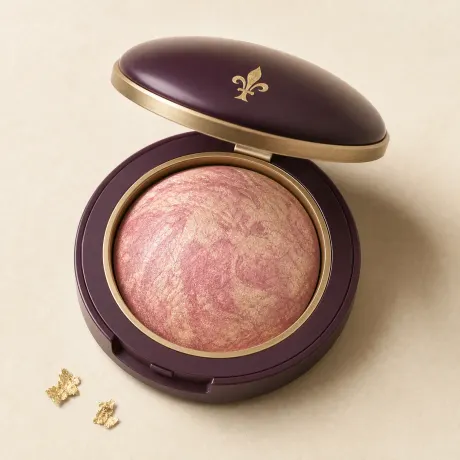
Baked blush
Blush baked into a domed cake from a cream base, with a luminous, marbled finish.
Read the guide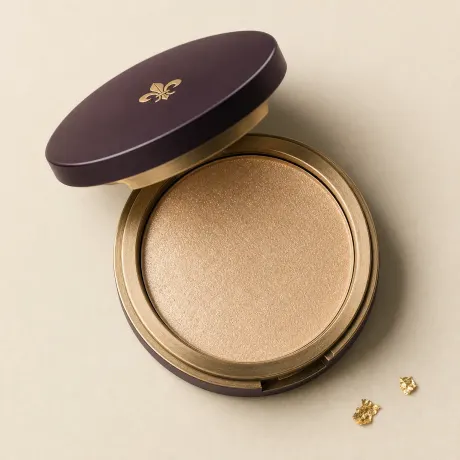
Pressed highlighter
A light-reflecting powder for the high points of the face.
Read the guide
Baked highlighter
Highlighter baked into a domed cake, giving a wet-looking, metallic shine.
Read the guide
Loose highlighter
Pure shimmer pigment, the most intense form of highlight.
Read the guide
Other kinds of cheek & sculpting brushes
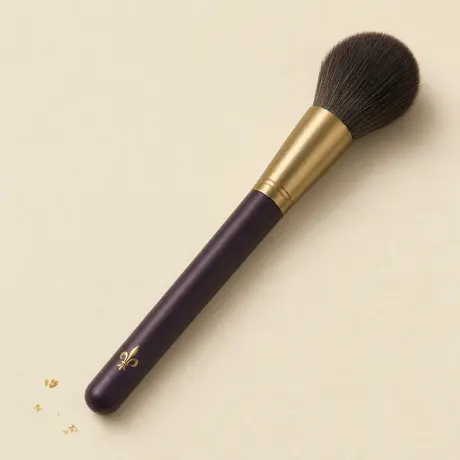
Blush brush
A medium, soft, domed brush sized to the apple of the cheek.
Read the guide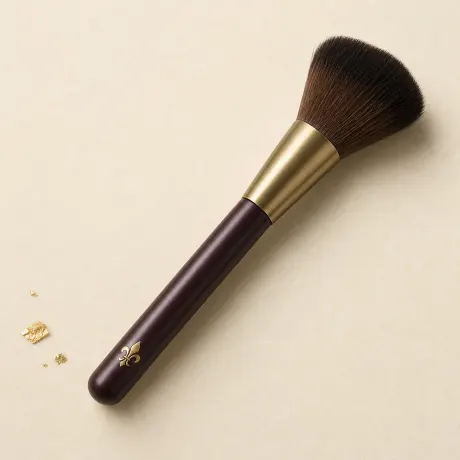
Angled blush brush
A fluffy brush cut on a slant to follow the cheekbone.
Read the guide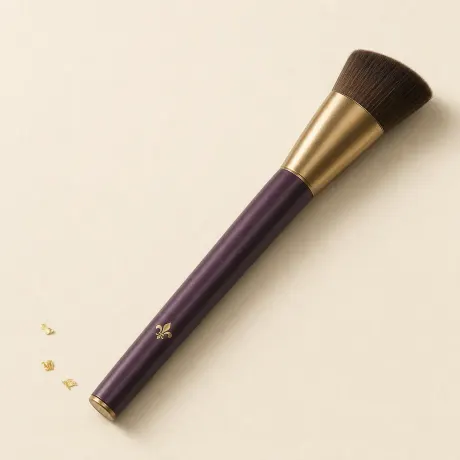
Angled contour brush
A denser brush cut on a sharp slant, for laying contour into the hollow of the cheek.
Read the guide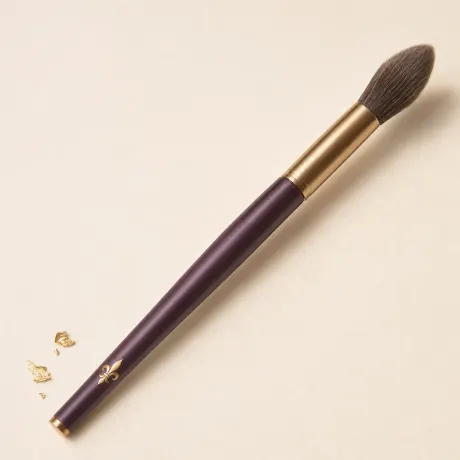
Tapered sculpting brush
A narrow, oval head that tapers to a soft point, for placing shadow exactly and blending it out.
Read the guide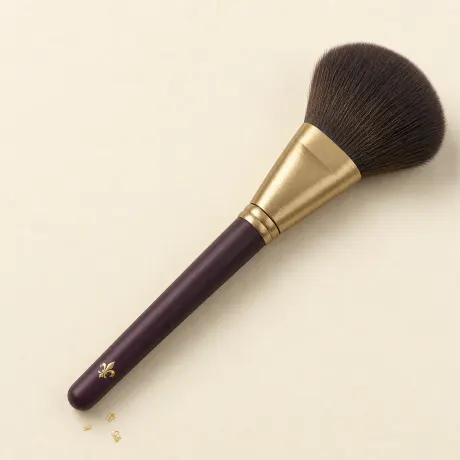
Bronzer brush
A large, loose, slightly flattened brush that diffuses warmth over a wide area.
Read the guide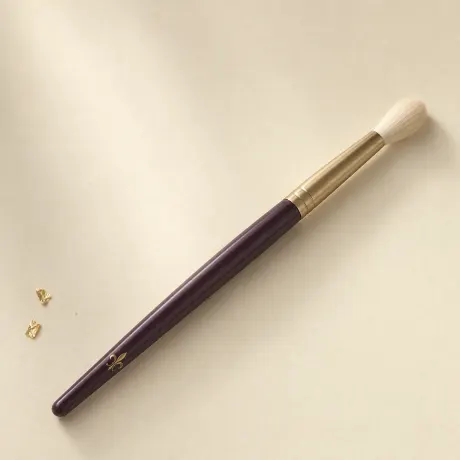
Tapered highlighter brush
A small, soft, pointed brush that puts highlight exactly on the high point.
Read the guide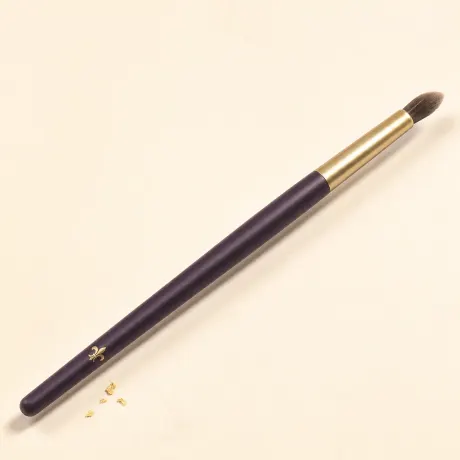
Nose contour brush
A small, dense, tapered brush for shading narrow areas: the sides of the nose, the hairline, the crease of the chin.
Read the guide