Angled blush brush
A fluffy brush cut on a slant, made to lay blush along the cheekbone rather than on the apple. How to choose and use one, and how blush moved up to the bone.
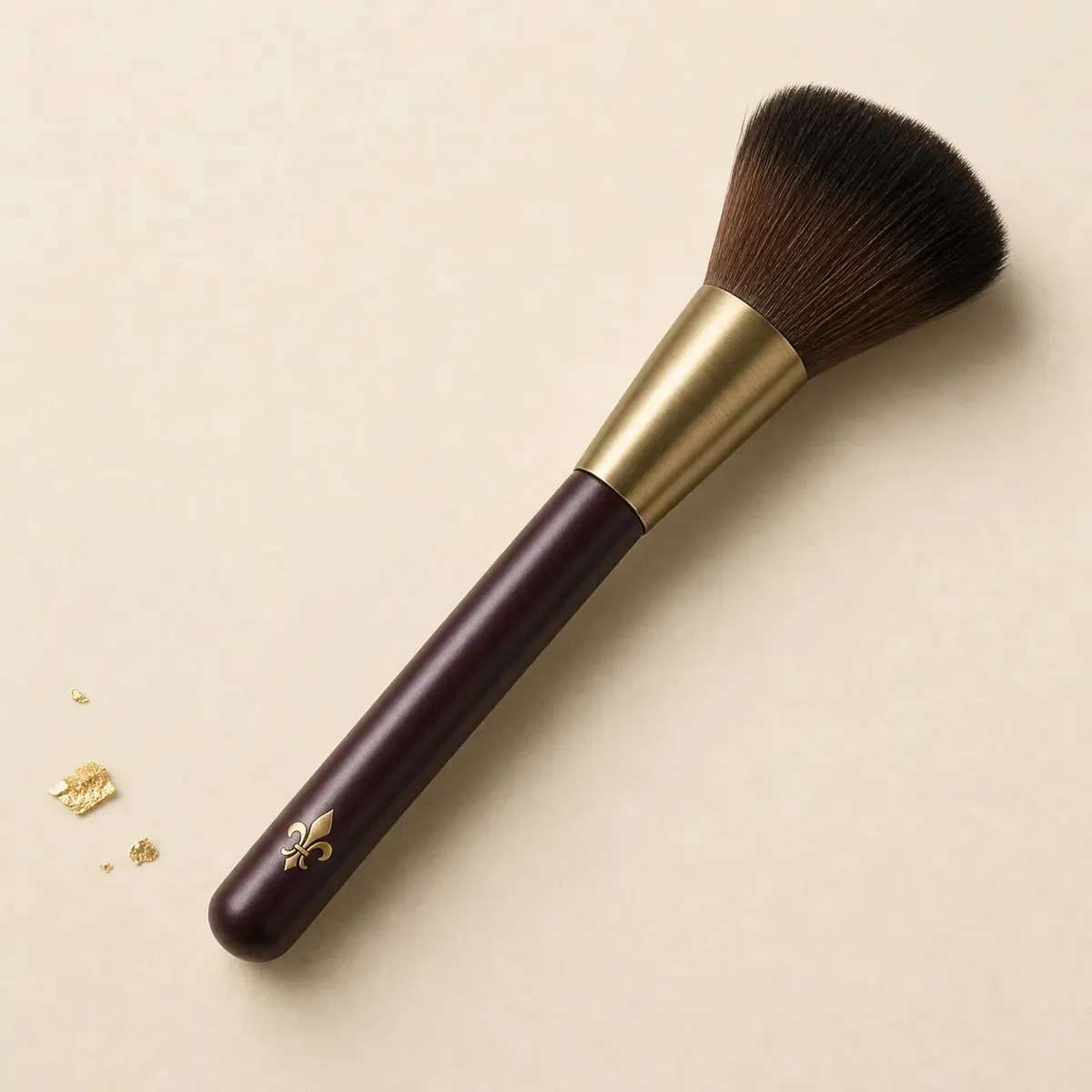
An angled blush brush is a soft, fluffy brush whose head is cut on a slant, one side longer than the other, so that it can be laid along the cheekbone to sweep blush up and back towards the temple.
Our picks
One angled blush brush from each house we could verify, across the steepness of the slant and the density of the head, for powder and for cream, from drugstore to prestige, with a hand-made brush of squirrel and horse hair from Kumano. Each opens where its maker sells it: on Amazon, or at the house’s own shop.
As an Amazon Associate I earn from qualifying purchases. Affiliate links — we may earn a commission at no extra cost to you. How this works
Squirrel and horsePrestige Hakuhodo
G504BkSL Blush Angled
A very dense slant of blue squirrel and horse hair from the Kumano maker, soft and springy enough to shade as well as colour.
- Blue squirrel and horse
- Very dense
- Powder
Budget angleDrugstore e.l.f. Cosmetics
Angled Blush Brush
An inexpensive slant for a sculpted placement with any texture of blush.
- Angled
- Cream, liquid or powder
- Vegan
Lifted placementMid-range Kosas
Angled Cheek Brush
A soft, fluffy slant made for a lifted placement of blush in a single sweep.
- Angled head
- Soft, fluffy
- Vegan
Very fluffyDrugstore Morphe
M201 Angled Powder Blush Brush
A very fluffy, flexible slant for a soft pinch of powder colour, tapped on or swept.
- Angled tip
- Very fluffy
- Powders
Loose or pressedMid-range bareMinerals
Blooming Blush Brush
An angled head from a mineral-makeup house, for loose and pressed blush and bronzer along the bone.
- Angled
- Loose or pressed
- Synthetic
Liquid and creamDrugstore Real Techniques
Cat Paw Blush Brush
An inexpensive angled brush made for liquid and cream blush rather than powder.
- Angled
- Liquid and cream
Liquid blushPrestige Hourglass
No. 15 Blush Brush
Developed for the house’s liquid blush and called by its maker an angled stippling brush, for pressing liquid or cream colour onto the cheek.
- Angled
- Liquid and cream
- Aluminium handle
Hugs the boneDrugstore Ulta Beauty Collection
Angled Blush Brush 148
A slant from Ulta’s own line, shaped to hug the cheekbones with pressed powder blush.
- Angled
- Pressed powders
- Synthetic
Soft angleMid-range Sigma Beauty
F43 Soft Angled Cheek Brush
A gently angled, dense head for sculpting the cheeks softly with cream or liquid colour.
- Softly angled
- Dense fibres
- Cream or liquid
Precise cutDrugstore Crown Brush
Paris Tools Angle Blush Brush GT07
An inexpensive precise angle from a professional brush maker’s Paris Tools line, for colour on the apples or a sweep along the cheekbones.
- Angled cut
- Synthetic, vegan
- Cream or powder
Blush and bronzerMid-range Laura Geller
04 Angled Blush Brush
An angled powder brush for blending blush and bronzer along the cheekbones.
- Angled
- Blush and bronzer
Graceful slantMid-range Bdellium Tools
Golden Triangle 962 Slanted Blusher
A gracefully angled head from a professional brush maker, for blush that shapes the cheek.
- Slanted
- Vegan synthetic
- Blush or powder
Cream slantMid-range Anisa Beauty
Angled Cream Blush Brush
A slightly domed, dense but flexible slant for pressing balm, cream, liquid or stick blush into the skin.
- Angled
- Slightly domed
- Balm to stick
Long-handledMid-range Cinema Secrets
A85 Angled Blush Brush
A long-handled angle from a professional makeup house, cut to hug the curves of the face.
- Angled
- Two-toned synthetic
- Long handle
An angled blush brush is a blush brush with its top cut on a diagonal, like a chisel: one side longer than the other, the whole head about three centimetres across at its widest. The long side is laid along the cheekbone, and the slant turns a dab of colour into a line. Swept up and back, it carries blush from the cheek towards the temple, where a round brush would leave it on the apple.
It sits between two neighbours. The round blush brush is for the apple and a softer, rounder flush; the angled contour brush is denser and cut more sharply, for laying shadow into the hollow beneath the bone. The angled blush brush is fluffier than the one and more precise than the other, which is why many makers also sell it for bronzer.
Choosing one
Look at the angle first. A gentle slant, like Sigma’s F43 or Kosas’s, blends softly and suits an everyday flush; a steeper cut gives a crisper line and moves towards contour, and Hakuhodo’s angled blush brush is dense enough to shade as well as colour. Then the density. A fluffy head, like Morphe’s, diffuses powder; a denser one, like Anisa’s or Real Techniques’ Cat Paw, holds its shape against cream and liquid blush, which need pressing into the skin rather than dusting on.
Fibre follows the formula, as with any brush. Hakuhodo makes its slant of blue squirrel and horse hair, for powder; synthetic fibre is the choice for cream and liquid, which hair would soak up. And size the head to your cheekbone: one much wider than the bone spreads colour into the hollow and the temple at once, while a small one needs several passes.
How to apply it
Find the top of the cheekbone with your fingertips first. Tap off the loaded brush, lay its long side along the bone with the longer fibres towards the ear, and sweep up and back towards the temple in two or three short strokes, starting where the colour should be strongest, usually level with the middle of the eye. Then soften the edges in small circles, especially the lower one, so that no line shows.
Placement changes the effect. Colour set higher and further back lifts the face and reads as sculpted; lower and further forward, towards the apple, it reads as a flush. Draping carries it in a long curve up over the temple. For cream blush, press and pat with the flat of the slant rather than sweeping, and blend the top edge last. Let your own bone set the line rather than a chart: follow the cheekbone you have, and stop a finger’s width short of the hairline.
Bronzer and highlight
Most angled blush brushes are sold for bronzer as well, and the slant suits it: laid along the top of the cheekbone and swept up to the temple, then across the forehead where the sun would catch it, it gives warmth without the stripe of a contour. Keep one brush for each, or clean it between them, because a brush that has held bronzer muddies a pink. For highlighter, use only the longer tip, touched along the very top of the bone.
Common mistakes
The commonest is taking the colour too low, into the hollow beneath the bone, where it looks like contour in the wrong colour; keep the long side on the bone, not under it. The next is a hard stripe, from too much colour in one stroke: tap more off, sweep lightly and build. Stopping short of the hairline leaves an edge, so blend the colour out towards it. And a slant shows its angle only if it keeps its shape, so wash the brush weekly, and at once after cream, and dry it lying flat with the cut edge free.
Where it came from
Where blush goes has changed more than what it is. In 1909 the actor Cavendish Morton told readers making up as Romeo to dust dry rouge on the cheeks after powdering and carry it up to the temples.[1] In the 1930s the Hollywood make-up artists Perc and Ern Westmore developed what the historian James Bennett calls the first systematic approach to make-up and hair by face shape, built on the premise that the ideal face was oval. Perc set out seven face types in newspaper articles in 1937 and in a booklet of 1939 that came with a measuring wheel for working out one’s own, and after the Second World War Ern taught a simpler five.[2]
Blush went the same way. After the war, stick rouges were generally marketed as blushers and used to sculpt the shape of the face rather than to make the cheeks look rosy, and Revlon’s Face Gleamer stick blusher of 1967 was, in Bennett’s words, more concerned with accentuating the cheekbones than with mimicking cheeks untouched by sun.[3] Making up by face shape, he notes, is still in circulation.[2]
The angled blush brush is the tool for that shift: a brush cut to follow the bone rather than to fill the apple. Its own beginnings are not recorded in anything read for this page. What survives in it is the old stage instruction, to carry the colour up towards the temple.
The techniques
- Sweep
- Long, light strokes that deposit a veil of product.
- Drape
- Sweep colour from the cheek up across the temple in one continuous band.
Sources
- [1]The Art of Theatrical Make-up Adam and Charles Black, London; Project Gutenberg eBook #56617, 1909.View source (opens in a new tab) Accessed 2026-09-26.
- [2]Face Shapes Cosmetics and Skin, 2018.View source (opens in a new tab) Accessed 2026-09-26.
- [3]Rouge Cosmetics and Skin, 2010.View source (opens in a new tab) Accessed 2026-09-25.
What it is used with
Other kinds of cheek & sculpting brushes
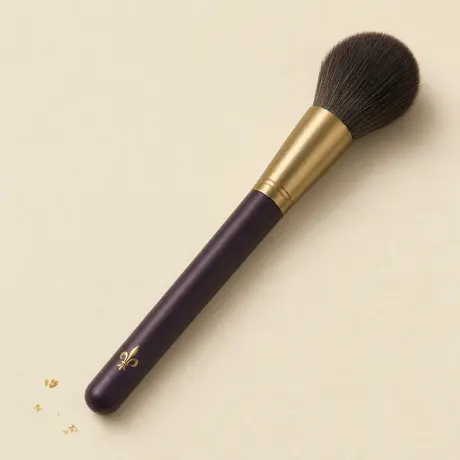
Blush brush
A medium, soft, domed brush sized to the apple of the cheek.
Read the guide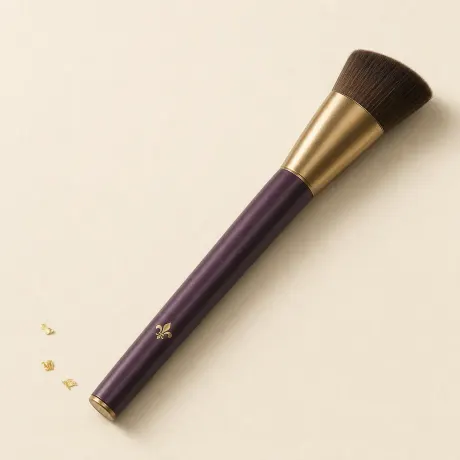
Angled contour brush
A denser brush cut on a sharp slant, for laying contour into the hollow of the cheek.
Read the guide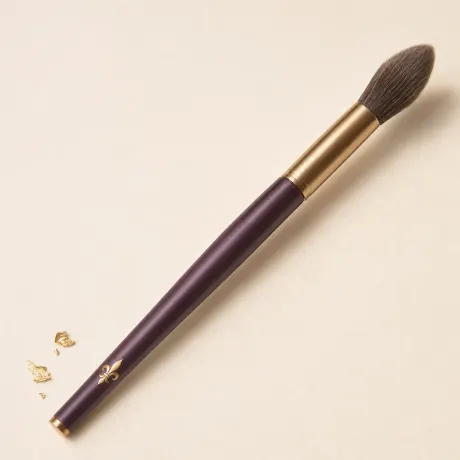
Tapered sculpting brush
A narrow, oval head that tapers to a soft point, for placing shadow exactly and blending it out.
Read the guide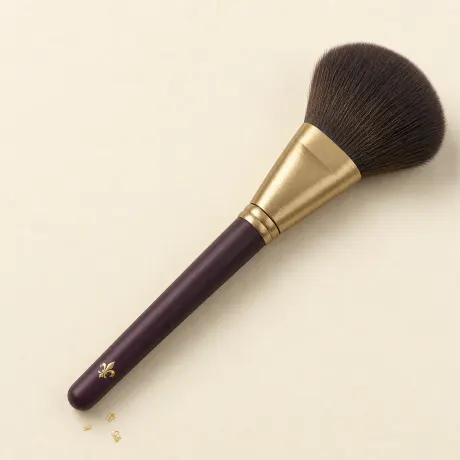
Bronzer brush
A large, loose, slightly flattened brush that diffuses warmth over a wide area.
Read the guide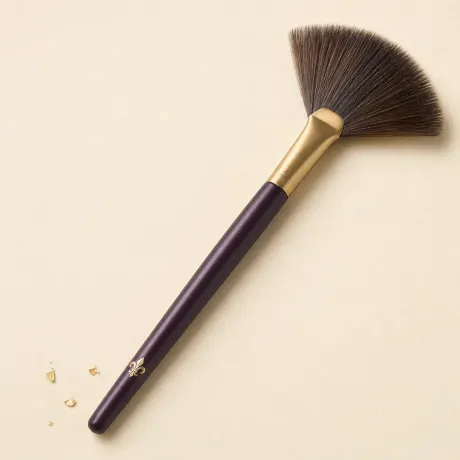
Fan brush
A thin arc of bristles — the lightest touch in the kit — for highlighter and for dusting away fallout.
Read the guide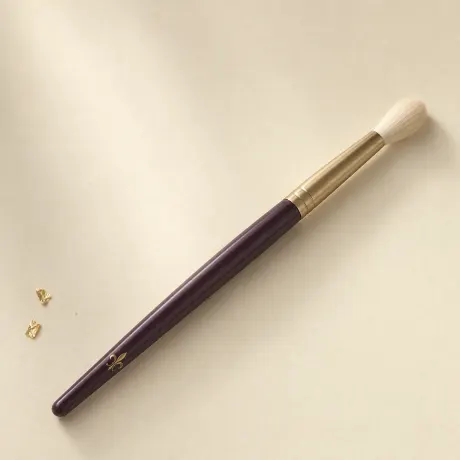
Tapered highlighter brush
A small, soft, pointed brush that puts highlight exactly on the high point.
Read the guide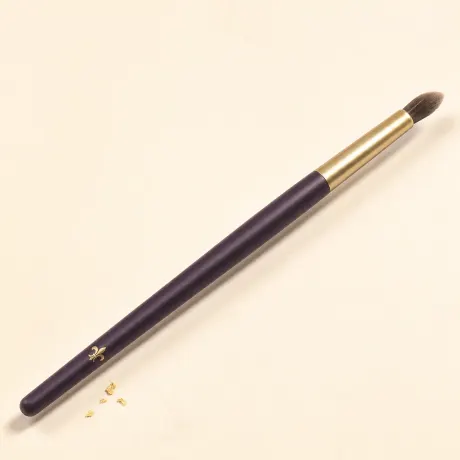
Nose contour brush
A small, dense, tapered brush for shading narrow areas: the sides of the nose, the hairline, the crease of the chin.
Read the guide