Bismuth Oxychloride
Identity
In current useas of 22 Sep 2026
- INCI name
- BISMUTH OXYCHLORIDE
- CAS
- 7787-59-9
- EC
- 232-122-7
- Colour Index
- CI 77163
- Origin
- Synthetic
- First attested
- 1883 CE
- Also known as
- bismoclite · bismuth chloride oxide
What it does
How it is dated
The earliest dated evidence in the sources cited here is documentary rather than an object: an 1883 list of cosmetic analyses gives Champlain's Liquid Pearl as oxychloride of bismuth, then called pearl white, with drop chalk in perfumed water, and an 1885 advertisement for Champlin's Liquid Pearl survives with the same composition. Bennett also captions an 1863 advertisement for Laird's Bloom of Youth as containing bismuth oxychloride, but the 1883 analysis he reproduces on the same page gives that product as zinc oxide and chalk, so 1863 is not relied on here. The earliest securely dated surviving object is a jar of Pears' Blanc de Perle in the Science Museum Group collection, dated to about 1890.
No regulatory dataset is loaded. The status above is this archive's editorial summary of the documented record, not a statement of any substance's legal position in your jurisdiction, and nothing here is advice on whether to use it.
In short
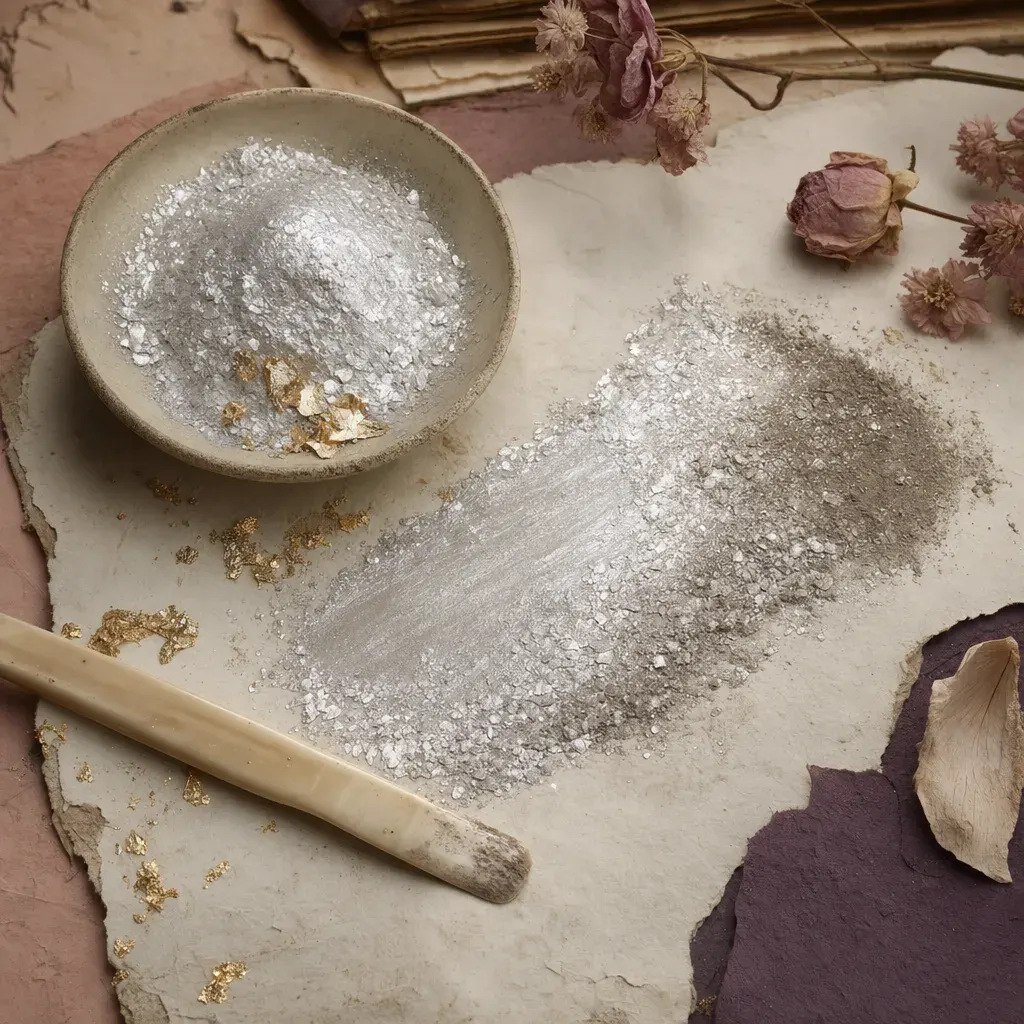
A synthetic white that grows as flat, highly reflective crystals, giving the silvery pearl finish which dominated cosmetics for decades before coated mica arrived.
- 4min read
- 4chapters
- 6sources

Vivien
Your guide through time
Listen to this entry
7 min listenVivien reads our essays aloud, word for word — every date and every name in its place — so you can listen the way you would be walked through a gallery.
An AI voice, designed for History of Makeup
Bismuth oxychloride is a white inorganic compound that crystallises in thin, flat plates with a high refractive index. The plates act as very small mirrors, and a powder of them looks like ground pearl.
It was the pearl the industry used before coated mica. Guanine pearl essence, extracted from fish scales, was in nail polish from the 1920s; controlled laboratory production of bismuth oxychloride followed in the 1930s, giving larger crystals and a brighter lustre, which Bennett calls the first synthetic, non-toxic pearl lustre; titanium dioxide on mica, described in 1942, did not become widely available until the 1960s.[1] Coated mica has since taken over most of its work. It survives in pressed powders and in mineral-marketed foundations, where slip and adhesion to skin are hard to match, though that persistence is this entry's reading of current formulation practice rather than a sourced claim.
What It Is
The compound is one bismuth, one oxygen and one chlorine. The cosmetic colour additive listing at 21 CFR 73.2162 does not describe it at all: it adopts the identity paragraph at 21 CFR 73.1162(a)(1) by cross-reference.[2] That paragraph gives a synthetically prepared white or nearly white amorphous or finely crystalline, odourless powder consisting principally of BiOCl, and specifies no manufacturing route.[3] The route in ordinary use is hydrolysis of a soluble bismuth salt, usually the nitrate, in the presence of chloride; the solid precipitates out, and is then washed and graded. A natural mineral of the same composition exists, called bismoclite, and Bennett's account has the cosmetic material first taken from mineral deposits, with chemical production in laboratories beginning only in the 1930s.[4] The material sold today is synthetic.
For the pearl effect, crystal habit is what matters. Larger, flatter plates give a brighter pearl and a more slippery feel. Smaller ones give a duller finish that reads as skin rather than as shine. The listing itself is looser than that, admitting amorphous as well as finely crystalline grades.[3]
In History
Bismuth compounds were sold as face whiteners through the nineteenth century, under names such as pearl powder, pearl white, bismuthine cream, blanc de perles and fard blanc de bismuth. Those were names for a class of product, not for a single compound. Two bismuth whites were in common use, the oxychloride, valued for its sheen, and the subnitrate, valued for being more astringent, and the trade names were applied to both; some products carrying them held no bismuth at all, and a Blanc de Perle recipe given by Cristiani in 1877 is levigated talc with a little almond oil and mucilage of gum tragacanth.[5] That is why this entry keeps those names out of its synonym list, where they would resolve to one compound: bismuth subnitrate is a separately registered material with its own identifiers. A jar of Pears' Blanc de Perle from around 1890 survives in the Science Museum Group collection.[6]
The material had a specific and well-documented failure. Bismuth compounds react with sulphides to form bismuth sulphide, which is dark grey. Nineteenth-century writers describe powdered faces discolouring in rooms lit by coal gas or heated by coal fires, and warn readers accordingly.[5] Controlled laboratory synthesis from the 1930s produced larger, better-formed crystals, and the compound moved from being a whitener that sometimes went grey to being a deliberate pearl.[7]
What It Does
It does two things in a formulation. Optically it gives a specular, silvery pearl, brighter and cooler than the pearl from coated mica and without interference colour, which is this entry's comparison and not a sourced one. Physically it is slippery and clings well to skin: the nineteenth-century trade valued the bismuth whites for exactly that soft skin feel and those adhesive properties.[8] Adhesion is the most plausible reason the material persists in pressed powders long after its optical job could be done another way, but no source cited here establishes that.
Its best-documented weakness is chemical rather than photochemical: the sulphide reaction described above, which greyed powdered faces in rooms lit by coal gas.[8] Claims that ultraviolet exposure darkens the compound circulate widely in formulation writing; this entry has found no source for them and does not repeat them.
Safety and Status
In the United States bismuth oxychloride is listed at 21 CFR 73.2162 for colouring cosmetics generally, including cosmetics intended for use in the area of the eye, and is exempt from batch certification.[9] In the European Union it is entry 123 of Annex IV to Regulation (EC) No 1223/2009.[10]
A persistent claim circulates that the material causes itching or cystic acne in some people. The Science Museum record repeats a version of it, suggesting the crystalline structure can irritate and block pores at higher concentrations.[11] That is a plausible hypothesis and a widely shared anecdote. It is not a finding from a controlled study, and it is not reflected in either regulator's conditions of use. The accurate summary is that the claim is much repeated and thinly evidenced.
Sources
- [1, 4, 7]Pearl Essence Cosmetics and Skin, 2009.View source (opens in a new tab) Accessed 2026-09-22.
- [2, 9]21 CFR 73.2162 - Bismuth oxychloride Code of Federal Regulations, title 21, part 73, subpart C, 2026.View source (opens in a new tab) Accessed 2026-09-22.
- [3]21 CFR 73.1162 - Bismuth oxychloride Code of Federal Regulations, title 21, part 73, subpart B, 2026.View source (opens in a new tab) Accessed 2026-09-22.
- [5, 8]Pearl Powders Cosmetics and Skin, 2009.View source (opens in a new tab) Accessed 2026-09-22.
- [6, 11]Pears' Blanc de Perle Science Museum Group Collection, 1890.View source (opens in a new tab) Accessed 2026-09-22.
- [10]Regulation (EC) No 1223/2009 on cosmetic products 2009.View source (opens in a new tab) Accessed 2026-09-22.