Lips and Fingertips: Revlon and the Cream Nail Enamel
In the depths of the Depression three men set up a business with one product, an opaque nail polish. By the end of the decade nail colour was a fashion, and the mouth was expected to match it.
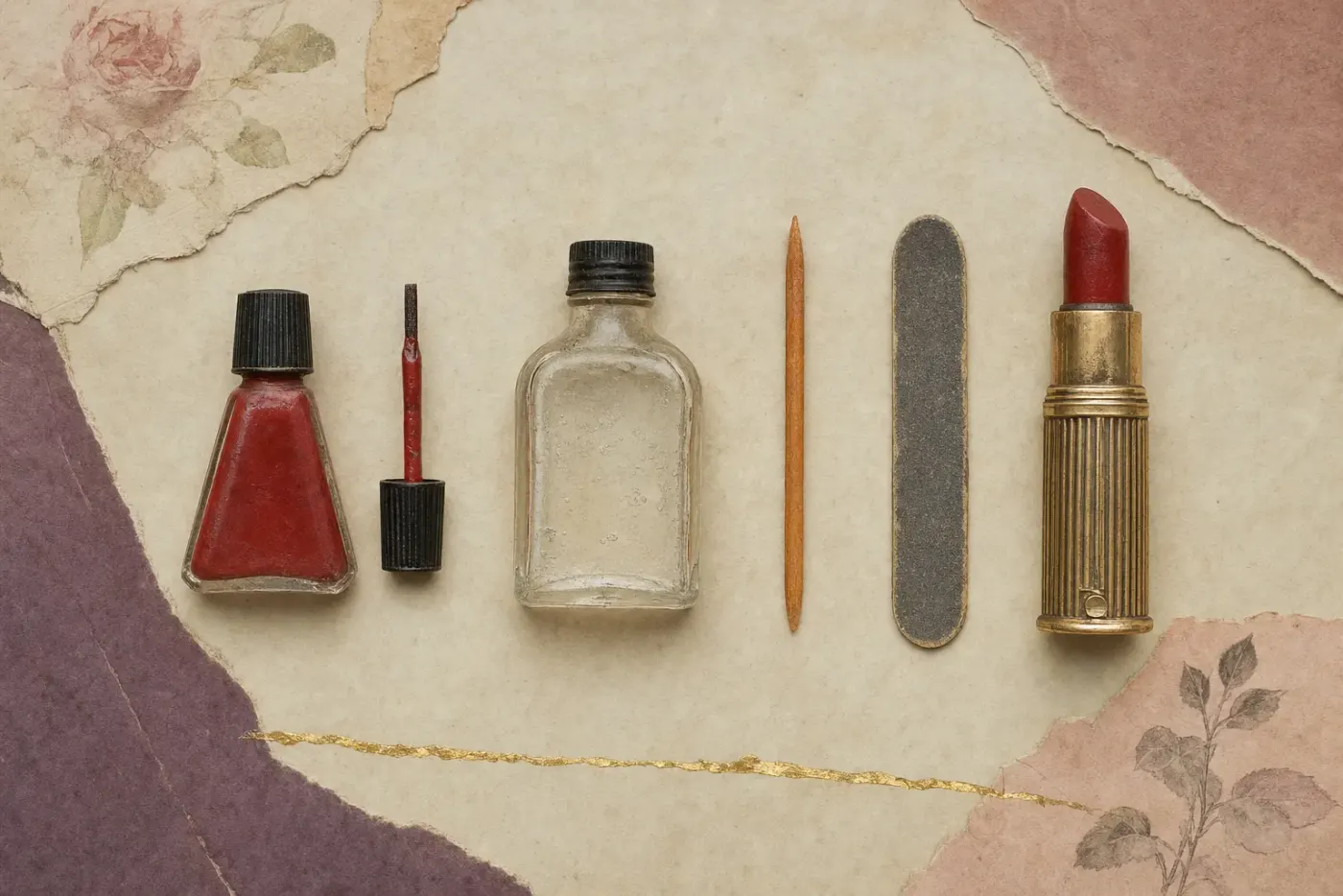
In short
Revlon opened in New York in March 1932 with one product, an opaque cream nail enamel; its sales grew from about $4,000 in its first ten months to $1.2 million by 1940, though cream polishes were already fashionable in Europe and Glazo and Peggy Sage had matched polish to lipstick first.
- 6min read
- 6chapters
- 2sources
In March 1932, with the Depression deepening, a small company opened at 38 West 21st Street in New York with a single product to sell. It was a nail polish, and an unusual one: opaque, when most polishes on the American market were transparent.[1]
The company was Revlon. Within a decade it had made nail colour a fashion, and was telling women that their mouths should match their hands.
Three Partners
Charles Revson had been a salesman in New York’s garment district before he began selling nail polish, in 1930 or 1931, for a small firm called Elka. He soon left to set up on his own with his older brother Joseph and a business acquaintance, Charles Lachman.[2] The name was to have been Revlac, for Revson and Lachman, until an L replaced the S in Revson; the firm was incorporated in 1933 as the Revlon Nail Enamel Corporation.[2]
Lachman mattered for a practical reason. His wife’s family owned the Dresden Chemical Company, which made nail polish, and his part in the business came on condition that Dresden supplied Revlon on credit — which is why he was given a half-share.[2]
An Opaque Polish
Most American nail polishes of the early 1930s were coloured with dyes and were transparent. The fashion was to colour only the centre of the nail, leaving the half-moon at the base and the free edge clear, a look that transparent polish suited when it was put on with skill.[3] A cream polish was different. Titanium dioxide and pigments such as iron oxides made it opaque, and it was painted over most or all of the nail, which hid flaws and needed less skill.[3][4]
The story usually told about Revlon’s start is that this was a revolution. Revson’s biographer Andrew Tobias wrote that the Elka polish he had been selling “was revolutionary. It was opaque. All the other nail polishes on the market were transparent.”[3] The historian James Bennett calls that overstated. Cream polishes were already becoming fashionable in Europe by 1930, and Cutex, the best-selling American brand, began selling one in 1934.[4]
In the three depression years since 1929, total dollar sales volume for Cutex manicure products has been 28% greater than in the three preceding years — following a steady sales growth since 1915.
Selling in a Slump
Revson is sometimes said to have taken a great risk in starting a business in the middle of the Depression. Bennett doubts it: Elka was small, Revson probably lived mostly on commission, and nail polish does not appear to have suffered the slump that other cosmetics did.[6]
Revlon took $4,055.09 in its first ten months and $11,246.98 in 1933, and reached $1.2 million by 1940.[6] Much of the early business came through beauty salons. Permanent waves filled them in the 1930s, many women had a manicure while their hair set, and a salon was easier to sell to than a department store. Revlon made its first large sale, to Marshall Field, in 1934, and began selling to department stores in 1935.[6]
Colour as Fashion
The colours mattered more than their number. The 1920s had ended with polish in blues, greens and metallic golds and silvers; the Depression years moved nail fashion to subdued reds and smoky reds, and that was the range Revlon promoted, in shades such as Sun Rose, Chestnut, Cubana and Riviera.[7][8]
Revson chose most of the colours himself, and treated them as fashion. From 1937 Revlon brought out new shades each spring and autumn, and that year it opened a style department to promote fashion in manicure.[7] Selling colour by the season, which Revlon would make famous with Fire and Ice in the 1950s, was already its practice here, on the nails.
Matching the Mouth
Matching nails to lips was not Revlon’s idea either. It was a French fashion of the 1920s, and Glazo and Peggy Sage were making polishes to match lipsticks by 1930: Glazo’s were Flame, Geranium and Crimson, sold under the line “Fingertips and lovely lips now blend”. In 1931 Helena Rubinstein sold lipstick, rouge and nail polish in matching Red Geranium, Red Raspberry and Coral.[9] Cutex brought out lipsticks in four shades to match its cream polish in 1935, with advertisements headed “Fashion says—Lips and fingertips now must match”.[10]
Revlon came to lipstick in 1939, with nine shades matched to its enamels; later it used the slogan ‘Matching fingertips and lips’, the Cutex line turned round. It would not be the last time, in Bennett’s judgement, that Revson capitalised on an idea developed by others.[10]
What Is Not Known
The colours Revlon sold in 1932 are not known; the historian whose work this account relies on could not find them.[11] Nor is it settled that Revlon’s polish was better than its rivals’. The witnesses who said so include a Chicago distributor who carried Revlon from 1934, and Diana Vreeland, who remained convinced that Revson had copied a polish she brought home to New York.[11]
The claim, still repeated, that Revlon made the first opaque nail polish is not supported by the sources here: cream polishes were made by several companies before Revlon began.[12] And the early sales figures come from a business history written some seventy years later.[11]
Sources
- [1, 2, 3, 5, 6, 7, 10, 11]Revlon Cosmetics and Skin (updated 26 April 2021), 2012.View source (opens in a new tab) Accessed 2026-10-03.
- [4, 8, 9, 12]Nail Polishes/Enamels Cosmetics and Skin (updated 7 August 2024), 2014.View source (opens in a new tab) Accessed 2026-10-03.
Filed under