Slant tweezers
Tweezers with angled tips: an edge to grip and a point to pick out a single hair. How to choose a pair that closes true, how to pluck without regret, how to keep them clean, and how an old tool became a brand.
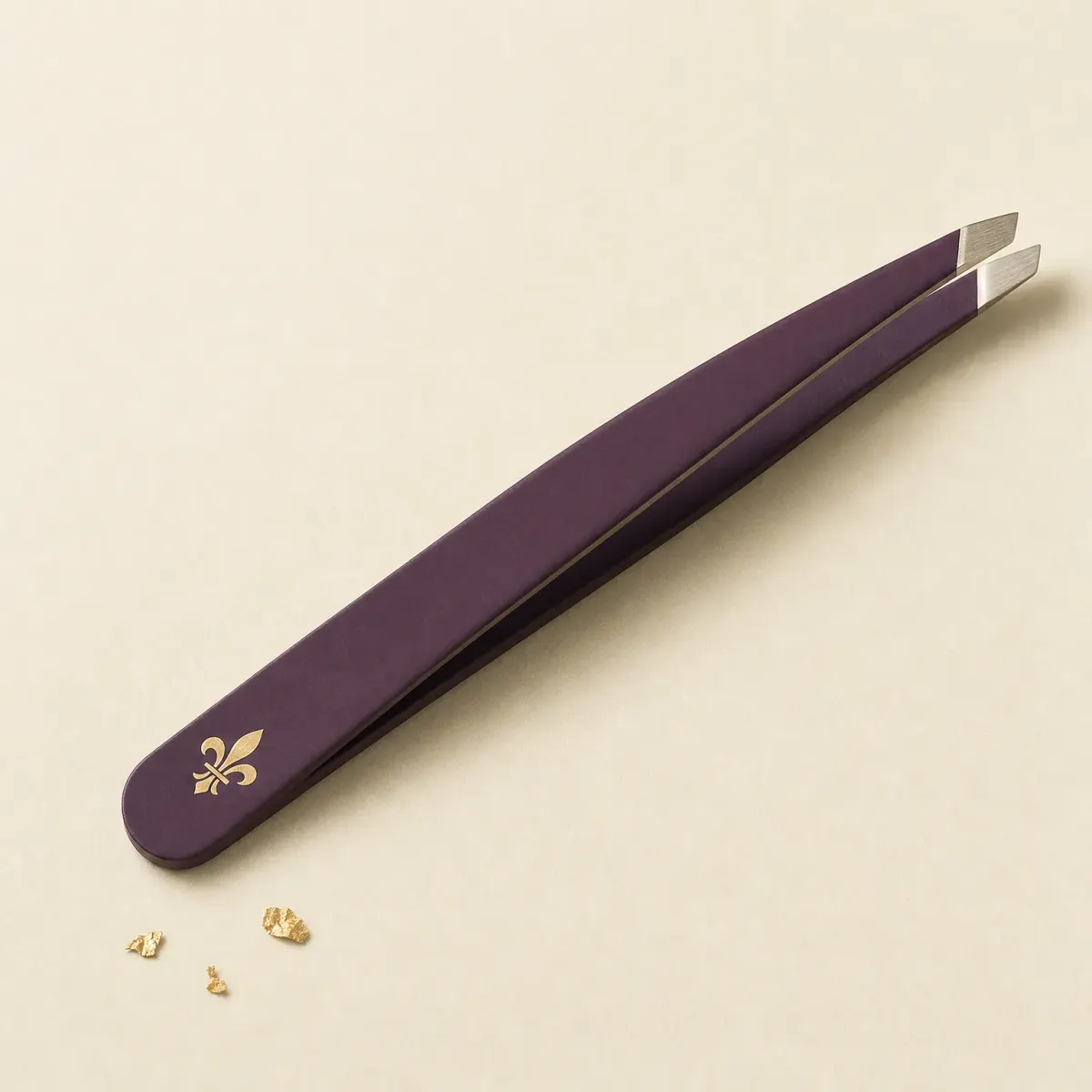
Slant tweezers are tweezers whose tips are cut at an angle, giving a slanted edge that grips short or stubborn hairs and a point that picks out single strays, used mainly to shape the brows and to set false lashes.
Our picks
Seventeen slant tweezers, from drugstore to prestige, including a pointed slant and a wide slant for thick brows, from makers in Switzerland, Germany, Italy and the US. Each opens where its maker sells it — on Amazon, at the house’s own shop or at Sephora. Hand-filing, tip angles and grips are the makers’ claims.
As an Amazon Associate I earn from qualifying purchases. Affiliate links — we may earn a commission at no extra cost to you. How this works
Hand-filed tipsMid-range Tweezerman
Slant Tweezer
Tweezerman’s classic slant, sold on tips the maker says are perfectly aligned and filed by hand.
- Hand-filed tips
- Aligned tips claim
- Stainless steel
Ultra-fine tipsDrugstore Revlon
Ultimate Slant Tip Tweezer
A drugstore pair with hand-finished, ultra-fine tips for the smallest hairs.
- Hand-finished tips
- Stainless steel
Swiss handmadePrestige Rubis
Classic Slant Tweezer 1K102
A classic slant from a Swiss maker, handmade, sold in a leather sleeve that protects the tips.
- Handmade in Switzerland
- Stainless steel
- Leather sleeve
Made in ItalyMid-range Anastasia Beverly Hills
Precision Tweezers
The brow house’s own tweezers, handcrafted in Italy with a hand-filed slant.
- Handcrafted in Italy
- Hand-filed tips
Budget gripDrugstore e.l.f. Cosmetics
Slant Tweezer
An inexpensive steel slant for everyday tidying.
- Stainless steel
- Ergonomic design
Thick browsMid-range Staleks
Classic 10 Eyebrow Tweezers
A professional tool with a wide slant that grips more hair at once, sold for thick brows.
- Wide slanted tips
- For thick brows claim
Textured tipsPrestige Zwilling
Premium Angled Tweezers
From the Solingen knife maker: textured, angled tips the maker calls perfectly calibrated.
- Textured tips
- Hypoallergenic claim
Full sizeMid-range Japonesque
Pro Performance Tweezer
A full-length slant for steady control, with a pouch to protect the tips.
- Full-size handle
- Storage pouch
Pocket slantDrugstore wet n wild
Slanted Tweezers
A low-cost steel slant that fits a purse or pocket.
- Stainless steel
- Made for brows
Calibrated tensionMid-range Plume Science
Sculpt & Refine Precision Tweezers
From a lash and brow care brand: an angled tip on tension the maker calls perfectly calibrated.
- Angled tip
- Calibrated tension claim
Twenty-five degreesPrestige Regine
Venus Slant Tweezers
Engineered in Switzerland and made in Italy, with hand-etched tips at a stated 25-degree angle.
- 25-degree tip
- Hand-etched tips
- Tip guard
Solingen steelMid-range GERmanikure
Slanted Tweezers
German steel from Solingen, the cutlery town, in a leather case.
- Made in Solingen
- Leather case
Hand-finishedDrugstore Flamingo
Tweezers
An Italian-made slant with a hand-finished tip from the women’s razor brand.
- Made in Italy
- Hand-finished tip
- Coated steel
Pointed slantMid-range Tweezerman
Slanted Point Tweezer
A slant narrowed to a point, for very fine hairs as well as the brow: the hybrid tip, from the maker of the classic slant.
- Slanted point
- Stainless steel
Plain steelDrugstore Diane
D9183 Slant Tip Tweezer
A plain stainless slant from a beauty-supply maker, for a spare pair.
- Slant tip
- Stainless steel
Sharp slantMid-range Bushbalm
Slant Tweezers
A sharp everyday slant from a brand that makes body-care and hair-removal products.
- Sharp slanted tip
Sterilisable steelDrugstore Sephora Collection
Slant Eyebrow Tweezer
Sephora’s own steel slant, sold as standing up to repeated sterilisation.
- Stainless steel
- Withstands sterilisation claim
Slant tweezers are two strips of steel joined at one end, their tips cut at the same angle so that they close into a single slanted edge. The long side of the slant grips a hair along its length, which is what catches a short or stubborn one; the point picks out a single stray. That combination is what makes the slant the usual shape for brows, and the same tool sets false lashes and lifts cluster lashes into place.
Other tips do other jobs. Pointed tweezers, fine as needles, are made for splinters and very fine hairs; flat or rounded tips grip a broad area but are less precise; a pointed slant combines slant and point. Tweezing takes hairs out one at a time, from the root. Threading and waxing clear many at once, and a brow razor cuts hair at the surface rather than pulling it.
Choosing a pair
Hold a pair up to the light and close it. The two tips should meet along the whole slanted edge with no gap; tips that cross, or that leave a sliver of light between them, will slip on a short hair however hard you squeeze. The tension should be firm enough to close without effort and to spring open at once. Makers that hand-file or etch their tips say so, and angles differ: one Swiss-designed pair is sold at 25 degrees, and a wider slant is sold for thick brows.
Size and grip suit the hand. Full-length tweezers give more control; minis travel. Stainless steel is the norm, and it can be wiped with alcohol; painted and coated handles look cheerful but can chip. A cap, sleeve or case matters more than it seems, because tips knocked about in a bag go out of alignment, and a pair whose tips no longer meet is worth replacing.
How to pluck
Work in good light, on clean skin: cream and oil make hairs slippery, and one maker tells its buyers always to use its tweezers on clean skin, without lotion, oil or makeup. Decide the shape before you start, with a pencil if it helps, and take out only the hairs outside it. Hold the skin taut with one finger, grip each hair as close to the root as you can with the slanted edge, and pull it out quickly in the direction it grows. Work on both brows in turn and step back from the mirror often; a hair taken out cannot be put back.
Plucking has a cost. The NHS lists it, with waxing and threading, among the causes of ingrown hairs, and advises against scratching, picking or squeezing an ingrown hair, since that can damage the skin and lead to infection.[1] Near the eye, the same tweezers set false lashes and lift away dried glue; the FDA asks that any instrument placed in the eye area be clean, and warns against scratching the eye or the skin around it.[2]
Keeping them clean
Makers’ instructions agree on the basics. Sephora’s own-label pair is to have its tips cleaned with alcohol after each use and left to dry; a Swiss maker recommends a little rubbing alcohol on a clean cloth after each use, drying the tips thoroughly and keeping the cap on. Pick stray hairs and any dried lash glue off the tips before cleaning them, since glue left on the tips stops them meeting and makes the next lash stick to the tweezers rather than the lid. If a pair falls onto a hard floor, check the tips against the light before using it again. Keep brow tweezers for brows and lashes, with a separate pair for splinters, and do not share them.
Where it came from
Tweezers for removing hair are ancient. The Science Museum Group holds a bronze pair of depilatory tweezers, probably Graeco-Roman, dated between 500 BCE and 500 CE.[3] A bronze pair from Korea’s Goryeo dynasty (918 – 1392), in the Victoria and Albert Museum, is made in one piece with an ear-scoop; the museum says tweezers were widely used by men and women in that period, and links them to a taste for a broad forehead and distinctive eyebrows, citing an account of 1123 by an envoy from Song China.[4] In Japan, a woodblock print by Utagawa Kunisada of about 1823, from a series on modern makeup, shows a woman plucking her brows with tweezers, framed as if in a hand mirror.[5]
Between the wars, one American maker redesigned the tweezer around the brow. In 1934 the Kurlash Company of Rochester, New York, added a patented pair, the Twissors, whose scissor-like handles were bent so that the brows stayed in view; a professional version followed in 1940, and similar tweezers are still sold.[6] The slanted tip itself has no reliable date of birth that we have found.
In the late twentieth century the tweezer became a business of its own. Dal LaMagna founded Tweezerman in 1980.[7] By his own account he began by buying Swiss tweezers of the Dumont brand and selling them to lumberyards, for splinters, until a woman he knew told him they made splendid eyebrow pluckers and he turned to spas and beauty salons.[8] By January 2005 the company had been sold to Zwilling J.A. Henckels, the Solingen maker of knives and scissors.[7] A precision instrument for splinters had become a beauty tool by being sold as one.
The techniques
- Pluck
- Grip one hair close to the root and pull it out in the direction of growth.
- Glue and place
- Apply adhesive, wait until tacky, then set onto the lash line.
Sources
- [1]Ingrown hairs NHS (England).View source (opens in a new tab) Accessed 2026-09-26.
- [2]Eye Cosmetic Safety US Food and Drug Administration.View source (opens in a new tab) Accessed 2026-09-22.
- [3]Depilatory tweezers, bronze, probably Graeco-Roman, 500 BCE-500 CE, object number A634816 Science Museum Group Collection.View source (opens in a new tab) Accessed 2026-09-26.
- [4]Bronze Tweezers, Korea, Goryeo dynasty, 918-1392, museum number M.69-1937 Victoria and Albert Museum.View source (opens in a new tab) Accessed 2026-09-26.
- [5]Utagawa Kunisada, Plucking eyebrows, from the series Modern Makeup Mirrors (Imafū keshō kagami), woodblock print, ca. 1823, museum number E.14747:32-1886 Victoria and Albert Museum.View source (opens in a new tab) Accessed 2026-09-26.
- [6]Kurlash Cosmetics and Skin.View source (opens in a new tab) Accessed 2026-09-25.
- [7]L.I. @ Work: Tweezerman Is Sold To Henckels Cutlery The New York Times, 2 January 2005, 2005.View source (opens in a new tab) Accessed 2026-09-26.
- [8]L.I. @ Work; The Spirit of Woodstock Survives in Glen Cove The New York Times, 10 June 2001, Section LI, p. 14, 2001.View source (opens in a new tab) Accessed 2026-09-26.
What it is used with
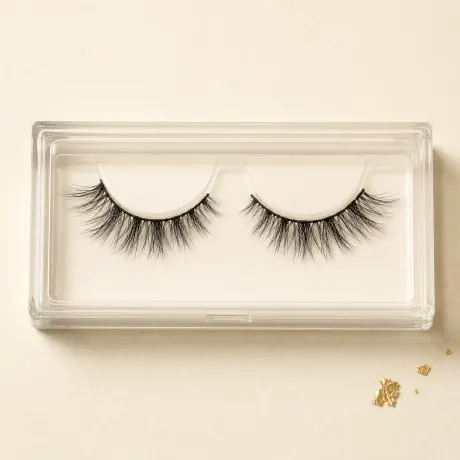
Strip lashes
A full row of false lashes on a thin band, glued along the lash line.
Read the guide
Cluster lashes
Small bunches of false lashes, placed one by one for a result that looks like your own.
Read the guide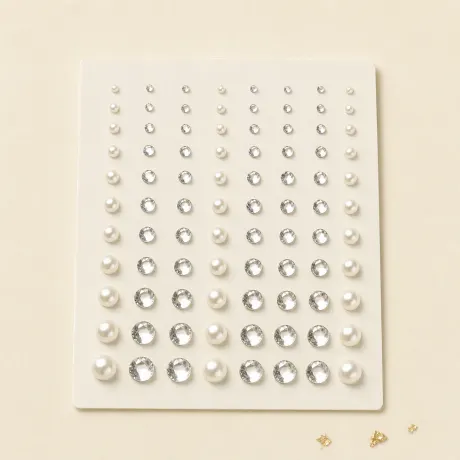
Face gems
Self-adhesive crystals and pearls placed on the face as decoration.
Read the guide
Other kinds of lash & brow tools
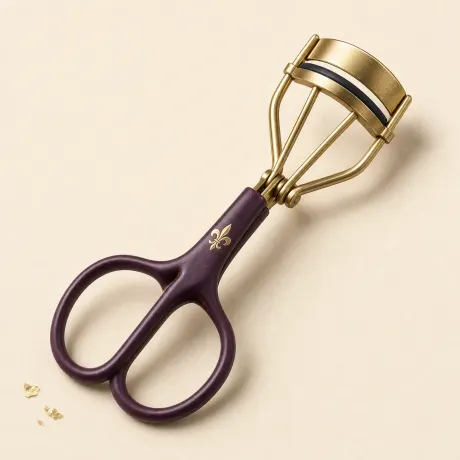
Eyelash curler
A scissor-action clamp with a curved, padded jaw that bends the lashes upward.
Read the guide
Brow razor
A tiny guarded blade for tidying stray brow hairs and fine facial hair.
Read the guide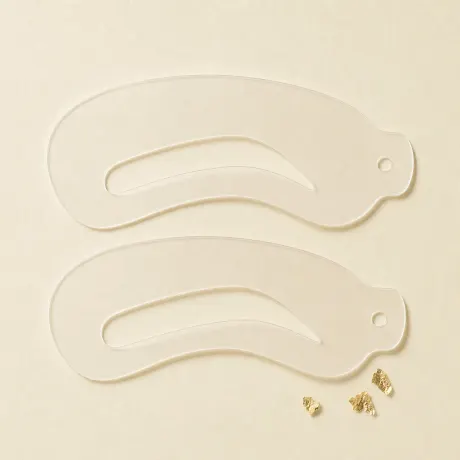
Brow stencil
A thin, flexible guide with a brow-shaped cut-out, for a repeatable shape.
Read the guide