Strip lashes
A whole row of false lashes on one thin band, glued along the lash line for an evening and peeled off at the end of it. How to choose a band and a shape, how to fit and keep them — and a history that is older than film.
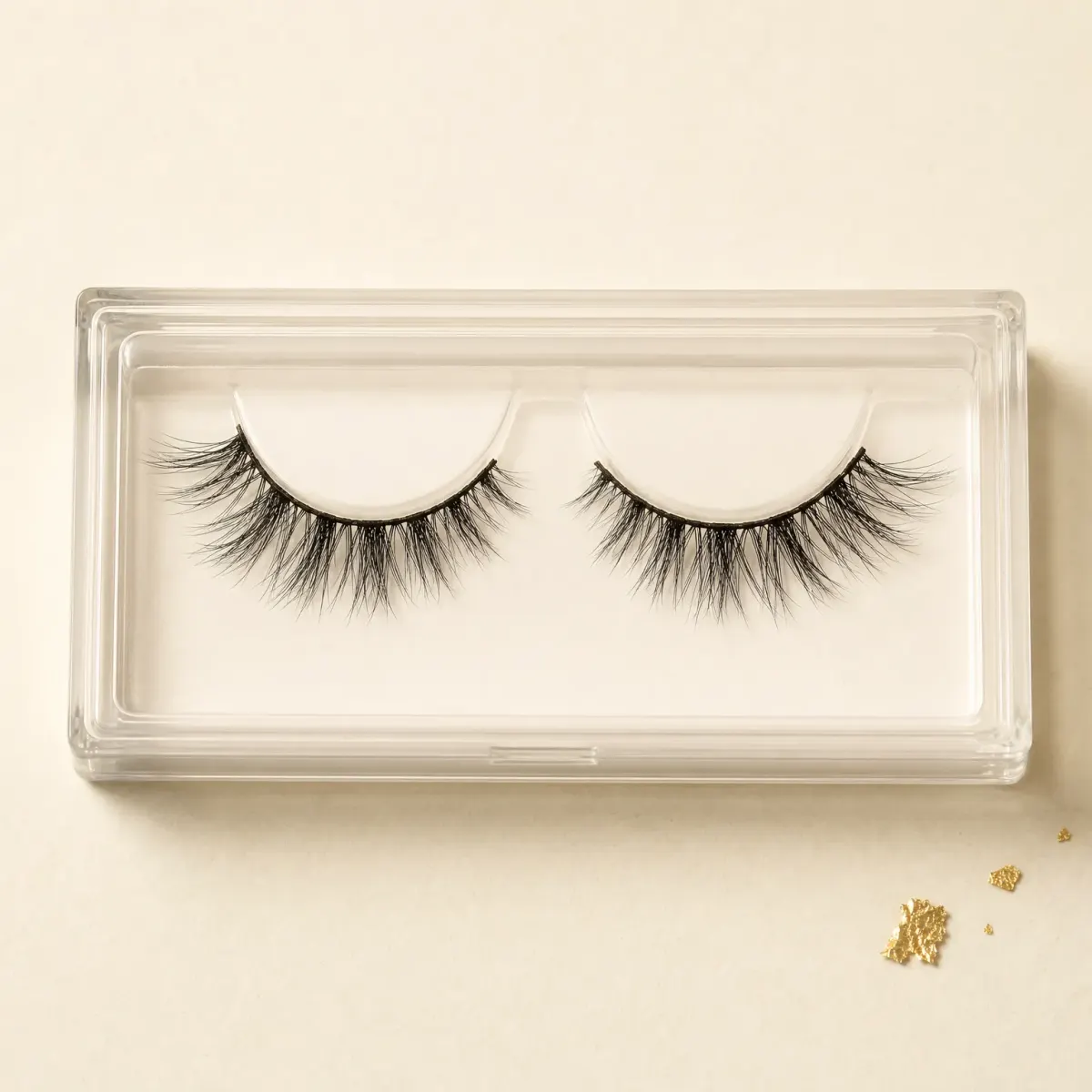
Strip lashes are false eyelashes made as one continuous row on a thin band, which is fixed along the upper lash line with glue, a pre-applied adhesive or magnets to lengthen and thicken the look of the natural lashes, and taken off to be worn again.
Our picks
Chosen across bands, fibres and ways of fixing — glue-on, pre-glued and magnetic — and across budgets, from drugstore strips to handmade ones. Each opens where its maker sells it: on Amazon, or at the house’s own shop. Houses whose listings could not be confirmed as the maker’s own are left out rather than linked.
As an Amazon Associate I earn from qualifying purchases. Affiliate links — we may earn a commission at no extra cost to you. How this works
Dramatic 3DPrestige Lilly Lashes
3D Miami Faux Mink Lashes
Full, layered volume for evenings and photographs; the glue is bought separately.
- 3D faux mink
- Reusable
Wispy classicDrugstore Ardell
Faux Mink Demi Wispies
Criss-crossed fibres, short at the inner corner and fanning outward, on a band thin enough to disappear.
- Knot-free Invisiband
- Flared
- Twin pack
Bold volumeMid-range House of Lashes
Iconic False Eyelashes
A full, bold strip for when the lashes are meant to be seen across a room.
- Faux mink
- Reusable
VeganDrugstore NYX Professional Makeup
Jumbo Lash! Vegan False Eyelashes
An inexpensive vegan strip made to be stacked and worn again.
- Vegan
- Reusable up to 15x
- Up to 12hr wear claim
Everyday flarePrestige MAC Cosmetics
M·A·C Lash / 80 Romantic Lash
A soft, flared pair from MAC, pitched at everyday wear rather than drama.
- Wispy
- Flared
Hand-wovenDrugstore KISS
Lash Couture Masterpiece False Eyelashes
A long, hand-woven faux mink strip with a strong curl, from KISS’s Lash Couture range.
- Faux mink
- Tapered fibres
- Contact-lens friendly
MagneticMid-range Glamnetic
Magnetic Eyelashes, Lucky
No glue at all: magnets on the band cling to a magnetic eyeliner drawn along the lash line.
- Magnetic
- Short cat-eye flare
- Up to 60 wears claim
First pairDrugstore Eylure
Naturals Accent No. 003 Lashes
A light accent strip on a clear band, sold for first-time wearers, with glue in the box.
- Clear band
- Glue included
- Reusable
Plant fibrePrestige Velour
Plant Fibre Eyelashes
Lashes made from a hemp-derived fibre rather than plastic or fur, handmade and sold for repeated wear.
- Hemp-derived fibre
- Vegan
- Up to 25 wears claim
Budget glamDrugstore Profusion Cosmetics
Iconic 3D Faux Mink False Lashes
An inexpensive 3D faux mink strip that comes with its own quick-dry glue.
- 3D faux mink
- Adhesive included
3D flutterMid-range Tarte
tarteist PRO lashes
Fluttery volume that stays light on the lid, sold as comfortable enough for a long day.
- 3D
- Lightweight volume
- Vegan
Pre-gluedDrugstore Eylure
Pre-Glued Wispy Light No. 117 Lashes
The adhesive is already on the band: peel, place and press, with no glue to measure out.
- Pre-glued
- Wispy
- Claims 15-hour wear
Handmade 3DPrestige Battington
Monroe
A handcrafted strip on a soft cotton band, balancing moderate length against full volume.
- 3D
- Cotton band
- Multi-use
Simple syntheticDrugstore Lurella Cosmetics
Synthetic Eyelashes, Anastasia
An inexpensive synthetic strip from a small lash house, sold with plain instructions for fitting, removing and reusing it.
- Synthetic
- Reusable
A strip lash is a whole fringe made in one piece: fibres knotted or fused to a fine band, trimmed to the width of the eye and glued along the base of the natural lashes. It is the quickest way to change the shape of an eye for an evening and the easiest to undo, since the band peels away at the end of the day, and a pair that is looked after can be cleaned and worn again.
It sits between two neighbours. Cluster lashes are the same fibres made as small bunches and placed one at a time, which blends more easily but takes longer. Salon extensions are single fibres bonded to single natural lashes by a technician, and stay on for weeks. A strip does the whole lash line in one movement, and its band is both its convenience and the thing to judge it by.
Band, shape and fibre
Start with the band. A thick black band reads as eyeliner and hides the join, which is why dramatic styles use it; a thin, flexible or clear band disappears into the lash line and bends with the lid, which suits natural styles and first attempts. Some strips arrive with their adhesive already on the band, and a few are held by tiny magnets against a magnetic eyeliner instead of glue.
Then shape. Natural and wispy styles mix short and long fibres crossed at angles, as real lashes grow. Flared or cat-eye styles lengthen towards the outer corner and lift the eye outward, while full or 3D styles stack fibres for volume. Half and accent strips cover only the outer part of the eye, and are the forgiving way to begin. Most fibres are synthetic, sold as faux mink or silk; others are human hair, real mink or, lately, plant fibre. How many times a pair can be worn is the maker’s claim, and care decides most of it.
How to put them on
Hold the strip against the closed eye before anything else and trim it from the outer end, so that the band starts a little in from the inner corner and stops where your own lashes stop. Bend it gently into a curve so it meets the lid rather than springing off it. Run a thin line of glue along the band and wait about thirty seconds until it turns tacky: wet glue slides, tacky glue holds.
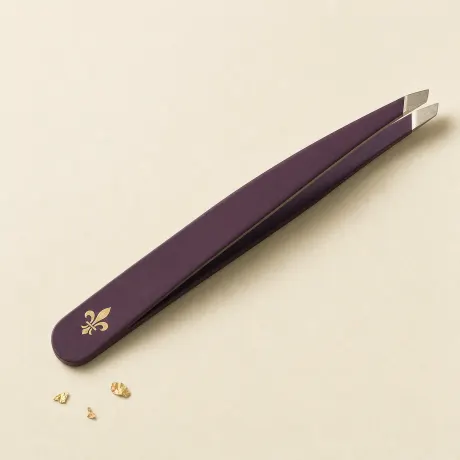
Look down into a mirror held below the face, set the middle of the strip first, as close to the roots of your own lashes as it will go, then press the ends into place. A line of liner hides the band, and mascara, where the maker allows it, marries the two sets of lashes. If a corner lifts after a few minutes, press it down again with the tip of the tweezers; a dot more glue at the corner works better than another coat along the whole band.
Care and removal
To take a strip off, hold it at the outer corner and peel it inward, never pulling at the fibres. Lift the dried glue from the band with tweezers, return the pair to its tray so it keeps its curve, and never share lashes. Throw away a pair that has lost its shape or made the eye itch. The FDA treats false eyelashes and their adhesives as cosmetics, reminds wearers that an allergic reaction or irritation around the delicate eyelid can be particularly troublesome, and advises stopping any eye product that causes irritation.[1]
Where it came from
False lashes are older than the films usually credited with them. In the 1870s British newspapers reported that someone in France had found a way to fix false eyelashes, and by the 1880s that Parisians were having hair drawn through the eyelid with a needle. Hair glued to a backing strip was in use in Europe by then too, perhaps first on the stage.[2] Around 1903 the London hairdresser Charles Nessler, better known for the permanent wave, sold boxed pairs of human hair fixed to a strip of “fish-skin”, isinglass made from fish bladders.[2] In 1911 Anna Taylor of Ottawa was granted a US patent for an “artificial eyelash”: a crescent of material, preferably transparent, with short hairs fixed along its curved edge and an adhesive spread across its underside.[3]
The story most often told comes later. For Intolerance, in 1916, the director D. W. Griffith is said to have had his wigmaker glue lashes to the actress Seena Owen with spirit gum, and her fellow actress Lillian Gish later wrote that Owen arrived one morning with her eyes swollen nearly shut.[4] It is a story about Hollywood rather than an invention: Griffith is only one of several people credited with the idea, along with Nessler, Taylor and the make-up artists George Westmore and Max Factor.[2]
The modern strip is post-war. In 1947 the brothers Eric and David Aylott, film make-up artists, founded Eylure to sell lashes knotted on nylon thread. By 1954 they came ready trimmed on a curved plastic mount, a pack so widely copied that it became the standard, and self-adhesive lashes followed in 1963.[5] By 1968 Americans were buying more than twenty million pairs a year, many of them made by Eylure for other houses, before production moved to South Korea and India.[2]
The techniques
- Glue and place
- Apply adhesive, wait until tacky, then set onto the lash line.
Sources
- [1]Eye Cosmetic Safety US Food and Drug Administration.View source (opens in a new tab) Accessed 2026-09-22.
- [2]False Eyelashes Cosmetics and Skin, 2018.View source (opens in a new tab) Accessed 2026-09-26.
- [3]US Patent 994,619 — Artificial eyelash United States Patent Office, 1911.View source (opens in a new tab) Accessed 2026-09-26.
- [4]A True History of False Eyelashes Racked (Vox Media), 2015.View source (opens in a new tab) Accessed 2026-09-26.
- [5]Eylure Cosmetics and Skin, 2019.View source (opens in a new tab) Accessed 2026-09-25.