Cluster lashes
Small bunches of false lashes placed one at a time, among or beneath your own, for a result that can pass for natural. How to choose them, place them and take them off — and how an hour in a salon chair became a kit on the drugstore shelf.
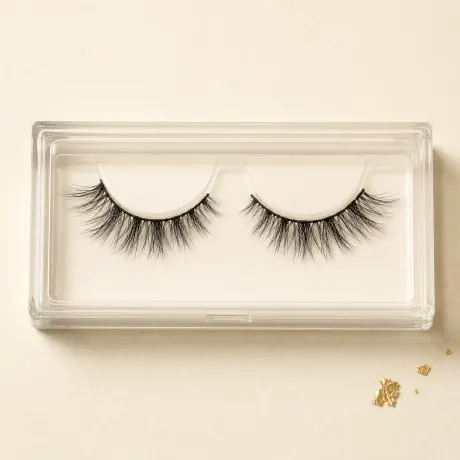
Cluster lashes are small bunches of false lash fibres, joined at the base by a knot, a fused point or a short band, that are fixed one at a time among or beneath the natural lashes to add length and volume where it is wanted rather than along the whole lash line at once.

Our picks
Chosen across the two ways of wearing clusters — at the lash line for a day, or beneath the lashes for several — and across glue-on and pre-glued, from drugstore packs to specialist systems. Each opens where its maker sells it: on Amazon, or at the house’s own shop.
As an Amazon Associate I earn from qualifying purchases. Affiliate links — we may earn a commission at no extra cost to you. How this works
Underlash systemPrestige Lashify
Gossamer Lashes, Plushy
Fine, full sections designed to sit beneath your own lashes, applied with Lashify’s own bonds and wand.
- Underlash
- PBT fibre
- 12 per cartridge
DIY extensionsDrugstore KISS
Falscara Lash Clusters, Classic Natural
A large pack of wispy clusters on a micro-band made to hide beneath your own lashes.
- Underlash
- 8–16 mm
- Reusable up to 3x
Everyday clustersMid-range Lilac St.
Natural Lash Clusters, Original
Soft, evenly spaced clusters that pass for your own lashes, for a look that is fuller rather than dramatic.
- Cotton band
- 10 mm
- Claims 10-day wear
Wispy underlashDrugstore Ardell
Seamless Eyelash Extensions, Wispies
Feathery, criss-crossed clusters in four lengths, for mapping a lifted shape from inner corner to outer.
- Underlash
- 10–16 mm
- Claims up to 10 days
Individual flaresPrestige Lash Star Beauty
Visionary Lash Flares
Wispy flares from a lash specialist, for building a line cluster by cluster at the lash line.
- Wispy
- Individual flares
Classic individualsDrugstore Eylure
3D Luxe Individual Eyelashes
Fluffy individuals in three lengths, glued among your own lashes for a day or an evening.
- 120 clusters
- 10–14 mm
- Up to 8 wears claim
Pre-glued toppersPrestige Lilly Lashes
Self-Adhesive Wispy Flares Lash Clusters
Clusters that press on in seconds, worn alone or layered over a strip for extra depth.
- Pre-glued
- Clear band
- 24-hour hold claim
Press-onDrugstore KISS
imPRESS Falsies, Demi Wispy
Pre-bonded clusters with a water-activated adhesive: no glue to measure, and no bond to cure.
- Pre-bonded
- Claims up to 5 days
- 5–14 mm
CustomisablePrestige Velour
Classic Velour-Xtensions Lash Clusters
Three or four clusters per eye make a full line and one or two a half lash; worn for a day, or for several with Velour’s own bond.
- 10–14 mm
- 3–4 per eye
- Multi-day with bond
LengthDrugstore Eylure
Underlash Lengthening Clusters
Clusters built for length rather than volume, worn beneath the lashes with Eylure’s own bond.
- Underlash
- 30 clusters
- Claims 7-day wear
Soft volumeDrugstore Ardell
Press On Lashes, Naked Soft Volume
Pre-glued underlash clusters with a light, criss-crossed volume, placed with the applicator in the box.
- Pre-glued
- Underlash
- Knot-free
A cluster is a strip lash that arrives in pieces: a few fibres or a few dozen, joined at the base by a knot, a fused point or a short band, and fixed one at a time. Because each piece is small, the finished line follows the eye’s own curve and can be built only where it is needed, longest at the outer corner and shortest at the inner. That is why clusters pass for natural lashes more easily than a strip does.
There are two ways to wear them. Traditional individuals, or flares, are glued among the natural lashes at the lash line for a day or an evening. The newer underlash clusters sit beneath the natural lashes, fixed with a bond and often a sealant, and are sold as lasting several days. Neither is a salon extension, in which a technician bonds single fibres to single natural lashes for weeks.
Choosing clusters
Decide first how long they should stay. Glue-on individuals come off at night. Underlash systems are built for several days’ wear, and their makers sell a bond, a sealant and a remover designed to work together; mixing parts from different systems is the easiest way to lose the hold. Pre-glued clusters carry their own adhesive, which makes them quicker still and less adjustable.
Then choose length and density. Most packs mix lengths, and the look is made by the arrangement: short to long from the inner corner outward for a lifted, cat-eye shape, or even lengths across the eye for an open, rounder one. Knot-free flares lie flatter against the lash line than knotted ones, and wispy, criss-crossed clusters blend more easily than dense, uniform ones. For a first attempt, choose shorter lengths than you think you want: a cluster that is too long for the eye tips forward and shows its base.
Placing and removing them
Map before you glue. Lay the clusters out in the order you will use them and start at the outer corner, where the longest go. For underlash styles, look down into a mirror, apply the bond to the underside of your own lashes, then slide each cluster beneath them so that its base sits just clear of the skin, never on the waterline, and pinch the two sets together with the applicator. For individuals, dip the base in glue, let it turn tacky and set it at the roots of the natural lashes.
Leave a small gap between pieces at first: a gap is easier to fill than crowding is to undo. Take clusters off with the remover their maker recommends rather than by pulling, which takes natural lashes with them. The FDA treats false eyelashes and their adhesives as cosmetics, and advises stopping at once if an eye product causes irritation, and seeing a doctor if it persists.[1]
Wear and care
Underlash clusters last only as long as their bond, so follow the maker’s care instructions to the letter: some systems ask you to keep oil-based cleansers and creams away from the eyes while they are in, others to press the clusters back into place after a shower. Brush them through gently each morning rather than rubbing, and do not try to patch a single lifting piece; when one starts to go, the others are usually close behind, and a cluster hanging by a few natural lashes pulls on them.
Clusters sold as reusable need the same cleaning as a strip. Soak the old bond or glue from the base with remover, let them dry, and keep them on their tray so they hold their shape. Throw away any that have bent, frayed or made the eye itch, and never share them.
Where it came from
Building a lash line piece by piece began in the salon. In the 1930s some beauty salons offered eyelash grafting, fixing single false hairs to the client’s own lashes with a special gum, an hour’s work for a trained hand. A trade article of 1936 describes a framework of about sixteen lashes per eye, each cut separately, and advises complete replacement after six weeks. The make-up artist George Westmore and a Madame Antoine were among those who claimed the method; the historian James Bennett thinks it likely that more than one person thought of it.[2]
Clusters for home use grew out of the fashion for false lashes that followed. Eylure added individual fur lashes to its range in 1965.[3] A skin-care manual of 1978 told readers to cut strip lashes into tufts of two or three and glue them among their own, and manufacturers took up the idea by selling boxes of false hairs already grouped into clusters.[2]
The do-it-yourself underlash kit is recent. Lashify, an American company founded in 2016, sells lash extensions for home use, and its patent describes clusters of artificial hairs arrayed along a base to be applied under the user’s natural lashes. In 2020 it asked the US International Trade Commission to act against imports of rival clusters that it said infringed its patents, naming KISS and Lilac St. among others; the Commission denied it relief, and in 2025 the federal appeals court sent part of the case back.[4] What began as an hour in a salon chair is now sold beside mascara.
The techniques
- Glue and place
- Apply adhesive, wait until tacky, then set onto the lash line.
Sources
- [1]Eye Cosmetic Safety US Food and Drug Administration.View source (opens in a new tab) Accessed 2026-09-22.
- [2]False Eyelashes Cosmetics and Skin, 2018.View source (opens in a new tab) Accessed 2026-09-26.
- [3]Eylure Cosmetics and Skin, 2019.View source (opens in a new tab) Accessed 2026-09-25.
- [4]Lashify, Inc. v. International Trade Commission, No. 2023-1245 (opinion) United States Court of Appeals for the Federal Circuit, 2025.View source (opens in a new tab) Accessed 2026-09-26.