Gel eyeliner
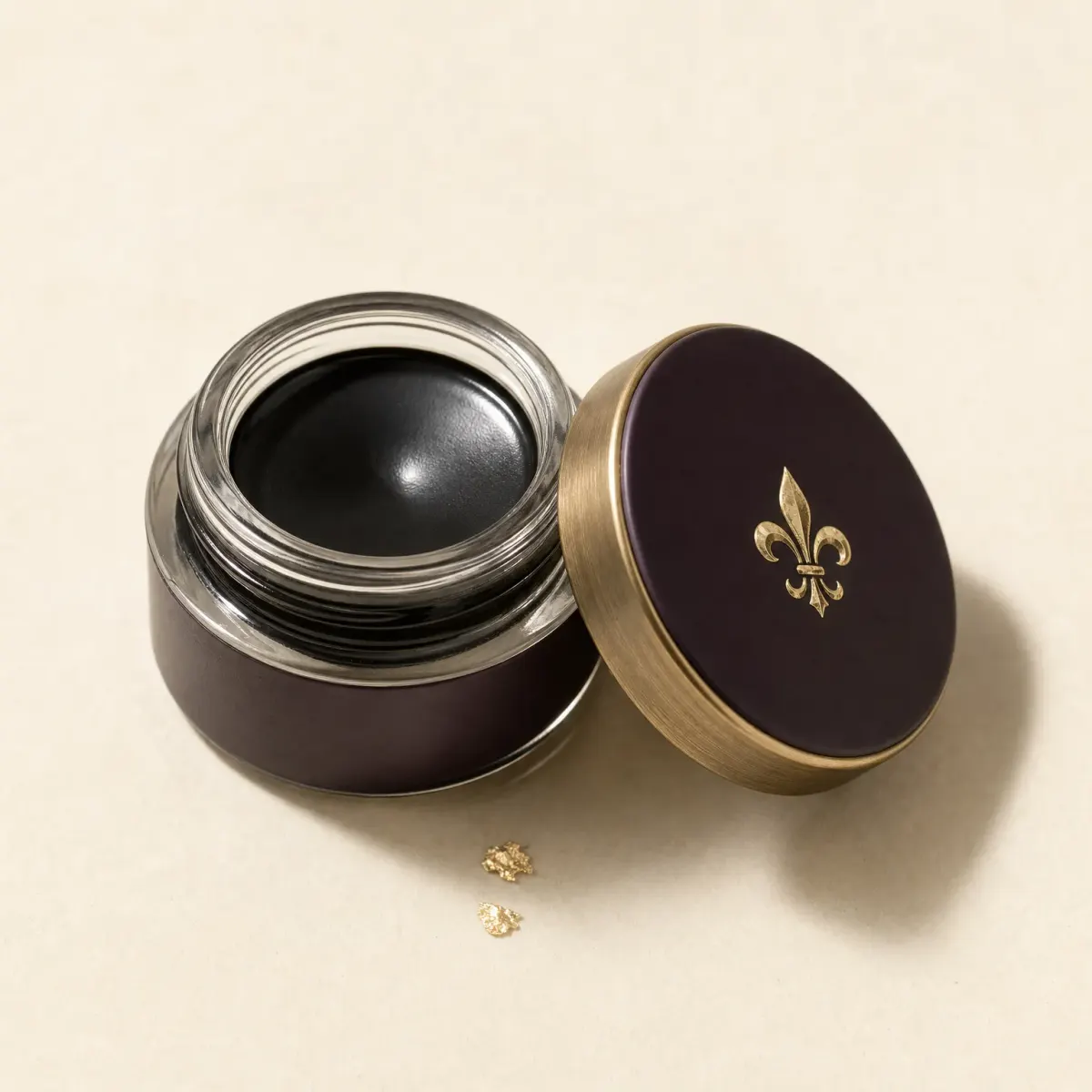
Liner in a pot, drawn with a brush: sharp enough for a wing, soft enough to smudge before it sets. Choosing the brush and the formula, working the pot — and what came before it.
Gel eyeliner is a dense, creamy liner sold in a small pot and applied with a brush; it can be drawn sharp or smudged before it sets, usually to a waterproof finish.
Our picks
Six pots from drugstore to prestige — far fewer are made than pencils or pens, and these are the ones we could link to their makers. Pair any of them with a brush of your choosing. Each opens where its maker sells it — on Amazon, or at the brand’s own shop — and you choose your shade on that page.
As an Amazon Associate I earn from qualifying purchases. Affiliate links — we may earn a commission at no extra cost to you. How this works
The artist’s potPrestige Bobbi Brown
Long-Wear Smudge-Proof Gel Eyeliner
A makeup artist’s gel in a pot, dense enough to smudge soft along the lashes or to draw a sharp wing.
- Waterproof
- Smudge-proof
- 8-hour wear claim
Budget potDrugstore Maybelline New York
Eyestudio Lasting Drama Gel Eyeliner
The inexpensive way to find out whether a pot and brush suit you.
- Waterproof
- Smudge-proof
Deep blackMid-range Inglot
AMC Eyeliner Gel 77
A dense, creamy black that stays workable long enough to smudge, then holds.
- Waterproof
- Creamy
- Fragrance-free
Liner and browPrestige MAC Cosmetics
Pro Longwear Fluidline Eyeliner and Brow Gel
A long-wearing gel with a range of shades that also fills and shapes the brows.
- Waterproof
- Long-wearing
- For brows too
Shimmer shadesDrugstore L.A. Girl
Gel Eyeliner
A low-cost pot with shimmering teal, purple and black among its five shades.
- Water-resistant
- Smudge-proof
- 5 shades
Matte finishMid-range Sigma Beauty
Gel Eyeliner
A flat matte black from a brush maker, for a graphic line with no sheen.
- Matte
- Water-resistant
- 8-hour wear claim
Gel eyeliner is liner in a small pot: a dense, creamy gel of pigment in oils, waxes and volatile solvents, picked up on a brush and drawn on. It sits between the pencil and the liquid. Like a liquid it can be drawn fine and sharp, into a wing; like a pencil it can be pressed into the lash line and smudged, for as long as it stays wet. Then the solvent evaporates and the line sets, in most formulas waterproof.
What the pot gives, it also takes away. The brush means a line can be as thin or thick, sharp or soft as the hand makes it, and one pot can draw a tightline, a smoked edge and a graphic wing. But it is two objects rather than one, it asks for a little practice, and a gel that meets the air each time the lid comes off dries out sooner than a sealed pen or pencil.
Choosing the brush
With a gel, the brush matters as much as the pot. An angled liner brush, its bristles cut on a slant, is the easiest to control: pressed along the lash line in short stamps, it lays down an even line, and its point draws the flick of a wing. A fine-pointed brush gives the thinnest, most graphic line and the sharpest wing, and asks for the steadiest hand. A flat, square brush pressed up between the roots of the lashes is the tool for tightlining. For a smoked line, draw with any of these and soften the edge with a short, dense smudger before the gel sets.
Synthetic bristles suit gels better than natural hair, which soaks up the formula and splays. Wipe the brush on a tissue after each use and wash it weekly: a brush that goes back into the pot with old product on it carries that product, and whatever it has picked up from the eye, back into the jar.
Choosing the formula
Pots differ less in their packaging than in how they dry. Some set within seconds and suit a single, confident stroke; others stay workable for a minute or more, which is kinder while you learn and better for smudging. Matte blacks give the classic graphic line; satin and shimmer finishes catch the light and blur small wobbles. Most are sold as waterproof or water-resistant, and several are sold for the brows as well, pressed through them in fine, hair-like strokes with an angled brush.
Buy the smallest pot you can. Gel liner lasts only as long as its solvent does, and a pot used once a week will dry out long before it is empty. Brown, grey and navy make softer everyday lines than black, and a coloured gel drawn over a thin black one gives depth without much effort.
How to use it
Load the brush lightly, working it against the back of the hand or the inside of the lid until the bristles are coated but not clotted; most bad lines begin with too much product. Rest an elbow on a table, look down into the mirror, and press the line on in short strokes, from the outer corner inward or from the centre out, whichever keeps the hand steadier. For a wing, draw the flick first, from the outer corner towards the tail of the brow, and join it to the lash line afterwards. Mistakes are easiest to fix while the gel is wet: a pointed cotton bud with a drop of remover cleans up an edge.
Close the pot firmly every time. A gel that has begun to firm can sometimes be brought back by working it with a clean brush, but one that has gone hard and crumbly has lost its solvent and should be replaced — as should any eye product that has been open for some months, and any used during an eye infection.
Where it came from
The pot and brush are older than the gel in them. The cake liners of the 1960s came in compacts with a brush: Frances Denney’s of 1967 promised “Drama for your eyes in a pressed powder. In compact complete with brush.”[1] A small brush worked over a wetted cake was already how Maybelline’s cake eyelash and eyebrow beautifier of 1917 was applied.[2] What changed was the vehicle. A gel is not a powder that waits for water but a ready-made paste that stays creamy in the pot and sets on the skin, and it relies on the thickeners and film-formers of modern long-wear makeup. A Procter & Gamble patent filed in 2001, for instance, describes anhydrous cosmetics in which a solvent and a cross-linked silicone elastomer form a gel, and gives an eyeliner among its worked examples.[3]
The rest of the story is less well recorded than the product’s fame suggests. Several houses are credited, often in their own marketing, with making the gel pot a fixture of makeup artists’ kits, but the record of who sold the first one is thin, and no claim to a first is repeated here. What lasted is the method: the most adjustable liner on the counter, for the price of a brush and a little practice.
The techniques
- Draw
- A single controlled line, built from short strokes where the hand needs it.
- Wing
- Extend the liner past the outer corner in a flick that follows the lower lash line upward.
- Smudge
- Soften a drawn line into a haze while the product is still workable.
- Tightline
- Press liner into the roots of the upper lashes from beneath, so the lash line looks denser with no visible line.
Sources
- [1]Frances Denney (post 1945) Cosmetics and Skin, 2026.View source (opens in a new tab) Accessed 2026-09-25.
- [2]Maybelline Cosmetics and Skin, 2010.View source (opens in a new tab) Accessed 2026-09-25.
- [3]US Patent 6,475,500 — Anhydrous cosmetic compositions United States Patent Office, 2002.View source (opens in a new tab) Accessed 2026-09-25.
What to apply it with
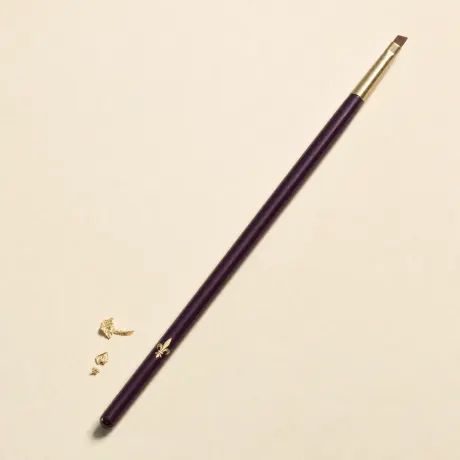
Angled liner brush
Thin, flat, stiff synthetic bristles cut on a sharp angle, for gel liner, wings and brows.
Read the guide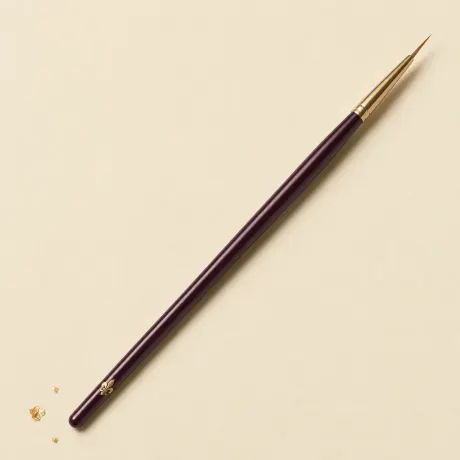
Fine liner brush
A very fine, pointed brush like an artist’s detail brush, for the thinnest line.
Read the guide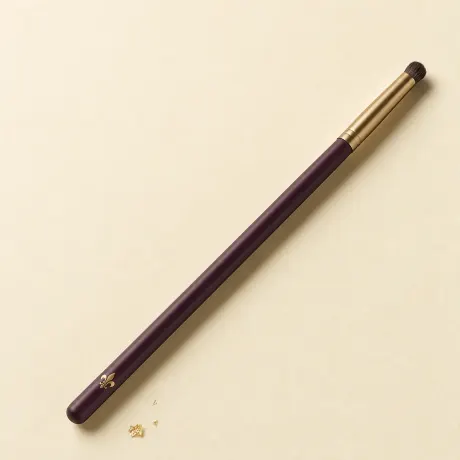
Smudger brush
A short, very dense, slightly domed tuft on a slim eye-brush handle — made to press liner and shadow into the lash line and soften it into smoke.
Read the guide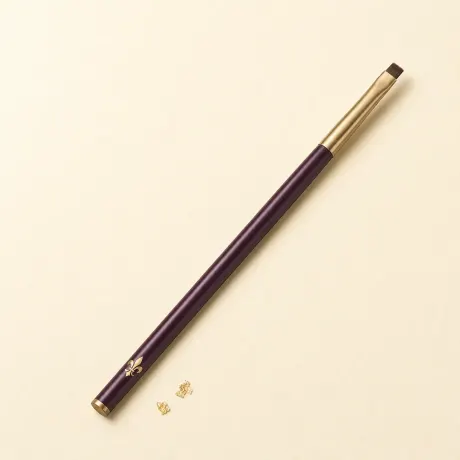
Flat definer brush
A small, very dense, square-cut brush that pushes colour into the roots of the lashes.
Read the guide
Other kinds of eyeliner
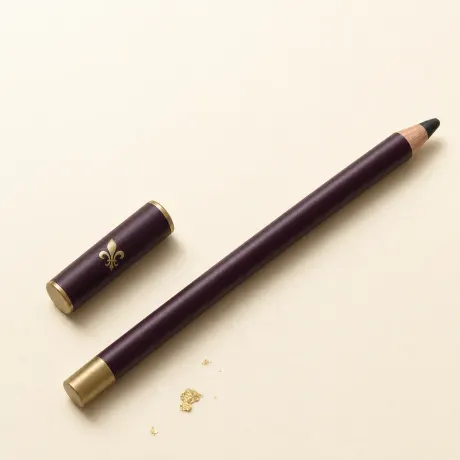
Kohl pencil
A soft, waxy pencil made to be smudged — the modern way to wear a kohl-rimmed eye.
Read the guide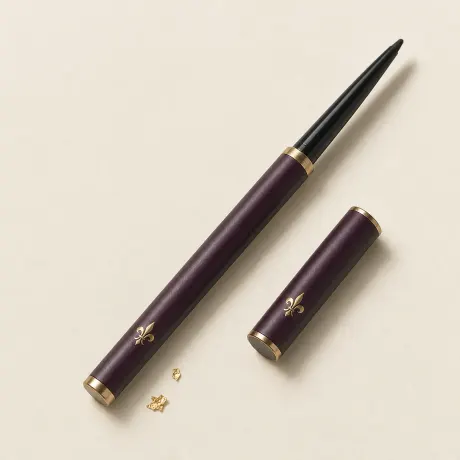
Gel eyeliner pencil
A retractable pencil with a creamy gel lead that glides, then sets waterproof.
Read the guide
Liquid eyeliner
Ink-like liner with a fine brush in the cap, for the sharpest possible line.
Read the guide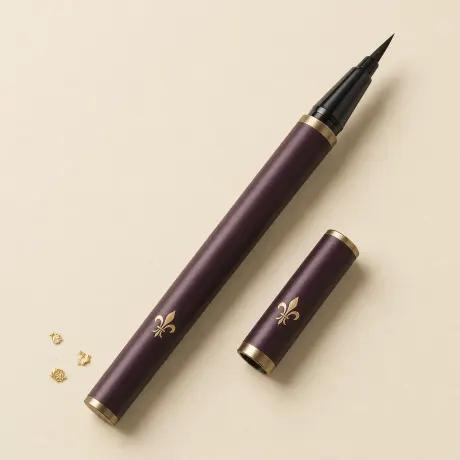
Felt-tip eyeliner
Liquid liner in a pen with a firm felt tip, the easiest way to draw a wing.
Read the guide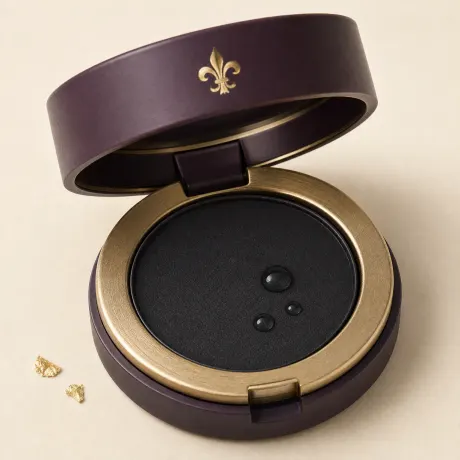
Cake eyeliner
A pressed cake of liner pigment activated with water, still the choice for graphic and stage work.
Read the guide