Fine liner brush
The thinnest brush in the kit: a pointed tip like a painter’s detail brush, for the finest line of gel, cake or liquid along the lashes. How to choose one, how to steady it — and why so many are bent.
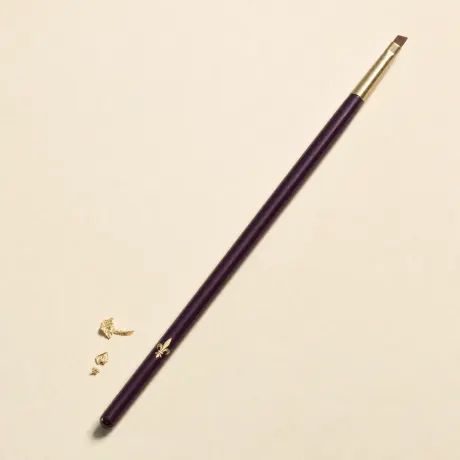
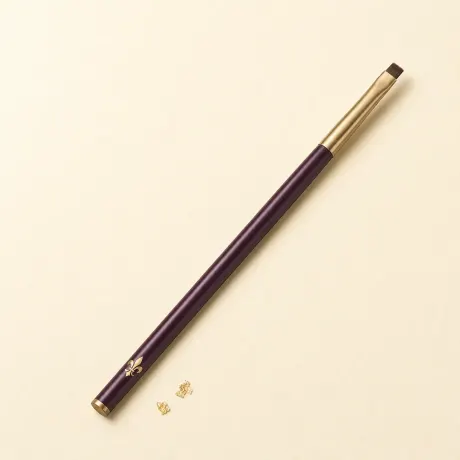
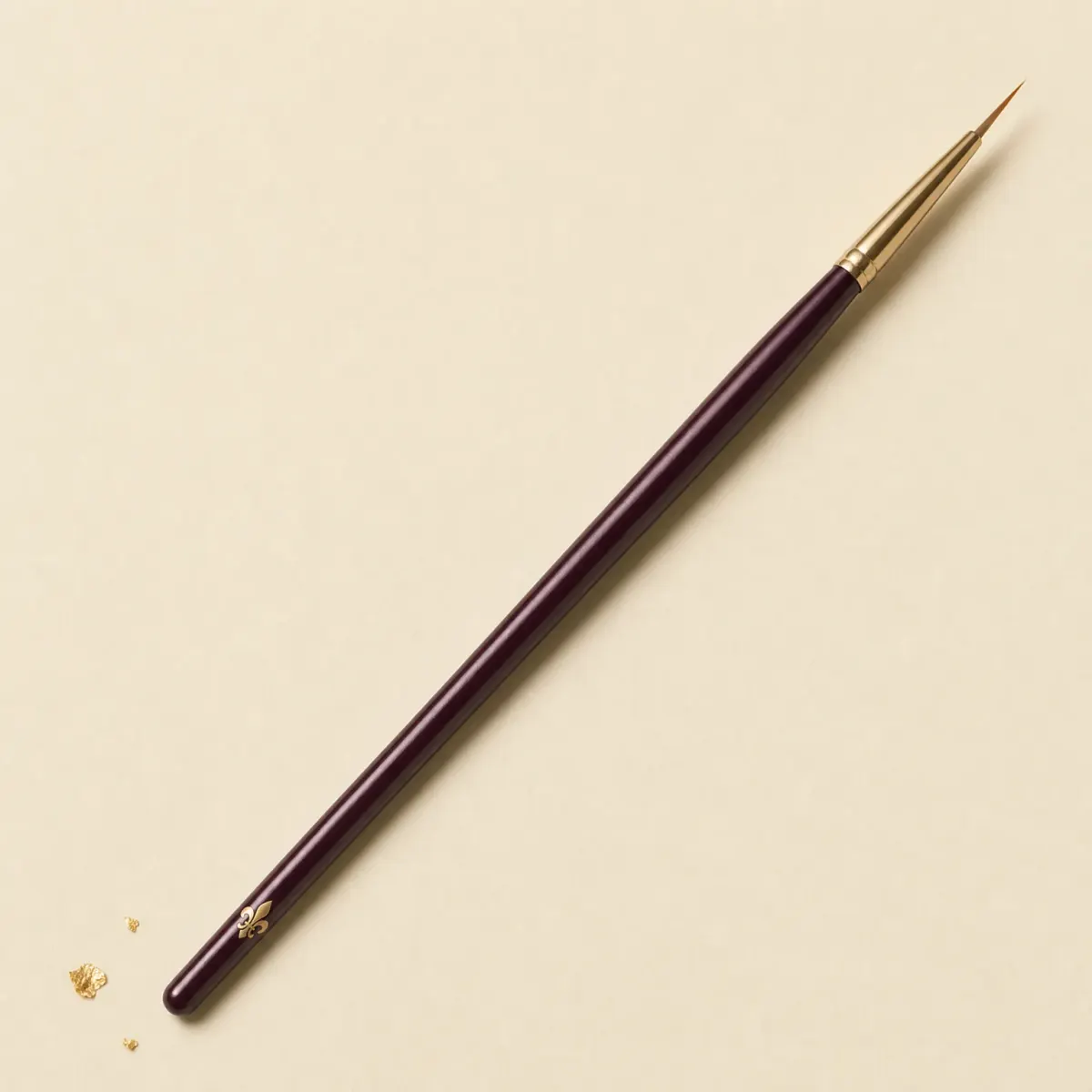
A fine liner brush is a slim eyeliner brush whose fibres taper to a very fine point, used to draw the thinnest line of gel, cake or liquid liner along the lashes and the sharpest point of a wing.
Our picks
Every house found selling a single pointed liner brush whose page could be verified, one brush each, from short, firm tips to long round liners and bent ferrules, from drugstore to prestige, with a synthetic eyeliner from Kumano among them. Each opens at the maker’s own shop; one Australian house ships from its own shop abroad.
Affiliate links — we may earn a commission at no extra cost to you. How this works
Extra-fine tipPrestige MAC Cosmetics
210 Synthetic Precise Eye Liner Brush
An extra-fine tip for the finest line at the lashes, sharp wings and the waterline, in any formula.
- Extra-fine tip
- Firm synthetic
- Waterline too
Narrow pointMid-range Bdellium Tools
Golden Triangle 710 Eye Liner
An extra-fine, narrow point for gel or wet liner, from a classic line to a wing.
- Extra-fine, pointed
- Gel or wet liner
- Vegan synthetic
Budget pointDrugstore Morphe
M362 Pointed Eyeliner Brush
A densely bristled fine point for controlled lining, a cat-eye or a graphic line.
- Fine point
- Densely bristled
Bent ferrulePrestige Kevyn Aucoin
Angled Eyeliner Brush
Sold as an angled liner, but its head is ultra-pointed; the bend is in the ferrule, which lets you stand closer to the mirror.
- Ultra-pointed
- Bent ferrule
- Synthetic PBT
MicrolinerMid-range Smith Cosmetics
202 Microliner Brush
Short synthetic sable bristles for lining the base of the lashes and for fine detail.
- Thin
- Short synthetic sable
Store brandDrugstore Ulta Beauty Collection
Pointed Eye Liner Brush 176
A tapered, fine point from Ulta’s own line, for precise gel or cream liner.
- Tapered, fine point
- Synthetic
- Gel or cream
Pressure-ledMid-range Graftobian
OMNIA® Pointed Liner Brush
A tapered tip that draws a delicate line with a light hand and a bold one with a firmer grip.
- Tapered tip
- Vegan fibres
Firmest of sixPrestige Hakuhodo
I007N6BkSL Eyeliner
From the Kumano maker Hakuhodo: the firmest of six versions of its synthetic eyeliner brush, for fine, sharp lines.
- Synthetic nylon
- Fine, sharp lines
Extra-fineDrugstore KIKO Milano
Eyes 63 Thin Eyeliner Brush
An inexpensive dense, extra-fine tip for thin, precise lines.
- Extra-fine tip
- Dense
- Synthetic
Lashes and lipsMid-range Anastasia Beverly Hills
Brush 3 – Liner Brush
A small, tapered liner for precise lines along the lashes, the waterline and the lips.
- Small, tapered
- Synthetic
- Waterline
Angled ferrulePrestige Laura Mercier
Angled Eye Liner Brush
A point on an angled ferrule with a short handle, to reach over the lashes while working close to the mirror.
- Pointed tip
- Angled ferrule
- Short handle
Precision pointDrugstore e.l.f. Cosmetics
Ultra Fine Eyeliner Brush
An inexpensive super-thin brush with a precision point, for sharp, graphic lines.
- Super-thin
- Precision point
Round linerMid-range Make-up Designory
#900 Round Liner Synthetic Brush
A round liner from a makeup school’s own line, for extremely thin lines in cream or cake liner.
- Fine, tapered point
- Cream or cake
- Synthetic
Slim taperPrestige Bobbi Brown
Eye Definer Eyeliner & Brow Brush
A slim, tapered brush for precise liner and detailed eye looks, or hair-like brow strokes.
- Slim, tapered
- Liner or brows
Hooked tipMid-range Rae Morris
Jishaku #15 Precision Bent-Liner Brush
Hooked to reach the inner corners with liquid or gel, and to let the hand rest on the face.
- Bent liner
- Inner corners
Long and stiffDrugstore Crown Brush
Pro Detail Liner C514
Long, stiff synthetic bristles that hold their shape, for classic and winged lines.
- Long, stiff bristles
- Winged liner
Finely tippedMid-range Ofra Cosmetics
Brush #8880 - Eyeliner
A firm, fine tip for thin lines close to the lashes, or a thicker cat-eye swoop.
- Finely tipped
- Firm
- Cream or gel
A fine liner brush is the painter’s detail brush made for the eye: a slim bundle of fibres tapering to a point, set in a narrow, round ferrule. It draws rather than presses. Used on its tip, it lays a hairline of liner right against the lashes; pressed a little harder, it swells into a bolder stroke, so one brush can taper a wing from nothing at its point to a full line at the lashes. It takes gel from a pot, cake liner mixed with water, liquid liner and cream shadow, and of all the liner brushes it is the one made for the thinnest line.
That precision has a cost. An angled liner prints an even line in short presses and forgives an unsteady hand; a flat definer pushes colour into the lash roots without drawing an edge at all. A fine point follows every tremor, so it rewards a practised, well-supported hand. Choose it for graphic lines, sharp wings and the inner corner, where no other brush fits.
Choosing one
The tip matters most. A good fine liner springs back to a single point after it is pressed and bent; a tired one splits in two. Firmer fibres give more control and swell less, which suits gel; softer ones swell more under pressure and suit a wing that runs from thin to thick. Hakuhodo sells its synthetic I007N eyeliner in six firmnesses and calls the N6 the firmest.
Length is the next choice. Short fibres, like those of Smith Cosmetics’ 202 Microliner, keep the tip steady close to the lashes; longer ones, like Make-up Designory’s #900 round liner, hold more product for a long, unbroken stroke and are easier with cake and liquid liner. Almost every fine liner is synthetic, which gels and liquids suit because the fibres do not absorb them. Pair the brush with the formula you use most: a stiff gel wants a firm, short point, while a fluid liquid or a well-mixed cake flows best from a longer, softer one.
Then the handle. Several makers bend the ferrule so that the hand sits clear of the eye. Kevyn Aucoin Beauty and Laura Mercier sell such brushes as “angled” liners, although their heads are pointed, and Rae Morris hooks her #15 to reach the inner corners. A bent brush lets you work from the side while watching the line.
Drawing a fine line
Support the hand before anything else: rest the elbow on a table and the little finger on the cheekbone, and look down into a mirror so that the lid lies flat without being pulled. Load only the last few millimetres of the brush, then roll it against the side of the pot or the back of your hand to bring the fibres back to a point. Draw in short strokes from the outer corner inward, keeping the tip in the roots of the lashes so that no skin shows between the line and the lashes.
If the hand shakes, do not fight it with one long stroke. Dot the line first, as a row of short dashes in the roots of the lashes, then join the dashes with the tip. The same point draws a thin second line of colour above a black one, and reaches the inner corner, where wider brushes print onto the skin beside the nose.
For a wing, the point does the work. With the eye open, draw the flick from the outer corner towards the tail of the brow, lifting the brush as you go so that the stroke thins to nothing, then join its base to the lash line. With cake liner, wet the brush, work it across the cake to a creamy paint and test the consistency on your hand before touching the eye.
Clean the tip after every use, because dried gel or cake splits the point. Rinse or wipe it, wash it gently, draw it back to a point between your fingers and dry it lying flat. A cap or a cover protects the tip in a bag.
Where it came from
The liner brush is older than eyeliner as a packaged product. A popular American stage guide of 1899 told actors to line the eyes with black or brown “aqua tint”, a water cosmetic, rather than India ink, and said that it “is applied with a small camel’s hair brush”.[1] Once liquid liners were sold in quantity, the brush came in the pack: a patent application filed by a New York inventor in 1969 described eyeliners as available either in stick form or “in liquid form packaged with a small semistiff applicator brush”.[2]
The trouble with a liner brush has always been the hand that holds it. The British firm Eylure sold a Folding Eye-Liner Brush in 1965, advertised with an “Angle adjustment that ensures that neither the brush nor the hand obscures vision”.[3] That April its designer, Eric Aylott, applied for an American patent on a folding cosmetic brush, noting that “such brushes are very often called eyeliner brushes” and that his could be held so that “the eyes may be made up without the hand being directly in the way since the application of the cosmetic may be effected from the side”.[4]
The bent ferrules on today’s liner brushes answer the same problem in the same way. They move the hand out of the line of sight, so that the point can work where the eye can see it.
The techniques
- Draw
- A single controlled line, built from short strokes where the hand needs it.
- Wing
- Extend the liner past the outer corner in a flick that follows the lower lash line upward.
Sources
- [1]Make-up Book, or, Guide to the Stage Henry J. Wehman, New York; digitized by the Internet Archive, 1899.View source (opens in a new tab) Accessed 2026-09-26.
- [2]US Patent 3,605,764 — Eyeliner, applicator and casing United States Patent Office, 1971.View source (opens in a new tab) Accessed 2026-09-26.
- [3]Eylure Cosmetics and Skin, 2019.View source (opens in a new tab) Accessed 2026-09-25.
- [4]US Patent 3,296,642 — Cosmetic brushes United States Patent Office, 1967.View source (opens in a new tab) Accessed 2026-09-26.