Cake eyeliner
Liner sold dry and mixed with water on the brush: the most adjustable line there is, and still the choice for stage and graphic work. How to use one, what one cake can do — and where it came from.
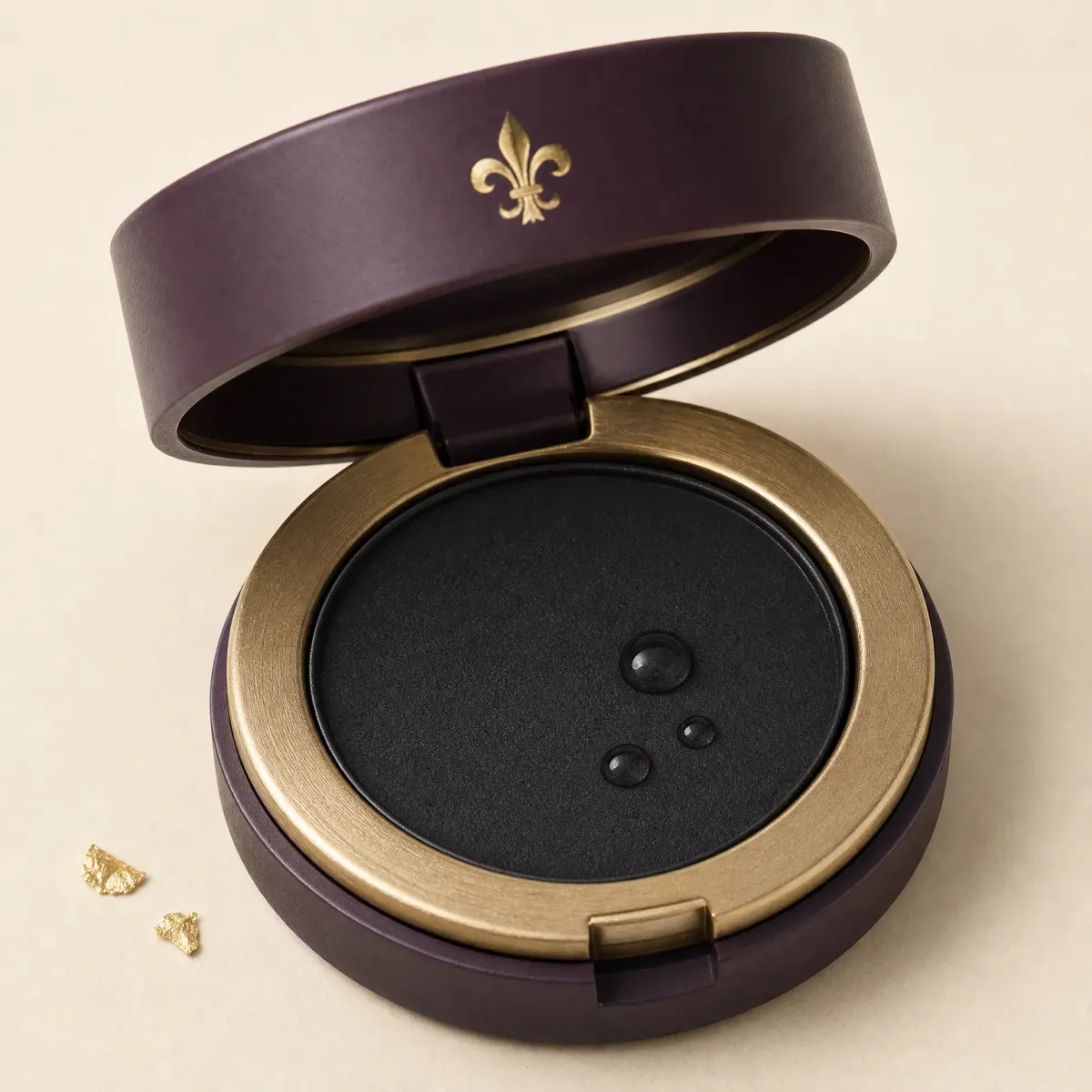
Cake eyeliner is a pressed cake of eyeliner pigment that is activated with water and applied with a fine or angled brush, drying to a matte line.
Our picks
Four cakes still made for the eyes, from a drugstore brand and three professional houses. Cake liner is a small, specialist category: of the ten or so we found on sale, these are the ones we could link to their makers, and no prestige house was among them. Each opens where its maker sells it, and you choose your shade on that page.
As an Amazon Associate I earn from qualifying purchases. Affiliate links — we may earn a commission at no extra cost to you. How this works
ProfessionalMid-range Graftobian
Cake Eye Liner, Ultra HD Compacts
A classic matte cake from a theatrical-makeup house: the stage liner, sold direct.
- Water-activated
- Pressed powder
Graphic colourDrugstore L.A. Girl
Hyper Cake Liner
An inexpensive way into cake liner, in black and white and a run of brights for graphic lines.
- Water-activated
- Built-in brush
- Eight shades
RefillableMid-range Make-up Designory
Black Cake Eyeliner Refill
A makeup school’s own black cake, sold as a refill pan for a compact you keep.
- Water-activated
- Refill pan
Softer shadesMid-range Just for Redheads
Professional Cake Eyeliner
A cake sold with its own brush, from a small house whose colours are chosen for fair and red-haired colouring.
- Brush included
- Pressed cake
Cake eyeliner is liner sold dry: a pressed cake of pigment and binder, like a small watercolour pan, which becomes paint when a wet brush is worked across it. Because you make the liquid yourself, you decide how it behaves. A barely damp brush gives a soft, slightly powdery line that can be smudged; more water gives a flowing, opaque one that can be drawn as fine and sharp as any liquid liner. Once dry it sets matte and stays put, although many cakes are not waterproof.
That control, and the long life of a dry product, are why it survives in makeup artists’ kits and in the theatre, where a colour can be mixed to order and a cake outlasts any number of pens. Next to a gel pot it is more work, and next to a liquid liner it is slower, but no other liner lets the wearer set its consistency stroke by stroke.
How to use it
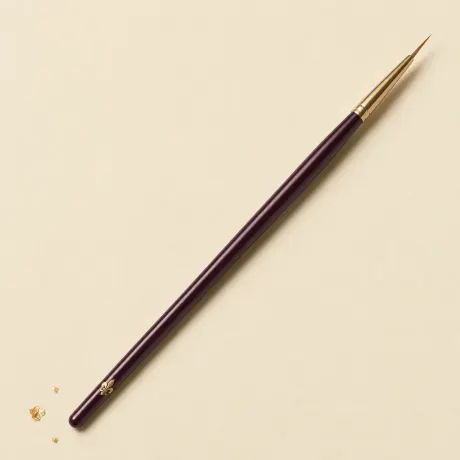
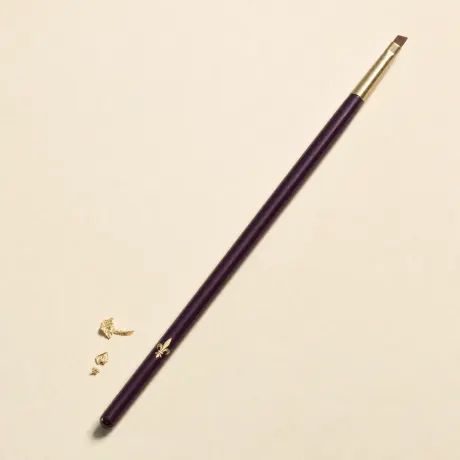
Use as little water as you can. Dampen a fine or angled liner brush, blot off the excess, and work it across the surface of the cake in small circles until the bristles carry a creamy paint. Too much water gives a thin, streaky line that dries grey; too little gives a dry, broken one. Test the consistency on the back of the hand before going near the eye.
Draw as you would with a gel: in short strokes along the lash roots, or with the flick drawn first for a wing, reloading the brush rather than pressing harder. For a softer effect, lay the line with a damp angled brush and blur its edge with a clean, dry one before it sets. Afterwards let the cake dry with the lid open, and never flood its whole surface: a cake kept damp in a closed compact is where bacteria grow.
Choosing one
Cake liners come in two families. Classic cakes, black and brown pressed powders in a small compact, are the everyday version and the one to choose for a soft, matte line. Hydra or water-activated liners, many of them sold for graphic looks and face art, are denser and come in brights, neons and metallics; they draw a more opaque line but can crack if laid on thickly. Either way, check that the cake is sold for use on the eyes. Some water-activated colours are face and body paints first, and not every pigment in them is permitted around the eye.
What one cake can do
Because the paint is mixed on the brush, one cake does several jobs. With little water it gives a soft line that can be pressed into the roots of the lashes and left slightly diffuse, closer to a shadow than a stroke. With more, it draws a crisp, opaque line for a graphic wing. The same black cake can tightline the upper waterline on a barely damp flat brush, and it will set a pencil line drawn underneath it, sharpening the edge and slowing the pencil from moving.
Colour works the same way. White and pale cakes brighten the lower lash line or double a black line with a thin second one above it; the brights and neons sold for stage and festival looks are laid on thickly, in one pass, because a cake line built up in layers tends to crack.
Keeping a cake
A cake keeps for years if it is kept dry and clean. Use a clean brush each time, rinse it before it goes back to the pan, and never share the cake: whatever the brush picks up from one eye it leaves on the surface for the next. If the top turns glossy and hard, which is the binder coming to the surface, rub it gently with a clean, dry tissue to reach fresh colour beneath. A dry cake also travels better than any pen or pot: it cannot leak, and it does not dry out between uses, which is part of why artists keep them in their kits.
Where it came from
The wet brush and the pressed cake reached the eyes by way of mascara. Maybelline’s product of 1917, a cake eyelash and eyebrow beautifier, came as a block stamped with the name, boxed with a small bristle brush and a mirror, and was applied by wetting the cake and lifting the colour with the brush.[1] By the late 1960s the cake was one of the three forms eyeliner itself was sold in, beside the pencil and the liquid. Frances Denney’s Cake Eye Liner of 1967 was “Drama for your eyes in a pressed powder. In compact complete with brush.”[2] Gala of London added a Cake Eye Liner later in the decade,[3] and in 1968 Maybelline sold an Ultra-Liner Cake Eye Liner alongside its waterproof fluid liner and its automatic pencil.[1]
The same years borrowed openly from the paint box. Mary Quant, launching her cosmetics on 28 March 1966, claimed to have used artists’ materials such as paint brushes, water-colour paint boxes and crayons.[4] The cake liner is the eye product that stayed closest to that idea. It has outlasted many of its contemporaries by remaining useful where control and a long shelf life matter more than speed: in professional kits, on the stage, and in the graphic, colourful liner looks for which many cakes are now sold.
The techniques
- Draw
- A single controlled line, built from short strokes where the hand needs it.
- Wing
- Extend the liner past the outer corner in a flick that follows the lower lash line upward.
Sources
- [1]Maybelline Cosmetics and Skin, 2010.View source (opens in a new tab) Accessed 2026-09-25.
- [2]Frances Denney (post 1945) Cosmetics and Skin, 2026.View source (opens in a new tab) Accessed 2026-09-25.
- [3]Gala of London Cosmetics and Skin, 2024.View source (opens in a new tab) Accessed 2026-09-25.
- [4]The story of Mary Quant make-upView source (opens in a new tab) Accessed 2026-09-22.
What to apply it with
Other kinds of eyeliner
Kohl pencil
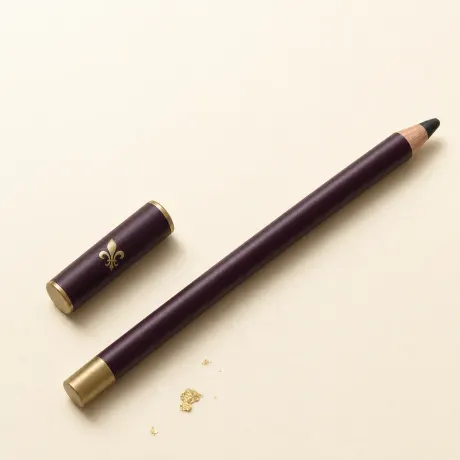
A soft, waxy pencil made to be smudged — the modern way to wear a kohl-rimmed eye.
Read the guide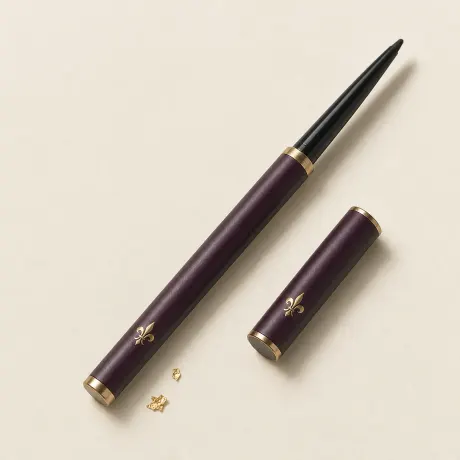
Gel eyeliner pencil
A retractable pencil with a creamy gel lead that glides, then sets waterproof.
Read the guide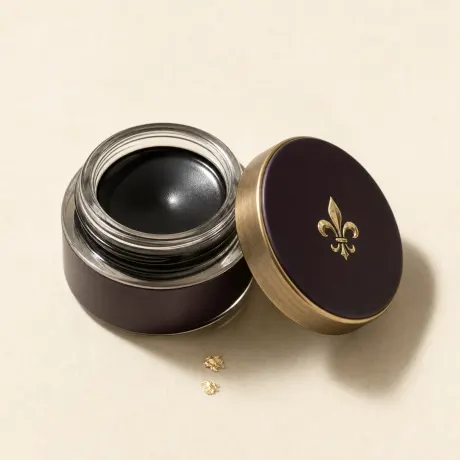
Gel eyeliner
A dense gel in a small pot, applied with a brush — sharp enough for a wing, soft enough to smudge.
Read the guide
Liquid eyeliner
Ink-like liner with a fine brush in the cap, for the sharpest possible line.
Read the guide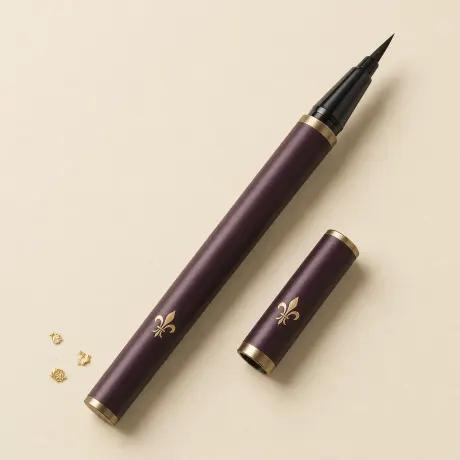
Felt-tip eyeliner
Liquid liner in a pen with a firm felt tip, the easiest way to draw a wing.
Read the guide