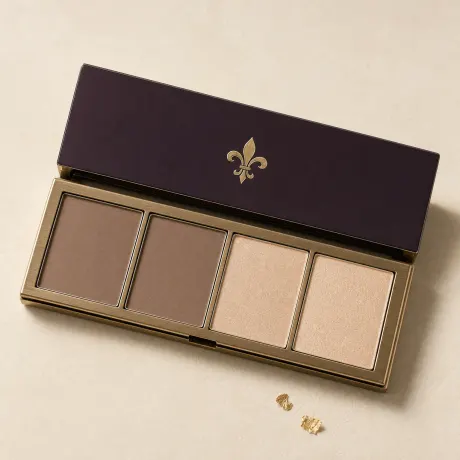
Contour powder
A cool, matte powder that paints shadow rather than sun. How it differs from bronzer, how to find a shade that reads as shadow on your skin, where to put it — and how film make-up turned shading into an everyday technique.
Contour powder is a cool, greyish-brown matte powder placed in the hollows of the face — under the cheekbones, along the jaw and beside the nose — to imitate shadow and change how the bones beneath read.
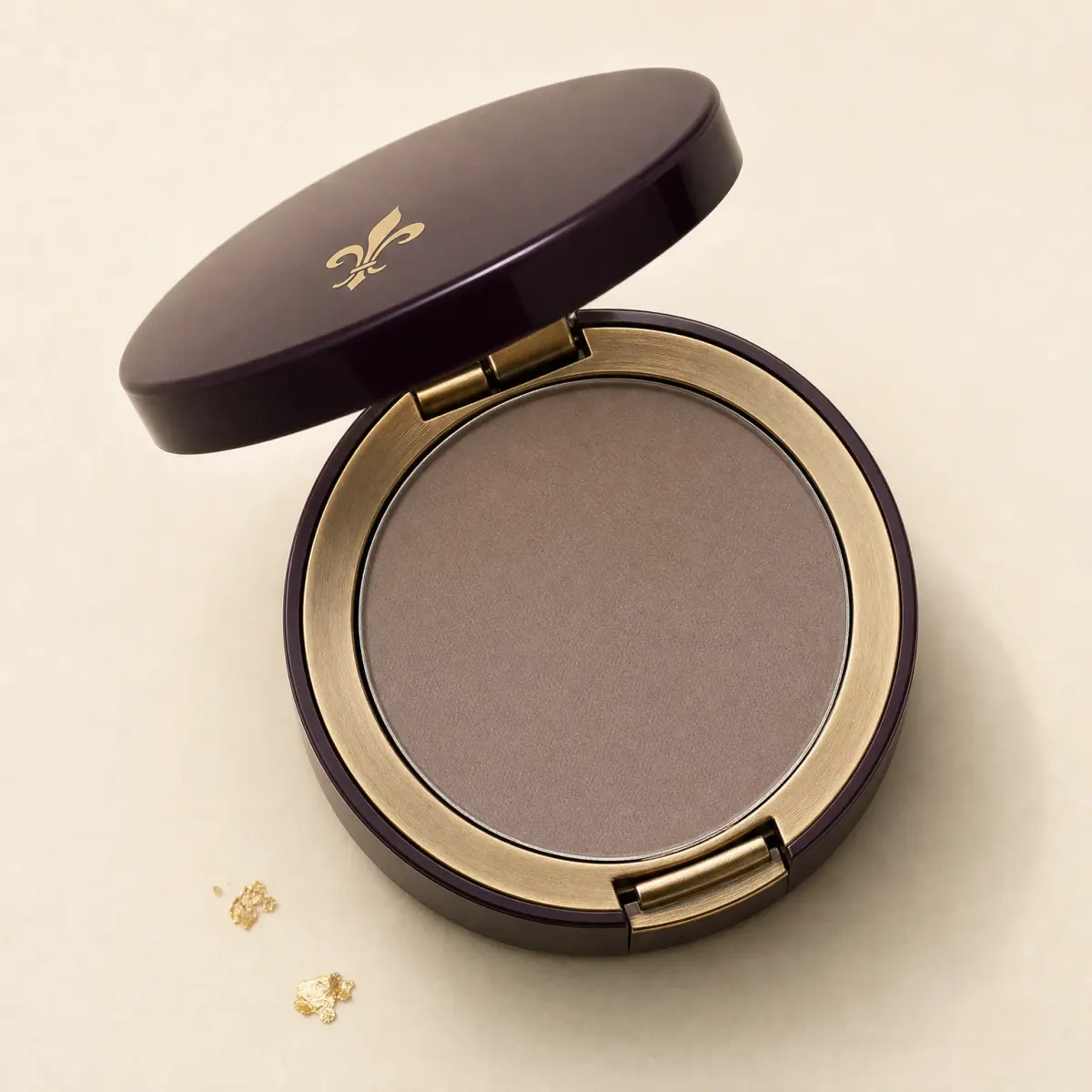
Our picks
Single contour powders are few: most houses sell their shading shades inside palettes, and many powders sold for contouring are warm bronzers. These are the genuine single powders that could be verified, from prestige houses to Japanese and Korean shading powders. Each opens where its maker sells it — at the house’s own shop, at Sephora or on Amazon — and you choose your shade on that page.
As an Amazon Associate I earn from qualifying purchases. Affiliate links — we may earn a commission at no extra cost to you. How this works
The referencePrestige Kevyn Aucoin
The Sculpting Contour Powder
A sheer, matte shadow powder from the line named for Kevyn Aucoin, whom the house calls the contour legend.
- Matte
- Sheer
- Three shades
Japanese shadingDrugstore Canmake
Shading Powder
An inexpensive Japanese shading powder, with a grey-brown for cooler skin beside warmer browns.
- Soft-focus
- Four shades
Three tonesMid-range Too Cool For School
Artclass By Rodin Shading
Three shading tones in one compact, swept together for a soft shadow or used apart.
- Shading powder
- Three tones
Intense pigmentPrestige Make Up For Ever
Artist Longwear Skin-fusing Contour Powder
A strongly pigmented matte powder for defined contour, which asks for a light hand.
- Matte
- Intense pigment
Cool-tonedDrugstore Sephora Collection
Sephora Colorful Contour Matte Powder
A plain, cool-toned matte shadow at a low price, the simplest way to try contour powder.
- Matte
- Cool-toned
Warm or coolMid-range dasique
V Cut Blending Shading
A Korean three-tone shading compact in a warm and a cool version, to match the shadow to the skin.
- Three tones
- Warm or cool
Contour powder is a matte pressed powder in the colour of a shadow: a brown with grey or taupe in it rather than red or gold. It is placed where light does not fall — the hollow beneath the cheekbone, under the jaw, at the temples and down the sides of the nose — so that those areas recede and the bones in front of them seem to come forward. It is a drawing technique as much as a product: shading, in the painter’s sense.
That is what separates it from bronzer, which it is often mistaken for and sometimes sold as. Bronzer is warm and adds the colour of a tan where the sun would land; contour is cool and adds depth where a shadow would fall. A warm powder in the hollow reads as colour, a cool one as shade. Contour must also be matte, because shimmer reflects light and a shadow does not. Single contour powders are rarer than bronzers; in Japan and Korea they are sold as shading powders, often in two or three tones to be blended together.
A shade that reads as shadow
A real shadow on your face is a deeper, duller version of your own skin, so that is what to look for: one or two shades deeper than your complexion, neutral to cool, with no orange in it. On fair and light skin a soft taupe or grey-brown works; on olive skin a neutral taupe, since a warm brown turns muddy; on medium skin a neutral brown; on deep skin a deep, rich brown, because a grey powder on dark skin reads as ash rather than shadow. The quickest test is the shadow you already have: compare a swatch with the colour under your jaw in daylight, and choose the one that matches it.
Mattes vary in strength more than the pans suggest. A sheer powder is easier to build and harder to overdo, which makes it the better first contour; a strongly pigmented one gives a sharper result for photographs and evenings, and needs a lighter hand.
Where to put it
Use a small angled or tapered brush and very little powder. To find the hollow, feel for the underside of the cheekbone, or look for where it falls into shadow under an overhead light. Place the powder there, starting near the ear and stopping around the outer corner of the eye, and blend the top edge upward so that the colour sits under the bone rather than across the cheek. Shade under the jaw to sharpen it, at the temples to narrow the forehead and, with a small brush, in two soft lines down the sides of the nose.
Blend until there is no edge, then check in daylight: contour that looks right under a bathroom bulb can look like a stripe of dirt outdoors. Powder goes over foundation and setting powder, not onto a damp base. On dry skin, a cream contour underneath and a little powder on top lasts longer and looks softer than either alone.
The common mistakes are all versions of too much. Contour placed too low drags the face down; brought too far forward, towards the corner of the mouth, it reads as a stripe; a shade with any warmth or shimmer in it reads as bronzer; and a hard edge under the jaw looks like a line drawn round the face. Stop sooner than you think you should. A good shadow is noticed only when it is missing.
Where it came from
Shading a face is as old as painting, and it was practised on the stage long before the street. For everyday make-up the technique came out of the film studios. Panchromatic film, adopted after 1927, recorded the face in a wider range of greys than the stock it replaced, and make-up artists learned to use that range. Perc Westmore, chief make-up artist at Warner Brothers, built a system in the early 1930s that he called “Corrective Make-up”, which the historian James Bennett believes is the first recorded use of the term. Jack Dawn, at Universal, described the method in 1941: to hide a sagging chin, the make-up artist throws it, “photographically, in the shadow by applying a slightly darker shade of make-up to that area”.[1]
After the Westmore brothers opened the House of Westmore in 1935 and began selling their own make-up, the ideas travelled into other firms’ make-up guides, and what had been done with rouge came to be done with foundation and powder.[1] They travelled with an ideal: the oval face, the easiest to light and photograph, towards which every other shape was to be “corrected”. The film and television make-up author V. J-R. Kehoe argued in 1969 that the ideal belonged to black-and-white photography.[1] It also carried a narrower standard. A Revlon trainer interviewed in 2015 described contouring used for years to sharpen features and narrow noses, under an industry ideal of an oval face and a dainty nose, one the article called a construct in which “beautiful” equated to “white”.[2] Contour powder is at its most useful now for the opposite purpose: to bring out the face you have rather than redraw it towards someone else’s.[1]
The techniques
- Contour
- Shade beneath the bone to make it recede, then soften the top edge.
- Blend
- Soften an edge until one colour passes into the next without a line.
Sources
- [1]Corrective Make-up (Contouring) Cosmetics and Skin, 2020.View source (opens in a new tab) Accessed 2026-09-26.
- [2]From on-stage to on-trend, contouring has gone mainstream (and you can thank Kim Kardashian) The Globe and Mail, 27 March 2015, 2015.View source (opens in a new tab) Accessed 2026-09-26.
What to apply it with
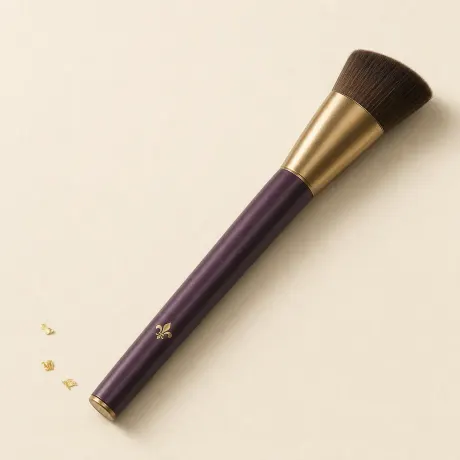
Angled contour brush
A denser brush cut on a sharp slant, for laying contour into the hollow of the cheek.
Read the guide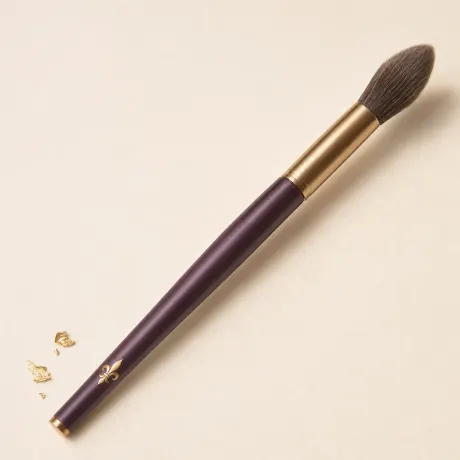
Tapered sculpting brush
A narrow, oval head that tapers to a soft point, for placing shadow exactly and blending it out.
Read the guide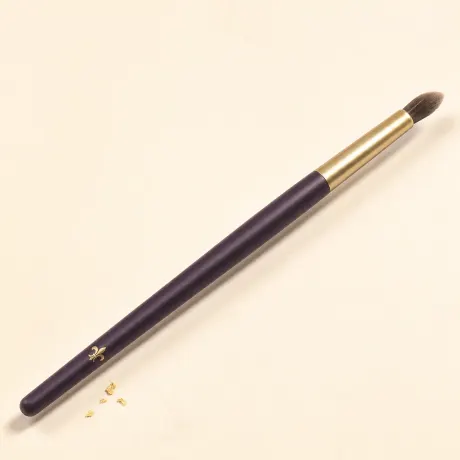
Nose contour brush
A small, dense, tapered brush for shading narrow areas: the sides of the nose, the hairline, the crease of the chin.
Read the guide