Contour palette
Shadow and light in one compact. How a contour palette is laid out and how it differs from a face palette, how to choose one for your skin, how to use the shades together — and the 1960s compacts that first sold the idea.
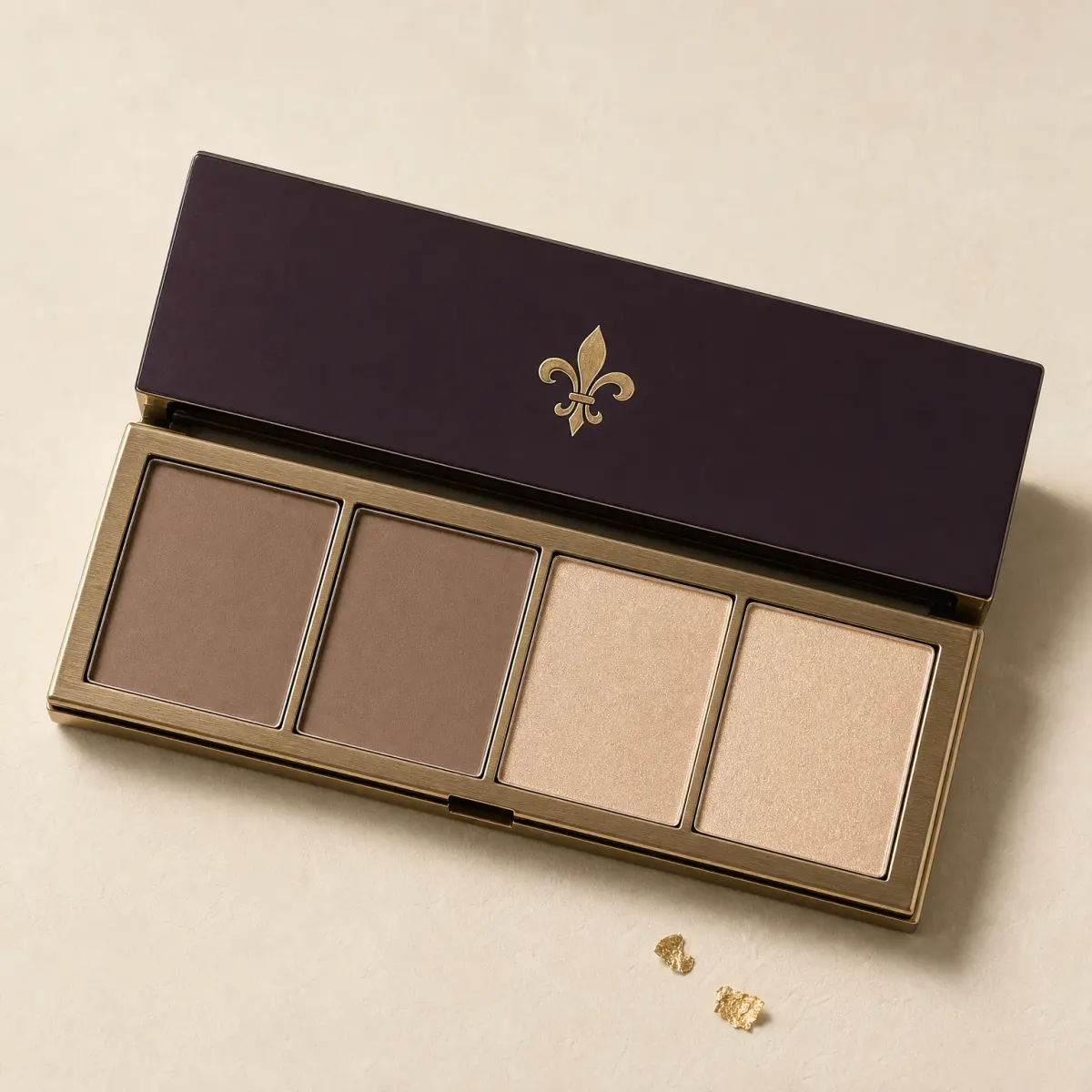
A contour palette is a compact that pairs deeper, cool shading shades with lighter highlighting ones, so the face can be sculpted — shadow beneath the bones, light above them — from a single case.
Our picks
Chosen to cover the layouts, from two-pan duos to six-pan palettes, in powder, and palettes made for darker skin as well as for the lighter end. Most of the contour palettes still sold come from the less expensive houses, and the carousel reflects that. Each opens where its maker sells it, at the house’s own shop or on Amazon, and you choose your depth range on that page.
As an Amazon Associate I earn from qualifying purchases. Affiliate links — we may earn a commission at no extra cost to you. How this works
Two-pan duoPrestige Charlotte Tilbury
Filmstar Bronze & Glow
One sculpting shade and one highlight in a compact, the simplest way into the technique.
- Contour and highlight
- Powder
Darker skinDrugstore Black Radiance
True Complexion Contour Palette
A palette from a house that makes its range for darker skin tones, in versions that reach dark to deep.
- Three depth ranges
- Contour and highlight
Three and threeMid-range KVD Beauty
Shade + Light Face Contour Palette
Three matte shadows and three lights, to mix a contour that matches rather than choose one.
- Matte
- Three contour, three highlight
Low costDrugstore e.l.f. Cosmetics
Contour Palette
An inexpensive four-pan palette to sculpt, shade and brighten, a sensible first contour palette.
- Four shades
- Vitamin E
Korean paletteDrugstore Etude
Contour Powder
A Korean palette for soft shading and highlight, made for natural definition rather than sharp lines.
- Blendable
- Shading and highlighting
Pro palettePrestige MAC Cosmetics
Studio Fix Sculpt and Shape Contour Palette
Three matte contours and three soft-focus highlights from a house with professional roots.
- Three matte contours
- Three shimmery highlights
Budget duoDrugstore wet n wild
MegaGlo Contouring Palette
A deep shade and a light one in a small compact, at the bottom of the price range.
- Duo
- Define and highlight
With a guideMid-range Smashbox
Step-By-Step Contour Kit
A three-shade kit that comes with a guide to where each goes, for anyone starting out.
- Three shades
- Step-by-step guide
Contour and bronzeDrugstore Physicians Formula
Butter Bronzer Contour Palette
A contour, a bronzer and a highlight together, for shadow and warmth from one compact.
- Contour, bronze, highlight
- Murumuru butter
Many shadesDrugstore Revolution Beauty
Ultra Contour Palette
A large palette of contour shades with baked highlighters, for mixing to an exact match.
- Contour and shaping shades
- Baked highlighters
Cool and warmMid-range KIKO Milano
Contour Obsession Palette
A cool and a warm contour to use alone or mix, with a metallic highlight above them.
- Cool and warm contour
- Metallic highlight
Talc-freeDrugstore Palladio
The Definer Contour + Highlight Palette
A talc-free six-pan palette, three shadows and three lights, at a drugstore price.
- Talc-free
- Six shades
Six shadesDrugstore Beauty Creations
Floral Bloom Highlight & Contour Kit
A low-cost six-shade kit of highlighters and contour powders, with a mirror for use away from home.
- Highlight and contour
- Built-in mirror
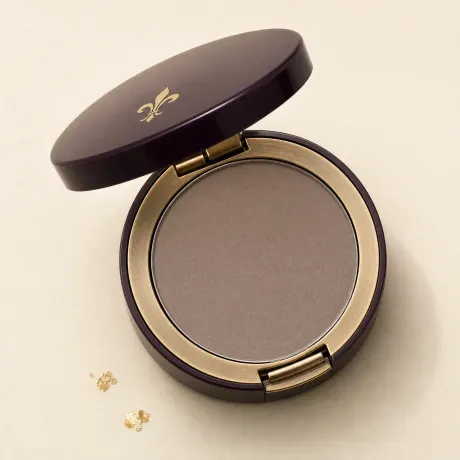
A contour palette puts the two halves of sculpting side by side: one or more shading shades, cool and matte, to lay a shadow in the hollows of the face, and one or more lighter shades to bring forward the planes above them. The smallest are duos, a single shadow and a single light; the largest hold eight or more pans, from which the right pair can be chosen or mixed. Some add a warmer shade for bronzing, and the light shades may be matte, to brighten, or pearly, to catch the light.
It is not the same thing as a face palette, which combines blush, bronzer and highlighter for colour and glow, and has a page of its own. Nor is it simply several contour powders in one case. The point of it is the relationship between the shades: each shadow is chosen to sit with a light, so that the two can be blended into one another without a visible join, and the whole technique — shade below the bone, light above it — can be carried in one flat compact.
Choosing a palette
Most palettes are sold by depth — fair to light, medium, deep — and the first thing to check is that both ends of the one you choose suit you. The deepest shading shade should be a cool or neutral brown one or two shades deeper than your skin; the lightest should brighten without looking chalky or grey, which is the usual failing of pale powders on deep skin. If the standard ranges stop short, look for houses that make their palettes for darker skin, or sell them in several depth ranges.
Then decide how much shine you want. Matte light shades brighten the centre of the face and under the eyes without showing texture; shimmering ones read as highlighter and belong on the tops of the cheekbones only. A warm bronzing shade is useful for warmth but not for shadow. Powder palettes wear longer on oily skin and are easier for beginners, because powder builds slowly; cream palettes blend into foundation and suit dry skin. A palette earns its place if it holds one pair you reach for every day and others worth mixing.
Size is the last decision. A duo is the easiest to learn on and to carry. A larger palette pays its way for someone whose skin changes colour through the year, since the right shadow can be mixed as a summer colour comes and goes, and for anyone who does makeup for other people.
Using shadow and light together
Work shadow first, then light. With a small angled brush, place the shading shade in the hollow beneath the cheekbone, under the jaw and, lightly, down the sides of the nose, blending the upper edge upward. Then place the light shade just above the shadow — along the top of the cheekbone, down the bridge of the nose, in the centre of the forehead and on the chin — and soften the join between the two with a clean brush until the change is gradual. Light sits on what should come forward; shadow on what should recede.
Mix when no single pan is right: a little of the light shade softens a shading shade that is too strong, and two shading shades together often match better than either alone. Keep separate brushes for dark and light, or the highlight turns muddy and the shadow chalky. Tap the brush before it touches the face, because pressed pans hold a lot of pigment and the first stroke is the one most often too strong; if it is, go over the edge with the brush you used for setting powder. And use less than a palette tempts you to: six pans do not ask to be worn at once.
Where it came from
Contouring compacts for the dressing table were on sale by the mid-1960s, when cosmetics houses sold shading as a kit. In 1965 Du Barry, the make-up line of Richard Hudnut, brought out Glissando Contouring Make-up: compacts holding three compressed powders — a basic skin tone with a highlighter and a shadow — with a mirror and a natural silk sponge. Its advertisement promised to “re-shape, re-make, ‘sculpture’ your face with an interplay of light and shadow”.[1] The next year Max Factor launched Geminesse, an upmarket line sold only through selected department stores, whose make-up used highlighters and shadows to contour the face — an idea, the historian James Bennett notes, that Max Factor had helped originate in the 1930s. Its Contour Supreme was “a trio of subtle highlights and shadows, with an outliner and fill-in brush”.[2]
Half a century later contouring returned as a public fashion. In 2015 a Sephora vice-president said it was the most requested mini makeover in the chain’s in-store beauty studios,[3] and a trade report on that year’s sales in American prestige stores put the growth of face makeup down to “Instagram-driven trends like highlighting, contouring, strobing and sculpting”.[4] The palettes here are what that boom left on the shelves. Most come from the less expensive houses, and all of them are sold on the principle the Glissando compact advertised: light and shadow, in one case.
The techniques
- Contour
- Shade beneath the bone to make it recede, then soften the top edge.
- Strobe
- Highlight the high points alone, with no shading to set them against.
- Blend
- Soften an edge until one colour passes into the next without a line.
Sources
- [1]Richard Hudnut (post 1945) Cosmetics and Skin, 2015.View source (opens in a new tab) Accessed 2026-09-26.
- [2]Max Factor (post 1960) Cosmetics and Skin, 2013.View source (opens in a new tab) Accessed 2026-09-25.
- [3]From on-stage to on-trend, contouring has gone mainstream (and you can thank Kim Kardashian) The Globe and Mail, 27 March 2015, 2015.View source (opens in a new tab) Accessed 2026-09-26.
- [4]Makeup Fuels 2015 Prestige Market Growth WWD, 10 February 2016, 2016.View source (opens in a new tab) Accessed 2026-09-26.