Powder blush
The most common form of blush: colour pressed into a cake and swept on with a brush. What it is made of, how to choose and apply it, and how rouge came to live in a compact.
Powder blush is coloured powder pressed with a binder into a cake, swept onto the cheeks with a brush to add a flush that dries matte, satin or shimmering.

Our picks
Chosen to cover the finishes, from matte to shimmer, and every budget from drugstore to prestige, with houses from Paris, Milan and New York as well as the drugstore names. Each opens where its maker sells it — on Amazon, at the house’s own shop, or at Sephora — and you choose your shade on that page.
As an Amazon Associate I earn from qualifying purchases. Affiliate links — we may earn a commission at no extra cost to you. How this works
Reference shadePrestige NARS
Powder Blush
A broad range in matte, satin and shimmer finishes, from the peach-pink Orgasm to the vivid red Exhibit A.
- Matte, satin, shimmer
- Claims 16-hour wear
EverydayDrugstore Maybelline New York
Fit Me Blush
A plain, inexpensive powder that is easy to control: the right first blush.
- Lightweight
- Blendable
Two-tonePrestige Charlotte Tilbury
Cheek to Chic Powder Blush
A deeper ring for the cheekbone and a lighter centre for the apple, swirled together or used apart.
- Two shades in one pan
- Luminous
RadiantMid-range Rare Beauty
Soft Pinch Luminous Powder Blush
The powder sister of Rare Beauty’s liquid blush: airy colour with a lit finish, for skin that looks flat in matte.
- Luminous
- Silky
BlurringPrestige YSL Beauty
Make Me Blush 24H Buildable Blurring Powder Blush
A velvety powder made to blur as well as colour, in satin and matte versions of the same shades.
- Satin or matte
- Buildable
- Claims 24-hour wear
Oily skinDrugstore e.l.f. Cosmetics
Primer-Infused Matte Blush
A matte powder with primer built in, made to hold on skin that shines by midday.
- Matte
- Primer in the formula
- Vegan
True redPrestige Dior
Rouge Blush
A range that runs from sheer pinks to a true red, for anyone who wants rouge to look like rouge.
- Long-wear
- Pinks to reds
BrighteningMid-range Benefit Cosmetics
Dandelion Baby-Pink Brightening Blush
A pale, brightening pink that reads as a glow more than a colour, in Benefit’s boxed compact.
- Baby pink
- Brightening
Natural matteDrugstore Milani
Rose Blush
A soft natural-matte powder, pressed with a rose in relief, at a drugstore price.
- Natural matte
- Made in Italy
Silk glowPrestige Armani Beauty
Luminous Silk Glow Blush
Colour with a sheen from the house of Luminous Silk: pigmented, buildable and made to glow.
- Silk-infused
- Buildable
- Glow
Long wearMid-range Tarte
Amazonian Clay 12-Hour Blush
A sheer, clay-based powder sold on a claim of twelve hours’ wear, for days that run long.
- Sheer, buildable
- Vegan
Bright colourPrestige Clinique
Cheek Pop Blush
Clear, saturated shades that read as a flush rather than a stripe when built up slowly.
- Buildable
- Long-lasting
Low costDrugstore wet n wild
Color Icon Blush
A soft, buildable powder at the bottom of the price range, in a wide spread of shades.
- Sheer to bold
- Vegan
Artist’s powderPrestige Pat McGrath Labs
Skin Fetish: Divine Blush
The makeup artist Pat McGrath’s powder, sold as buildable, petal-soft colour.
- Buildable
- Soft texture
Talc-freeMid-range Haus Labs
Color Fuse Blush Powder
A talc-free powder made with squalane, for anyone who finds ordinary powders dry on the skin.
- Talc-free
- Fermented arnica
- Squalane
High pigmentDrugstore NYX Professional Makeup
Buttermelt Blush
Strong colour for deeper skin, where paler drugstore powders disappear: tap it on lightly.
- High pigment
- Claims 12-hour wear
Soft mattePrestige Bobbi Brown
Blush
Muted, skin-like shades from a house built on natural-looking makeup.
- Natural-looking
- Buildable
LiftedMid-range Makeup by Mario
Soft Pop Powder Blush
An artist’s powder made to brighten and lift the face as much as to colour it.
- Brightening
- Healthy-looking flush
BlendableDrugstore L'Oréal Paris
True Match Super-Blendable Powder Blush
A soft drugstore powder that blends out easily, which forgives a heavy first stroke.
- Super-blendable
Matte and shimmerPrestige Laura Mercier
Blush Color Infusion Powder Duo
A matte and a shimmer of the same colour in one compact: the matte on the apple, the shimmer above it.
- Matte and shimmer
- Talc-free
- Claims 10-hour wear
Italian houseDrugstore KIKO Milano
Unlimited Blush
A pigmented powder that the Milan house calls its best-selling blush, in matte and radiant finishes and a compact with a mirror.
- Matte to radiant
- Claims 12-hour hold
Soft focusPrestige Hourglass
Ambient Lighting Blush
Colour and a light-diffusing powder marbled in one pan, for a flush that blurs rather than shines.
- Soft-focus
- Blush and finishing powder
Powder blush is face powder with more colour in it. The base is the same fine, slippery mineral powder, but the pigment load is higher, and opacifiers such as zinc oxide and titanium dioxide are added so the colour reads over a made-up face.[1] A binder holds the mixture together and a press turns it into the cake in the pan.[1] The cake has to be firm enough to survive a handbag and soft enough to give up its colour to a brush.
It is the most forgiving form of blush. It goes on last, over foundation and powder, so it cannot disturb the base beneath it; it builds in thin layers and softens under a clean brush; and it holds up on skin that makes its own oil. What it gives up, against cream and liquid blush, is the look of colour coming from under the skin. On very dry skin it can sit on the surface rather than sinking in.
Finish, colour and label
The finish decides where a powder blush can go. A matte formula has no shimmer and reads purely as colour, which makes it the safest choice for textured skin and for the apples of the cheeks. A satin one has a faint sheen that softens the edge. A shimmer finish carries reflective particles, flatters smooth skin on the high point of the cheekbone and shows every pore on the apple, so it is better treated as blush and highlighter at once.
Choose colour by depth before undertone. Soft pinks and peaches suit fair skin; roses, corals and berries a middle range; and deep berries, bricks and plums dark skin, on which pale pinks can look chalky. The quickest test is the flush your own cheeks make after a walk in the cold: the shade that matches it rarely looks wrong. Pigment strength varies more than the pans suggest, so tap the brush against the edge of the compact before it touches the face.
The reds and pinks come from iron oxides, which are still used in cosmetics, from synthetic colours, and sometimes from carmine, the red of the cochineal insect.[2] Since 2011 a cosmetic sold in the United States has had to name carmine on its label, which is the place to look for anyone who avoids ingredients of animal origin.[3]
How to apply it
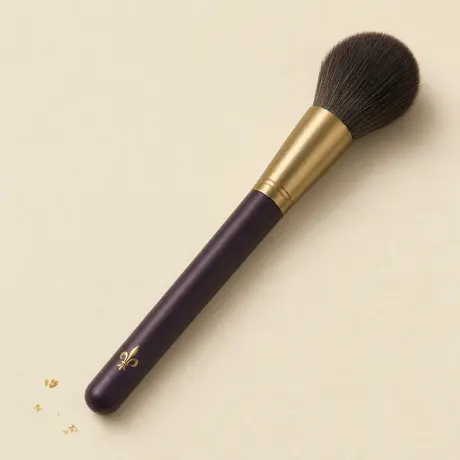
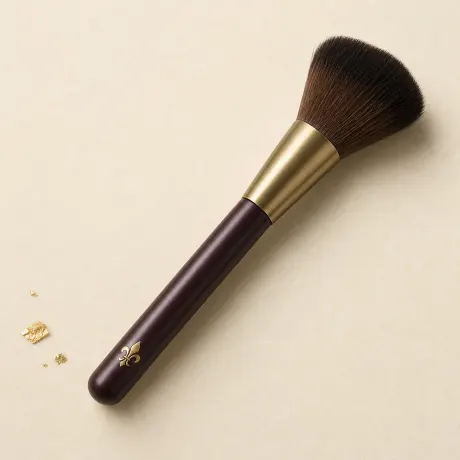
Load a brush lightly, tap off the excess and start where the colour should be strongest: the apple of the cheek for a fresh, rounded look, or just below the cheekbone for a longer, lifted one. Sweep back towards the ear in small movements rather than one stroke, and stop short of the nose. A round, fluffy brush diffuses the colour widely and forgives a heavy hand; an angled brush follows the bone and places it more precisely. Draping, which carries blush up towards the temple, uses the same brush in a longer curve.
Apply it over a base that has been set, not over wet foundation or cream, where powder grabs and goes patchy. If there is too much, go over it with a clean brush or a light dusting of translucent powder rather than wiping it. For long days, a cream blush underneath and a powder of a similar shade pressed over it lasts longer than either alone.
Where it came from
Blush was called rouge for most of its history, and for most of that history the difficulty was the red. The first carmine used in Europe came from a Polish scale insect; after the Spanish conquest of the Americas it was largely replaced by cheaper carmine from the cochineal insect of Mexico and Central America. Safflower, madder, alkanet, brazilwood and sandalwood supplied vegetable reds, while red lead and vermilion, both poisonous, supplied cheap mineral ones. In the United States the mineral reds lasted until the 1920s, when they were prohibited by law.[4]
Dry rouge was the simplest form: pigment ground into talc or French chalk. A recipe printed in 1875 needed only carmine, a little almond oil and chalk.[4] Loose powder rouge never became popular, though; most women preferred theirs compressed into a compact.[4] The first compact rouges were pastes moulded by hand into small shallow containers and dried, a method French houses such as Bourjois used through the nineteenth century; they gave way to cakes made in a mechanical press, which became the most popular form of rouge and the hardest to make well.[4] The same methods made compact face powder, and by 1925 the case itself was being called a compact.[5] A Tre-Jur vanity case of 1924 held compact powder, a smaller rouge compact and a lipstick together: the made-up face as one object in a handbag.[4]
The twentieth century changed the colours more than the cake. Synthetic reds such as geranium lake, eosine, erythrosine and phloxine widened the shades a rouge could come in.[4] After the Second World War the word changed too: new stick rouges were sold as blushers, and by 1978 Maybelline was selling a Fingertip Powder Blush.[4] Sales did not follow the name. James Bennett, whose Cosmetics and Skin traces the trade literature, finds that rouge never grew after the war as other cosmetics did, because the fashion for a tan had largely ended the peaches-and-cream complexion it was made for.[4] What lasted was the object: a pressed cake in a shallow pan, set into a case with a mirror, which is how powder blush is still sold.
The techniques
- Sweep
- Long, light strokes that deposit a veil of product.
- Blend
- Soften an edge until one colour passes into the next without a line.
- Drape
- Sweep colour from the cheek up across the temple in one continuous band.
Sources
- [1, 2, 4]Rouge Cosmetics and Skin, 2010.View source (opens in a new tab) Accessed 2026-09-25.
- [3]Listing of Color Additives Exempt From Certification; Food, Drug, and Cosmetic Labeling: Cochineal Extract and Carmine Declaration (final rule) Federal Register, 5 January 2009, 2009.View source (opens in a new tab) Accessed 2026-09-22.
- [5]Compressed Face Powders Cosmetics and Skin.View source (opens in a new tab) Accessed 2026-09-22.
What to apply it with
Other kinds of blush
Cream blush
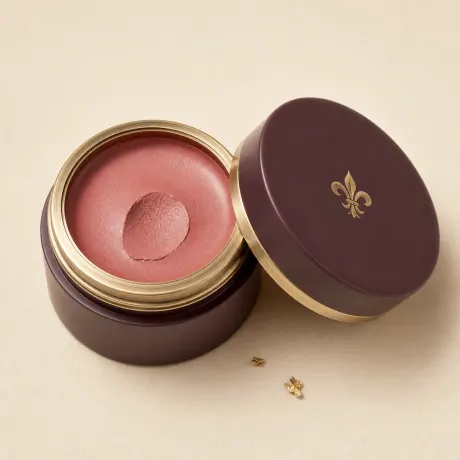
An emollient colour that melts into skin, often worn on the lips as well.
Read the guide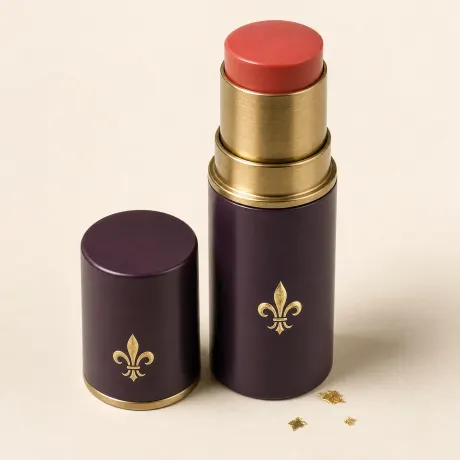
Blush stick
Cream blush in a twist-up stick, applied straight to the cheek.
Read the guide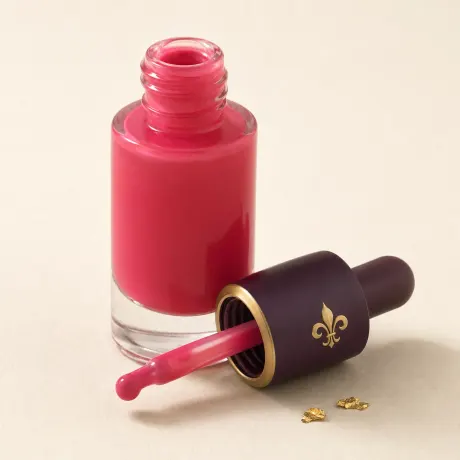
Liquid blush
Highly pigmented fluid colour for a flush that looks like it comes from under the skin.
Read the guide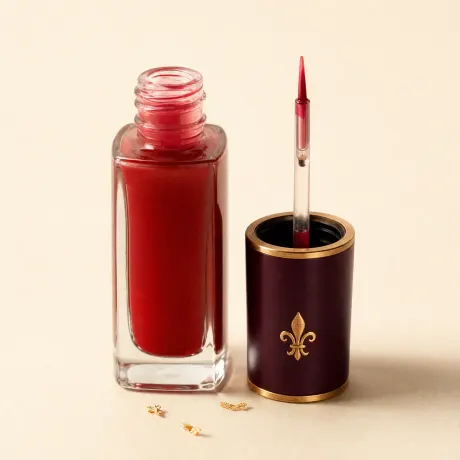
Cheek and lip tint
A water-thin stain that dyes rather than coats, and lasts through the day.
Read the guide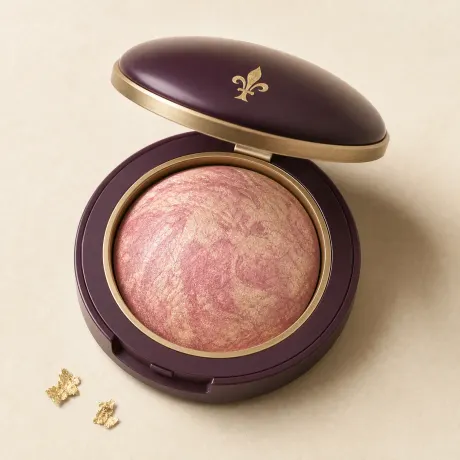
Baked blush
Blush baked into a domed cake from a cream base, with a luminous, marbled finish.
Read the guide