Cheek and lip tint
A water-thin stain that dyes the skin rather than coating it, sold for cheeks and lips alike. How it differs from blush, how to work fast enough to avoid a tide mark — and the long history of rouge that stained.
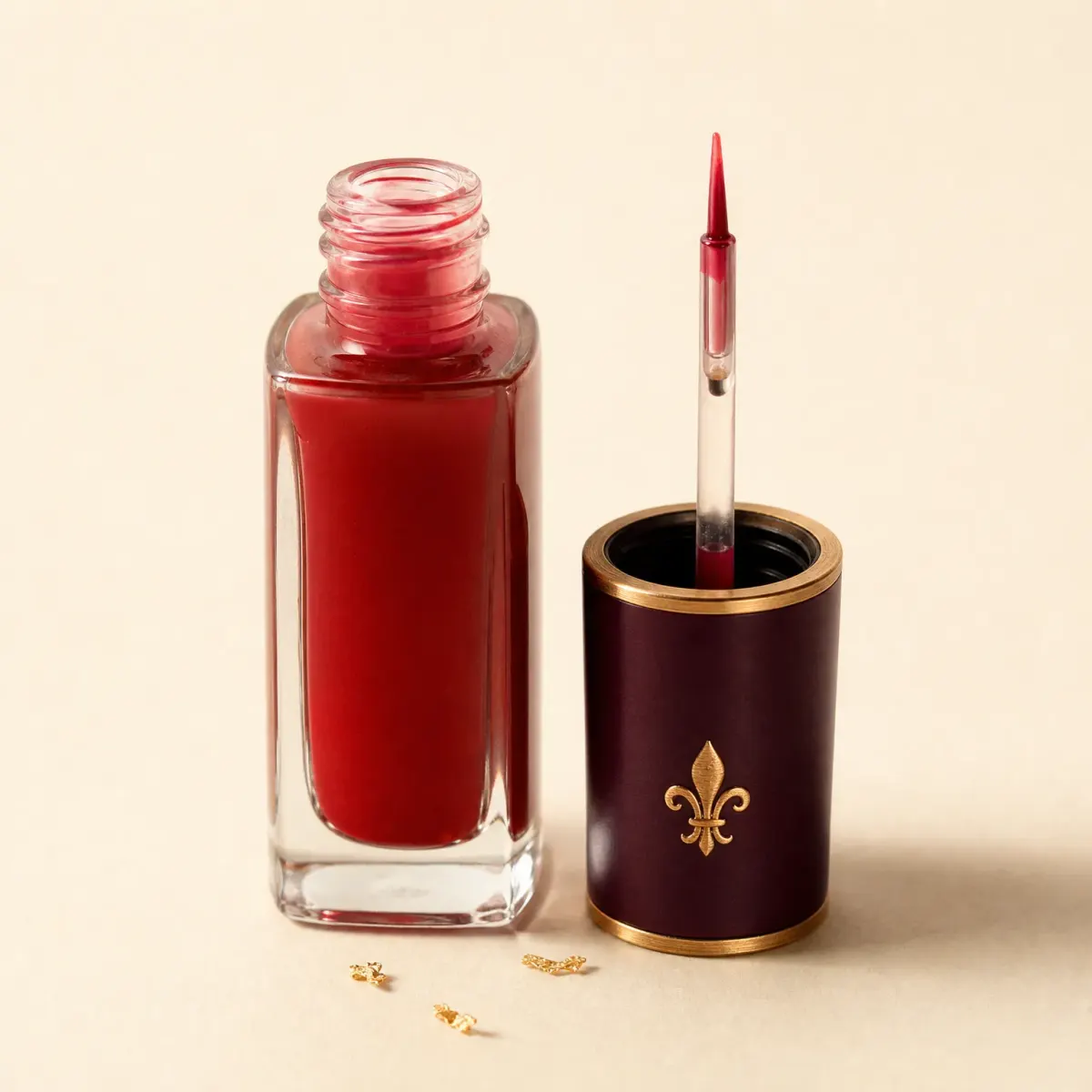
A cheek and lip tint is a water-thin stain, sold for both the cheeks and the lips, that colours the surface of the skin rather than coating it and sets within seconds into a sheer, long-wearing flush.
Our picks
Chosen from stains sold for both cheeks and lips; tints made for the lips alone are a separate kind. Few prestige houses sell a true stain, so the picks run from drugstore to mid-range, from Seoul and Sephora’s own range as well as the American names. Each opens where its maker sells it — on Amazon, at the brand’s own shop, or at Sephora — and you choose your shade on that page.
As an Amazon Associate I earn from qualifying purchases. Affiliate links — we may earn a commission at no extra cost to you. How this works
Rose stainMid-range Benefit Cosmetics
Benetint Cheek & Lip Stain
A sheer rose stain in a small bottle with a brush in its cap, for lips and cheeks alike.
- Cheeks and lips
- Sheer, buildable
- Brush in the cap
WateryDrugstore e.l.f. Cosmetics
Sheer For It Blush Tint
A watery stain, sold for lips and cheeks, that blends out to a sheer, lasting flush.
- Watery texture
- Transfer-resistant
- Cheeks and lips
Jelly stickMid-range Milk Makeup
Cooling Water Jelly Tint
A stain in a stick: swiped on, it goes on sheer and builds without the rush of a water tint.
- Water-jelly
- Cheeks and lips
- Stick
Water tintDrugstore Etude
Dear Darling Water Tint
A thin Korean water tint in a vivid cherry red, sold by the brand for lips and cheeks alike.
- Water tint
- Non-sticky
Soft stainMid-range caliray
SoCal Superbloom Dewy Lip & Cheek Soft Stain Tint
A soft, dewy stain, less insistent than a water tint, for a first try at the form.
- Dewy
- Cheeks and lips
- Hyaluronic acid
First stainDrugstore essence
What a Tint! Lip & Cheek Tint
A low-cost, non-sticky stain for lips and cheeks, and the simplest way to find out whether a tint suits you.
- Two-in-one
- Non-sticky
- Long-lasting
Glazed jellyMid-range Kaja
Jelly Charm Glazed Lip Stain & Blush
A jelly stain with a glazed finish on the lips, carried in a keychain case.
- Jelly
- Glazed finish
- Cheeks and lips
Gel tintDrugstore Sephora Collection
Cheek & Lip Long-Lasting Gel Tint
A gel tint, thicker than a water stain and easier to place, from Sephora’s own range.
- Gel
- Long-lasting
- Cheeks and lips
A tint is closer to a dye than to a paint. Blush of every other kind lays a film of pigment on the skin; a stain carries its colour dissolved in water or a thin gel, and the colour settles into the surface of the skin and lips as the liquid dries. What is left is sheer, has no texture of its own, and is hard to rub away: there is nothing on the surface to smudge, crease or come off on a glass.
That permanence is also the difficulty. A stain sets in seconds, so it has to be blended at once, and it takes more strongly on dry patches and rough lips than on smooth skin. Its nearest neighbour is liquid blush, pigment in a fluid, which stays movable for longer and covers more. Tints made only for the lips are a separate kind; the ones here are sold for both.
Water, gel or jelly
Tints differ mainly in how thin they are. A water tint is the thinnest: it spreads furthest, sets fastest and is the hardest to control, and it gives the most natural result once the hand has learned it. A gel tint is a little thicker, stays where it is dotted and allows a few more seconds to blend. A jelly, sold in pots and in sticks, is thicker again and behaves like a sheer cream until it sets.
The applicator follows from the texture. A brush in the cap, the classic form, paints a fine line that the fingers then tap out; a doe-foot wand lays down more at once; a jelly stick can be swiped straight onto the cheek. Whatever the form, the colour in the bottle is not the colour on the skin, which is sheerer and changes a little as it dries. And a tint sold for the cheeks alone is a liquid blush, and one sold for the lips alone a lip tint: check the label before wearing one on the mouth.
How to apply it
Work on one cheek at a time. Dot the tint onto the apple of the cheek, two or three small dots rather than one large one, and blend at once with the fingertips in a quick tapping motion, outwards and slightly up. Speed matters more than care: hesitate, and the edge of each dot dries as a ring. Build colour by repeating the process once the first layer has set, never by adding more to a wet one.
Tints behave best on bare, moisturised skin or over a thin liquid base; on top of powder they streak. On the lips, smooth them with balm first and blot, apply the tint to the centre, press the lips together and blend the edge out with a finger. A clear balm on top keeps the lips comfortable once the stain has set.
Shade, wear and removal
Because a stain is sheer, the same bottle reads differently on different skin. A rose that looks vivid on fair skin can be no more than a warmth on deep skin, where reds and berries show more clearly. Try it on the cheek, not the back of the hand, and judge it only once it has dried.
What makes a tint useful also makes it slow to leave. An oil or balm cleanser, followed by an ordinary wash, is the usual way to take one off; on the lips, balm left on for a minute before wiping does the same. And because a stain dries into dry skin, it shows every flake: smooth the skin gently first rather than trying to cover the flakes afterwards.
Where it came from
Colour that stains rather than coats has a long history on the face. In Japan, beni, made only from the red of safflower petals, was used for both lip rouge and cheek rouge; refined to a high grade it dries to an iridescent green, and turns red when it is dissolved with water. In a traditional palette of white, red and black, beni was the only colour, and it served the lips, the cheeks, the eye line and occasionally the nails.[1]
In eighteenth-century England rouge was applied with Spanish wool, a pad of hair saturated with bright pink colour; vermilion, also worn as rouge, was highly toxic, and cochineal papers were recommended in its place.[2] The nineteenth century sold rouge soaked into paper and bound as a little booklet, rouge en feuille, or into fabric, rouge en crépon, and on saucers whose colour was released with lemon juice. Liquid rouges meant for the lips as well as the cheeks were thickened with gums so that they stayed where they were put.[3] By 1915 Richard Hudnut was promising that a good liquid rouge, its Permanent Rose Tint, would not rub off on a dry handkerchief, was not affected by perspiration, and could be used on the lips.[3]
The twentieth century added chemistry that changed colour on the skin. The bromo acids of indelible lipsticks went into rouges too, and Princess Pat’s Tint of 1924 looked orange in the compact and turned red on the cheek.[3] The stain in a small bottle with a brush in its cap belongs to this line — thin, sheer and hard to shift — rather than to the powders and creams that sit on top of the skin.
The techniques
- Dot and blend
- Place small dots of product, then blend them outward.
- Paint
- Brush or dab liquid colour directly onto the skin or lips.
Sources
- [1]Japanese Traditional Craft: Beni for Cosmetics Google Arts & Culture.View source (opens in a new tab) Accessed 2026-09-22.
- [2]English Rose: Putting Your Best Face Forward — Cosmetics in 18th Century Society Portraits 2026.View source (opens in a new tab) Accessed 2026-09-22.
- [3]Rouge Cosmetics and Skin, 2010.View source (opens in a new tab) Accessed 2026-09-25.
Other kinds of blush
Powder blush
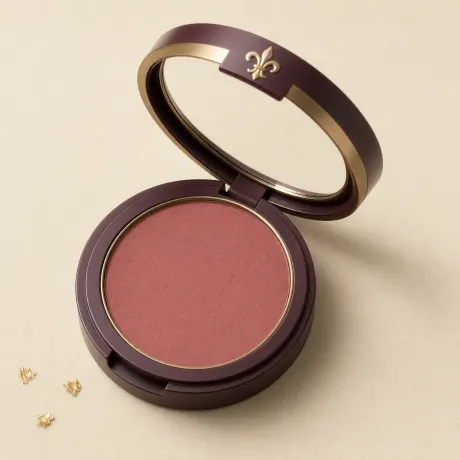
Pressed colour for the cheeks, the most common form of blush.
Read the guide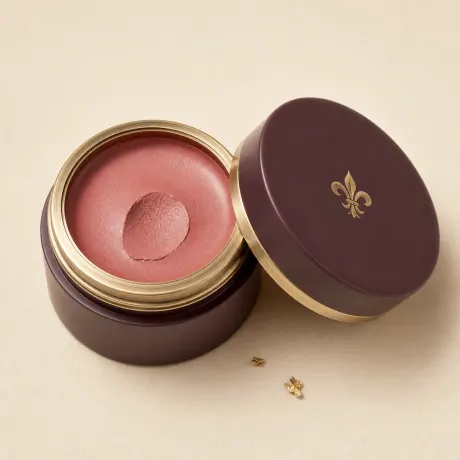
Cream blush
An emollient colour that melts into skin, often worn on the lips as well.
Read the guide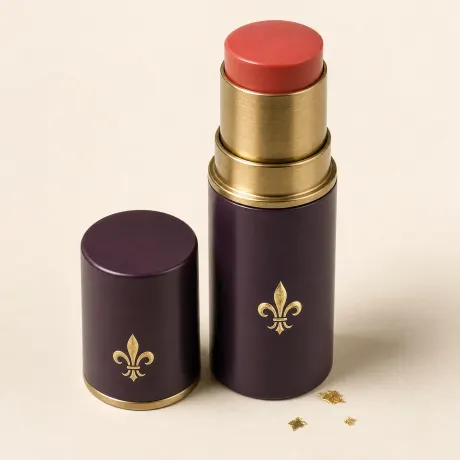
Blush stick
Cream blush in a twist-up stick, applied straight to the cheek.
Read the guide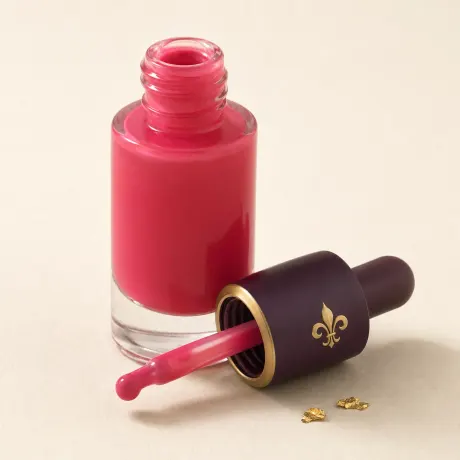
Liquid blush
Highly pigmented fluid colour for a flush that looks like it comes from under the skin.
Read the guide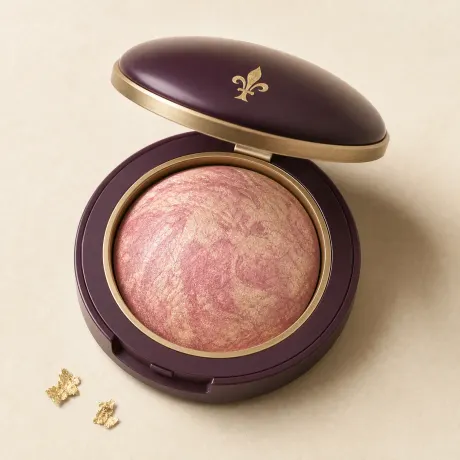
Baked blush
Blush baked into a domed cake from a cream base, with a luminous, marbled finish.
Read the guide